

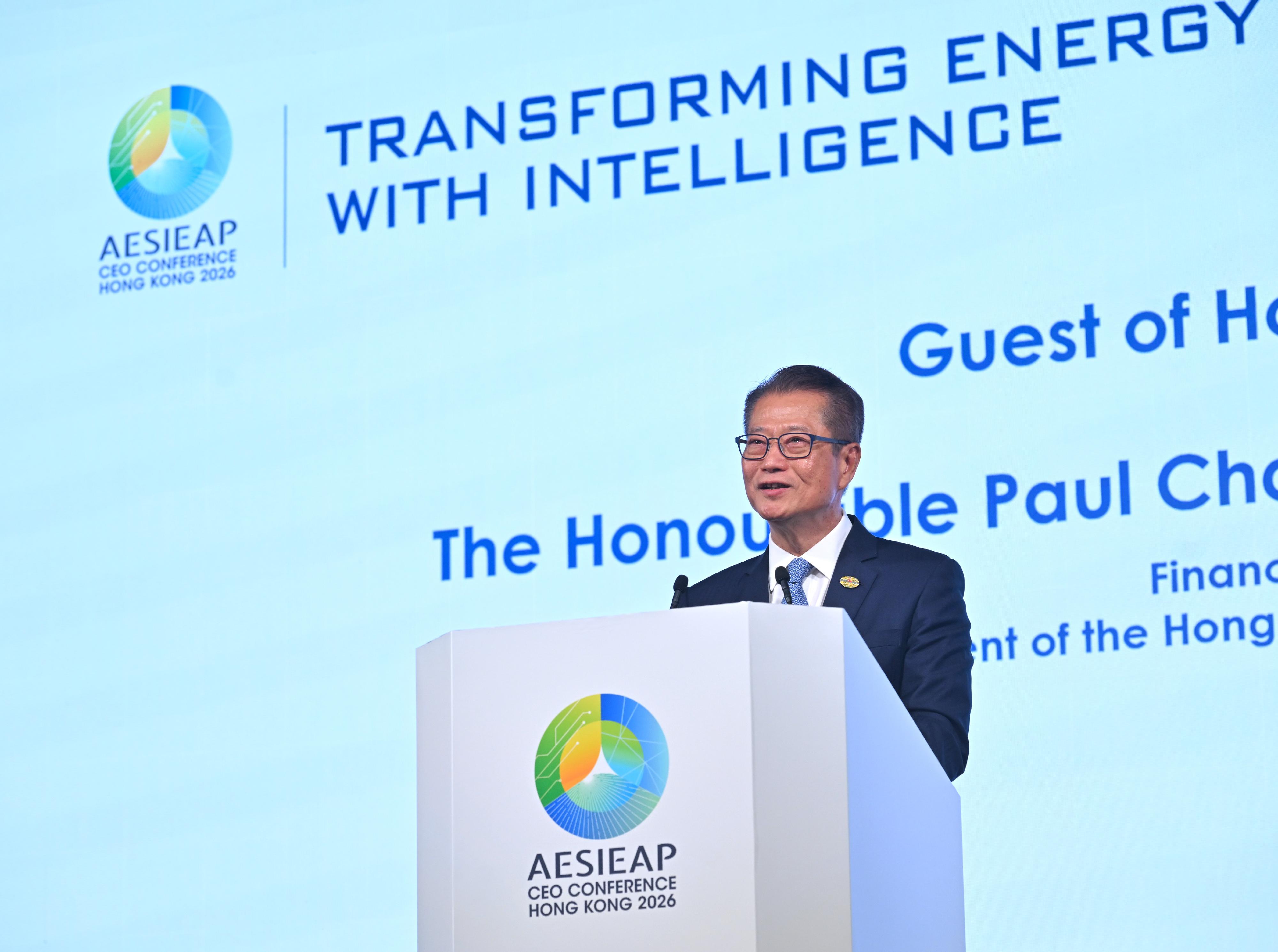
Hong Kong aims to play a bigger role in financing Asia’s green transition and digital infrastructure, drawing on the city’s position as an international financial center and its extensive global networks to foster regional cooperation, Financial Secretary Paul Chan Mo-po said on Sunday.
Writing in his weekly blog, Chan said the vision will be reflected at the Asia-Pacific Economic Cooperation Finance Ministers’ Meeting to be held in the Hong Kong Special Administrative Region for the first time on Oct 20 and 21. The discussions will focus on fiscal policies to support livelihoods, digital infrastructure financing, financial inclusion, and exchanges among young finance professionals.
“All four priorities are areas where Hong Kong has strengths in, and can make an active contribution,” he said.
ALSO READ: HK sets world record with largest digital bond offering
Low-carbon transition projects in the region need funding, while investors need transparency, Chan said, emphasizing the SAR can bridge the gap through green bonds, transition finance, project certification and professional services.
More than $76 billion in green and sustainable debt was issued in Hong Kong last year, according to official figures. This included about $38 billion in green and sustainable bonds arranged in the city, making it Asia’s leading market for the eighth consecutive year.
Chan said digital infrastructure also required substantial investment, with the rise of artificial intelligence fueling demand for computing power, data centers and cloud services. The scale of these projects and the pace of technological change mean financing arrangements have to balance commercial viability with fiscal sustainability.
“Hong Kong can foster closer ties and cooperation among APEC economies, bringing together governments, financial institutions, investors and technology companies across the region to explore public-private financing models,” Chan said.
ALSO READ: HK should embrace APEC to amplify its global voice
The SAR is also working to expand access to finance for small and medium-sized enterprises. Through the Hong Kong Monetary Authority’s Commercial Data Interchange, companies authorize banks to access their operating data from multiple sources, helping lenders to assess loan applications more efficiently.
The platform has facilitated more than 108,000 loan applications by the end of June, with approved credit totaling nearly HK$90 billion ($11.5 billion), according to the finance chief.
Beyond financing, Hong Kong also hopes to highlight its role as an international insurance and risk-management hub during the APEC meeting.
Hong Kong is well-placed to work with regional partners on insurance-linked securities, captive insurance and specialized maritime risk pools, Chan said, adding that catastrophe bonds and coverage for specific risks could provide additional protection and financing options for infrastructure investment and help the region manage climate risks.
READ MORE: APEC weekend could redefine Hong Kong’s place in the world
The discussions come amid growing uncertainty in the global economy, with geopolitical tensions, energy and supply-chain risks, and tighter financial conditions putting pressure on growth, Chan said.
How economies can work together to sustain growth and protect livelihoods will be a key issue for finance officials at the meeting.
The United Nations’ recently released Trade and Development Report 2026 forecasts that global economic growth will slow to 2.6 percent this year — down from 2.9 percent in 2025.
APEC’s 21 member economies are home to about three billion people and account for more than 60 percent of global gross domestic product. Trade with other member economies makes up 87 percent of Hong Kong’s total trade, Chan said.
