

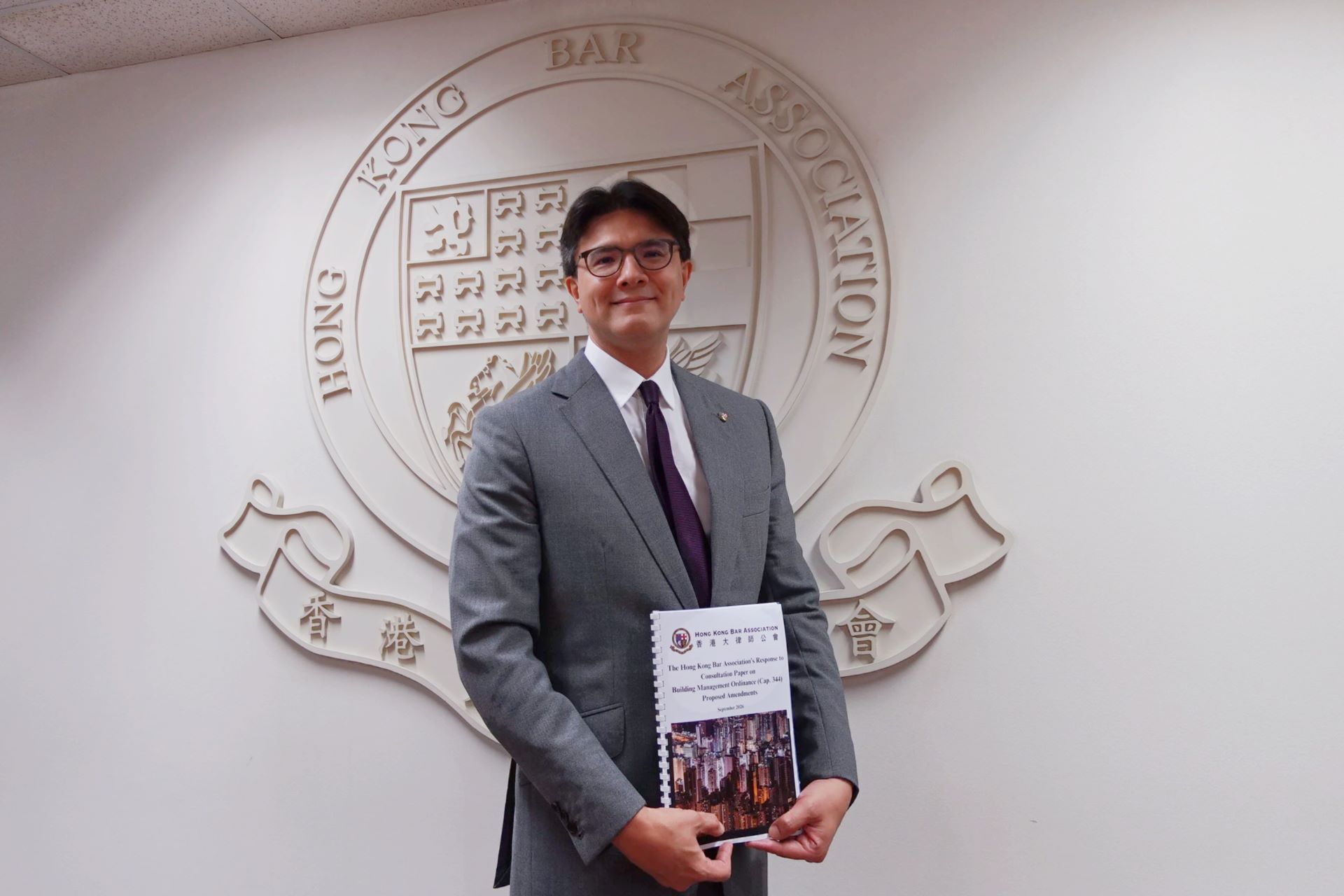
The Hong Kong Bar Association has urged the Hong Kong Special Administrative Region government to let apartment owners take legal action to force owners’ corporations to deal with fire and structural hazards as the authorities prepare a bill for sweeping building management reforms following the deadly Wang Fuk Court blaze in Tai Po in November last year.
Jose-Antonio Maurellet, who chairs the association, told China Daily on Saturday the mechanism, modeled on the “derivative action” in company law, would give owners a safeguard short of the step taken at Wang Fuk Court where the government disbanded the owners’ corporation. But, he called that step may be “very drastic and expensive”, saying it “may be unnecessary” in some circumstances.
The association’s submission on proposed amendments to the Building Management Ordinance, released on Sunday, says the change would close a legal gap. At present, a co-owner has no standing to enforce the Deed of Mutual Covenant directly and can only ask an owners’ corporation to act.
The association says it’s worth exploring whether the ordinance should “introduce a mechanism enabling relevant owners to seek permission to bring an enforcement action in the name of the owners’ corporation” when it unreasonably refuses to act on a safety-critical breach.
Maurellet stressed that permission, if granted, would be tightly limited to safety matters like fire hazards and structural defects, or cases where the corporation is shown to be acting unreasonably or improperly.
ALSO READ: Lee vows full reform, accountability after Tai Po fire report
The submission suggests that the Lands Tribunal could grant injunctions and order remedial works.
According to Maurellet, the main benefit may be that cases may never reach court. “Most of these things, if you have access to court, then people don’t need to go to court. That’s the beauty,” he said. He expects governance standards concerning owners’ corporations to rise just as companies sometimes change course once a shareholder threatens a derivative action.
Company law already provides for such action, and adapting it wouldn’t be “too difficult to legislate if the government is so inclined”, Maurellet said. “We’re proposing this as something that we think deserves serious consideration.”
The Home Affairs Department told China Daily it’s reviewing the feedback from public consultations that ended last month, and aims to submit proposals to the Legislative Council this year. The authorities will also launch a three-tier dispute resolution mechanism next year, starting with District Council members and professional mediation, to be followed by court adjudication.
ALSO READ: 25 charges levied against 7 people, 2 companies in deadly Tai Po fire
Maurellet backed government intervention, but only in limited circumstances. “There won’t be enough resources if the authorities are to run every incorporated owners [corporation] in Hong Kong,” he said, adding that private property rights must be respected.
Experts in related sectors have also demanded stronger oversight.
Tse Wai-chuen -- founding president of the Hong Kong Greater Bay Area Property and Facility Management Federation – said professionalism and transparency are key to governing owners’ corporations.
He said a government representative should be invited to oversee corporation’s meetings on critical issues, such as large-scale renovation projects, when at least five percent of owners request it.
READ MORE: Tai Po fire hearing identifies areas for improvement in safety, regulations
Tse and Maurellet said electronic voting to bypass proxies in corporations’ decision-making is needed, with a strong backing of the government’s iAM Smart digital platform to be used for the voting in the process.
Concerns over concentrated proxy power in owners’ corporations have been widely raised since the Wang Fuk Court fire.
Lawmaker and barrister Alex Fan Hoi-kit said statutory safeguards for the decision-making process would help owners exercise their autonomy over private property.
The legislature should ensure that the provisions are “unequivocal and practically workable, and carry real deterrent effects”, he said.
Transparency is another shared theme to resist bid-rigging. “The sun is really the best disinfectant,” Maurellet said.
The HKBA proposed stricter interest declarations, saying consultants and contractors who’re not necessarily covered at present should declare their direct or indirect interests, as well as non-interests.
Tse suggested widening the range of contractors and consultants required to declare interests in order to combat bid-rigging.
Criminalization bid-rigging is another point of consensus between the government and legal professionals.
Maurellet also pointed out that proxy forms should warn that falsifying a proxy is a crime.
He called for online classes to be conducted for members of owners corporations who’re mostly volunteers and often lack relevant expertise.
