

More tourists from cities going off the beaten track in search of raw places, authentic experiences and a slow-paced life
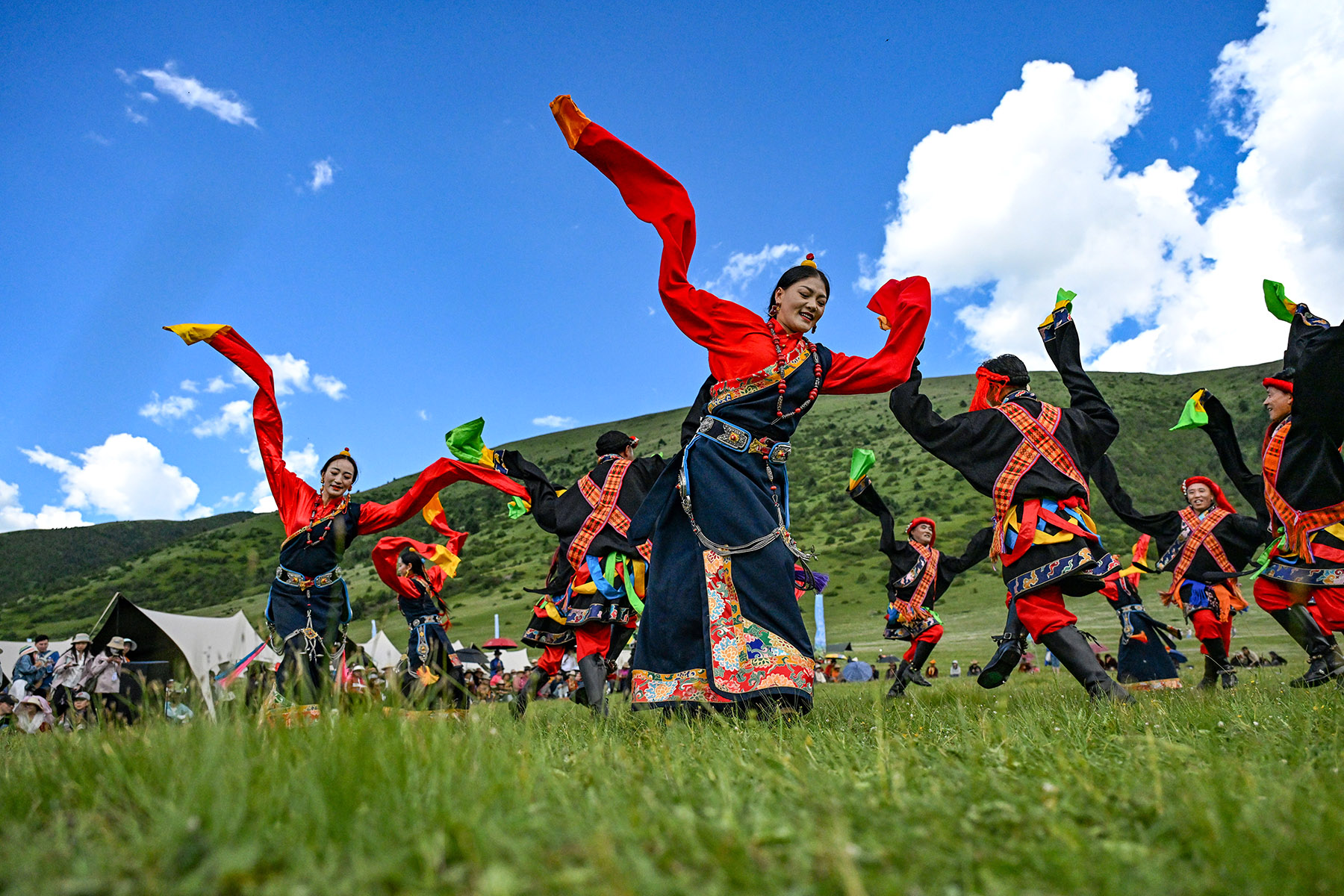
Standing atop Chijia Mountain above the Yangtze River in Chongqing's Fengjie county, known as Kuizhou during the Tang Dynasty (618-907), Chen Xiangying finally understood why Du Fu, the great poet, produced hundreds of poems despite spending only about a year and nine months there.
She had not come merely as a sightseer, but as a reader, following the geography of classical Chinese poetry.
Chen, a 39-year-old university lecturer in ancient literature from Yan'an, Shaanxi province, said the experience of visiting the places she had read about was completely different from reading about them in books.
"When I actually got there, I felt very different. Du Fu's poems suddenly appeared in front of me. He wrote, 'The Chijia and Baiyan peaks rise, both piercing the sky'. And then I understood why Du Fu wrote those poems," Chen said.
Chen's experience is part of a broader shift in China's domestic tourism market, as growing numbers of urban residents turn away from megacities and popular ancient towns and toward county-level destinations in search of unpolished landscapes, living cultural memories and a slower pace of life.
In August, Chen and a friend traveled to Fengjie and Wushan counties in Chongqing.
"They're small counties, but the cultural accumulation is incredibly deep. Not only Du Fu, but also poets like Li Bai and Bai Juyi passed through and wrote about them," she said.
What also moved her was the sense of stepping out of time.
"The streets still look like the 1990s or early 2000s. In a second you're back in childhood. It's completely different from Shanghai or Beijing. Here, you can still see the past, including old restaurants, old buildings and places with stories."
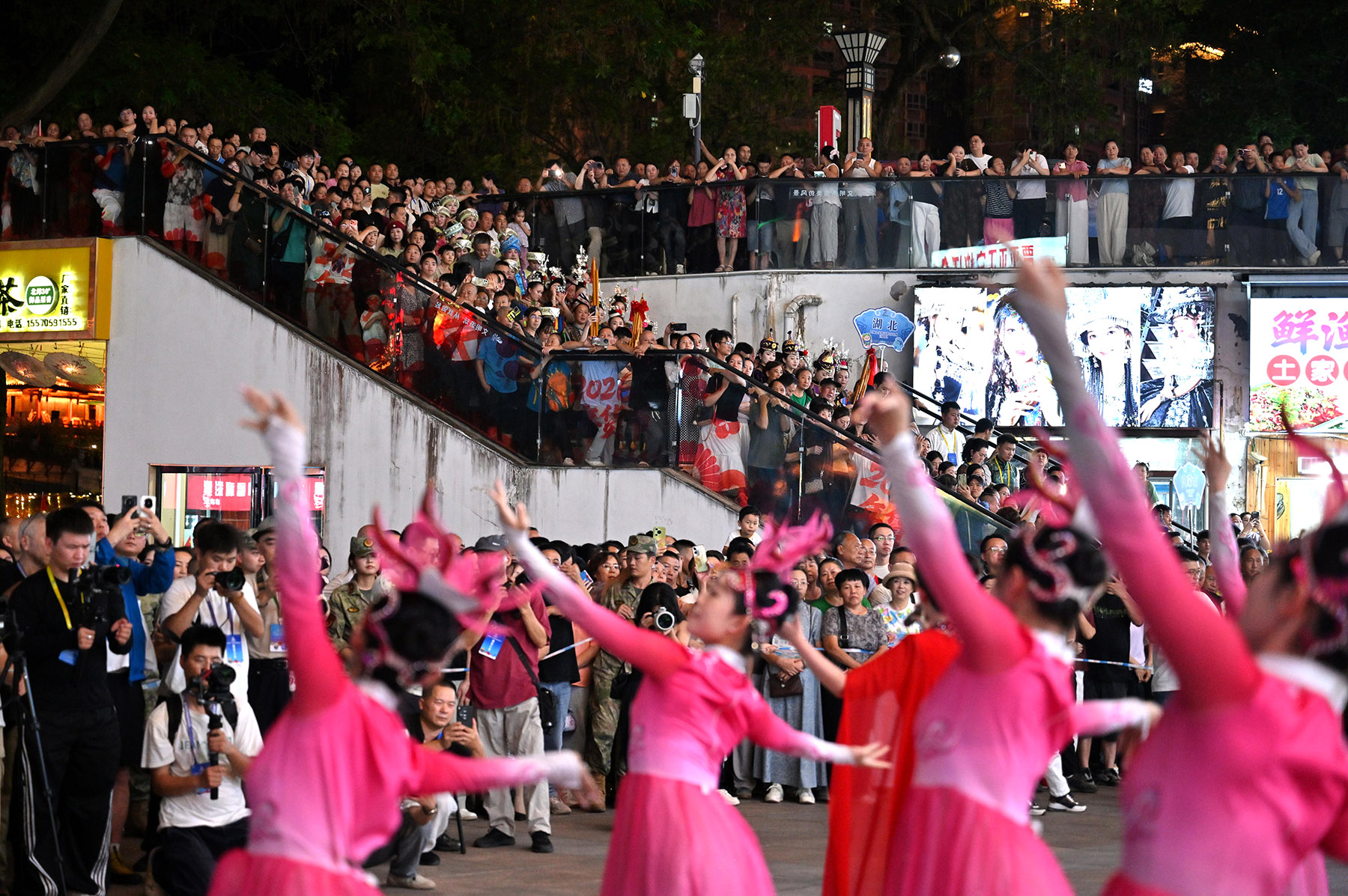
In the counties, Chen noticed that the ride-hailing drivers she met seemed genuinely content.
"They were not exhausted, not like drivers in big cities. One driver warmly shared some local knowledge with us and gave us a glimpse into everyday life in the area," she said.
"Small restaurant owners worked briskly and cheerfully. We'd watch what locals ordered and order the same."
But county rhythms are not urban rhythms. If visitors miss the meal window, there may be no food available. The famous local buns, for example, were sold out by 9 am, she said.
"I had a wonderful time, and I ate very well. It's worth going, not because food and lodging are cheap, but because the experience is real."
She was also impressed by the way the Wushan Museum presents local history.
The exhibition begins with the railway station, which holds particular significance for the county.
One display hall is dedicated to Wushan's new high-speed railway station.
"Wushan did not have a railway station before. Now it has high-speed rail. People are genuinely proud. They even built a mock train carriage that visitors can step into and photograph."
The museum also showcases prehistoric archaeological sites in Wushan, something that may be unfamiliar to visitors from outside the area.
"It is very impressive," Chen said.
Small counties across China are emerging as a major growth engine for the country's tourism market, as visitors increasingly turn away from crowded big-city attractions in favor of slower-paced and more authentic experiences.
Nonlocal spending in county-level destinations rose 14.1 percent year-on-year in the first half of 2026, according to a report by the China Tourism Association.
The trend has been driven by what Chinese travelers call "treasure towns" and "county trips", with searches for such getaways surging over the summer.
Searches for "county trips" to popular destinations jumped 110 percent this summer holiday year-on-year on travel booking platform Qunar, according to company data.
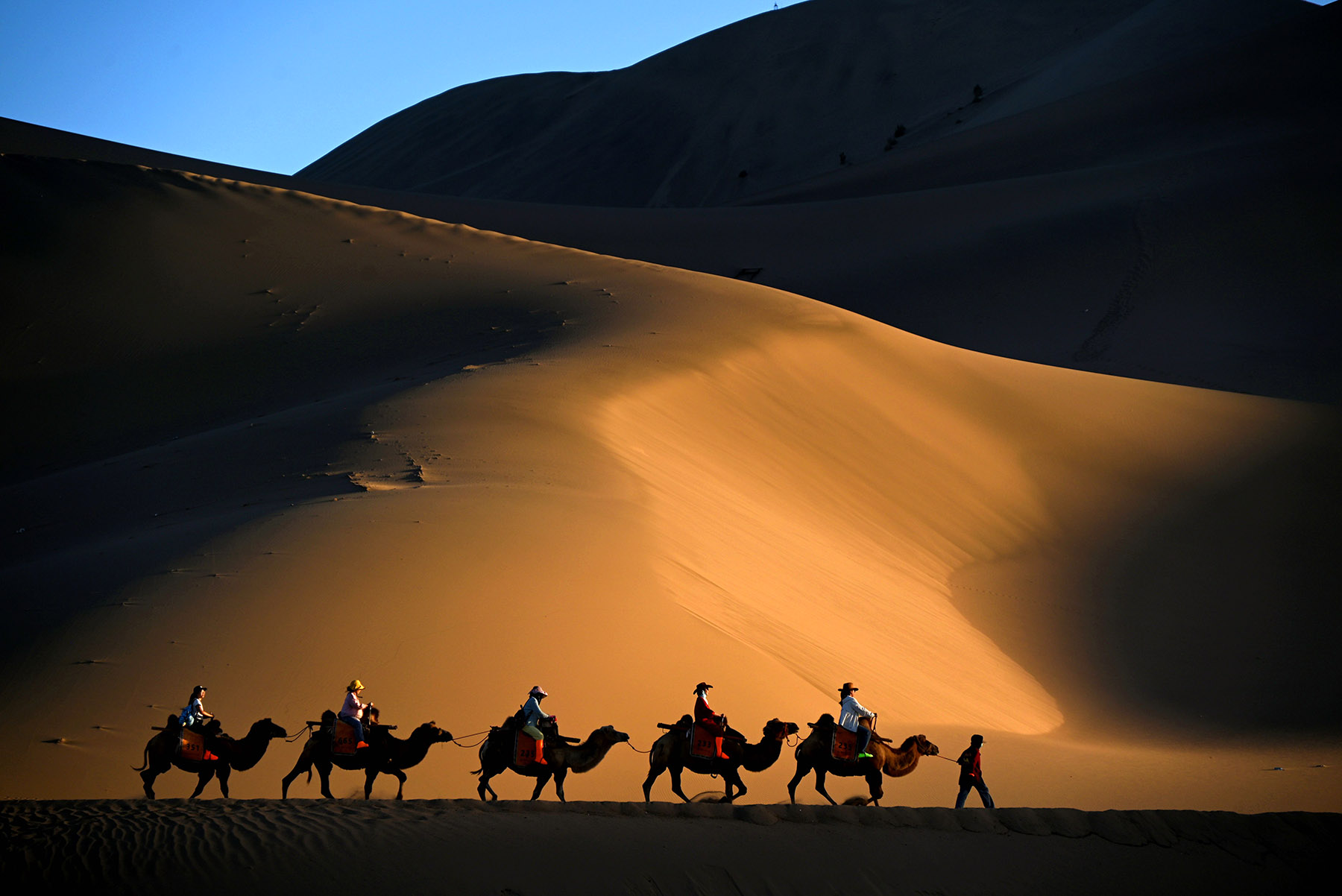
For example, Hui'an county in Fujian province, known for its women's culture and distinctive traditional dress, reported an increase in visitor numbers.
Hui'an received about 2.89 million tourist visits in the first six months of 2026, up 5.7 percent from a year earlier, according to local media.
In the first seven months of this year, Zhejiang's Anji county welcomed about 21.6 million tourist visits and generated more than 30 billion yuan ($4.47 billion) in tourism revenue, according to the county government.
Its appeal begins with its natural setting. More than 70 percent of the county is covered by forest, with bamboo groves stretching across the landscape and tea plantations scattered across the hillsides, the county said.
These examples show how varied the appeal of county travel can be. That appeal can also be found in the smaller, everyday details of county life.
For Fu Bingqin from Beijing, the prices he encountered in Linzhou, a county-level city tucked into the Taihang Mountains of northern Henan province, were not simply startlingly cheap. They were his first sign that he had entered a different kind of China.
One and a half yuan for three steamed stuffed buns. Two yuan for a bowl of hot and sour soup.
Fu, who traveled by motorcycle through places including Linzhou, said county-level destinations offer a compelling mix of distinctive culture, mountain scenery and architectural heritage.
Linzhou offers an attractive combination: the Red Flag Canal, built largely by hand by about 100,000 people in the 1960s and now a symbol of their determination; the dramatic Taihang landscape of gorges and cliffs; and the city's identity as China's "hometown of architecture".
"We didn't just pass through. We wanted to understand a place more deeply," Fu said.
"One evening we went out to eat and came across a street lined with mahjong parlors. Everyone was inside playing, and the whole pace of life and people's energy felt totally different. I was honestly envious.
"There was no rush, and no one had that tired, drained look you often see on people coming out of the subway after work. The street felt alive with the rich flavor and warmth of everyday life. People just seemed to eat well, play well and really enjoy themselves," he said.
Fu said it is rare to see unrenovated 1980s architecture these days. But in small county-level places, the past is still present, giving them a nostalgic feel.
Many of these places once boomed. Then their populations shrank, and the towns were not urbanized as quickly as the big cities.
Fu shipped his motorcycle to Zhengzhou, Henan province, in April before setting out with fellow riders on a weeklong journey through the Taihang range.
Linzhou was just one stop along the way. The trip ran from Zhengzhou to Handan, Hebei province, before the group returned to Beijing by rail.
Fu came away from the journey with some practical thoughts on county tourism.
His advice is straightforward: put traffic police at busy spots and build better hotels.
"County tourism depends on good accommodation. If people have a nice place to stay, they'll stay longer," he said.
Ma Yiliang, deputy director of the China Tourism Academy, said the growth of county travel reflects a desire for distinctive experiences.
"These days, travelers are increasingly drawn to county-level destinations, where tourism services are underdeveloped and the overall experience is far from polished. Visitors get the feeling that time stretches out, and they naturally slow down into a relaxed, unhurried state.
"At the same time, these counties retain more authentic spaces and traditions that haven't been over-commercialized, giving people a genuine sense of vitality," he said.
However, beyond brand building, more efforts should be made to improve public services and tourism quality so that tourists are attracted by the authentic appeal of county-level cultural tourism, Ma said.
Meanwhile, the business environment should be further improved to attract more market entities to develop local tourism at the county level, he added.
Contact the writers at lihongyang@chinadaily.com.cn
