

Marking his 90th birthday, the renowned conductor returns to Beijing for a program that pairs Mozart with Respighi, and reflects on his enduring relationship with Chinese audiences, Chen Nan reports.
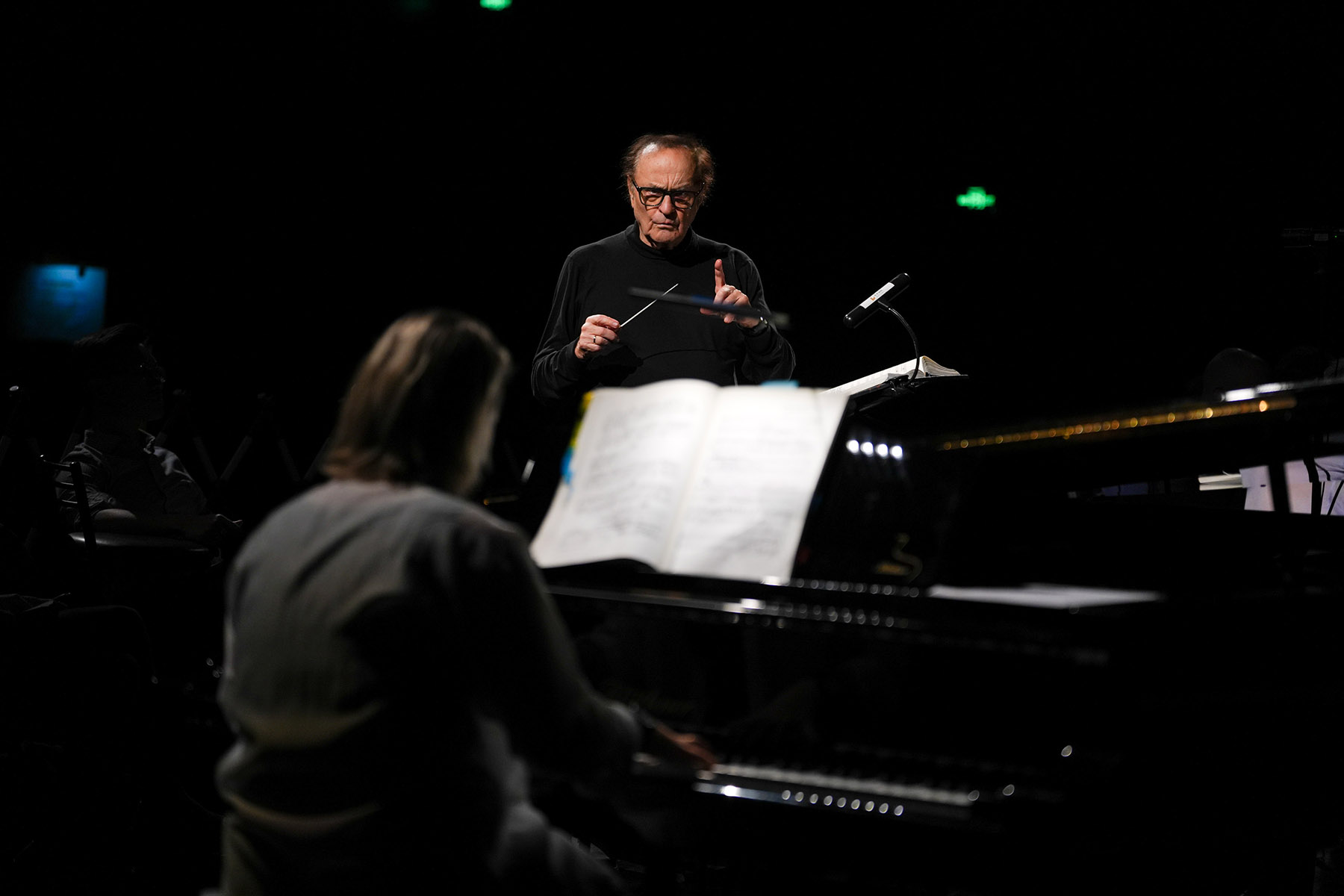
At 90, Charles Dutoit has conducted some of the world's greatest orchestras and spent more than six decades on the podium. Yet he says music still has something to teach him every day.
"Music has been a never-ending source of joy in my life," the Swiss conductor says. "No matter how much experience one may have, music continues to teach you something every day. There is always more to discover, understand and share."
That sense of discovery will take Dutoit to Beijing on Oct 9, when he opens the 29th Beijing Music Festival at the National Centre for the Performing Arts with the Chinese Musicians Association Symphony Orchestra Alliance — BMF Festival Orchestra.
The opening concert pairs two contrasting musical worlds: Mozart's Piano Concerto No 22 in E-flat Major, K 482, with pianist Elisabeth Leonskaja, followed by Italian composer Ottorino Respighi's vividly orchestrated Roman Trilogy.
For Dutoit, the contrast is part of the attraction.
READ MORE: Mozart meets Chinese rock
"Diversity and different styles work very well in programming, and I have always enjoyed mixing opposites," he says. "Mozart is probably my favorite composer. And Respighi is not only a very interesting work for the orchestra but also, I am hoping, a crowd-pleaser."
The program also brings together two musicians whose careers span generations.
Dutoit has held leading positions with ensembles such as the Orchestre National de France, the Montreal Symphony Orchestra, the Verbier Festival Orchestra and the Royal Philharmonic Orchestra, and has worked with more than 150 major orchestras around the world.
His relationship with Chinese audiences has also developed over decades. Last year, when Dutoit was named Artist of the Year at the 28th Beijing Music Festival, the festival's founder Yu Long paid tribute to the conductor's enduring connection with Chinese music lovers.
"Over the past two or three decades, you have given our music-loving audiences countless unforgettable musical experiences," Yu said. "You are truly a giant in the world of music, and an admirable musician. We sincerely thank you."
The sentiment echoes Dutoit's own observations about the changes he has witnessed in China. After conducting in the country for about 30 years, he says audiences have become increasingly enthusiastic, engaged and knowledgeable, having encountered leading orchestras from around the world while also witnessing the rapid development of Chinese ensembles.
Leonskaja, meanwhile, is regarded as a leading interpreter of the Austro-German piano repertoire. Rooted in the Russian piano tradition while deeply connected to the Western European classical tradition, she is known for her powerful yet finely controlled playing and understated stage presence.
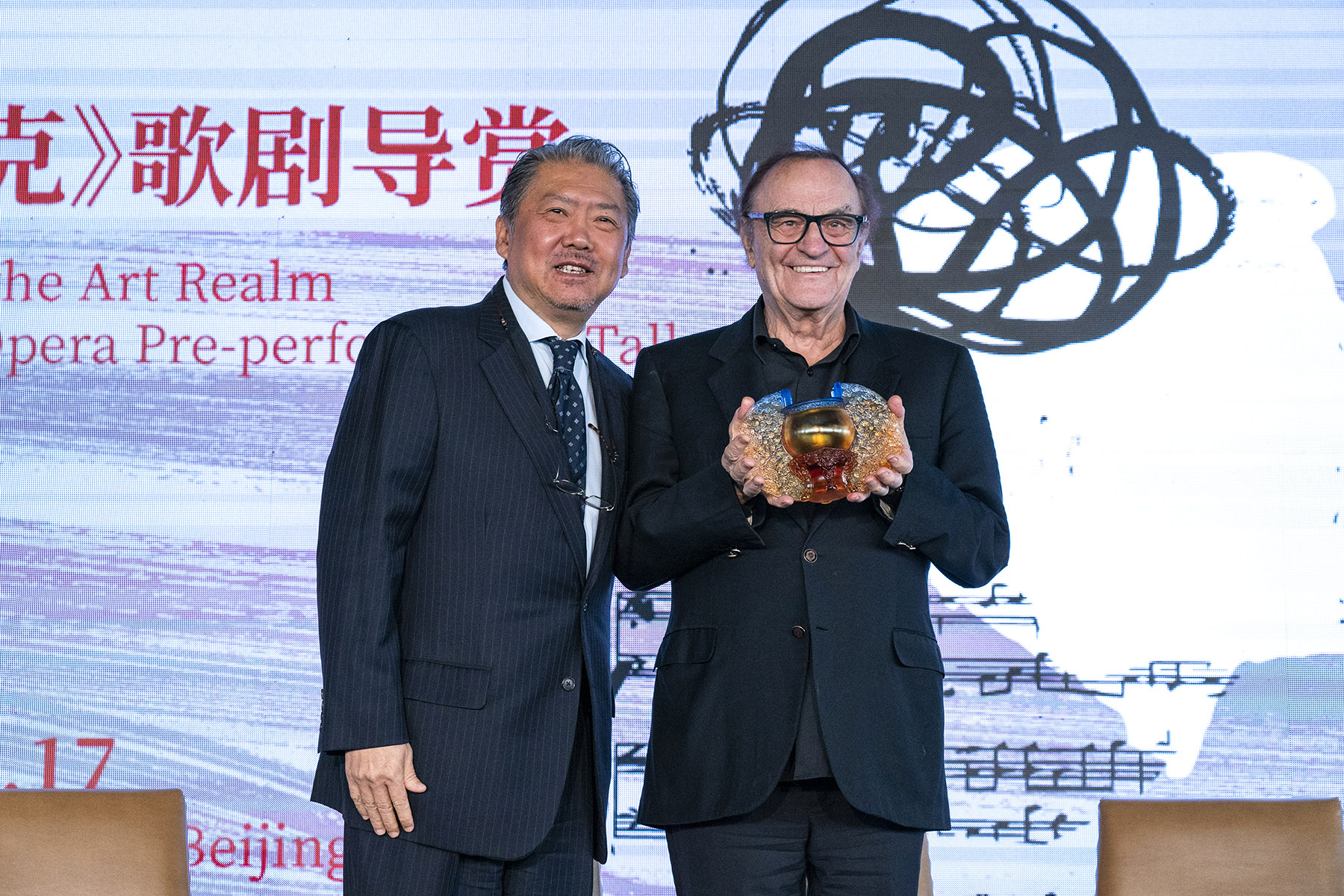
Their collaboration in Mozart's Piano Concerto No 22, Dutoit says, depends on something that has little to do with technical mastery alone: listening.
"The chemistry between two musicians is much like any relationship in life," he says. "It sometimes works wonderfully and sometimes less so. But, as in every aspect of life, one has to learn to be respectful of each other's views and listen."
With Leonskaja, he says, that chemistry came naturally.
"I feel we share a strong musical connection where a mutual understanding and instinctive communication make performing music together a particularly rewarding experience."
For Dutoit, approaching Mozart or Respighi after decades of conducting is not simply a matter of relying on experience. His interpretation of music has matured, he says, but his fundamental principle has remained unchanged: respect the composer.
"It is essential to explore the social and historical context of a composer's life to understand the depth of his work," he says.
Dutoit describes Respighi as "a master orchestrator", with the trilogy offering a showcase for the orchestra's range of colors and textures. Dutoit sees the music's ability to create an experience in the present moment as the enduring appeal of the concert hall.
He compares listening to live music with visiting a museum. A painting remains physically unchanged, even as a viewer's understanding of it may evolve. Music, however, is re-created every time it is performed.
"In a concert hall, when it depends on the musicians, the audience, the space and the acoustics, the emotions in that particular moment … you are not simply observing but actually experiencing something that is being created there and then," he says.
ALSO READ: Symphony of time and tradition
As he celebrates his 90th birthday in Beijing, Dutoit remains less interested in looking back than in continuing to listen.
For young musicians, he says, music is about more than mastering an instrument or interpreting a score. It is about communicating with other people.
"Every time you perform, you have an opportunity to share something deeply human with an audience, and no two performances will ever be the same."
And for those encountering classical music for the first time, his advice is strikingly simple.
"Simply listen," he says. "Allow the music to speak to you, and give yourself time to discover what moves you."
Contact the writer at chennan@chinadaily.com.cn
