

Protected Gansu wetlands a 'natural breeding ground' for black storks, other species
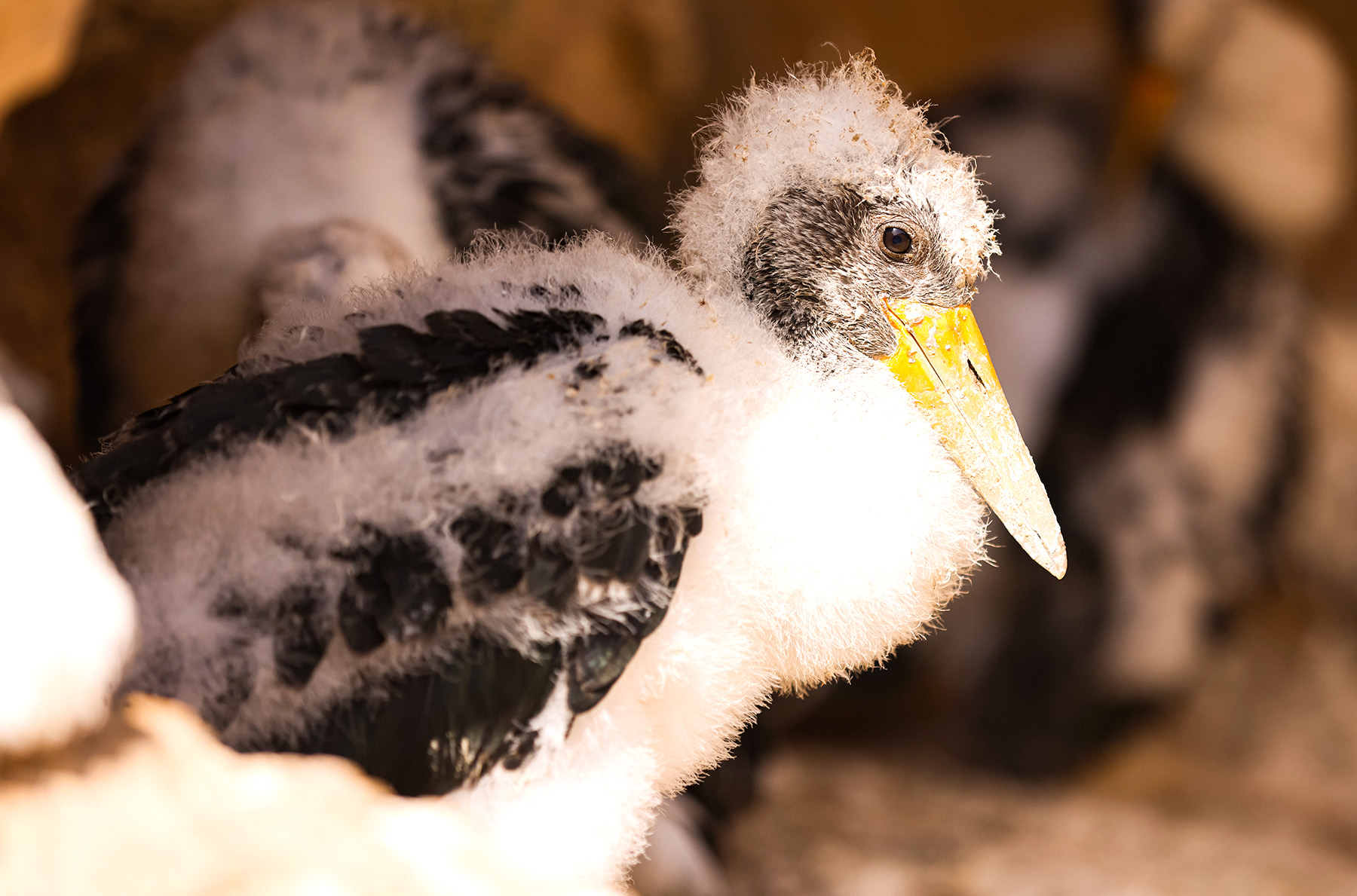
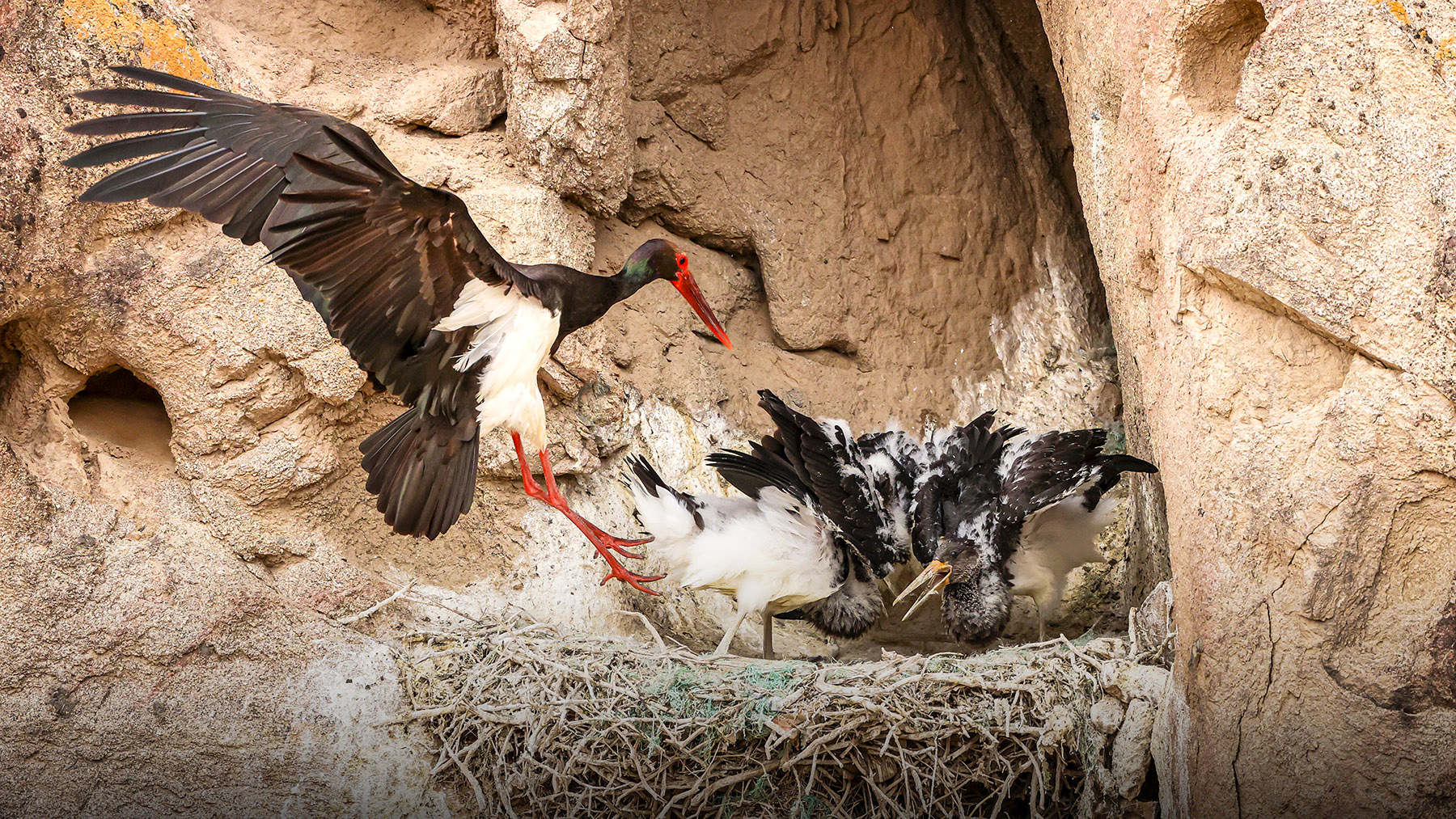
For nearly three months, a young black stork stayed in its nest on a cliff in Gansu province, waiting to learn how to fly. Then the time came for the nestling to leave its temporary home in Gaotai county, Zhangye.
Other chicks in the same nest had already flown off. But the third, whose leg had been broken, remained behind.
Documentary filmmaker Zhao Hai remembered the scene while watching footage captured by an infrared camera near the nest.
The young bird hesitated to leave the nest, while its parents stayed nearby. Eventually, the chick took off. Its parents flew alongside it for a while, as if encouraging it on its first flight.
For Zhao, who has observed birds for about 30 years and filmed them for more than two decades, it was one of many moments that have made black storks more than a subject for his camera. "When we watch birds, sometimes their behavior is basically the same as that of humans," he said.
READ MORE: Bird on a wire
He recalled another touching scene. When newly hatched black stork chicks were still tiny and April mornings and evenings could be cold, an adult bird brought pieces of plastic to the nest and covered the chicks with them.
"It was almost like covering the chicks with a blanket to keep them warm," Zhao said.
Such moments are difficult to capture. Black storks are highly wary of people, and Zhao has tried to minimize disturbing them while filming.
So far, he has filmed two nests through most of the breeding process. But what he has seen at the nests is part of a much larger story unfolding along the Zhangye Heihe Wetland.
'Bird airport'
The wetlands are sometimes described by locals as a "bird airport".
Wetland ranger Jiang Yonghong sees this seasonal traffic firsthand as he patrols the Zhengyi Gorge area in Gaotai, a natural breeding ground for black storks.
Zhangye sits on the edge of the vast Badain Jaran Desert, the third-largest desert in China, covering about 49,200 square kilometers. The desert stretches across much of the landscape to the north and west, while the Qilian Mountains rise to its south. The Heihe River cuts through this dry landscape, creating wetlands where migratory birds can stop, feed and rest.
The Zhangye Heihe Wetland National Nature Reserve includes natural habitats such as the Heihe River and its tributaries and marshes, as well as man-made reservoirs and artificial lakes, said Shan Guofeng, head of the reserve's animal and plant protection department. The diverse habitats support 246 bird species, including 107 waterbird species, along with nationally protected wildlife.
Located along key sections of the Central Asian-India flyway and the East Asian-Australasian flyway, Gansu serves as an important stopover for hundreds of thousands of migratory birds.
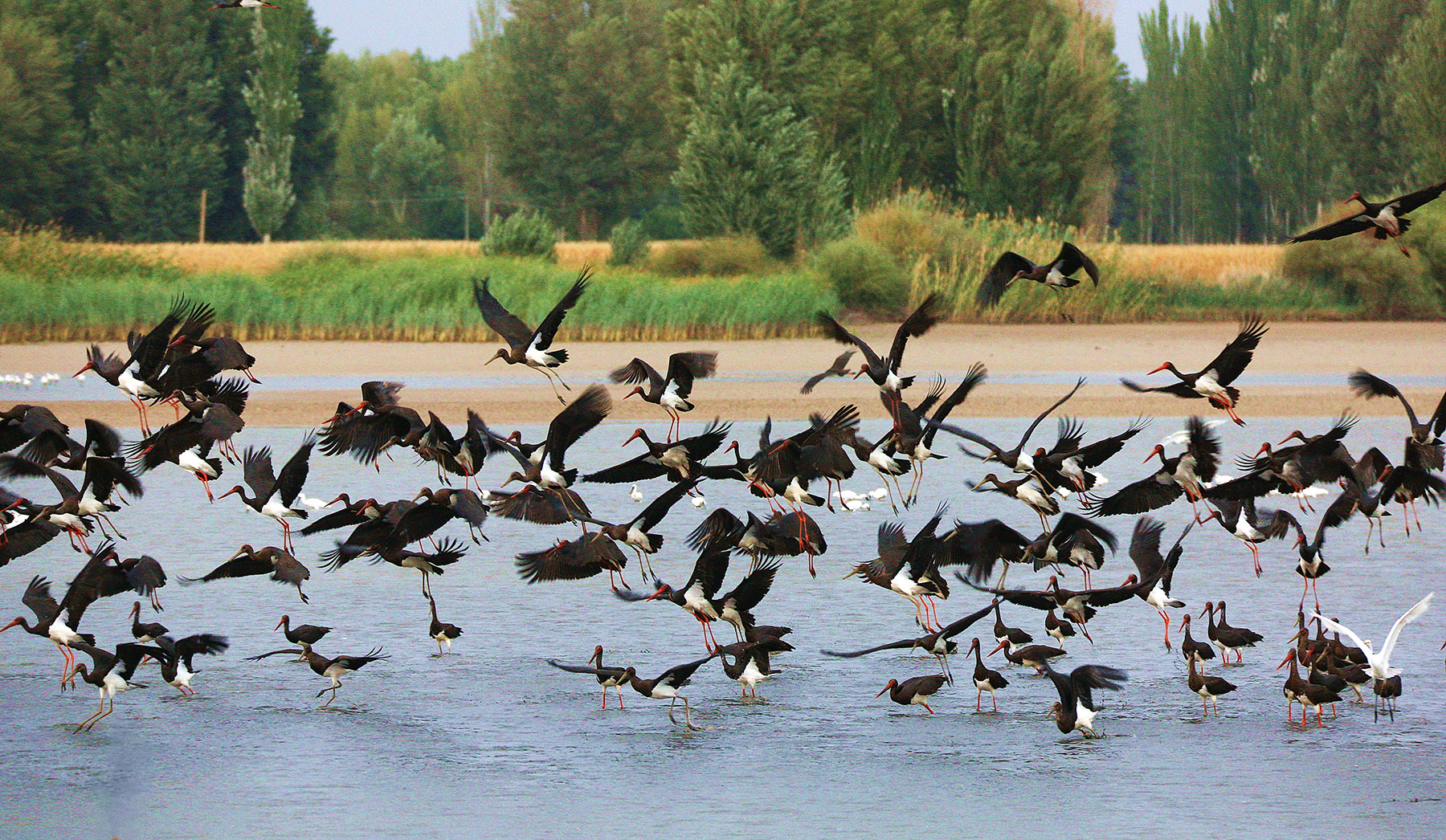
Large numbers of migratory birds arrive from early September, with the number peaking around mid-October, Jiang said. Black storks are one of the main species, while other waterbirds use reservoirs, shallow waters and mudflats.
Jiang compares the wetlands to a highway service area.
After flying hundreds or even thousands of kilometers, birds need somewhere to stop, rest and feed, he said. "They may have found this oasis and chosen to stop here," said Shan.
The wetlands are not simply a place for birds to pass through. For black storks, they also provide a breeding ground.
Known as the "giant panda of birds", the black stork is demanding when it comes to its habitat requirements. It needs clean water, sufficient food and minimal human disturbance to breed and survive. For this reason, the species is often seen as a natural indicator of an ecosystem's health.
Black storks often choose the cliffs around Zhengyi Gorge for breeding because they are high and relatively isolated, Jiang said. Their proximity to the wetlands also allows them to forage for fish and shrimp and carry food back to their nests.
The breeding season typically begins in late March or early April. Chicks generally hatch around May and begin leaving the nest in late July or early August.
During the breeding period, conservation workers place warning signs and fences around some nests and, when necessary, place small fish and shrimp in the river to supplement natural food sources.
Mountain 'life source'
The water that makes this "airport" possible comes from much farther away.
Far upstream, snow, glaciers, permafrost and precipitation feed streams in the Qilian Mountains. Their runoff gathers into rivers and eventually flows into the Heihe River, sustaining ecosystems across the arid Hexi Corridor.
In an otherwise dry landscape, the Heihe River and its tributaries thread through a 41,200-hectare reserve in Zhangye, creating a mosaic of rivers, lakes, ponds, forests, grasslands and wetlands.
"The Qilian Mountains are the source of life for the Hexi Corridor and even Ejina," said Xu Erwen, director of the Gansu Qilian Mountain Water Conservation Forest Research Institute.
But the importance of the mountains goes beyond simply supplying water. "We have found that water has always been the key to understanding the Qilian Mountains," said Xu, who has studied the ecosystem for more than four decades.
The forests and grasslands of the mountains act as a giant "sponge", he said, and upstream water sustains the shallow waters, aquatic life and feeding grounds on which migratory birds depend.
The mountains' role also extends beyond water storage.
"The forests, grasslands and shrubs in the Qilian Mountains are not only the main components of water conservation, but also a 'pump' driving regional water-vapor circulation," Xu said.
But this system is not static. Xu's institute has maintained an ecological observation station in the Dayekou Basin of the Qilian Mountains for more than 30 years. Its observations show that temperatures there have risen by about 0.17 C every 10 years, Xu said.
Warming can accelerate glacier melting and permafrost thawing, but Xu cautioned against simply viewing this as beneficial to wetlands.
An ecosystem includes interconnected elements such as the cryosphere, water, forests and grasslands, he said. Changes in one section cannot simply be judged as good or bad for another.
What is clear, he said, is the importance of maintaining a stable water supply.
"There is no oasis without water. Without water, there is no life," Xu said, adding that ecological restoration and water conservation should be viewed over the long term rather than judged by one or two years of change.
Habitat restoration
For the birds that rely on the wetlands, a stable water supply is not an abstract ecological goal. It determines whether there is enough habitat and food when required.
Jiang said dry conditions this year have reduced water availability in some areas. Black storks feed on small fish and shrimp, as well as dragonfly larvae and tadpoles. When water becomes scarce, their feeding grounds can shrink and their food sources can become less abundant.
Shan said water levels had fallen in some parts of the wetlands this year, reducing areas suitable for waterbirds. The reserve's full monitoring results for the year are not yet available, but field observations suggest that bird numbers are lower than in previous years.
Maintaining a suitable habitat therefore requires sustained ecological restoration and management.
Since the 14th Five-Year Plan (2021-25) period, central and provincial special funds totaling about 130 million yuan ($19 million) have supported ecological protection and restoration in the reserve. More than 160 hectares of damaged wetland has been restored, along with 274.73 hectares of vegetation.
More than 27.4 kilometers of waterways have been dredged, and ecological water replenishment has covered 953.33 hectares, according to the reserve.
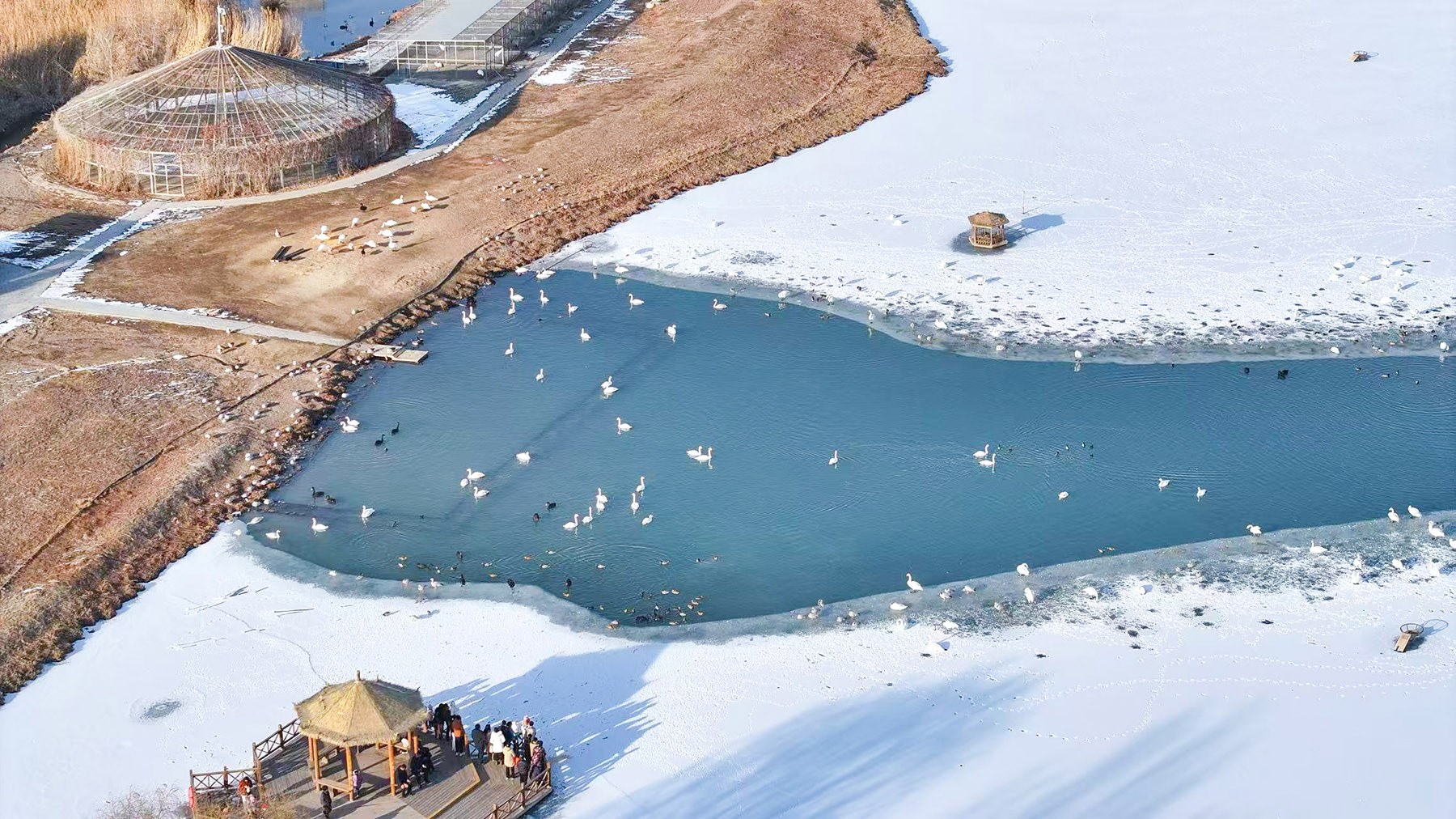
For black storks in particular, habitat restoration has focused on creating shallow-water feeding grounds. As wading birds, they do not forage well in deep water, so restoration work has included areas generally no deeper than 50 centimeters where the birds can catch fish, Shan said.
Targeted habitat restoration for black storks began in 2025 and continued this year, alongside patrols, measures to reduce human disturbance, and the provision of small fish and shrimp during the breeding season when food is limited.
Satellite tracking
Restoration, however, is only part of the effort. Conservation workers also need to know how birds are using the wetlands and where they go after leaving.
The reserve has monitored birds since 2014, Shan said.
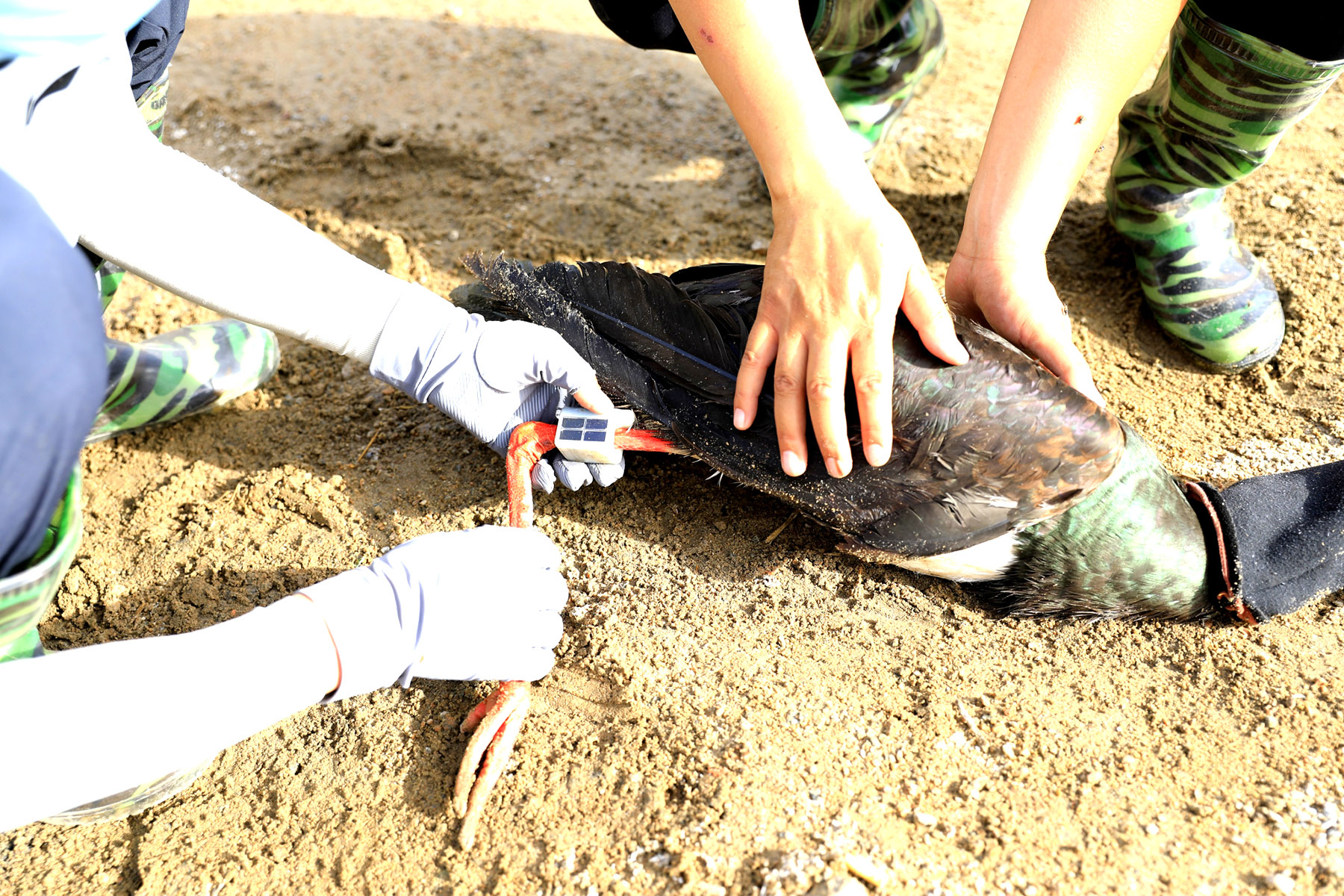
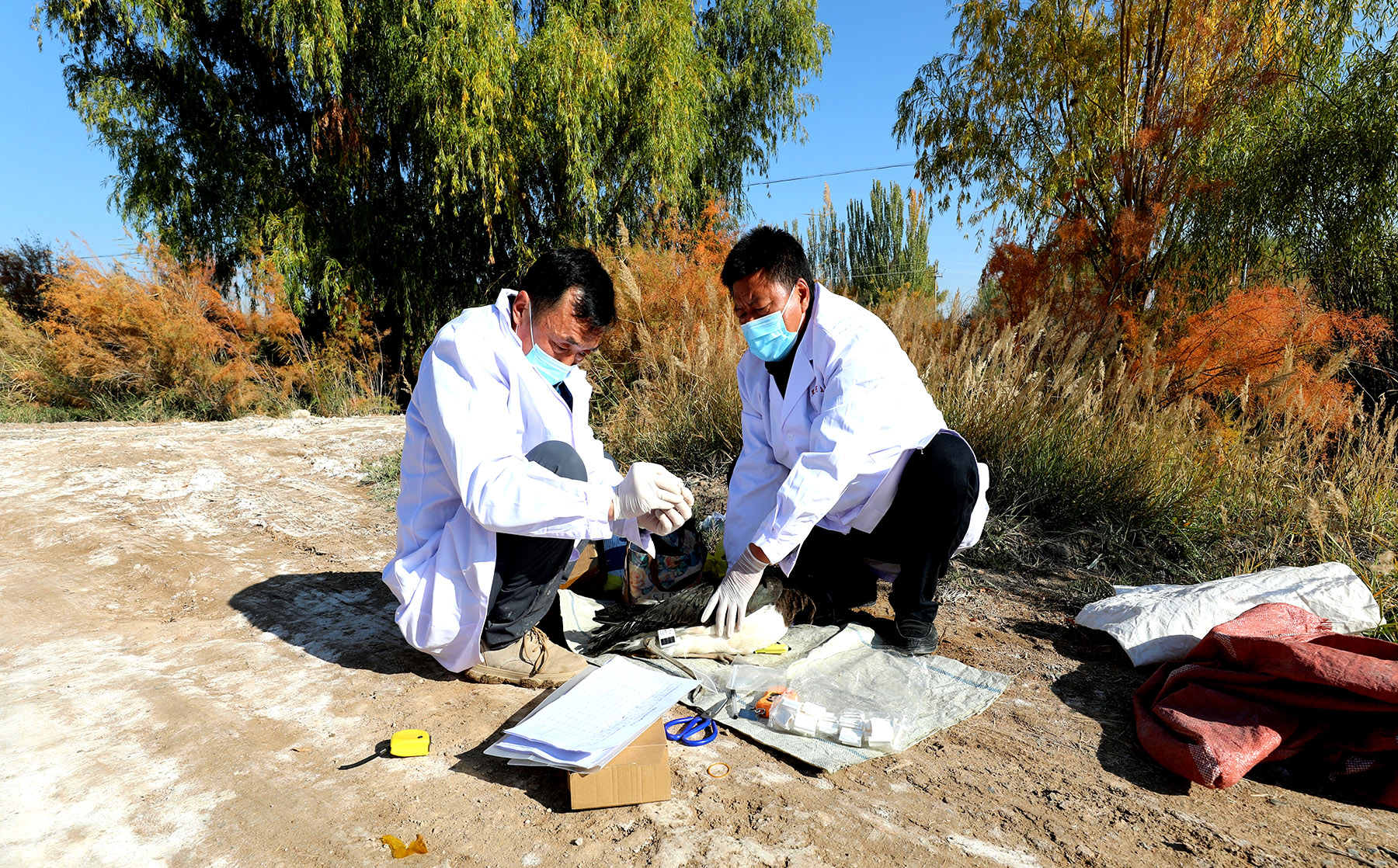
Since 2022, conservation workers have used breeding observations, behavioral studies and satellite tracking to monitor black storks and other rare birds.
So far, 39 black storks have been fitted with satellite trackers, mainly to study the migratory routes of birds that breed in Zhangye, when they leave, where they stop and where they spend the winter.
The tracking revealed a regular migratory route for the Zhangye population.
The birds generally leave in mid-to-late October, cross the Qilian Mountains and stop at wetlands in places including Qinghai province and Zoige Grassland before continuing through Yunnan province to Myanmar, where they spend the winter.
They return along roughly the same route the following year, Shan said.
The value of the monitoring was demonstrated in March 2026, when tracking data showed that a black stork fitted with a satellite device in September 2025 had returned to Zhengyi Gorge. Field checks later confirmed that it had successfully bred there.
"It was a significant finding for our research into the breeding habits and migration patterns of black storks," Shan said, adding that such findings help researchers develop more targeted protection measures.
During the 2026 breeding season, workers conducted three rounds of full-coverage surveys. They recorded 23 black stork chicks hatching, with 19 becoming fledglings.
The longer-term monitoring also offers a more cautious way of reading changes in bird numbers.
A synchronized survey in 2024 recorded 675 black storks in the reserve, while a subsequent survey in 2025 recorded 455. Shan said year-to-year differences do not necessarily indicate a change in the quality of the wetland environment.
Bird monitoring is a long-term process and comparisons are generally more meaningful over periods of about five years, he said. Annual numbers can be affected by random or temporary factors, so a decline in one year does not necessarily mean that the wetland has deteriorated.
"Over a longer period, such as 10 years, bird numbers have shown an overall upward trend," Shan said. "That suggests the environment is gradually improving."
Daily vigilance
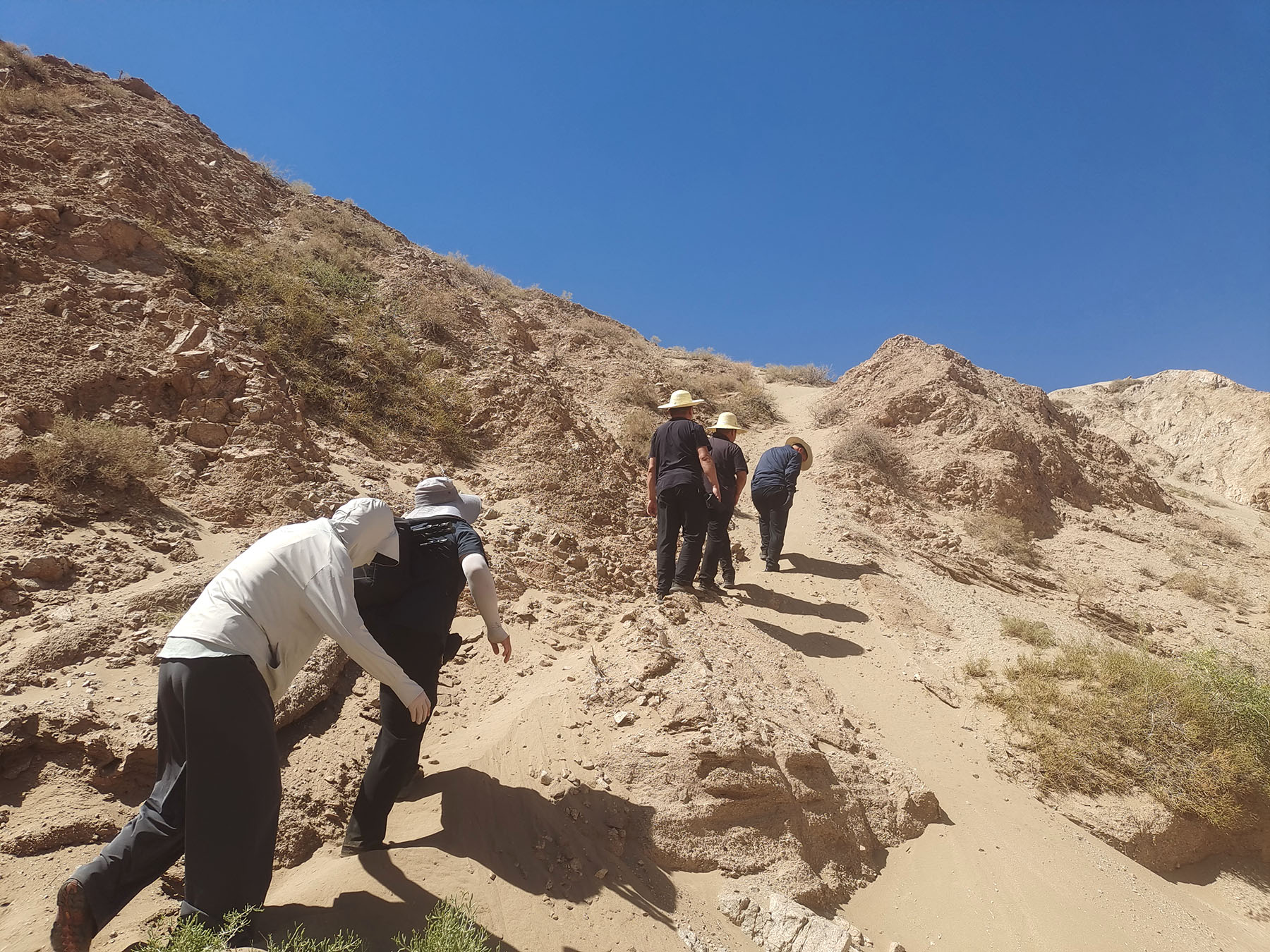
For Jiang, protecting that progress is part of his daily work. His patrols take him along the Heihe River and through the Zhengyi Gorge area every other day. He checks for fires, tree cutting, sand and gravel extraction and damage to the riverbank, while also observing wildlife.
"The wetland is our neighbor," he said, describing how settlements and wetlands exist alongside each other.
The reserve is part of a broader wetland protection network in Zhangye, which has 230,300 hectares of wetlands. The city has established a four-level protection system involving a national nature reserve, national wetland parks, wetland conservation areas and villages jointly involved in wetland protection and management.
Technology is also expanding the reach of that protection. The city has added remote monitoring points, drone patrol systems and monitoring equipment, integrating them with satellite remote sensing and the city's ecological monitoring network.
ALSO READ: Restored wetlands welcome new flocks of migratory birds
On the ground, people continue to deal with the everyday challenges of sharing the landscape with birds.
Shen Yang, a transmission-line patrol worker with State Grid Zhangye Power Supply Company, has spent years inspecting power lines around the wetlands. He has noticed more bird species and greater numbers of some birds over the past decade. In his experience, birds that were once rarely seen in Zhangye, he said, have become common.
As bird numbers increased, a transmission line running through the wetland was relocated to its outskirts before 2015 as part of the wetland's overall planning, Shen said.
For Shen, protecting birds has become part of his daily patrols. When he finds an injured or flightless bird, he sends it to a wildlife protection station for care.
If a nest is empty, he still goes back to check it. "Even though the birds have flown away, I still come to take a look. They will come back next year," he said.
Contact the writer at huyumeng@chinadaily.com.cn
