

Bracelets are a hot item, especially those carrying traditional or spiritual connotations
At the Great Bao'en Temple Ruins Museum in Nanjing, Jiangsu province, a young boy sits with his parents in a DIY corner making a bracelet. He tells Doubao, an AI-powered app, his birth date, star sign and other details. The app suggests a combination of beads. Following the recommendation, he chooses his beads and then strings together a one-of-a-kind bracelet.
Scenes like this are becoming common. During the weeklong National Day holiday in October, the DIY bracelet corner sold hundreds of bracelets a day, made from materials including crystal, jade and enamel. Prices ranged from 100 yuan ($15) to several hundred, depending on the materials, said Wang Yue, a designer at the museum.
Since 2024, bracelets have become a hot item in China, especially among young people. In recent years, designs that blend traditional Chinese culture with Western elements have been especially popular.
Different materials carry different meanings, Wang said. Yellow crystal symbolizes wealth, jade represents peace and health, while agate stands for good fortune. "They believe these bracelets can bring them positive energy," Wang said.
The museum's bracelet designs draw on distinctive cultural images: gourds, pixiu (a mythical beast believed to attract wealth), archways and other motifs linked to historical stories about the site's relics.
Designers incorporate these images into individual beads, and consumers are happy to pay for them.
Foreign visitors are also drawn to beads featuring Chinese cultural symbols, such as Chinese zodiac animals, Wang said. With translation and AI software, they look up their zodiac signs and make their own bracelets, enjoying the process.
Meanwhile, Wang has observed that many Chinese visitors seek wealth and good luck, while foreign tourists tend to favor love and peace.
The boom has also been fueled by celebrities, influencers and public figures wearing bracelets at public events or promoting them during livestreams. Colorful bracelets, especially crystal ones, quickly went viral.
"These colorful, aesthetically pleasing beads with all kinds of meanings are easy to get hooked on," said 26-year-old Li Siyue. Over the past year, she has collected more than 20 bracelets, and her mother and younger sister have followed her into the hobby.
"When I'm in a bad mood, playing with them makes me happy. And each one was chosen by me, so it has a unique meaning," Li said. She has gotten into the habit of asking AI every morning which bracelet is suitable for the day, letting it offer advice based on feng shui and outfit matching. Then she chooses her favorite to wear.
Chinese tradition
"Most young people around me are willing to pay for the look of bracelets, and I'm also willing to believe in the positive psychological suggestion behind them," Li said, adding that ascribing talismanic properties to jewelry is a Chinese tradition dating back thousands of years.
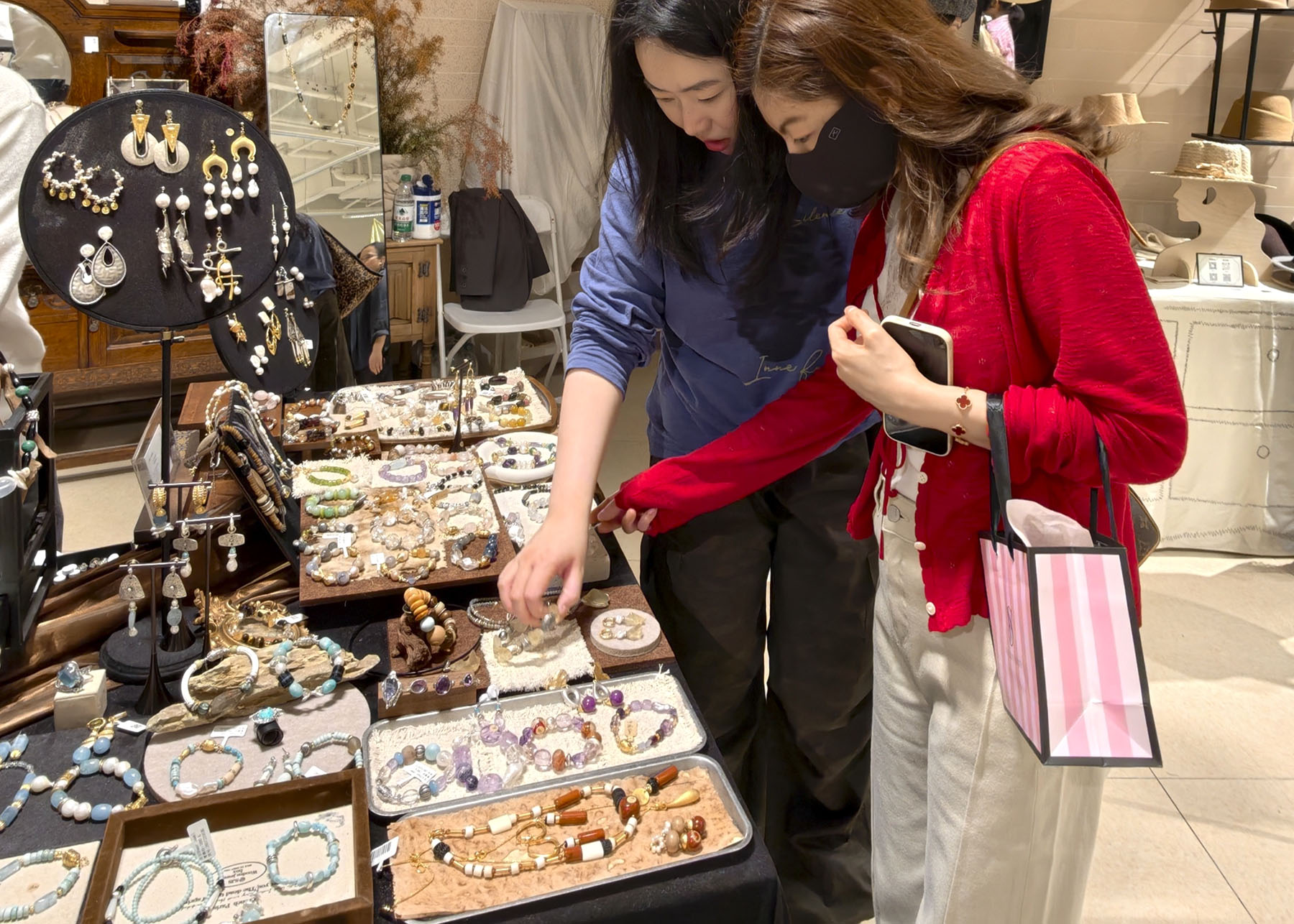
In early July, Shanghai hosted a bracelet market. Nearly 100 vendors gathered, and the market featured workshops, a bracelet museum, a photo area and a bead playground. Visitors could make bracelets on-site. The event was a hit with young people — on Xiaohongshu, many said they had to line up for more than an hour just to get in.
Because the number of stalls was limited, Huang Huang, a jewelry designer, missed out on registration this year. During the National Day holiday, she joined another fashion market in Shanghai, where her stall was constantly surrounded by young people.
She said her designs used to focus on pearls, though in the past two years she has designed many bracelets incorporating materials favored by Chinese consumers, such as bodhi seeds and agarwood. As traditional culture gains popularity, she now consciously pairs crystal bracelets with materials such as agate, jade and precious woods.
Huang said most of her pieces are sold online. For her, taking part in markets is about meeting consumers in person, sharing the design concepts behind the bracelets and exchanging stories about their own bracelets — such as the important life moments that the bracelets have marked, or the serendipitous encounters they have brought.
"A bracelet is, in essence, an emotional release and a pursuit and affirmation of one's personal taste and cultural identity," she said.
Contact the writers at dengzhangyu@chinadaily.com.cn
