

The People’s Republic of China’s meteoric economic rise from an impoverished economy to a middle-income country and industrial powerhouse has been extensively documented and studied. Throughout its different phases of development, China has repeatedly defied skeptics by restructuring its economy, adapting to changing circumstances and pursuing new sources of growth.
Today, China’s economy, measured at purchasing power parity, is estimated at between $37 trillion and $44.3 trillion, placing it 20 to 35 percent above that of the United States. Yet China faces an increasingly complex and volatile international environment, marked by the erosion of international law, deadly regional conflicts, intense security and technological competition, and the prospect of further trade and economic confrontation arising from structural “imbalances”.
 China has sought to address structural problems in its domestic economy by promoting new quality productive forces as a new engine of growth. The concept was raised by President Xi Jinping during his inspection tour of Heilongjiang province in September 2023. “New quality productive forces” refers broadly to technological innovation and breakthroughs that generate new products, industries and forms of production. Artificial intelligence, which is rapidly transforming how people live and work, is a prominent example.
Three years later, China continues to grapple with structural challenges involving capital formation, consumption and the downturn in the property sector. At the same time, heavy investment in emerging and future industries, combined with advances in frontier technologies, has enabled Chinese companies to produce open-weight AI models that rival leading US frontier models in areas such as complex coding and long-horizon agentic tasks. China has also emerged as a global leader in technologies with the potential to transform industrial production, notably electric vehicles, batteries, robotics and green technologies.
As a major country with global responsibilities, China is also seeking to contribute greater stability and security to the international system through its Global Governance Initiative. The initiative advocates sovereign equality, greater support for the authority of the United Nations, multilateralism, respect for international law, mutual respect and learning, and greater representation for the Global South. Launched by President Xi at a meeting of the Shanghai Cooperation Organization in Tianjin in September 2025, the initiative represents a central element of China’s efforts to promote an international order in which influence, dialogue and cooperation play a greater role.
A recent illustration of China’s emphasis on high-level diplomacy as a means of managing tensions was Xi’s state visit to the US from Sept 23 to 25. Although some US commentators viewed the visit as heavy on ceremony but lighter on concrete deliverables, diplomatic form itself can carry significance. The carefully choreographed images of President Donald Trump welcoming Xi at Joint Base Andrews, the arrival ceremony on the White House South Lawn, their closed-door discussions, the state dinner, tea in the White House Red Room and the visit to the National Archives — a cultural detour that echoed Trump’s visit to the Temple of Heaven in Beijing in May — all conveyed messages of mutual respect and an effort by the two leaders to manage their differences.
Judging from statements issued by the two governments following the visit, the two sides reported progress on a range of issues, including reciprocal tariff reductions in non-sensitive sectors, an extension of the trade truce to January 2027, the establishment of a Board of Trade and a Board of Investment, consultations on geopolitical and security issues relating to Iran, a dialogue on “Super-Intelligence”, greater law-enforcement cooperation, additional leaders’ meetings before the end of the year, and expanded cultural and student exchanges. The arrival of two giant pandas in Atlanta, Georgia soon after the visit provided another visible symbol of continuing cooperation.
The visit reinforced the framework of “constructive strategic stability” through which Beijing seeks to stabilize the world’s most important bilateral relationship. Deep differences remain, including over the Taiwan question, while intense security and technological competition continues. Nevertheless, the maintenance of dialogue offers the possibility that fundamental differences and strategic competition can be managed through mutual respect, leader-level engagement and closer communication between officials at the working level.
The easing of Sino-US tensions following the tariff escalations and subsequent détente of the past year also offers some hope that the emerging trade and economic frictions between China and the European Union can likewise be managed in ways that serve the interests of both sides.
Over the past 77 years, China has undergone a remarkable economic and social transformation. Living standards have improved substantially, while developmental opportunities have expanded on a scale that has reshaped the country and its place in the world. Beijing has also moved closer to its goal of national reunification following the return of Hong Kong and Macao.
As a major global player, China has presented an alternative to an older conception of great-power politics centered primarily on military superiority. William R. T. Fox’s 1944 classic, The Super-Powers: The United States, Britain, and the Soviet Union — Their Responsibility for Peace, reflected a world in which a small number of military powers were regarded as having particular responsibility for international order.
China today seeks to advance a different approach to global governance, counterbalancing unilateralism, protectionism and the use of military power with diplomacy, high-level dialogue, multilateral institutions and broader international partnerships. This approach will face demanding tests in a world that remains deeply unsettled. Yet China’s transformation over the past 77 years provides an important context for understanding both the country’s ambitions and the changing international environment in which they are unfolding.
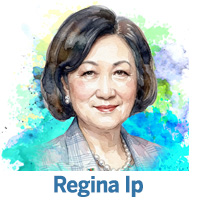
The author is convenor of the Executive Council of the Hong Kong Special Administrative Region.
The views do not necessarily reflect those of China Daily.
