

Zhang Mengting combines biotechnology training with police work, helping investigators identify suspects, crack difficult cases and bring families back together.
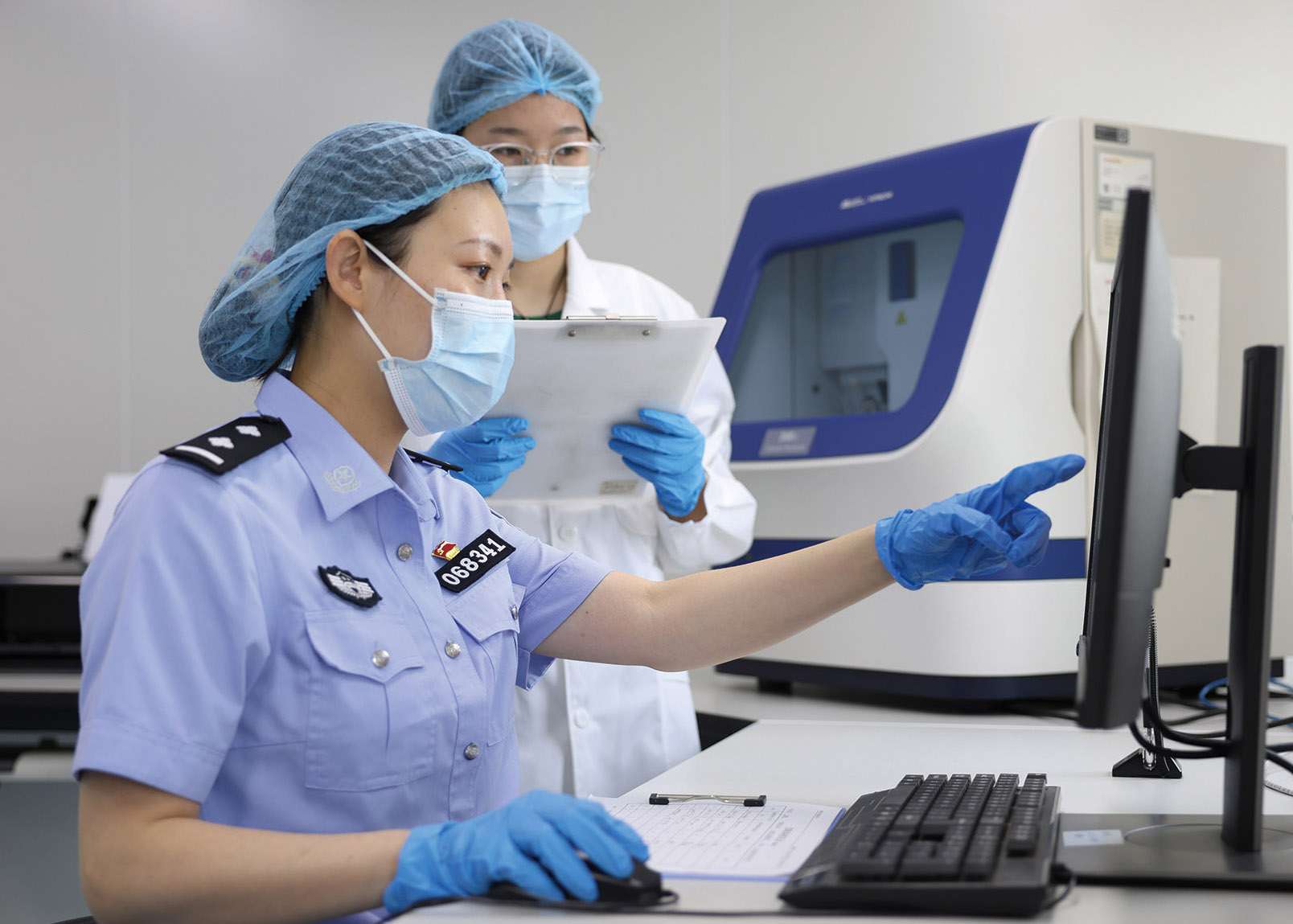
On a sweltering afternoon in August 2020, mosquitoes and other insects swarmed around a dilapidated shack in Gucheng county, Xiangyang, Hubei province.
Police believed a suspect who was on the run after committing a serious crime might have spent the night there.
After receiving the call, Zhang Mengting, a forensic DNA analyst with the Xiangyang Public Security Bureau, went to examine the scene.
Bending over, she searched the entire shack inch by inch. Once. Twice. Ten times.
Finally, on a worn sleeping mat, Zhang spotted a dark-red bloodstain measuring only about 2 millimeters across. It was not human blood, but blood left behind by a mosquito that had been swatted.
She carefully collected the almost imperceptible trace and took it back to the laboratory for analysis.
"Evidence doesn't reveal itself," Zhang said. "Only by staying focused and examining a scene meticulously can we find the crucial clue among countless traces."
DNA extracted from the blood eventually led police to the suspect, who had fled elsewhere, and the case was solved.
Zhang, however, stresses that solving cases is a team effort.
"Tracing the suspect's escape route and figuring out how he got there all depended on colleagues from other police units," she said. "I simply did my part."
Her ability to spot such an unlikely clue grew out of her scientific background and an unconventional path into policing.
Zhang, 32, is a native of Xiangyang. After graduating from Qingdao University in Shandong province in 2016 with a degree in biotechnology, she worked in new media and advertising.
In 2019, when the Xiangyang Public Security Bureau began recruiting DNA analysts from outside the police academy system, Zhang applied.
The decision brought her back to an ambition she had expressed years earlier. In middle school, when her English teacher asked students what they wanted to be when they grew up, Zhang answered, "A police officer."
"I found it fascinating that a tiny detail could help reconstruct the truth step by step," she said.
A changing profession
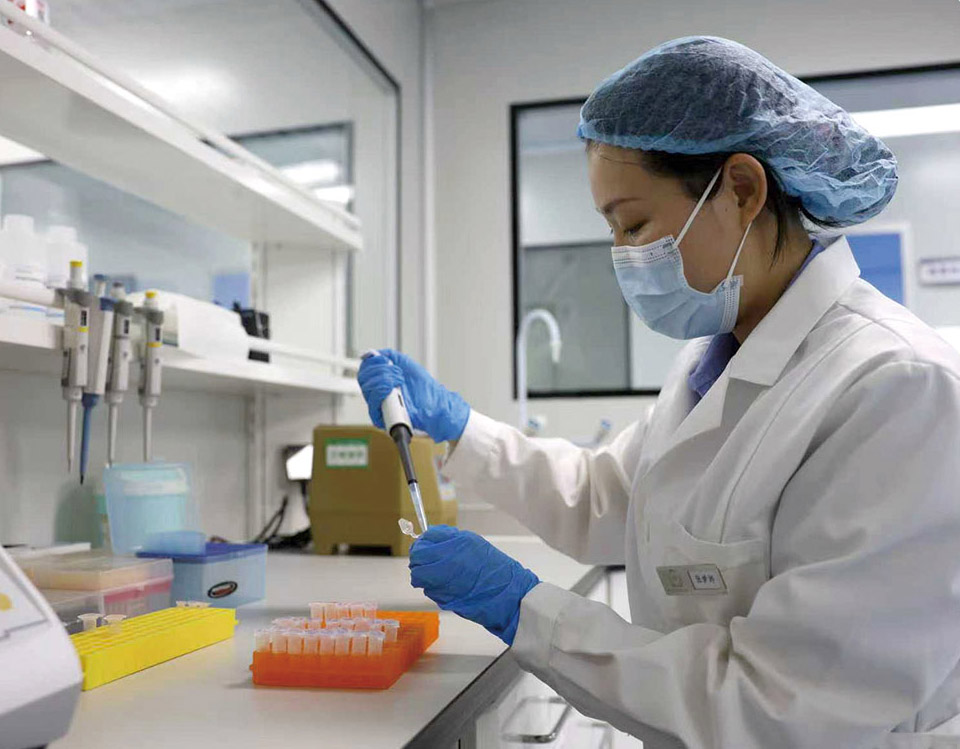
Her scientific training soon found a practical application in police work. The criminal technology unit where Zhang works covers a range of disciplines, including DNA analysis, trace evidence examination, forensic medicine, chemical and physical analysis, document examination, imaging and electronic evidence.
"Police academies usually focus more on training officers in investigation and case handling," Zhang said. "But policing today also brings together specialists from different fields, combining traditional investigative experience with better teamwork and procedures, as well as technologies such as big data and artificial intelligence. This makes investigations more efficient and precise."
In recent years, more people without police academy backgrounds have entered the public security system through open recruitment, including some from fields outside the sciences. Zhang's career reflects that broader shift toward a more professionally diverse police force.
For Zhang, combining her biotechnology expertise with police work has yielded concrete results.
In 2024, a bottle was thrown from a high-rise residential building in Xiangyang and it struck a car below. With more than 1,000 people living in the building, investigators faced the challenge of narrowing down a suspect.
Rather than recommending that blood samples be collected from every resident, Zhang extracted DNA from the rim of the broken bottle. The DNA profile provided investigators with a crucial piece of evidence as they worked to identify the suspect.
Another case took her work in a very different direction. It involved a family separated for half a century.
In 1974, a 3-year-old boy referred to by the pseudonym Zhao was abducted and trafficked. His mother provided a blood sample for inclusion in a DNA database in 2017, but the search stalled because no DNA sample was available from Zhao's father, who had died.
Zhang and her colleagues proposed an unconventional solution: collecting blood samples from Zhao's biological brothers and using algorithms to infer their deceased father's genetic information.
The approach eventually helped establish the family connection, and mother and son were reunited after 50 years apart.
In more than six years as a police officer, Zhang has examined over 16,400 biological samples without error. Her DNA work has contributed to identifying suspects in more than 320 difficult cases, locating 35 missing or trafficked people and reuniting 42 families.
On April 29 this year, Zhang was awarded the Hubei May 1 Labor Medal.
But the moments she values most do not come with an honor or a title. As a technical officer who spends much of her time in the laboratory, Zhang rarely gets to meet victims or receive their thanks in person. After a case is closed, however, she often asks colleagues the same question: "How did the case turn out?"
Hearing that a difficult case has been solved or that her work has helped someone gives her a sense of fulfillment. "I realize that my expertise can really make a difference for victims," she said.
For Zhang, that sense of purpose goes back to what first drew her to detective work as a schoolgirl: the idea that something small, examined carefully, can reveal something much larger.
"If I could say one thing to the person I was back then, I would tell her: 'I hope you always hold on to your respect for science, your determination to pursue the truth and your commitment to serving the people,'" Zhang said.
Contact the writers at guiqian@i21st.cn
