

In Shangxiahang, ancient buildings are becoming places visitors can experience instead of simply observing history, Yang Feiyue reports in Fuzhou.
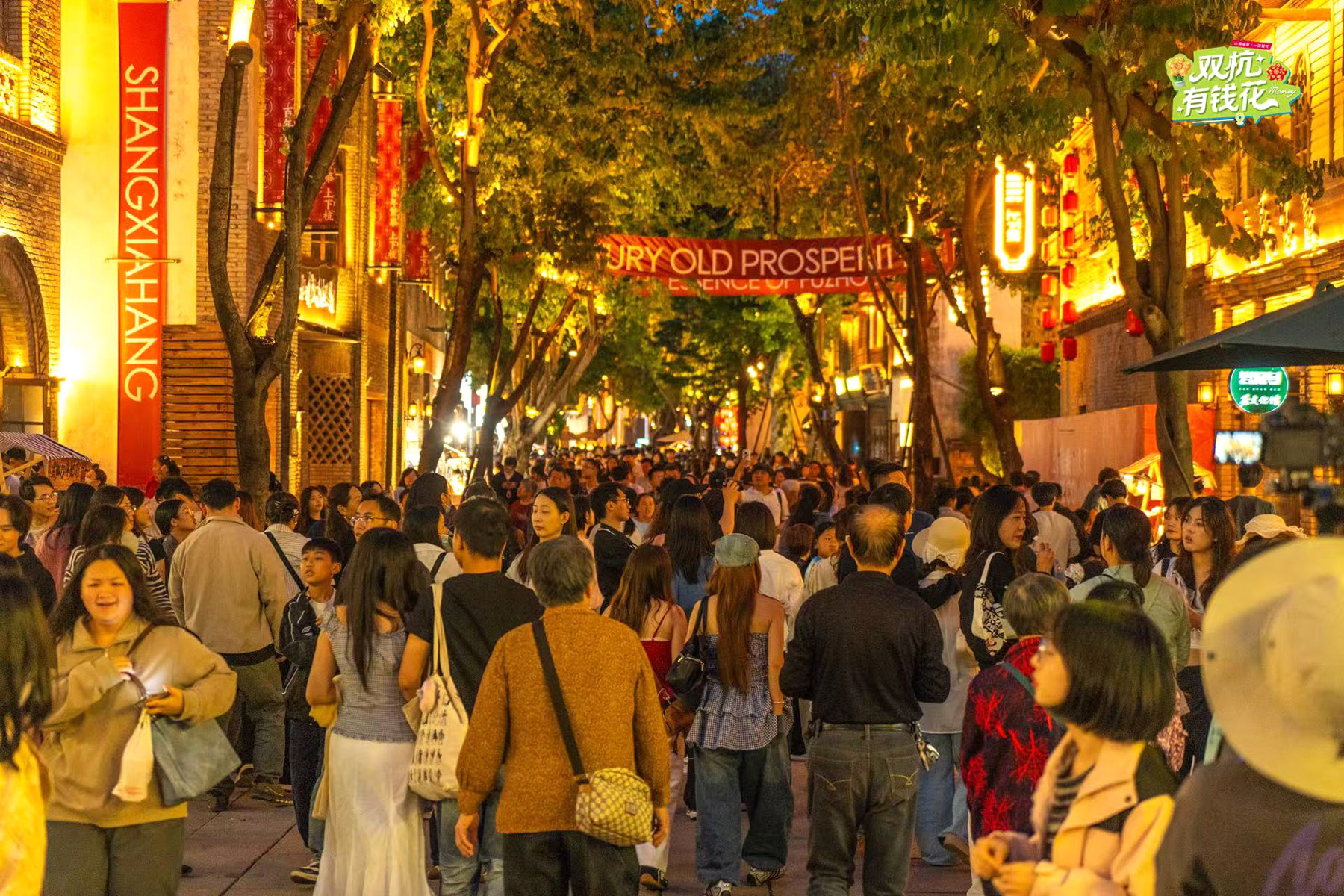
Amid the summer heat in Shangxiahang in Fuzhou, Fujian province, visitors sit beneath the eaves of an old courtyard house, sipping chilled jasmine tea and sampling pastries infused with the same floral fragrance. Some browse books, while others chat over tea or wander into nearby shops selling fragrances, handicrafts and cultural products. The scenes offer a glimpse of how historical buildings and old traditions are being woven back into everyday life in the Shangxiahang neighborhood on the north bank of the Minjiang River, once one of the city's major commercial centers.
For guide Xin Xiaoqi, the best way to understand the neighborhood is to start with the river.
More than 1,000 years ago, sediment carried by the Minjiang gradually formed sandbanks in the area. Changing tides created two routes used by boats — one farther north during high tide and another farther south as the tide receded. The routes came to be known as Shanghang and Xiahang, referring to the upper and lower waterways. The names were later carried over to the two commercial streets that developed in the area, which together gave the neighborhood its name, Shangxiahang, Xin says.
READ MORE: Fuzhou sets example in preserving past
As land developed around the waterways, the area grew into a bustling commercial hub. By the Ming (1368-1644) and Qing (1644-1911) dynasties, merchants were trading goods from across Fujian and beyond.
Tea was among the commodities that passed through the district, alongside Dehua porcelain, textiles, medicinal materials, and dried foods.
One old trade was known as the jingguo business, dealing in dried foods and other goods exchanged between northern and southern China. Northern merchants brought grain and other staples south, while southern traders supplied dried fruit, seafood and other local products, Xin says.
The trade also drew merchants from across Fujian, whose communities left their mark through guild halls, shops and residences, she adds.
The district's recent revival has sought to preserve that commercial character while giving it new uses. Its current layout retains the logic of the historical neighborhood, with four horizontal routes connected by Longping Road along a central north-south axis.
The riverside section, along Sanjie River, has become a more relaxed leisure area, with teahouses, cafes, cultural and creative shops and evening activities. Longping Road brings together traditional Fuzhou snacks and newer food concepts. Xiahang Road focuses on intangible cultural heritage experiences, while Shanghang Road is being developed as a quieter cultural space with bookstores, exhibitions and other venues.
"The idea is to let different parts of the neighborhood offer different experiences," Xin says.
Discovering new rhythms
At Caifeng Villa, a residence built in 1920 with funding from overseas Chinese businessman Yang Hongbin, much of the original architecture remains.
The 2,500-square-meter villa is a provincial-level protected cultural relic and one of Fuzhou's best-preserved examples of a modern residence combining Chinese and Western architectural elements.
Its old window decorations, tiles and other architectural details have been retained. Rather than becoming a building that visitors can only view as a historical relic, it now houses a cafe, restaurant and bookshop.
Yang Jiayu, a staff member at the venue, says customers usually come for drinks, food and conversation, but some stay for hours.
"A customer can spend the whole afternoon here," Yang says.
Average spending is around 100 yuan ($14), while visitor numbers can reach 200 to 300 on holidays, Yang says.
The transformation of Shangxiahang is also reflected in the ways local traditions are being adapted for contemporary consumers.
At Fuzhou Teahouse, manager Zeng Xiang has witnessed the neighborhood's recent changes firsthand.
The teahouse was among the first new businesses to move into the area during the pandemic, when the streets were still relatively quiet.
"When we first arrived, there were very few people walking around, especially in winter," Zeng recalls. "Now the streets are packed, particularly on weekends and in the evenings."
The shop specializes in Fuzhou jasmine tea, but its offerings extend well beyond traditional tea leaves. Jasmine-flavored mung bean cakes, pastries, fragrances, essential oils and cultural products introduce the city's signature floral scent in different forms.
The strategy is particularly aimed at younger customers, Zeng says.
Traditional Fuzhou jasmine tea is often brewed in a gaiwan, a small lidded bowl used for tea preparation. But younger consumers may find more contemporary formats easier to approach.
"We have introduced cold-brewed tea and modern tea drinks to make it more attractive for younger consumers," he says.
Foreign visitors have joined in as well. Zeng recalls receiving international students who came to experience Chinese tea culture.
Their first reaction, he says, was often to the tea's fragrance.
For those visitors, the fragrance is only the beginning of the story.
At a tea experience center in the neighborhood, Yan Jinhua, an inheritor of Fuzhou jasmine tea scenting techniques, demonstrates the craft behind the aroma.
Jasmine flowers are picked during the day and allowed to bloom at night, when they release their strongest fragrance. The flowers are then combined with prepared green tea, so the leaves absorb the floral aroma, he explains.
The scenting can be repeated several times, with higher-quality teas undergoing more rounds.
Before scenting begins, the tea must first be prepared to the right condition. The flowers also need to be "nurtured" after picking so they can fully open.
During his demonstration, Yan shows visitors key steps such as mixing and separating the tea and flowers, revealing the role of timing, weather and craftsmanship in producing the finished tea.
For Yan, such experiences are part of a broader effort to bring Fuzhou's jasmine tea culture closer to visitors and younger consumers. The same idea is shaping the development of Shangxiahang itself.
ALSO READ: Reuniting a forgotten foreign community
Chi Yingyue, deputy general manager of Fuzhou Shangxiahang Protection and Development Co, says the aim is not simply to restore old buildings, but to give them new functions while retaining their connection with the neighborhood's commercial and cultural history.
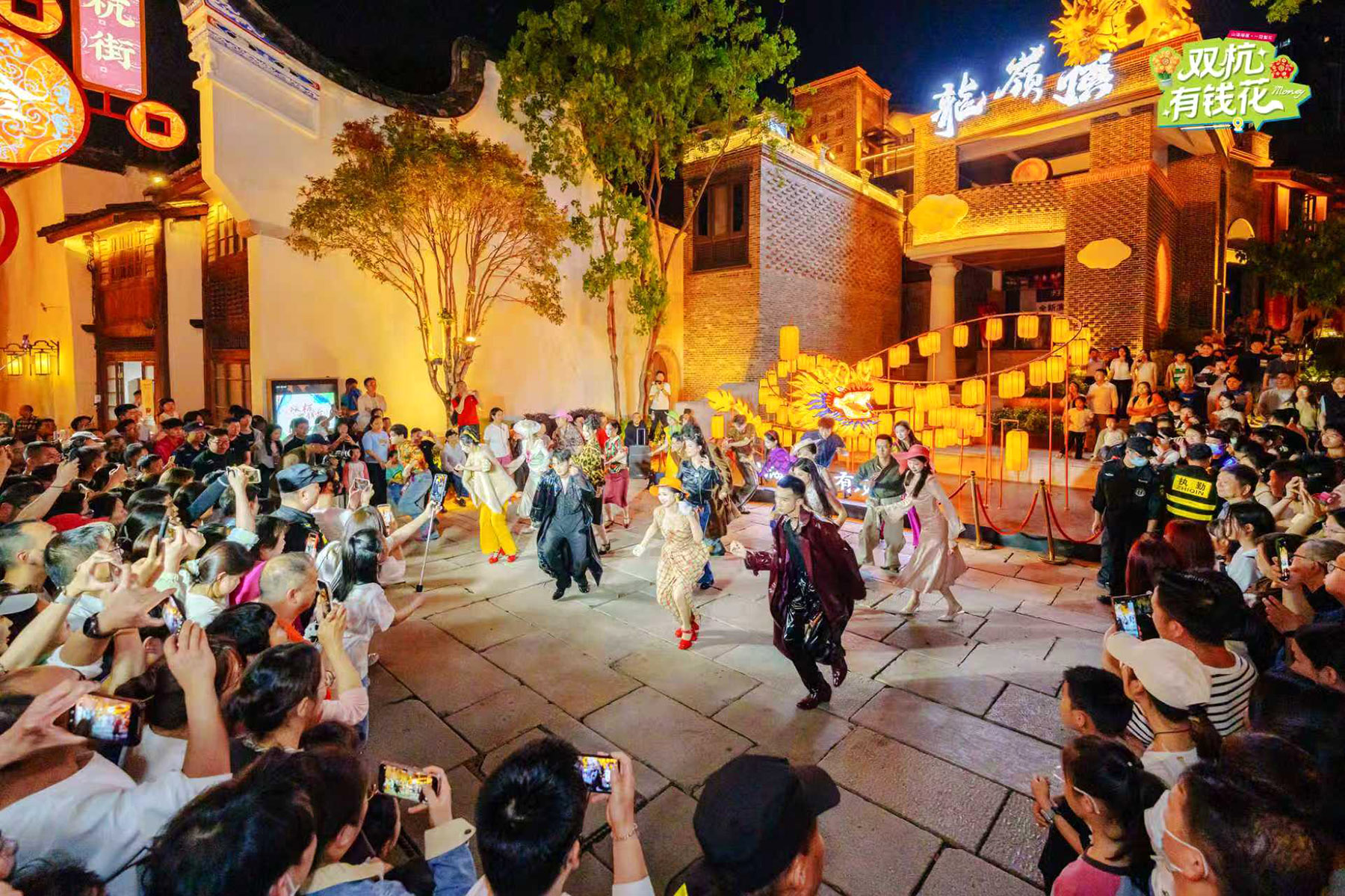
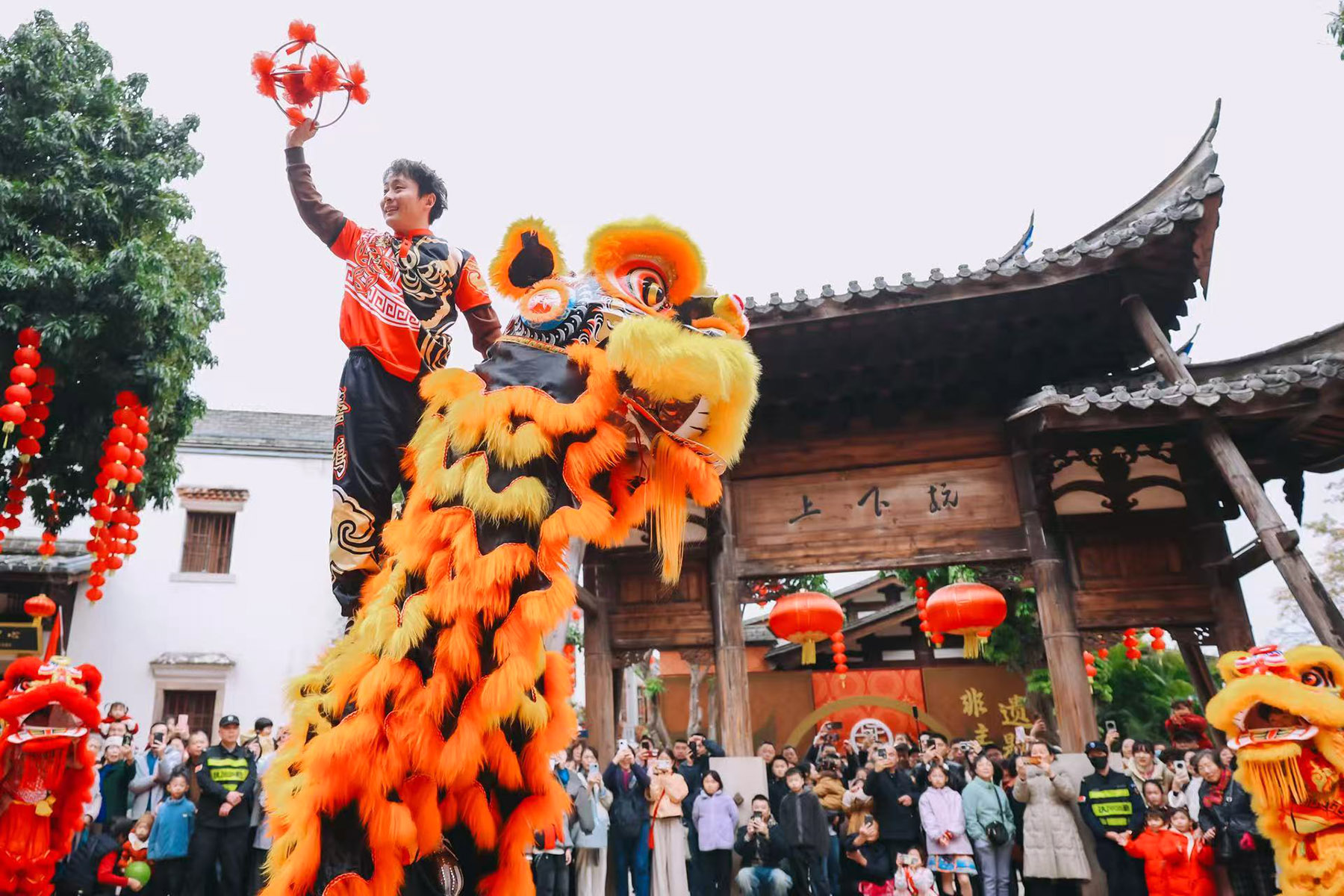
That approach can be seen in the mix of businesses and cultural activities now filling the district. The neighborhood has brought in intangible cultural heritage enterprises, cultural and creative businesses and food and beverage outlets, while festivals, performances and evening activities draw people onto its streets.
The district received nearly 13 million visitor trips in 2025, according to Chi.
The next stage, Chi says, will explore more ways to activate historical residences associated with notable Fuzhou figures, creating cultural experiences that can further connect the area's buildings with the people and stories behind them.
The result is a neighborhood where history is no longer confined to preserved facades or museum displays. It can be encountered over a cup of jasmine tea, through a traditional craft demonstration, in a century-old residence turned cafe, or along the riverside as the old commercial quarter finds a new rhythm, she adds.
Contact the writer at yangfeiyue@chinadaily.com.cn
