

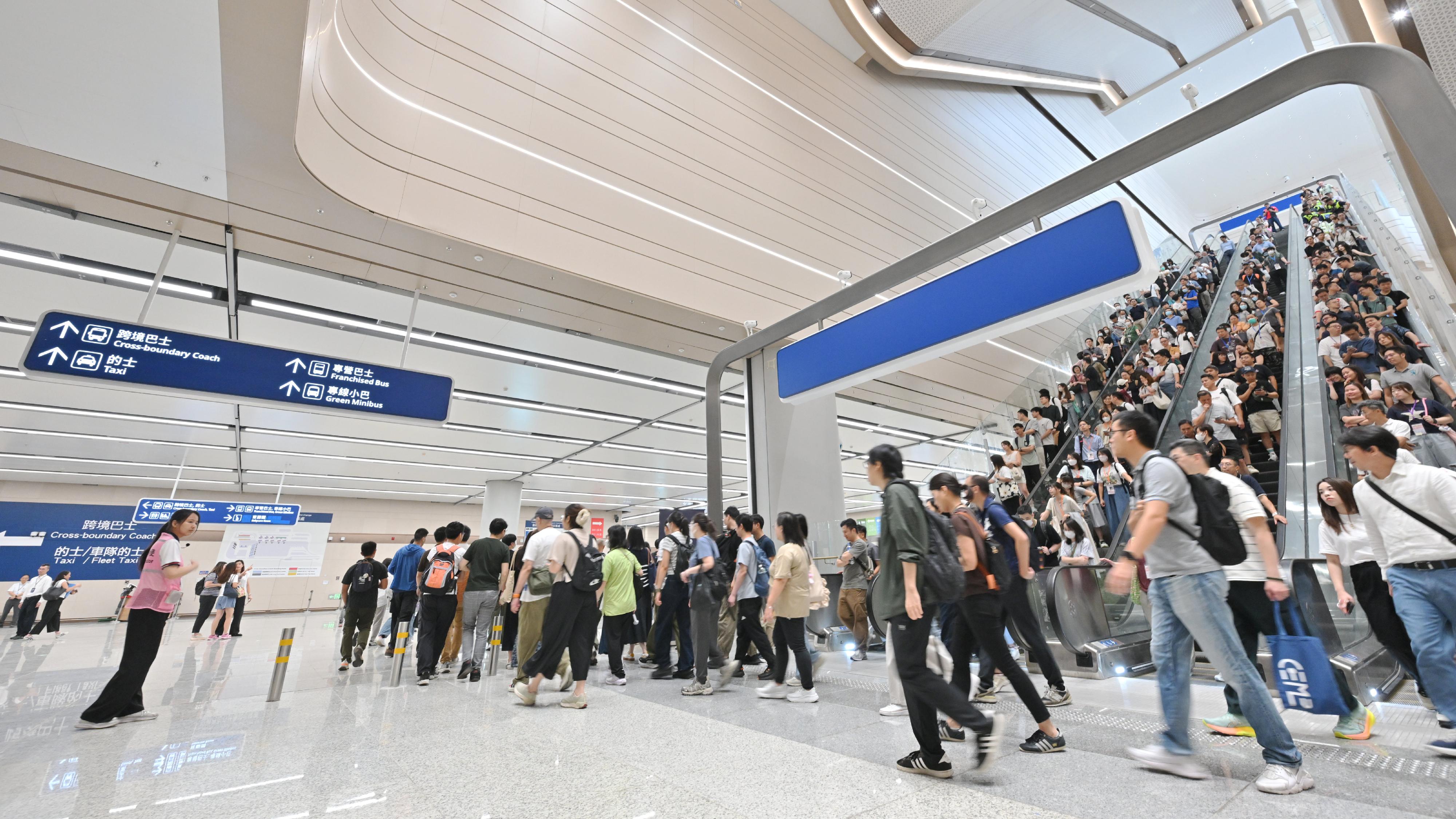
The Hong Kong Special Administrative Region government on Thursday conducted a large-scale drill at the Huanggang Port Hong Kong Port Area to prepare for the port’s upcoming official opening.
This is the first such drill after the SAR authorities’ announcement that more than 100 tests and drills will be conducted to assess traffic flow, crowd control and anti-terrorism measures of the new port ahead of its official opening.
The governments of Guangdong and Hong Kong will announce the official opening date once the port is fully ready for safe and smooth operation, the HKSAR government said in a press release.
Mobilizing approximately 1,000 civil servants from over 20 departments, the exercise successfully tested the overall management of passenger and vehicular flows at both the port building and the public transport interchange.
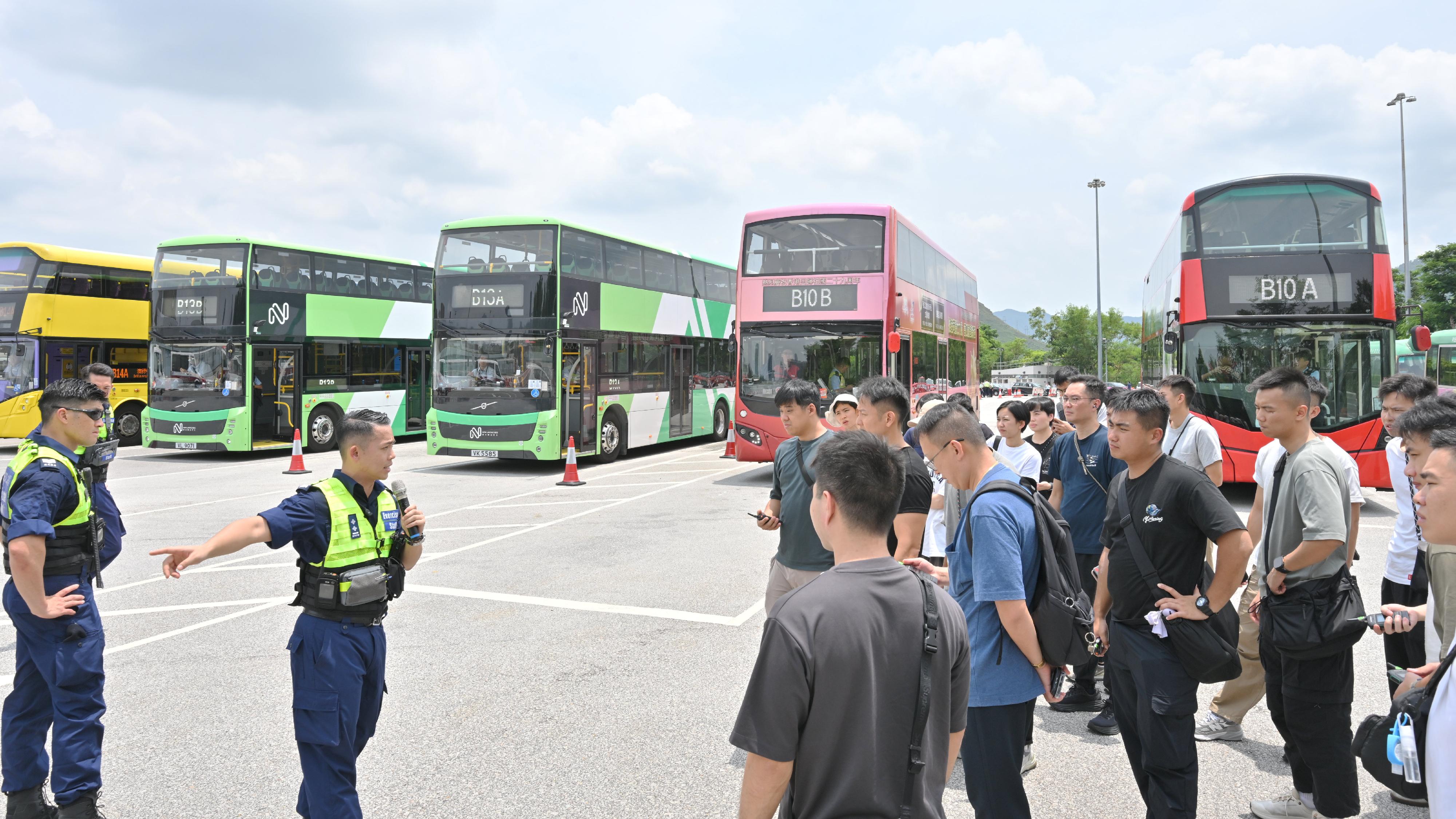
The participants took various modes of public transport, including franchised buses, short-haul cross-boundary coaches, green minibuses and taxis, to reach the public transport interchange on the second floor of the port building.
RELATED ARTICLES
- New Huanggang Port to undergo over 100 tests, drills before opening
- Huanggang Port upgrade nears completion as HK-side area begins commissioning
- HKSAR, Shenzhen sign deal on Huanggang port colocation arrangement
- HKSAR authorized partial jurisdiction over new Huanggang port
Later, they proceeded through the fifth-floor departure hall and the fourth-floor arrival hall before returning to the interchange to leave the port.
The drill participants and operator-dispatched vehicles conducted cyclical trials involving more than 120 departures to simulate realistic arrival and departure conditions. The trials were designed to specifically assess passenger and vehicular flow management, passageway capacity, on-site guidance, traffic control and various supporting facilities.
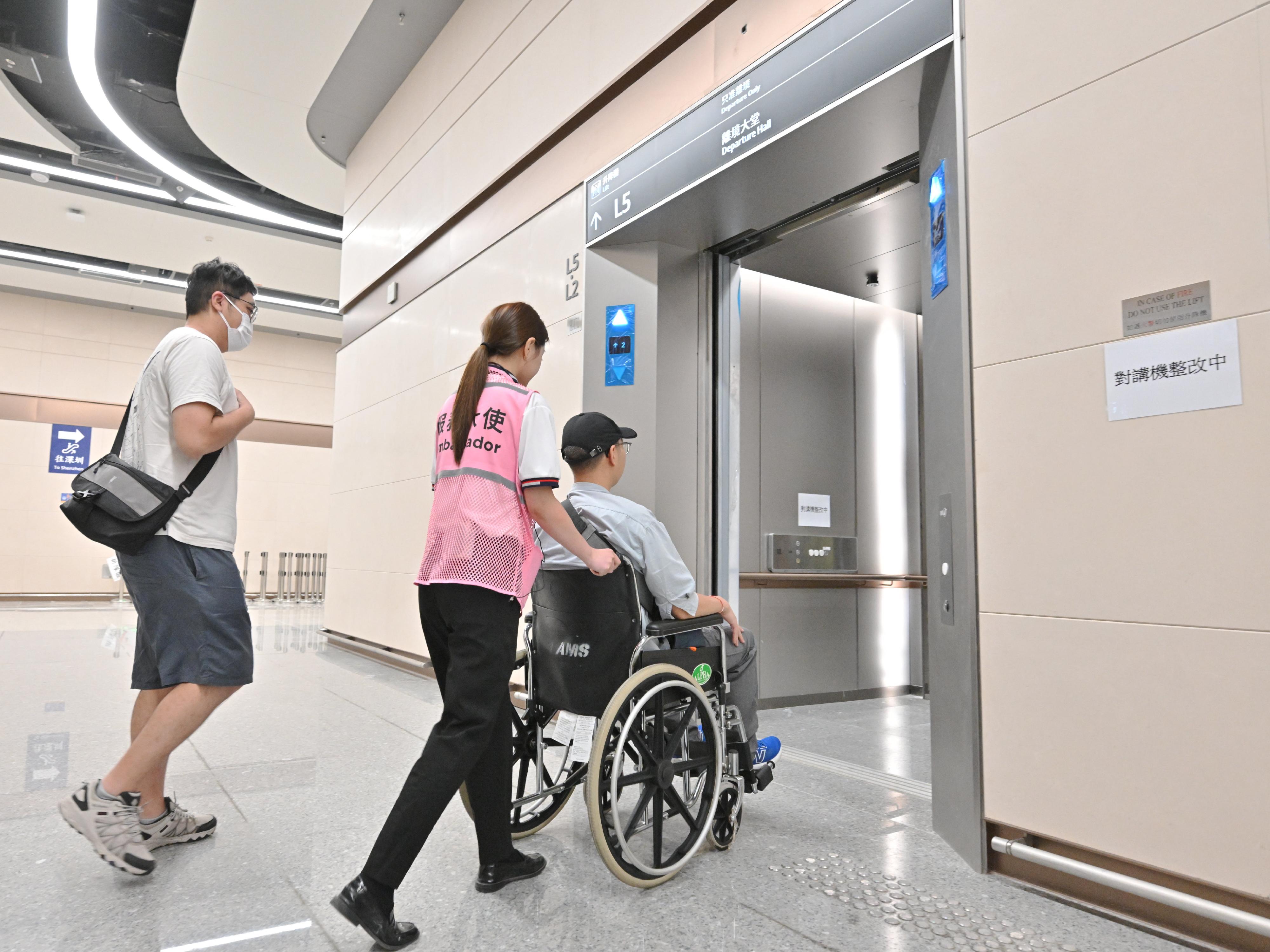
Inspecting the drill on-site along with Secretary for Transport and Logistics Mable Chan, Secretary for Security Chris Tang Ping-keung said the entire drill flowed smoothly and achieved its expected testing objectives through close interdepartmental cooperation.
Identified areas for improvement will be addressed in subsequent exercises, with larger drills planned for the future, said Tang.
He expressed his hope that larger drills could be conducted in the future for continuous optimization of the detailed arrangements, making the most comprehensive preparation for the opening of the port.
Secretary Chan said the initial drill primarily tested local and cross-boundary public transport services alongside their ancillary arrangements of the Hong Kong port area.
Passengers boarding, alighting, queuing and traffic management – all operated smoothly, delivering a positive passenger experience, she added.
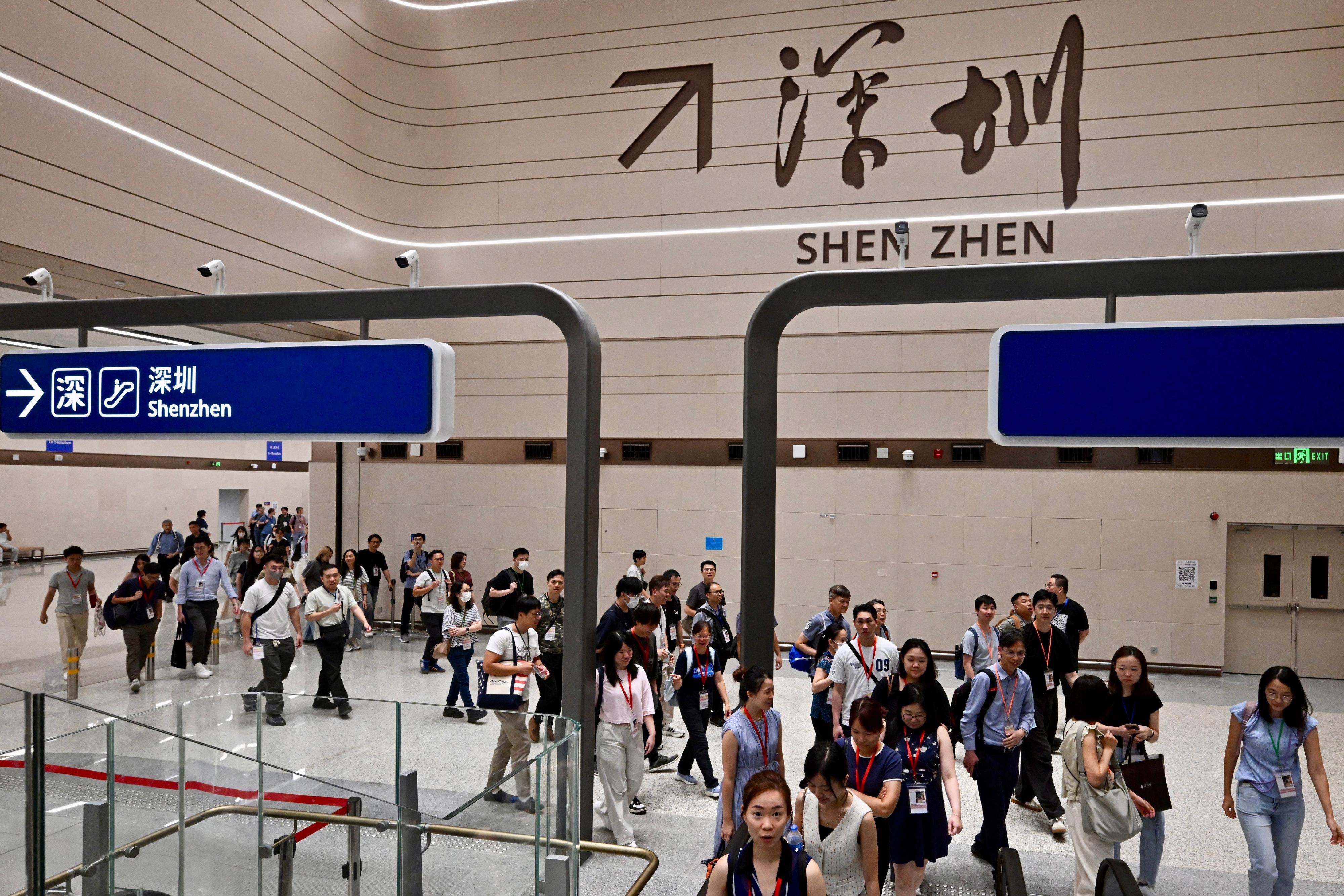
A wide range of bureaus, departments and public transport operators took part in the drills, including the Security Bureau, the Transport and Logistics Bureau, the Civil Service Bureau, the Hong Kong Police Force, the Transport Department, the Highways Department, the Immigration Department, the Hong Kong Customs and Excise Department, the Department of Health, the Fire Services Department, the Architectural Services Department, the Electrical and Mechanical Services Department, the Government Property Agency, the Digital Policy Office, the Office of the Communications Authority, the Food and Environmental Hygiene Department, the Agriculture, Fisheries and Conservation Department, the Civil Aid Service, the Auxiliary Medical Service and various public transport operators.
The Transport Department said it will continue conducting road and facility testing with operators. Its ongoing tasks include evaluating transit routes and facilities, training bus drivers and testing traffic diversions – all of which have progressed smoothly.
In close liaison with Shenzhen authorities to press ahead with preparatory tasks, the HKSAR government will continue to run drills of various scales to assess the capacity of the port and its surrounding infrastructure.
On July 30, the HKSAR government and the Shenzhen municipal government signed agreements to implement the colocation arrangement and the SAR’s jurisdiction over the Hong Kong port area and related extended areas.
According to Tang, Huanggang Port is capable of handling 200,000 passenger trips per day, and the volume will be raised to 300,000 crossings daily after the land crossing is linked up with the Mass Transit Railway by 2034.
A new immigration clearance mode will be adopted at the new port, allowing travelers to complete clearance procedures on both sides, with their travel documents checked once.
