

Two Hong Kong exhibitions shed light on the times when jewelry revealed a world of information about the wearer’s identity. Gennady Oreshkin reports.
The history of jewelry — and how in the past they often indicated the status, influence, and religious beliefs held by the wearer — is under focus at two noteworthy ongoing exhibitions in Hong Kong.
Among these, the Treasures of Global Jewellery from The Metropolitan Museum of Art: The Body Transformed, running at the Hong Kong Palace Museum (HKPM), looks closely at the culture of body adornment since ancient times. The story is told through 200 pieces of jewelry spanning five continents and 4,000 years — from the second millennium BC to the 21st century.
READ MORE: The timeless allure of lavish clocks
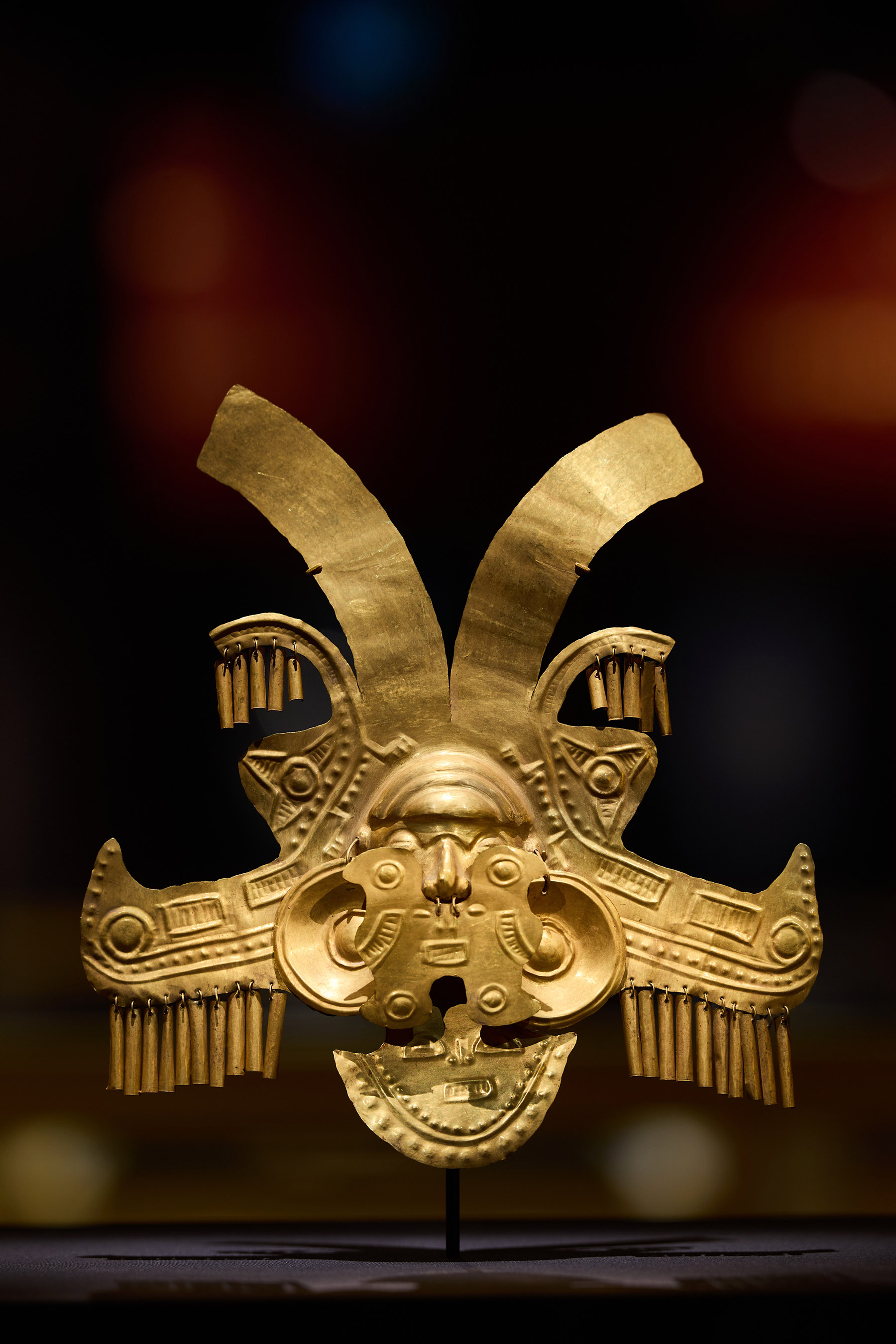
For example, an elaborate gold headdress from Colombia — a specimen of Calima culture from the Yotoco period (the first through seventh centuries) — highlights how in ancient times jewelry often bore a religious significance.
Yau Sum-yin, associate curator at HKPM, says, “The Calima people believed that gold was a divine substance, linked to the sun and its power. For leaders or high-status individuals, this ornament would have been affixed to the front of a turban or basketry headdress, giving the wearer a commanding presence and, more importantly, allowing them to assume powerful identities granted by the sun’s divinity.”
Melanie Holcomb, curator and manager of Collection Strategy, at the Department of Medieval Art and the Cloisters at the Metropolitan Museum of Art in New York, adds, “What I love most though is the work’s self-referential quality. It shows a face wearing jewelry — a headdress, nose and ear ornaments — that the wearer himself might have worn.”
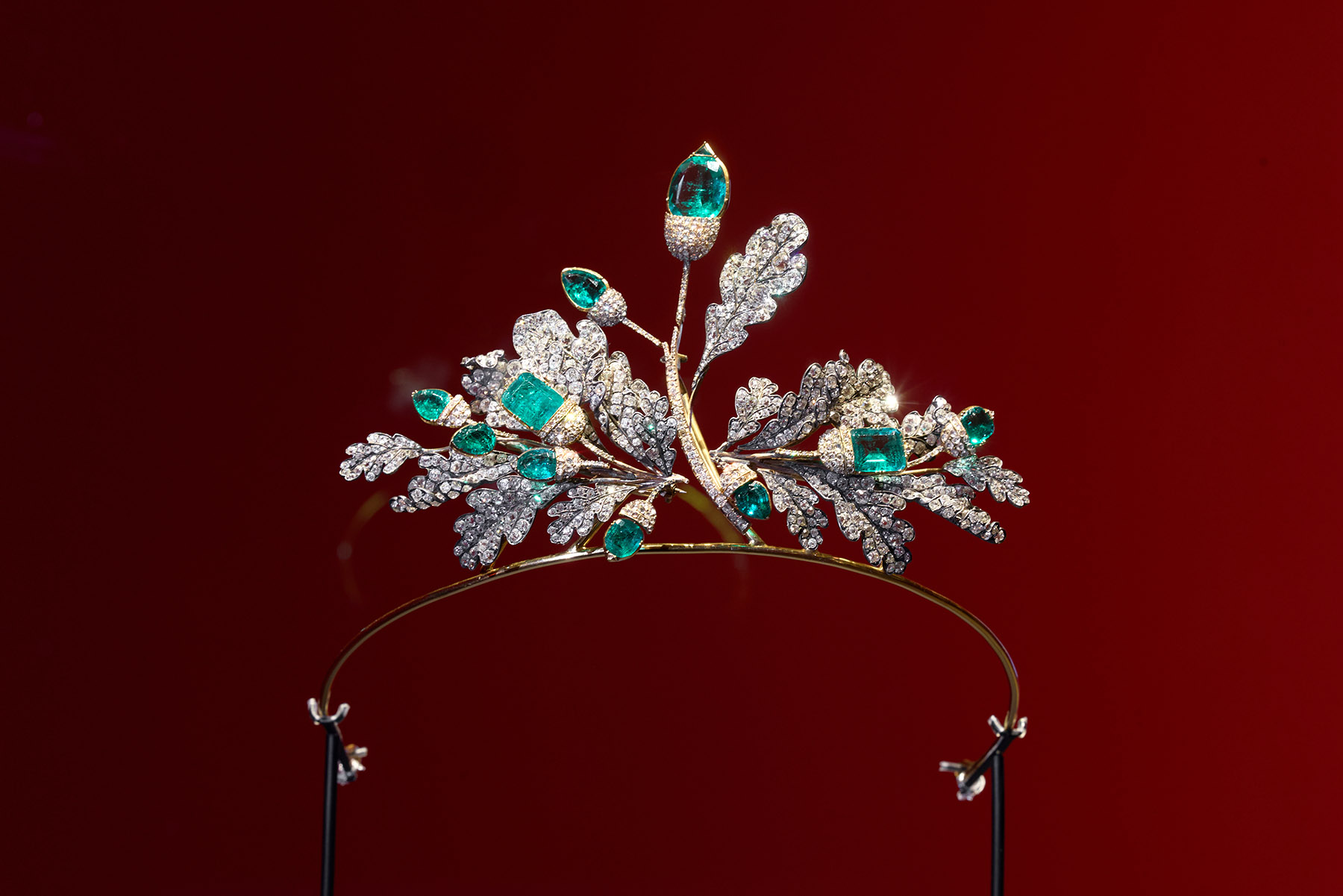
Another highlight from the exhibition is a gold-and-silver tiara, embellished with emeralds and diamonds arranged in the shape of oak leaves and acorns. The piece can be disassembled into three brooches. Crafted between 1840 and 1850, it alludes to Charles II’s defeat in the third English Civil War (1650–51), and how he had taken refuge in the upper branches of an oak tree to avoid getting caught by the Parliamentarian forces.
“In jeweled form, the oak spray later became a wearable declaration of patriotism and authority in Britain,” says Yau, adding that the piece is a good example of how Victorian-era jewelry designers were keen on functionality and versatility of the pieces they made.
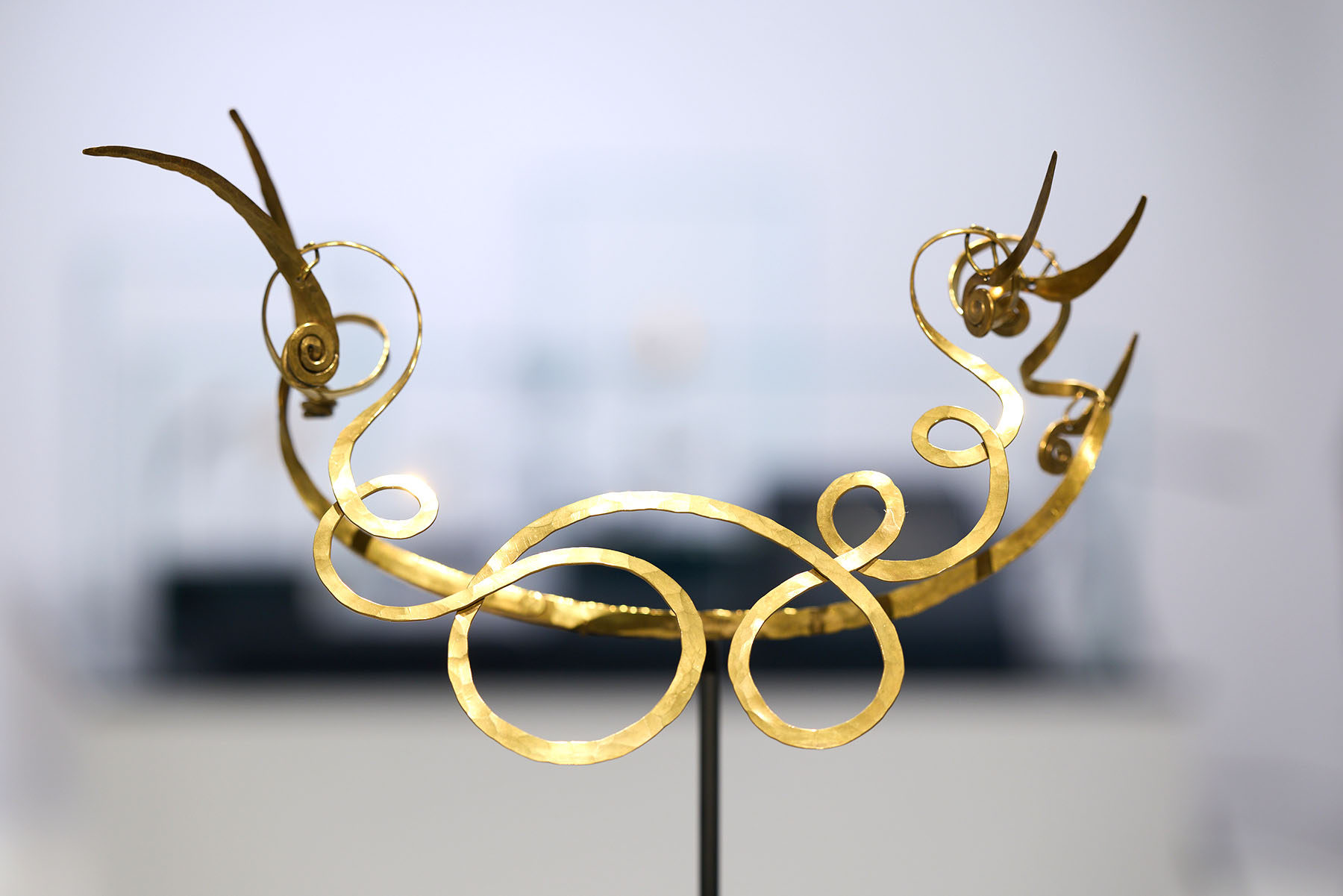
A spare, modernist inventiveness is manifest in Alexander Calder’s The Jealous Husband necklace from 1940. Yau says that the piece is marked by “the same playful yet sophisticated aesthetic” of Calder’s more widely known creations — suspended lightweight kinetic sculptures, featuring “organic forms such as coils, spirals, and wavy lines that echo his interest in movement”.
“In pieces like this one, he translated the ambition of his public sculptures into intimate, wearable forms.”
Red is the warmest color
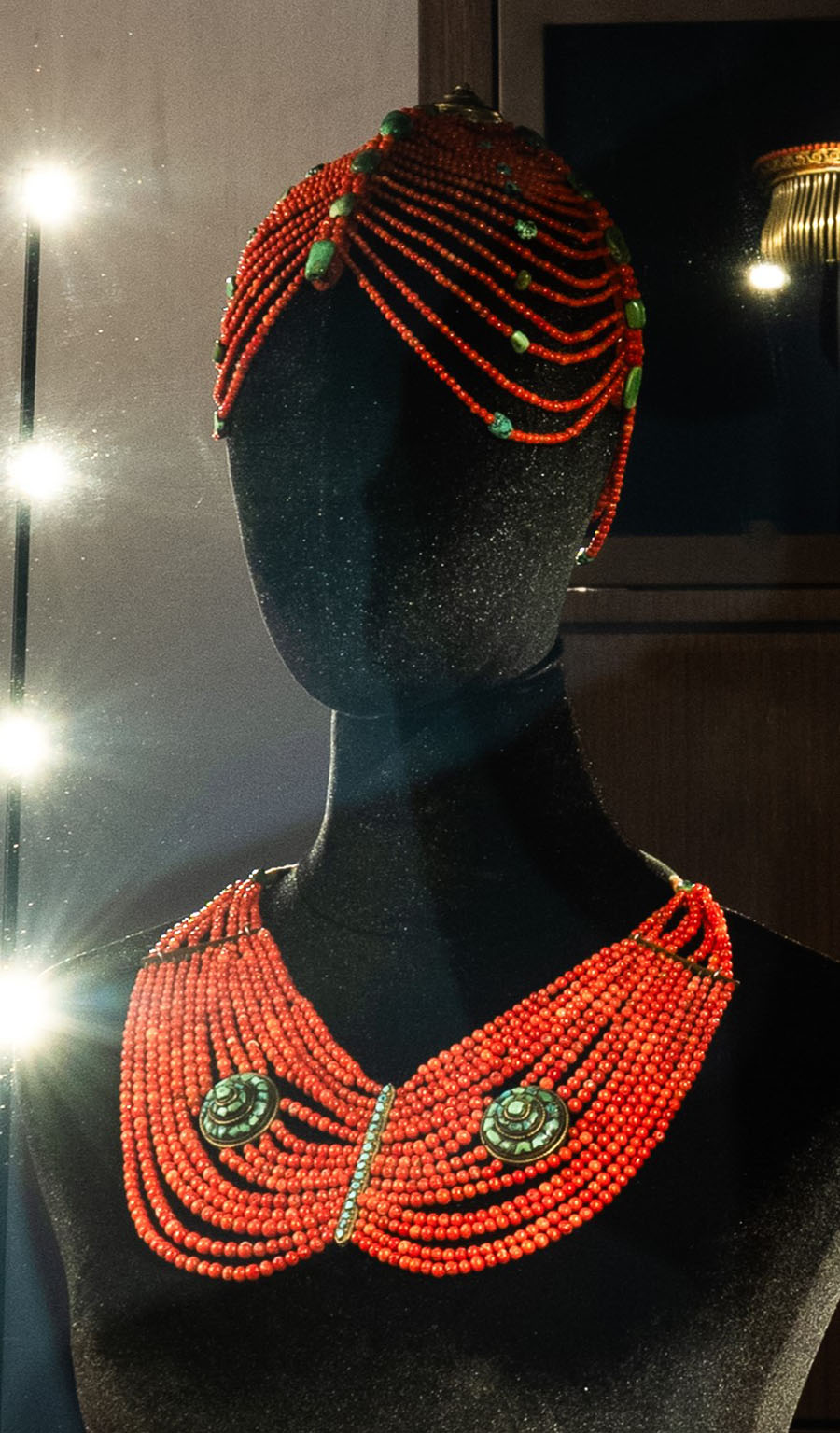
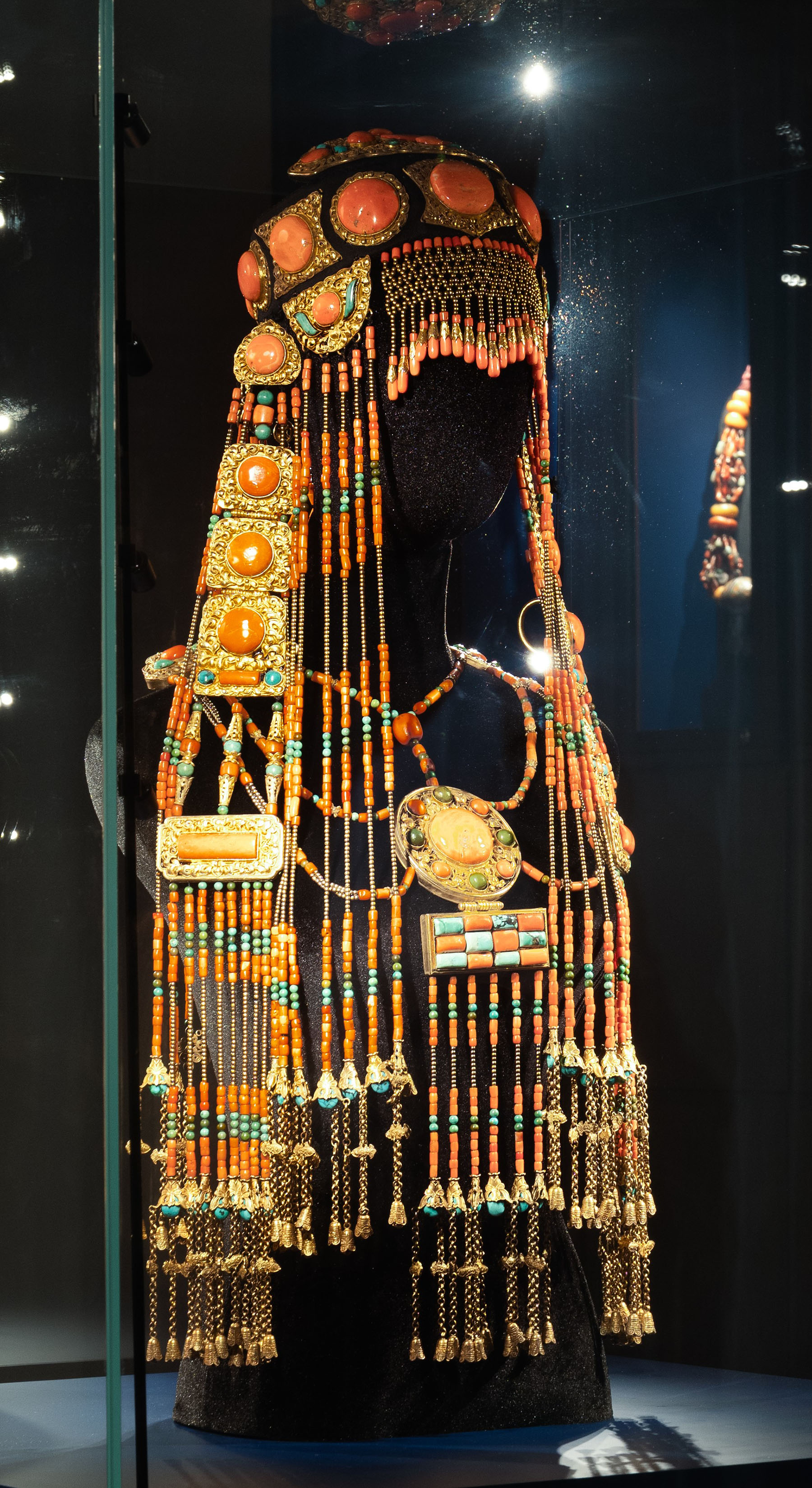
Some of the pieces in the L’ecole, School of Jewelry Arts-hosted Precious Coral, from Curiosity to Treasures show at K11 Musea are the very antithesis of Calder’s minimalistic “mobile” jewelry. For instance, a Mongolian ceremonial headpiece is more like an upper-body garment, extending to the wearer’s waist. The crown is studded with imposing coral medallions, while stringed coral beads frame the eyes. Covering the sides and back of the head are long strands of coral and turquoise beads with gold rosettes.
ALSO READ: Romancing the store
In a Himalayan ceremonial set, made up of strings of coral beads, the headdress doubles as a turban, while the necklace resembles a round yoke.
“From Mediterranean amulets to Qing court ornaments and Himalayan ceremonial adornments, precious coral has signified protection, vitality, rank, and prosperity,” says Mathilde Berger-Rondouin, the exhibition’s co-curator and an art historian. “It travels remarkably well — geographically and symbolically.”
If you go
Treasures of Global Jewellery from the Metropolitan Museum of Art: The Body Transformed
Dates: Through Oct 19
Venue: Hong Kong Palace Museum, West Kowloon Cultural District, 8 Museum Drive, Kowloon
www.hkpm.org.hk
Precious Coral from Curiosity to Treasures
Dates: Through Oct 11
Venue: L’école, School of Jewelry Arts in Hong Kong, 510A, 5/F, K11 Musea, Tsim Sha Tsui
www.lecolevancleefarpels.com/hk
The writer is a freelance contributor to China Daily.
