

A new generation of artists is reinventing the techniques listed as Hong Kong’s intangible cultural heritage, while staying true to the crafts’ traditional core. Faye Bradley reports.
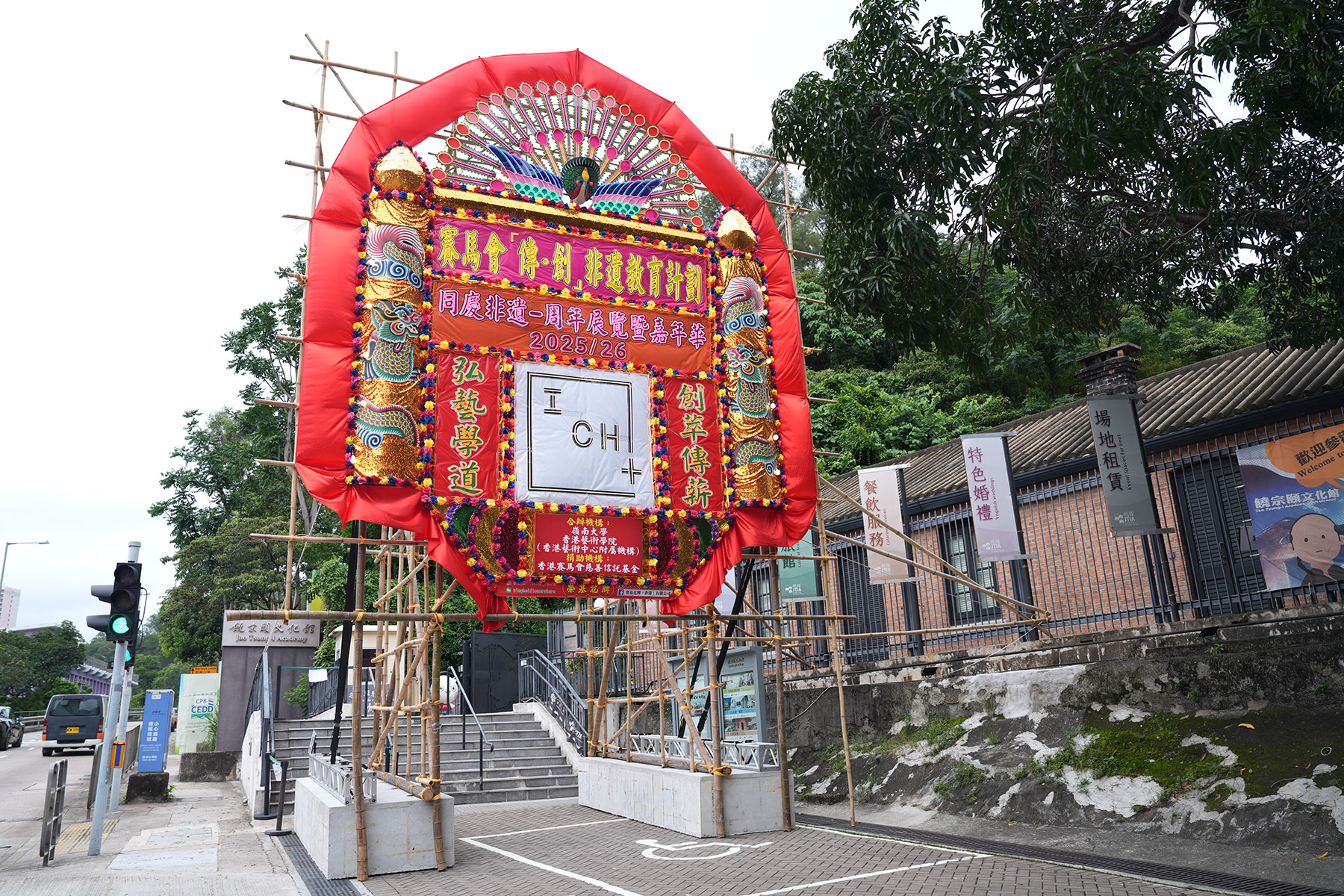
For two weeks this summer, an 8-meter-high flower board erected inside the Jao Tsung-I Academy in Mei Foo glowed with LED lights. The ceremonial gate — in which a traditional Hong Kong craft form was embellished with lights powered by modern technology — could be read as a sign of the way the craft traditions on the city’s intangible cultural heritage (ICH) list are headed.
The LED-lit flower board served as the gateway to ICH+ Festival 2025/26, which wrapped up on July 12. Funded by The Hong Kong Jockey Club Charities Trust, the festival is the annual showcase of the harvest from the Jockey Club ICH+ Innovative Heritage Education Programme, co-organized by Lingnan University and Hong Kong Art School, a division of the Hong Kong Arts Centre.
The Jockey Club ICH+ program runs two linked courses of study. Its Pass It On @ Tertiary Course is about the city’s master artisans training future instructors of ICH crafts, while as part of the Pass It On @ Secondary Course, graduates of the tertiary course use the skills they have picked up to teach school students. So far, the curricula for training in 13 ICH-listed craft techniques have been drawn up.
ALSO READ: Heritage renewal
Launched in 2018, the program has already produced secondary-school teachers of Guangcai — Guangzhou-style enamel painting on porcelain — paper crafting, and flower button — i.e., making ornamental toggle buttons resembling butterflies, plum blossoms and birds, among other forms.
Kenneth Wong, research development manager of the Hong Kong and South China Historical Research Programme at Lingnan University, compares the ICH+ program to a tree, “growing branches and spreading out”. “This transmission model — craft masters nurturing trainees, trainees growing into instructors, and instructors mentoring a new generation of students — forms a virtuous cycle,” he says.
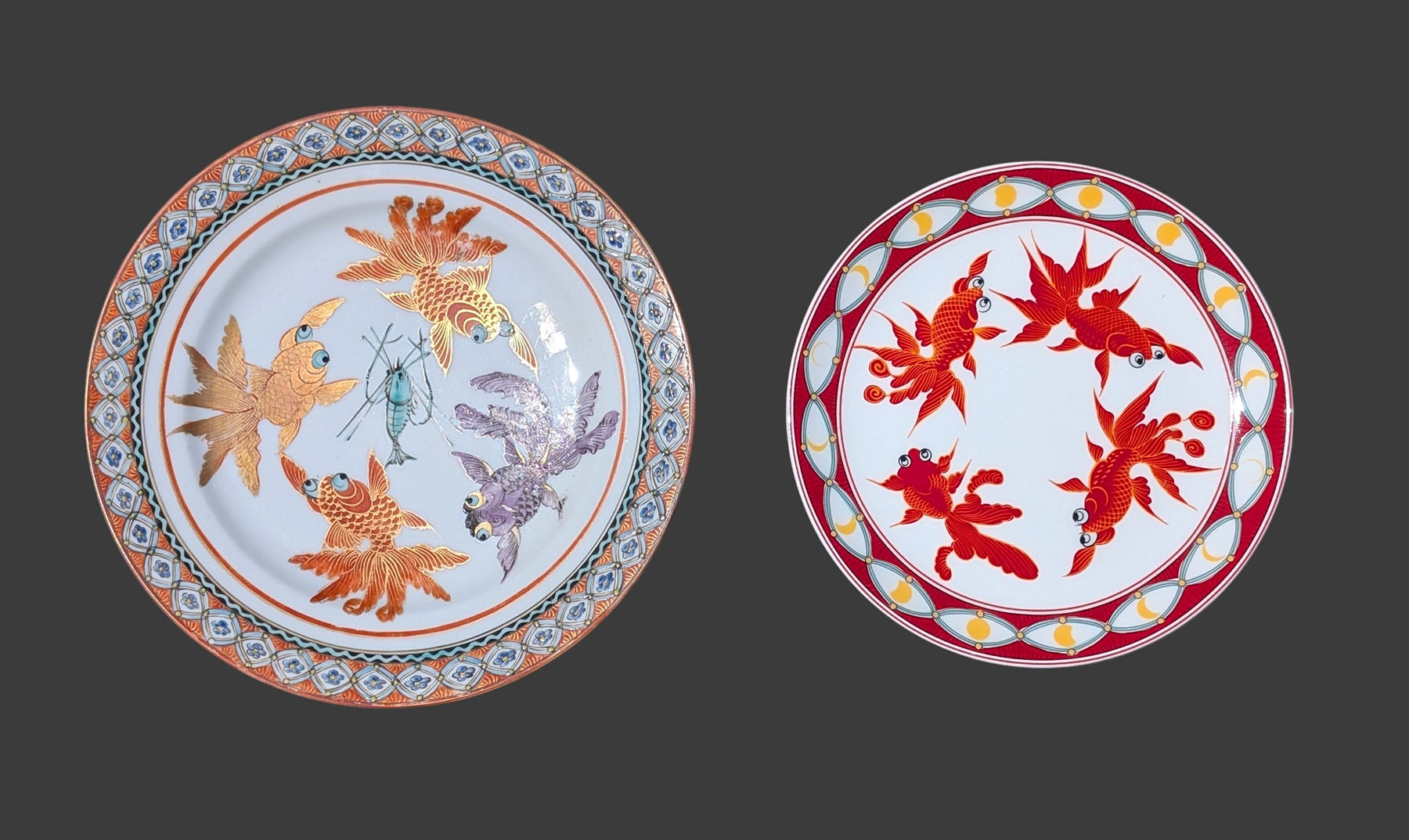
Wong adds that the five Guangcai instructors produced by the program “have not only mastered traditional skills, but also developed distinctive personal artistic styles”. Some of them draw inspiration from fantasy fiction, everyday life in Hong Kong, or comic and pop art.
Wong points out that academic research conducted by universities, such as his own, is increasingly concerned with “extracting the core value of traditional craft and making them relevant to the present” by exposing school students to “workshops, exhibitions, visits, fieldwork, community activities, and even games and digital media, so that heritage can sustain vitality beyond the classroom”.
Contemporary twist
Lau Hiu-yan, a graduate of the tertiary course in Advanced Paper Crafting, reveals that at the outset, she wasn’t too keen on the technique she would go on to specialize in as she associated it with temple offerings, or traditional Chinese ceremonies — lanterns shaped like white rabbits and goldfish put up during the Mid-Autumn Festival, for instance. “There weren’t many style variations, so I didn’t find them very engaging,” Lau says.
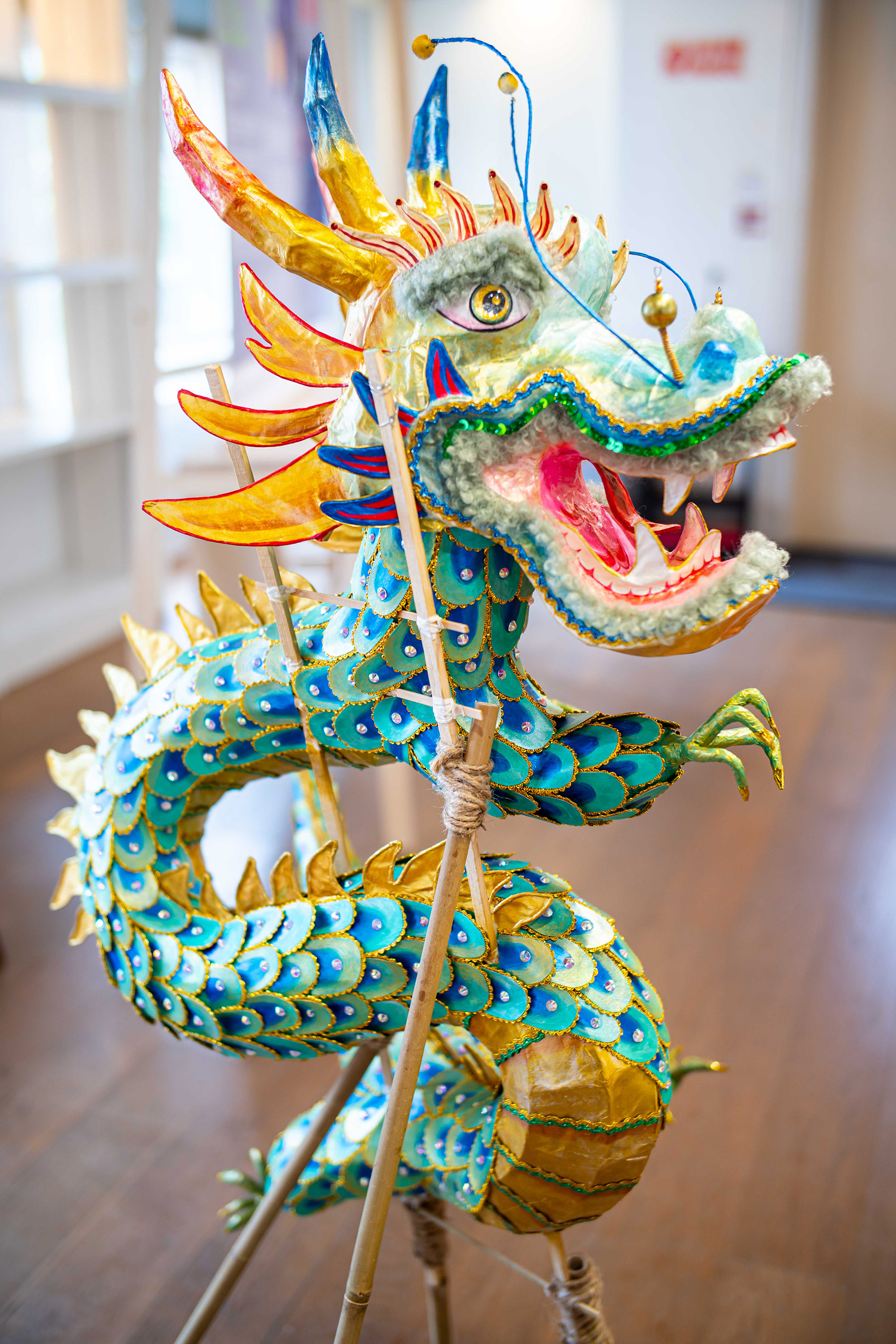
Over time she learned that the paper-made dragons, and lion-dance heads, as well as the animal figure-shaped lanterns, were in fact embodiments of cultural history.
While the traditional papier-mache lion heads seen at ceremonial dances are inspired by the heroic figures in the 14th-century novel Romance of the Three Kingdoms, and usually come in shades of black, red or yellow, Lau says that the paper-craft artists of today go for a whole variety of colors, including pink and purple. They also use computers to achieve a precise finish. “The designs feel more contemporary” as a result.
Hui Ka-hung, the master artisan who taught Lau, says that traditional craft practices risk stagnation when the products are seen only at festivals rather than as part of people’s everyday lives. He contends that the key to their survival lies in raising folk heritage to the level of art, without moving “too far off” from their traditional core.
When it comes to modern-day reimaginings of traditional crafts, Hui believes that the materials and technique must stay rooted in tradition to preserve “cultural legitimacy”, while the form can be experimented on and adapted in ways that underscore the craft’s continuing relevance.
Community matters
At the ICH+ festival, a dynamic installation formed the centerpiece. Called Illuminated Heritage: A Journey of Flower Buttons and Guangcai, it’s an animation piece in which the classic motifs produced by both techniques come to life. Hui and flower-button instructor Royce Chau led the sharing sessions held during the festival, exploring the historical roots of their respective practices, while also presenting samples of how the techniques could be reinvented.
The curatorial thinking behind such pairings comes from artist Jaffa Lam, who is also project director for the ICH+ program. Lam says that the new generation of artisans reinterprets tradition in a variety of ways. “Some focus inward, on refining techniques; some expand outward, trying out broader applications — each approach is a way of continuing to preserve and innovate.”
For her, the most rewarding aspect of the program is the community it has created. “After fellow trainees graduate, they continue to co-rent studios, keep creating, and offer each other guidance,” Lam says, adding that she finds the resilience demonstrated by young people trying to make a living from their craft “deeply moving”.
Recruiting AI
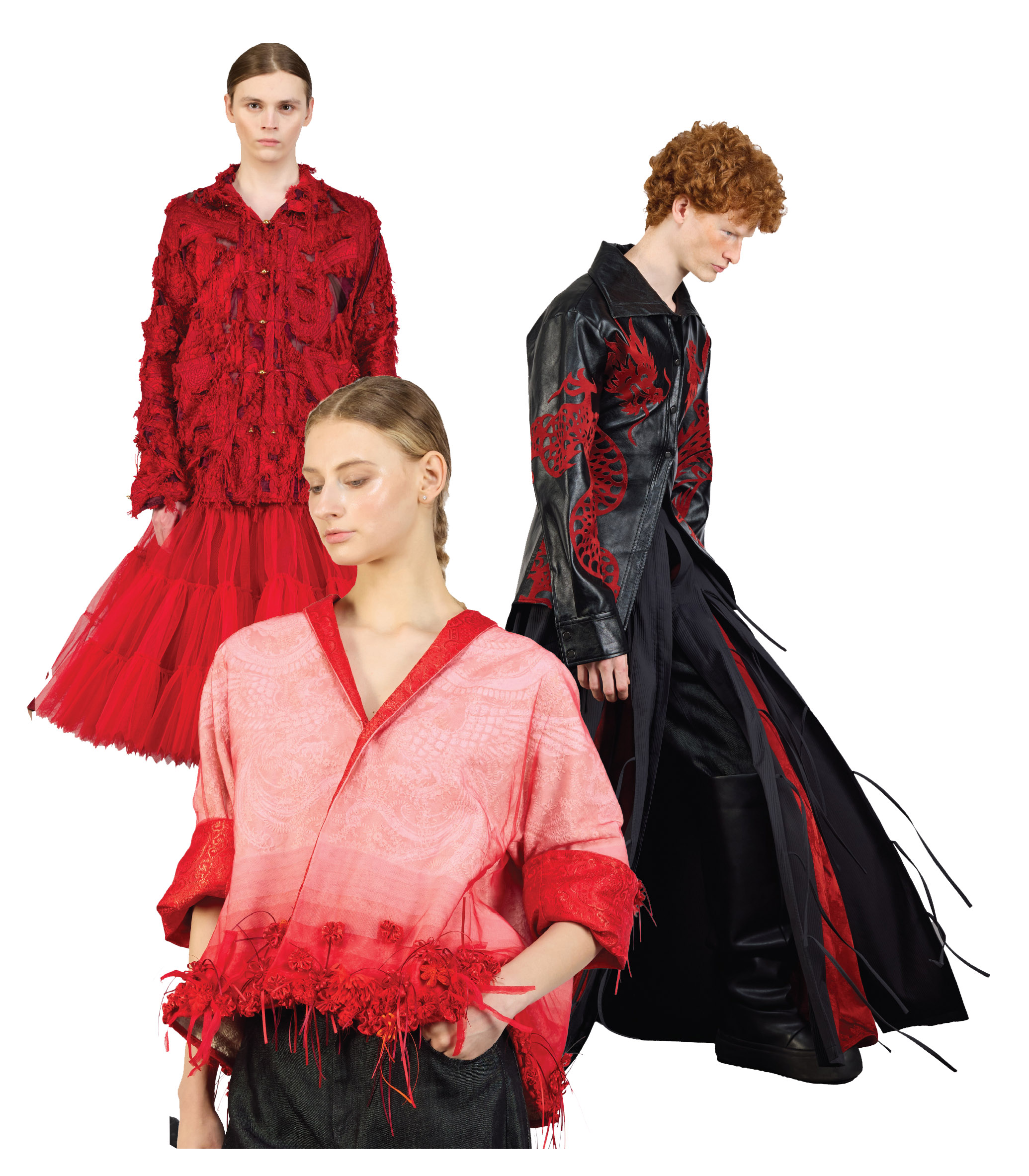
The Hong Kong Design Institute (HKDI) in Tseung Kwan O launched a similar training program led by Wong Kwok-hing in October. Wong is a master maker of the qungua, or kwan kwa — the traditional Chinese bridal outfit.
“We believe that heritage survives not by standing still, but by evolving with society,” says Elita Lam, who heads HKDI. “Innovation is one of the most effective ways to keep heritage alive.”
Wong, however, believes that there ought to be a limit to experimenting with classic designs when it comes to a wedding garment. “A kwan kwa is more than a garment. It represents blessings, tradition and craftsmanship heritage,” he says. “Hand embroidery adds warmth and character to a garment, and that cannot be replicated by a machine.”
His students seem to agree. Jessica Lee, a Higher Diploma in Fashion Design student, used artificial intelligence (AI) tools to get an idea of how well the standard motifs of dragon, phoenix and pomegranate might work when realized in nontraditional black and white — but stopped short of letting the technology finish the piece for her.
“AI acted as a creative collaborator during the concept development stage. While AI helped me explore ideas, the final creative decisions, material selection and the crafting was done by human hands,” Lee says.
She sees the piece as less of a wedding dress and more of an artifact — “a piece of cultural heritage you can wear”.
Fit for everyday wear
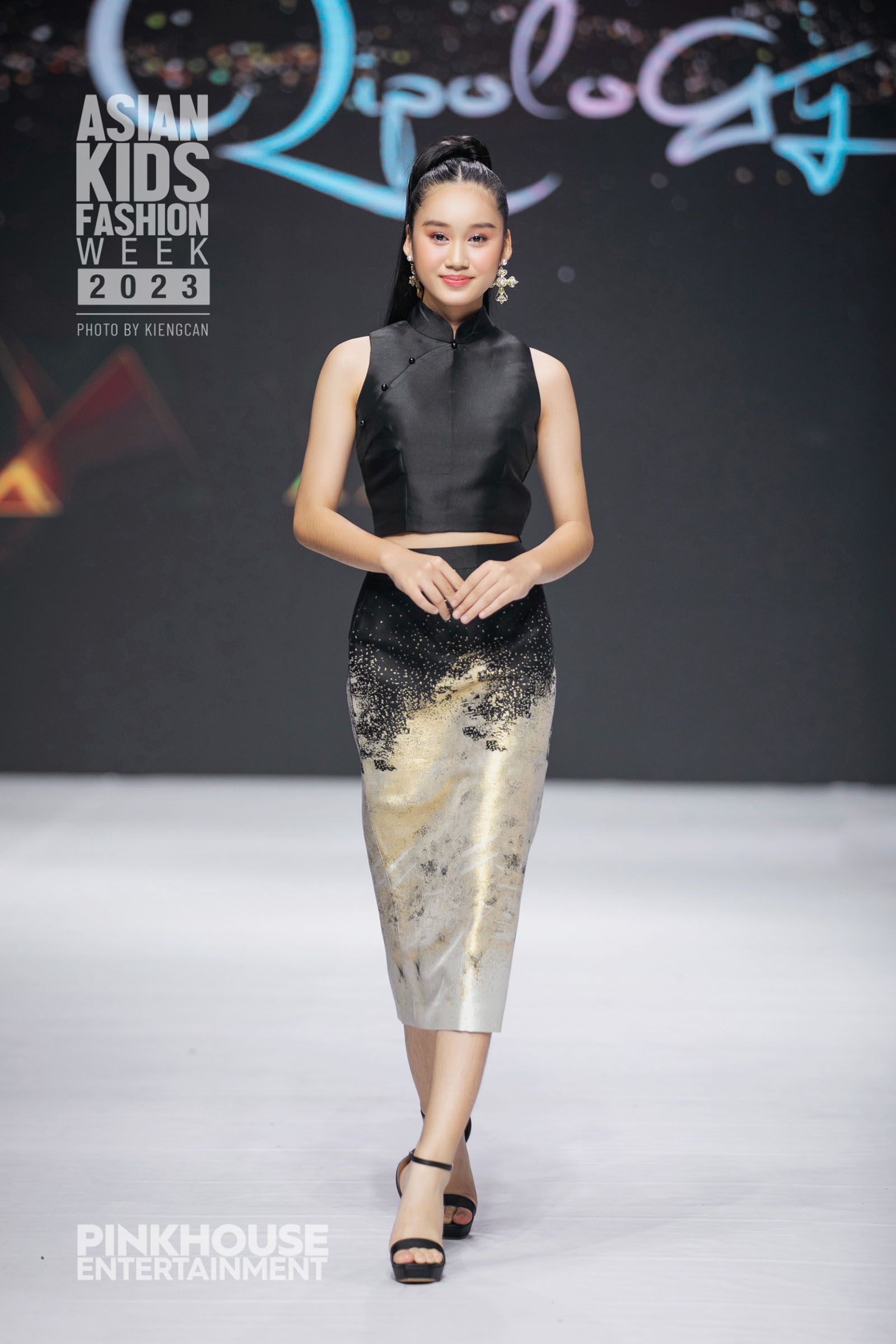
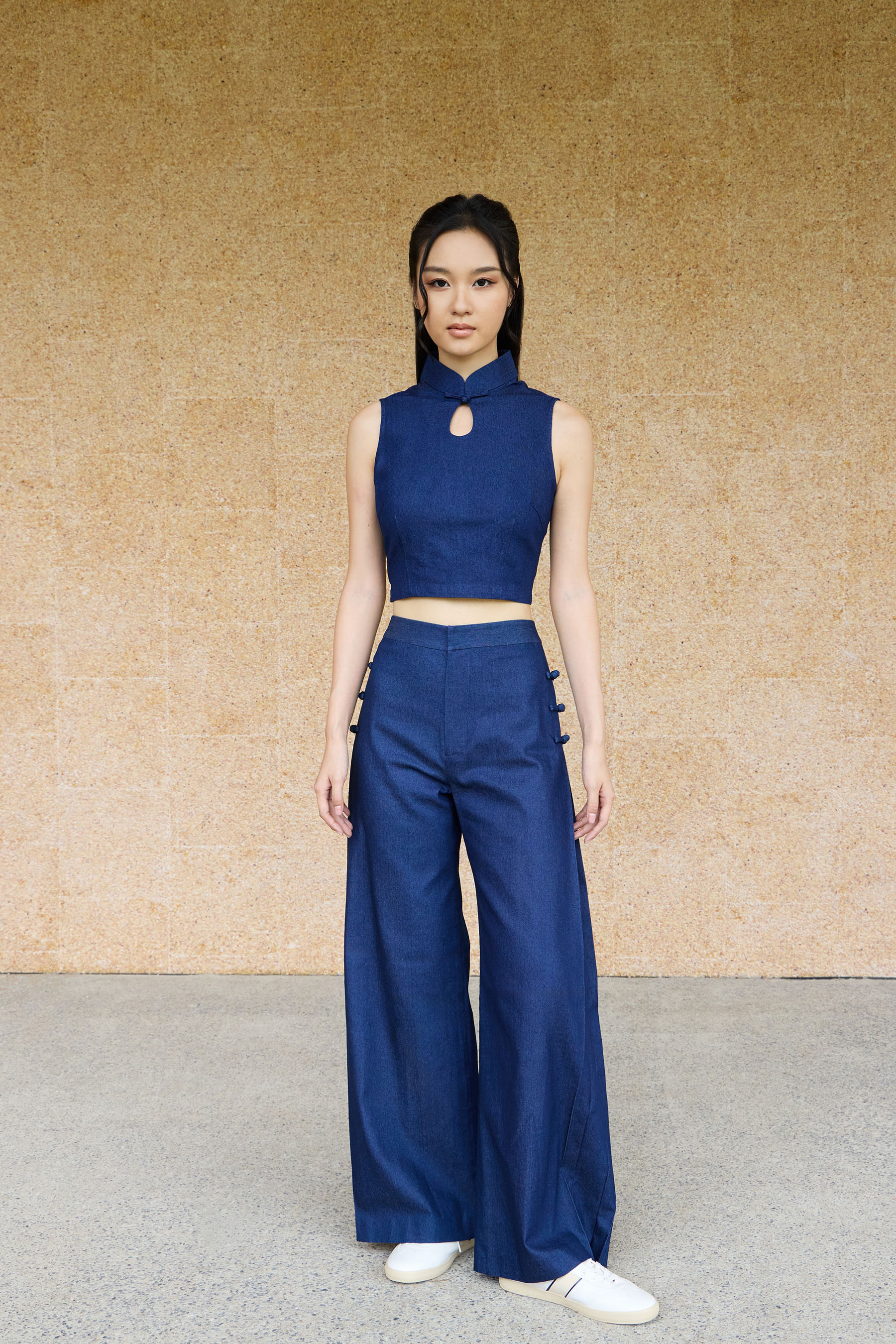
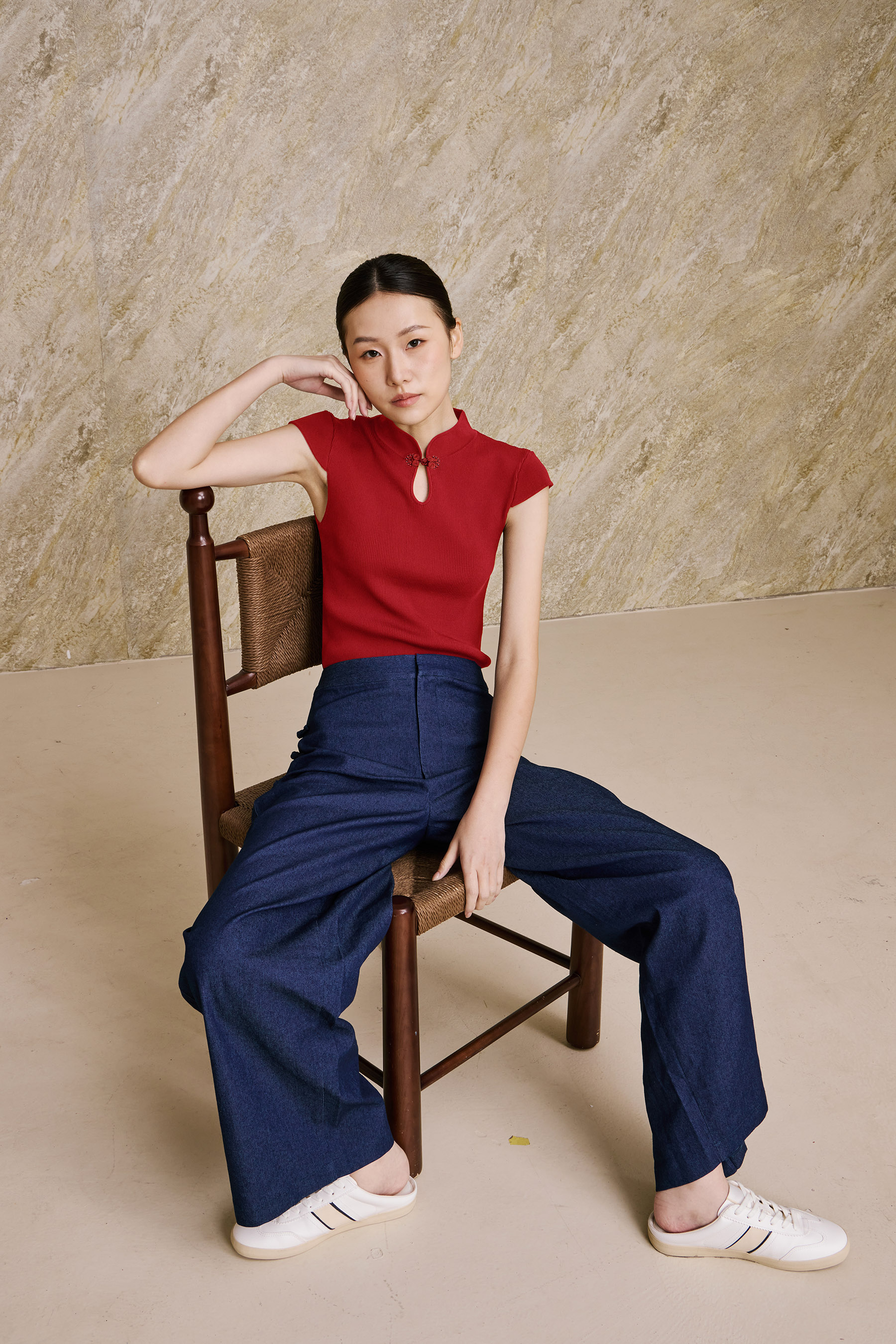
When it comes to the qipao — Chinese women’s formalwear with a high collar, asymmetric neckline, and side slits — it is perhaps easier to be more boldly experimental. Julie Liu, founder and designer at Qipology, says that her adaptations of the traditional qipao are meant to serve the present-day Hong Kong woman, and hence there is no reason to adhere to frog buttons or side slits in every piece.
“We try to create Oriental pieces that are wearable and practical enough, without feeling ‘out of place’ in modern daily life. That has always been our design ethos,” says Liu, who is known to have used unconventional materials such as wool or denim to create variations on a form traditionally made with silk.
However, there are one or two distinctive traditional features that she prefers retaining in her reimaginings of the traditional silhouette. “I mostly like to keep the mandarin collar in our designs as I do feel there is a certain elegance to the collar framing the wearer’s face,” Liu says. The relatively simpler pieces are embellished with jade or frog buttons, “for a little added story”.
Heritage at home
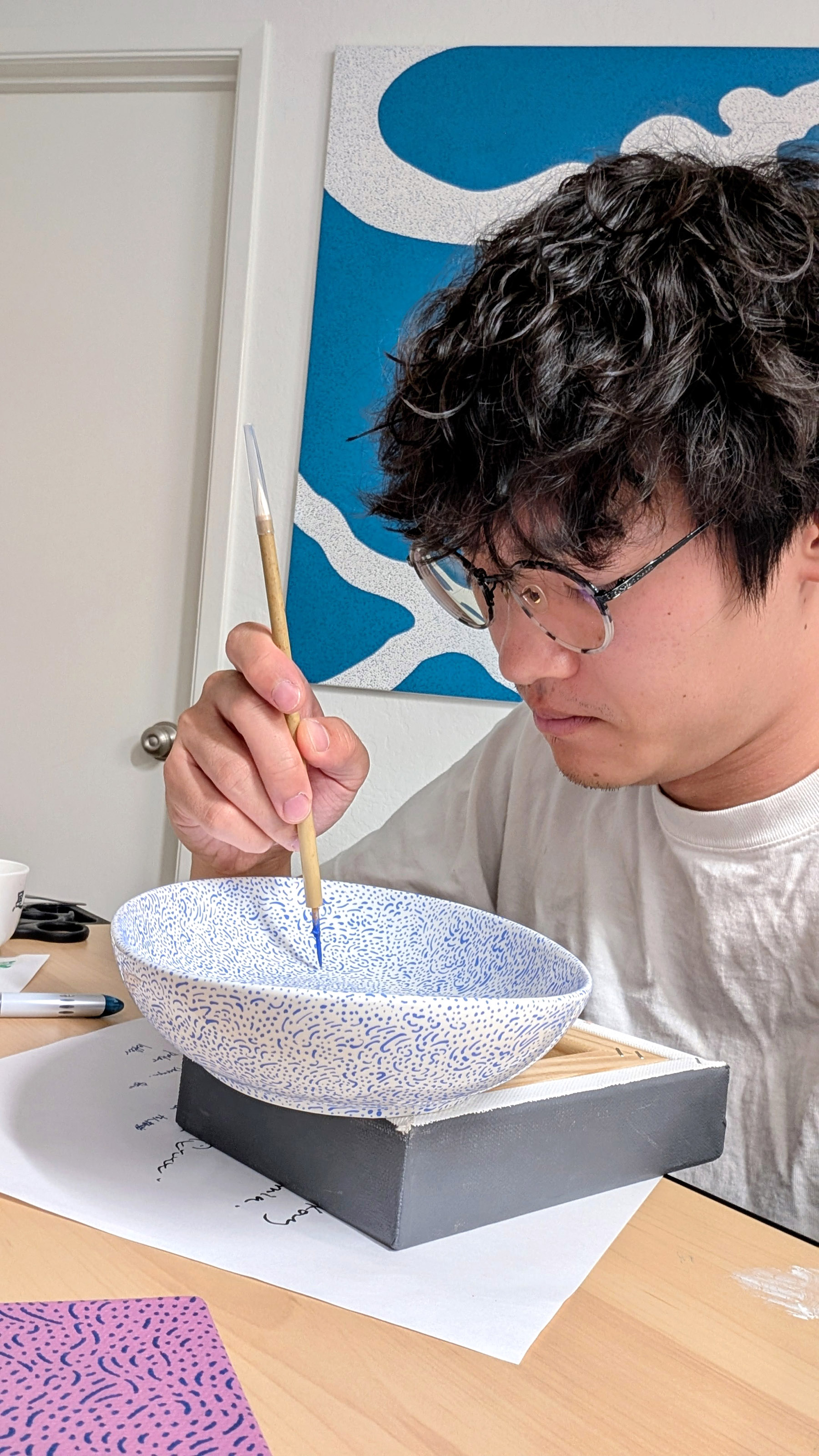
Functionality precedes decorative value for Guangcai artist Dixon Ngai. “I don’t just make a piece for display; I encourage people to use it,” he says. “When motifs inspired by our history are painted onto a cup and someone drinks tea from it, the connection becomes personal.”
“My approach is to take the exquisite motifs and apply them to objects that fit into a modern Hong Kong apartment — a coffee cup, or a decorative tile for a modern living room,” Ngai says.
ALSO READ: Finding creative solutions
While Ngai’s artistic philosophy is to put a slice of traditional art in people’s domestic environments, he has high regard for heritage, preserved in its most authentic forms.
“I truly respect the techniques passed down by the masters — the way they handle the brush, the patience required for firing, and so on,” Ngai says. “This forced patience teaches a level of focus, humility, and observation that is increasingly rare in our swipe-and-scroll culture.”
If you go
Kwan Kwa: Chinese Wedding Costume Reimagined
Dates: Through Nov 30
Venue: Hong Kong Design Institute, 3 King Ling Road, Tseung Kwan O, New Territories
https://hkdi.edu.hk
The writer is a freelance contributor to China Daily.
