

Several designers highlighted at the fashion events in HK this week have reinvented materials, techniques, or ideas from Chinese culture, Gennady Oreshkin reports.
If there is a common theme that stands out at various fashion events presented this week in Hong Kong, it probably has to do with the repackaging of Chinese cultural elements, while applying cutting-edge, sustainable techniques.
The trend was apparent in a collection presented by independent fashion label Tigerstrolling, and designed by Tiger Chung Ka-ching, shown at the Hong Kong Palace Museum on Tuesday, as part of Virtuose: The Artistry of Couture. Called Petit Coussin (Small Cushion), the collection takes off from an imaginary, if slightly comedic, premise.
ALSO READ: Back to the future
“A group of people who have never worn couture garments suddenly receive an invitation to an occasion that demands that they do,” says Chung, setting up the scene. “With no time to prepare, they turn to whatever material they can find around them — an old suit, a vintage qipao (traditional form-fitting Chinese women’s dress with an asymmetrical neckline and side slits), the leather from a bicycle seat, a tailor’s discarded tools — and piece together outfits that might look like couture only from a distance.”
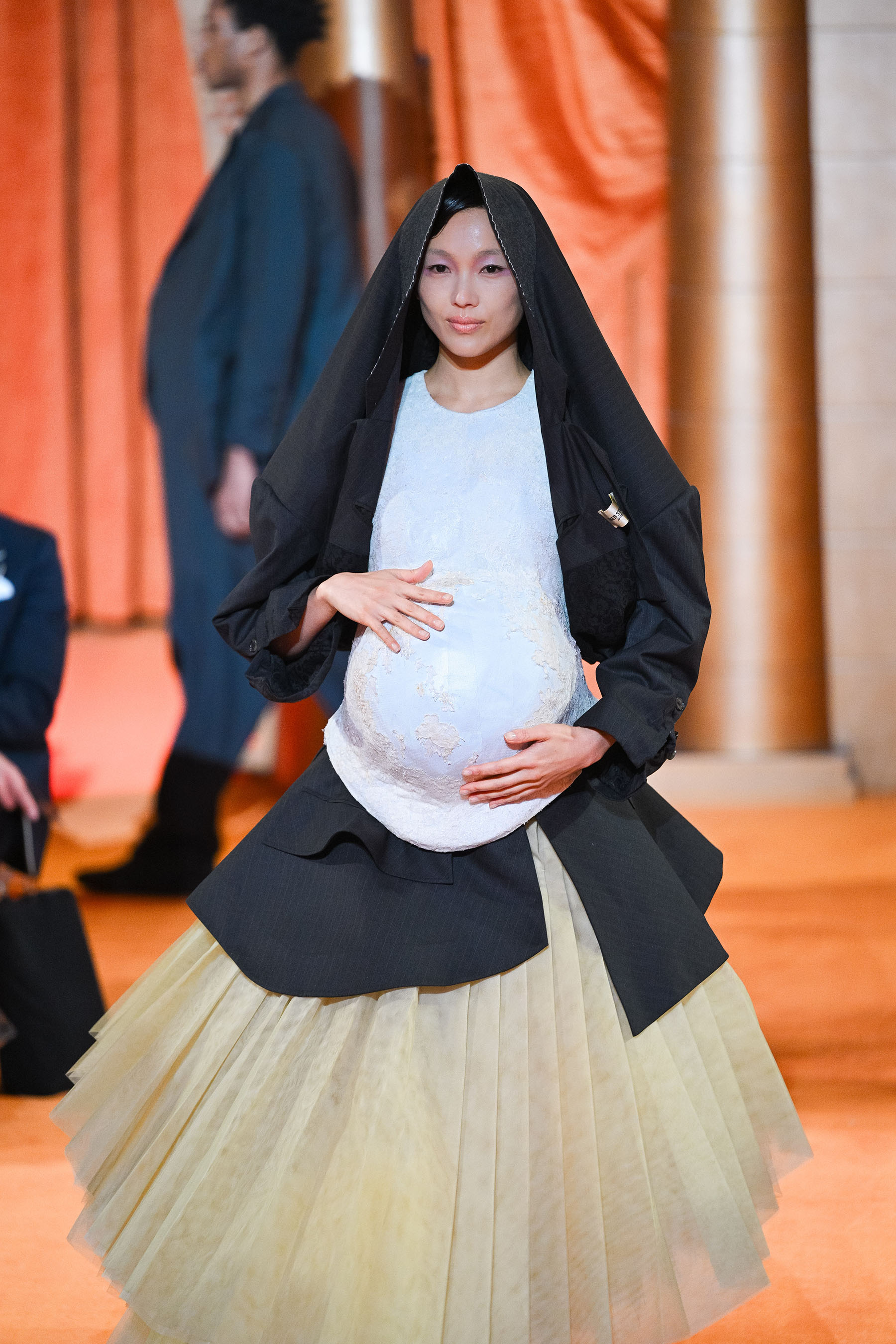
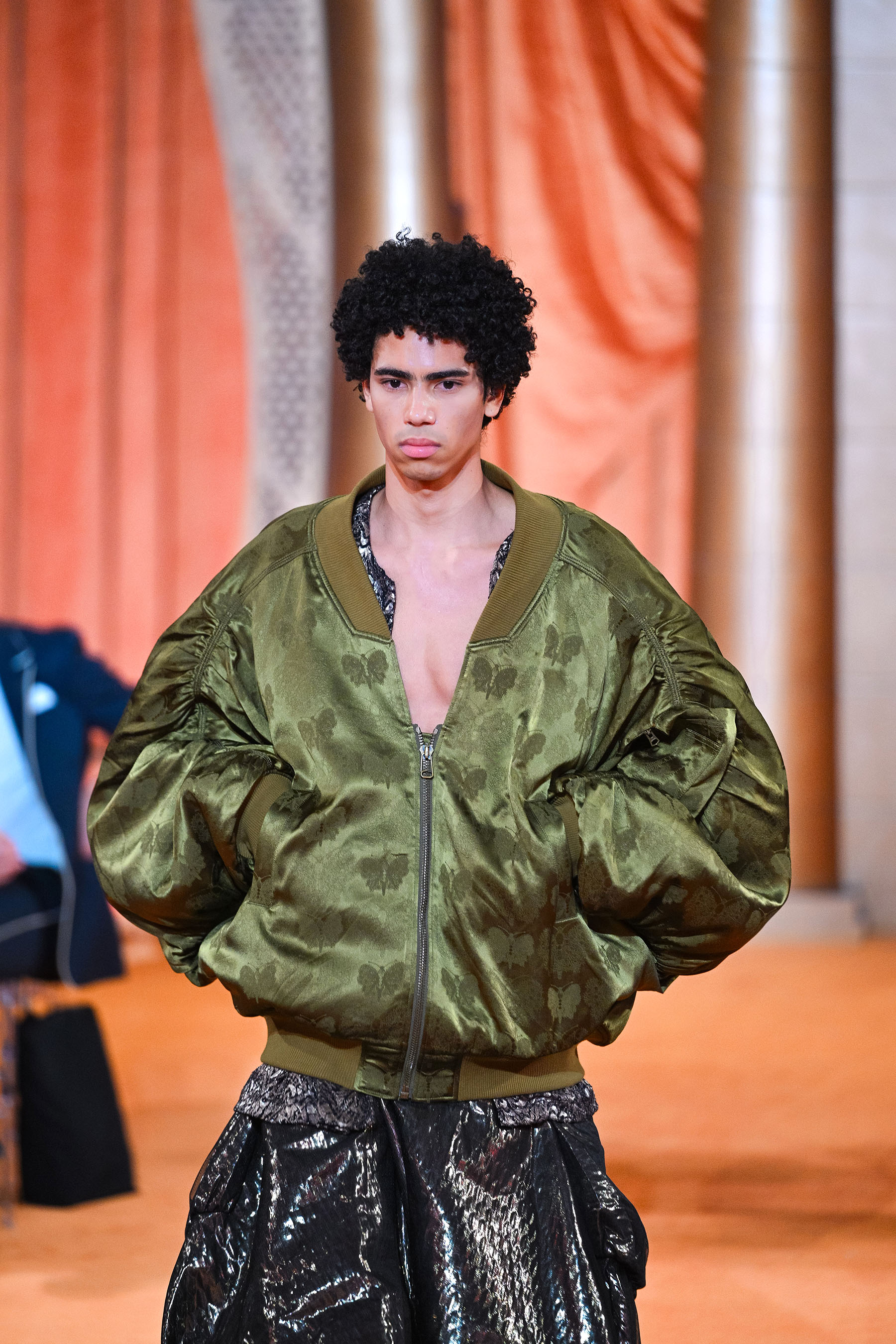
The products of these unlikely mix-and-match experiments included a bomber jacket made out of vintage qipao silk, and an asymmetric cut formal jacket with a hood combined with a tulle skirt and a stiff bodice that gave the model a pregnant look. There was also a red qipao with a drop waist and a hemline resembling a ballerina’s tutu — which could be a throwback to some of the generic pieces by Spanish master couturier Cristobal Balenciaga.
“These materials tend to come in narrow widths, and each piece has its own unique pattern placement,” Chung says. “Hence we cut and construct each garment according to the fabric’s specific layout — making the most of every inch and ensuring that no two pieces are exactly alike. It’s the kind of craftsmanship that only reveals itself when you get closer.”
The Petit Coussin line takes Tigerstrolling’s philosophy of merging casual fashion with high fashion to the next level. The general aesthetic is evocative of urban life in Hong Kong. “We’ve always been interested in feng shui and folk traditions. But we don’t deliberately add Chinese elements to our work,” Chung explains. “It has more to do with the fact that we live in Hong Kong, and the city naturally seeps into what we do. It’s a place where these things aren’t exotic or decorative — they’re just part of life.”
Futuristic designs
For Centrestage’s Fashion Hong Kong Runway Show on Thursday, local designers drew inspiration from the city they grew up in — including some of its generic cultural features and chaotic energy — to create experimental designs using innovative materials while following the best sustainability practices.
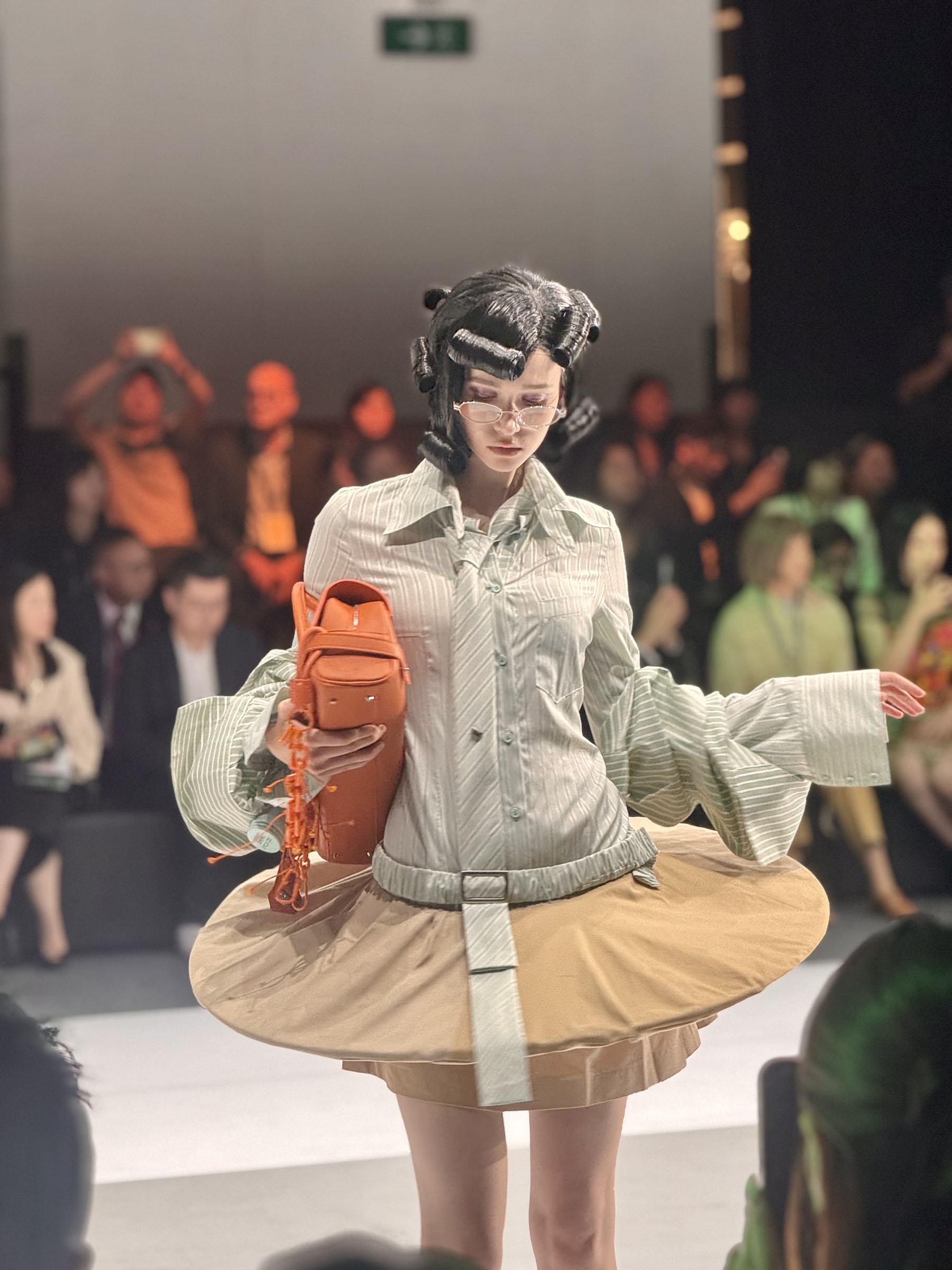
For instance, Nathan Moy, creative director of fashion brand Zidi, offered a counterpoint to the idea of Hong Kong as a city of high-rises and fast-moving vehicles in his collection Rhythm of the Heart. “Hong Kong is usually understood as speed and intensity,” he says. “Because here land is so limited, Hong Kong has been forced to grow upward. In that context, the decision to have our designs spread horizontally becomes charged.”
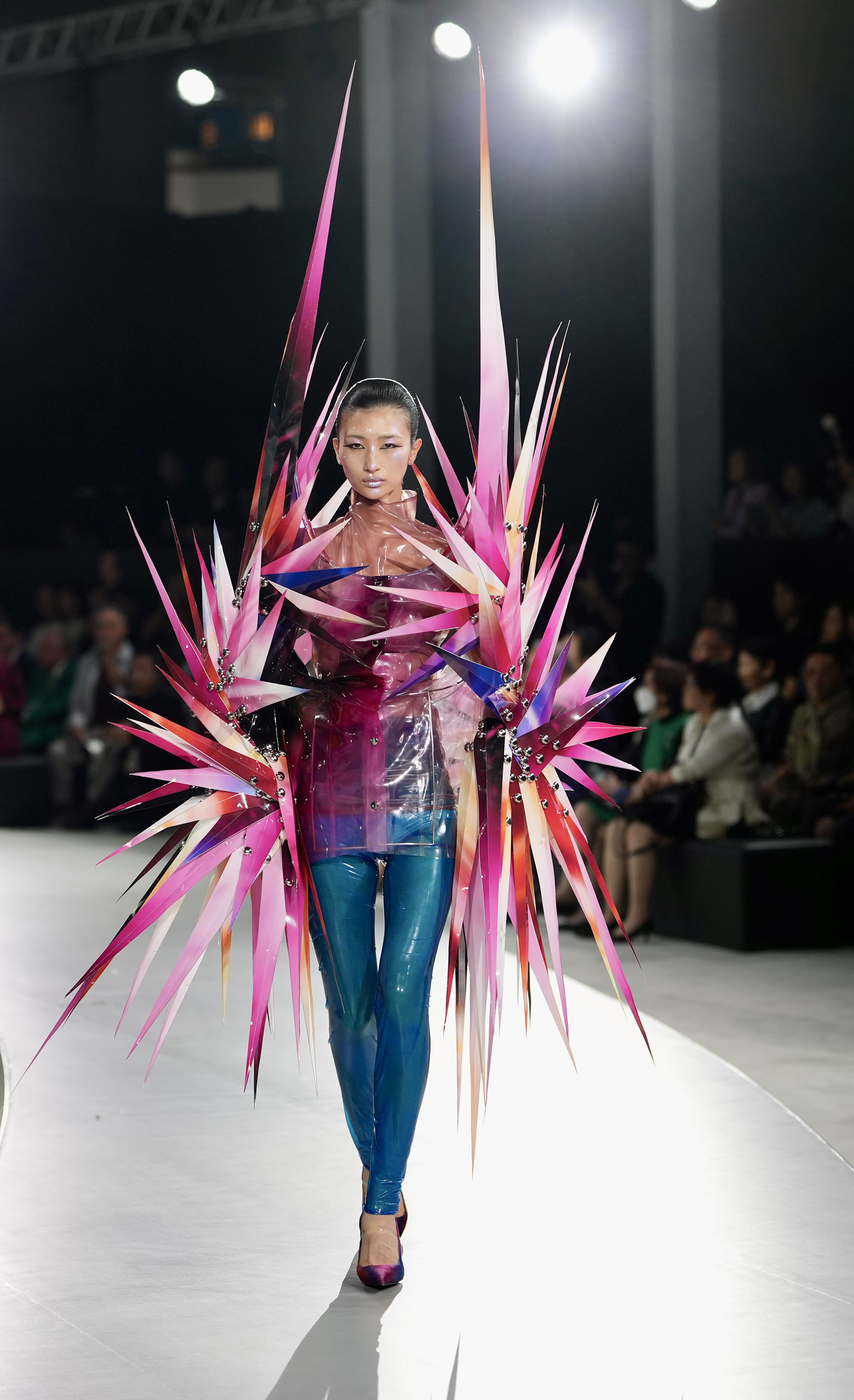
Silhouettes designed by Moy come with voluminous accessories extending sideways. The futuristic shapes are created by using hand-molded biodegradable thermoplastic made to look like pieces of fabric, frozen in motion. To be consistent with the general aesthetic of this collection, the accessories also needed to suggest movement. “I adapted a Tang Dynasty (618-907) technique,” says Moy, referring to ronghua, the craft of using silk and copper wire to make decorative flowers. “There is a fine metal wire hidden inside the fabric, in a way that a sash, a bow, a choker, or even an earring can appear to be frozen midmotion in space without visible support.”
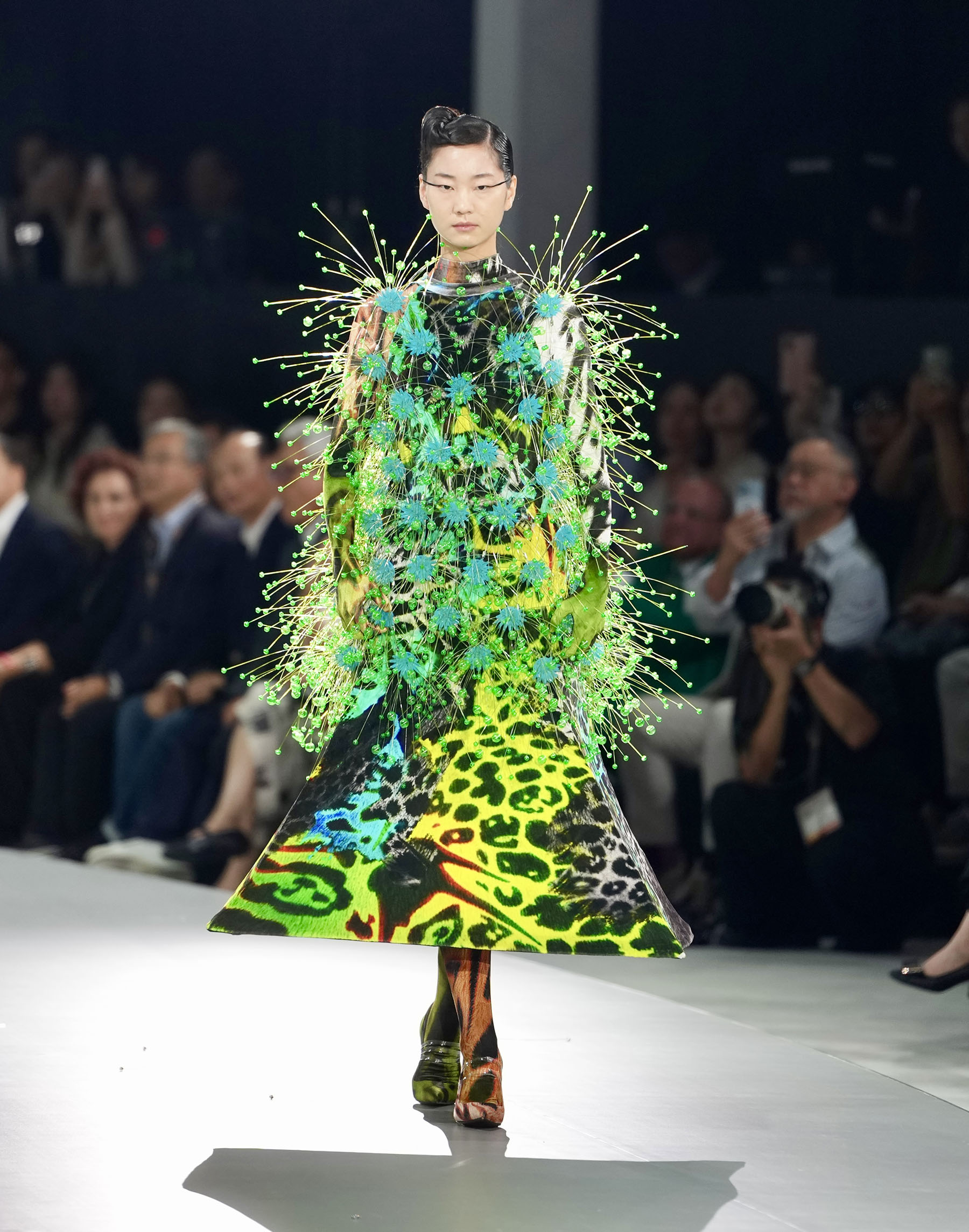
Futuristic designs dominated the Centrestage Elites show presented by Kit Wan Studios on Wednesday. Titled Mutant // Mythology, the futuristic collection saw the designer channeling his love for Cantonese music — he has a history of designing for local Cantopop legends Miriam Yeung Chin-wah and MC Cheung Tin-fu — into over-the-top punk-rock looks. Highlights included a black latex ensemble, studded with a number of sustainably sourced embellishments resembling sea urchins, and a latex minidress with a number of outsized spikes sticking out from the sleeves.
Nod to a Hong Kong historical action film
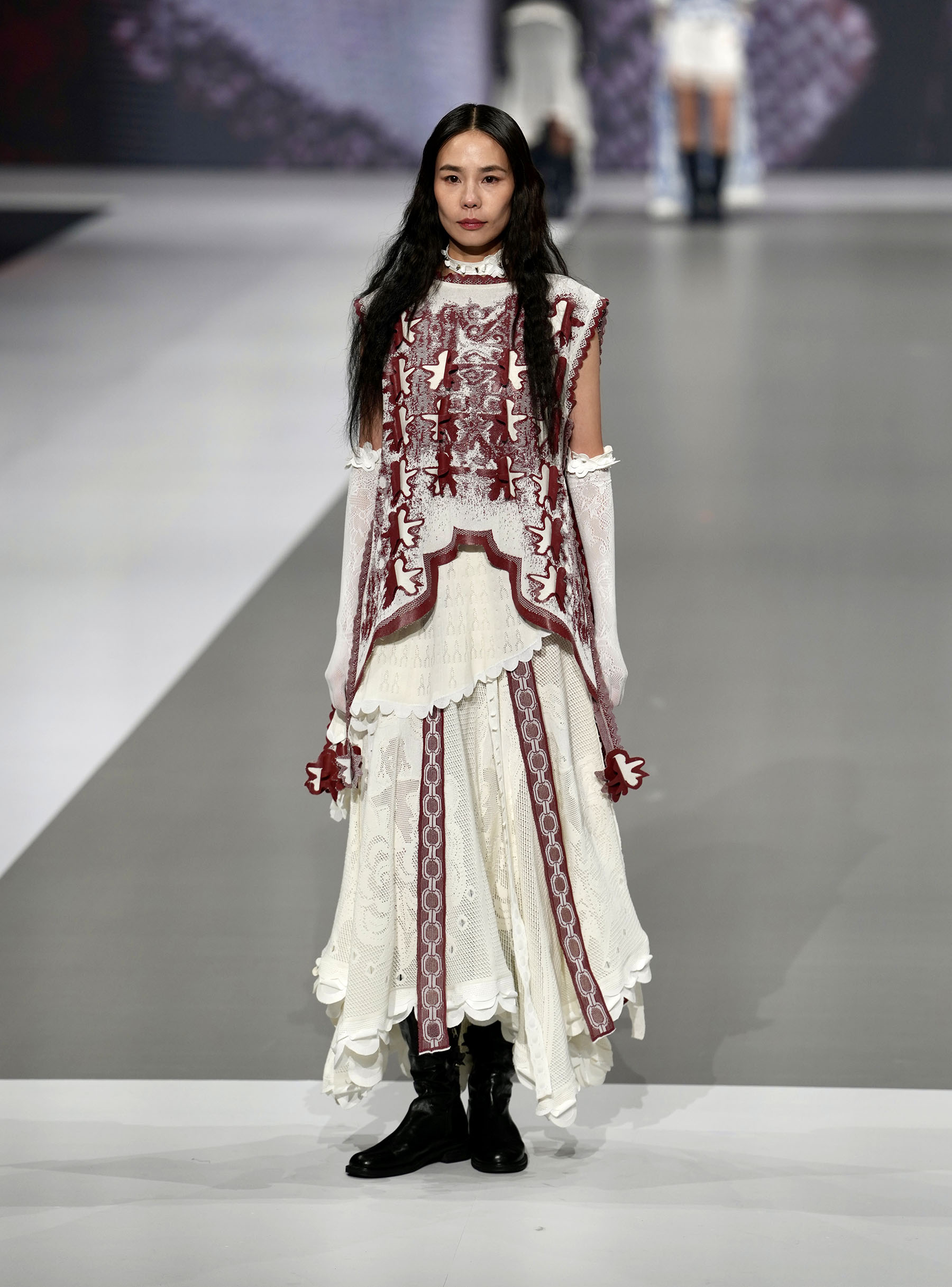
At the Hong Kong Young Fashion Designers’ Contest, due on Saturday, one of the finalists, Kenneth Cheang, is presenting his Nostalgia collection, named after Andrei Tarkovsky’s 1983 film. Like the film’s protagonist — a Russian writer dealing with homesickness during a research trip to Italy — Cheang decided to translate his feelings for Hong Kong while spending time overseas into “a poem written through clothes”.
The materials and textures used for the collection allude to the city’s humidity, salty air, typhoon shelters, and fishing villages, though not explicitly. The references to Hong Kong cinema are more apparent. In one of the designs, a scarf draped over one shoulder echoes actor Nicholas Tse Ting-fung’s look as rickshaw-puller Ah Si in the Teddy Chan-directed Bodyguards and Assassins (2009). To give a well-worn, distressed finish to the pieces in this collection, Cheang used hand-dyeing and experimented with material treatments — by letting mycelium grow on the fabrics, binding damaged fibers together in the process.
Sustainable designs involving wood and paper
Traditionally, Centrestage hosts the Redress Design Award — which recognizes achievements in the field of sustainable fashion. Eight fashion designers from around the world participated in this year’s edition, held on Wednesday. German designer Jon Liesenfeld won the main prize; the Hong Kong Best Prize went to local designer Jasmine Cheuk; while Israeli designer Tal Zohar won the People’s Choice Award.
One of the finalists, Yi Ding, a young Chinese designer based in Paris, is interested in Chinese craft tied to folklore and storytelling, as seen through a feminist lens. Her Faded Paper collection is meant to reclaim the traditional Chinese paper-cutting technique, which, she believes, was invented as an instrument of patriarchal control.
“Originally the practice was a way of measuring a young woman’s manual dexterity and patience for household duties,” she contends.
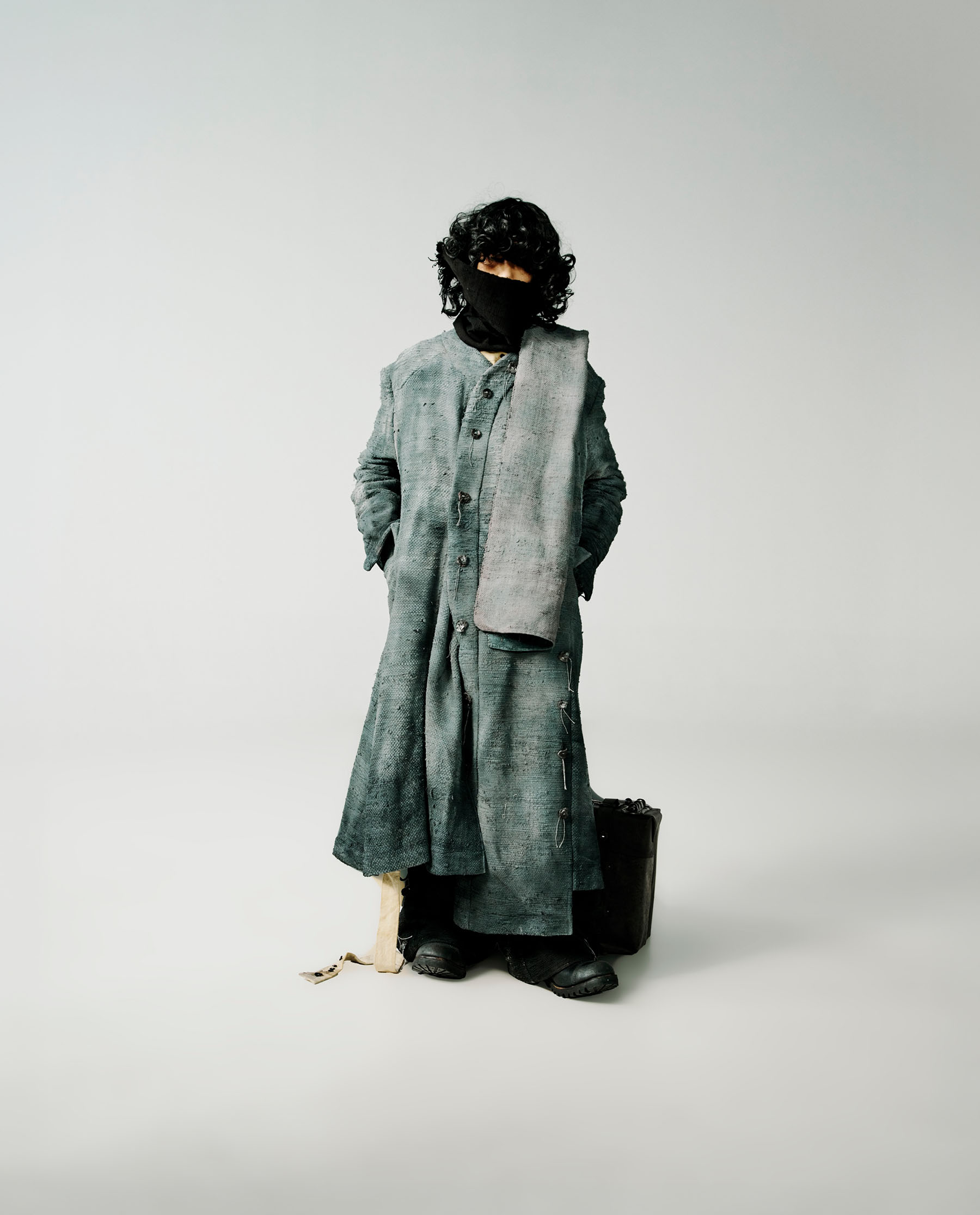
In her hands, paper-cutting has become a medium for a commentary on femininity and gender discrimination. One of the pieces in the collection is a blue dress with motifs of bunny rabbits, which, in Chinese culture, are associated with female fertility. “I painted the bunny blue because it’s the most masculine color to challenge this notion,” she explains.
She also presented a red dress with a hemline fraying into a number of messy ribbonlike strips. The model wearing the piece carried a pair of pliers as accessories. “It’s about a girl breaking free of chains,” says Ding. “She’s holding the pliers she used to cut the chains with, liberating herself and also challenging the stereotype that only men are capable of doing physical labor.”
To apply the craft of paper-cutting to textiles, the designer invented an entirely new technique, which took over 100 attempts to perfect. “I created a 3D-suspended Jacquard dress, consisting of two layers — conventional knitwear at the base and a lighter top layer which flutters with movement, mimicking that of paper-cut designs.” She adds that the technique ensures zero waste.
Holly Shih, another Redress finalist based in London, presented her collection, Threads of Time. It draws inspiration from decorative window grilles with floral patterns, a generic architectural feature in urban Taiwan, China.
“I grew up looking at the world through those windows,” says Shih. “The interplay between the light and shadow fascinated me, and I wanted to incorporate the idea in my garments.”
She used plywood to get the desired effect. Her pieces are marked by a well-defined structure and firmness — a skirt appearing to be frozen midmovement, or a sculptural neckline, with the pieces casting graphic shadows onto their own surfaces.
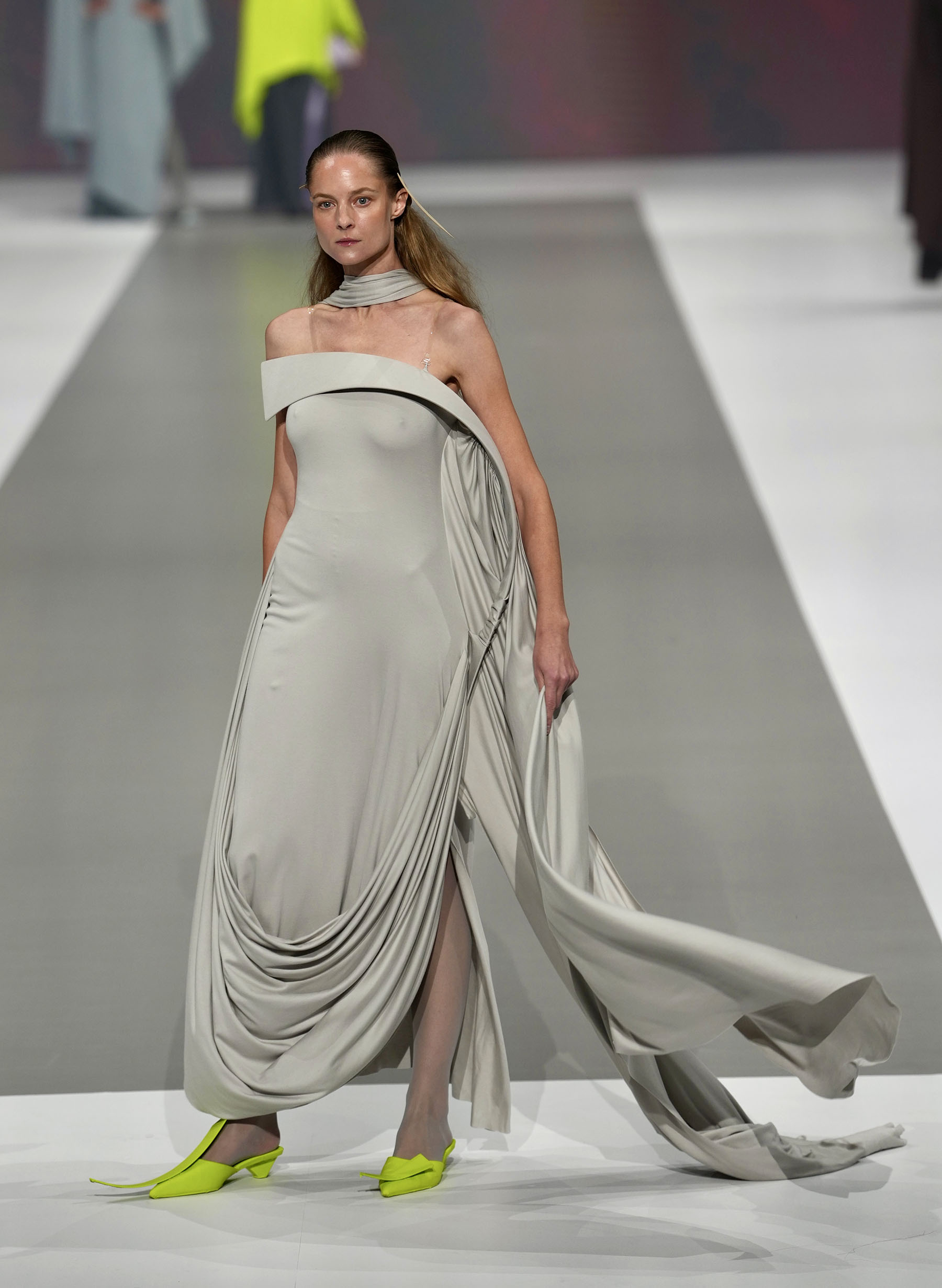
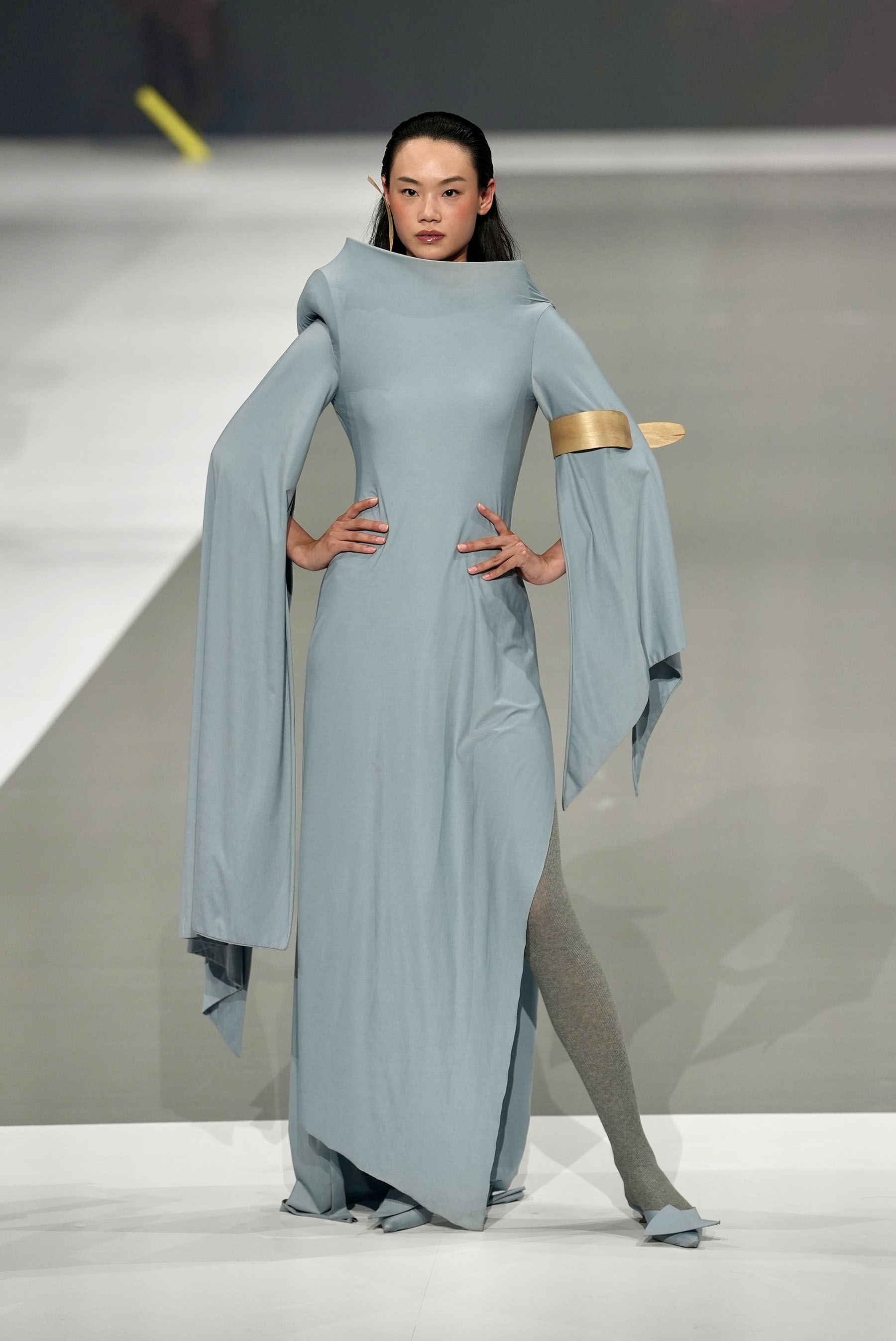
“I studied theater design for my bachelor’s degree, and learned how to work with wood while building stages,” Shih says. “I sourced the scraps of plywood from a woodworking factory near Somerset House in London, where I’m currently doing a residency, and found out that plywood can be quite a flexible material when steamed.”
ALSO READ: Do influencers still count?
To create her seamless, flowing, yet structured dresses, Shih created a complex base structure using padding and wood, and though she faced a number of challenges while making the patterns, the pieces that emerged in the end were statuesque, draping silhouettes.
If you go
Centrestage 2026
Dates: Through Saturday
Venue: Hong Kong Convention and Exhibition Centre, 1 Expo Drive, Wan Chai
www.hktdc.com/event/centrestage/en
The writer is a freelance contributor to China Daily.
