

With the local government actively encouraging the use of AI to make animation films, do HK animators have what it takes to come up with content that is refreshingly original? Amy Mullins investigates.
The application of large language models that artificial intelligence systems are built on — or AI, as most among us would call it — in filmmaking continues to draw flak. While AI is often dismissed for its inability to produce original work, the use of generative AI in moving-image works has also come under fire for its catastrophic environmental impact, stemming from its drastic power and water demands.
In a recent interview, Hollywood actor-producer Brad Pitt highlighted AI’s usefulness in cutting costs, calling it a boon for makers of midbudget films that otherwise may not get made. Little wonder then that the idea should appeal to animators in Hong Kong, where costs of producing animation works are prohibitive.
Could AI be the boost that Hong Kong’s animation industry needs?
READ MORE: AI + IP as the core helps culture go global
Vincent Mak Shing-fung, an assistant professor at the School of Arts and Social Sciences at Hong Kong Metropolitan University (HKMU), says that to be able to forge a truly vibrant and distinct identity, the city’s animation sector — at present sustained mainly by the revenue from advertising, games and other commercial endeavors — needs to secure more international collaborations, expanded production capacity and generate more local intellectual property (IP). The last of these would certainly help expand the sector, though at the moment, making animation in Hong Kong is not only expensive, it’s also time-consuming.
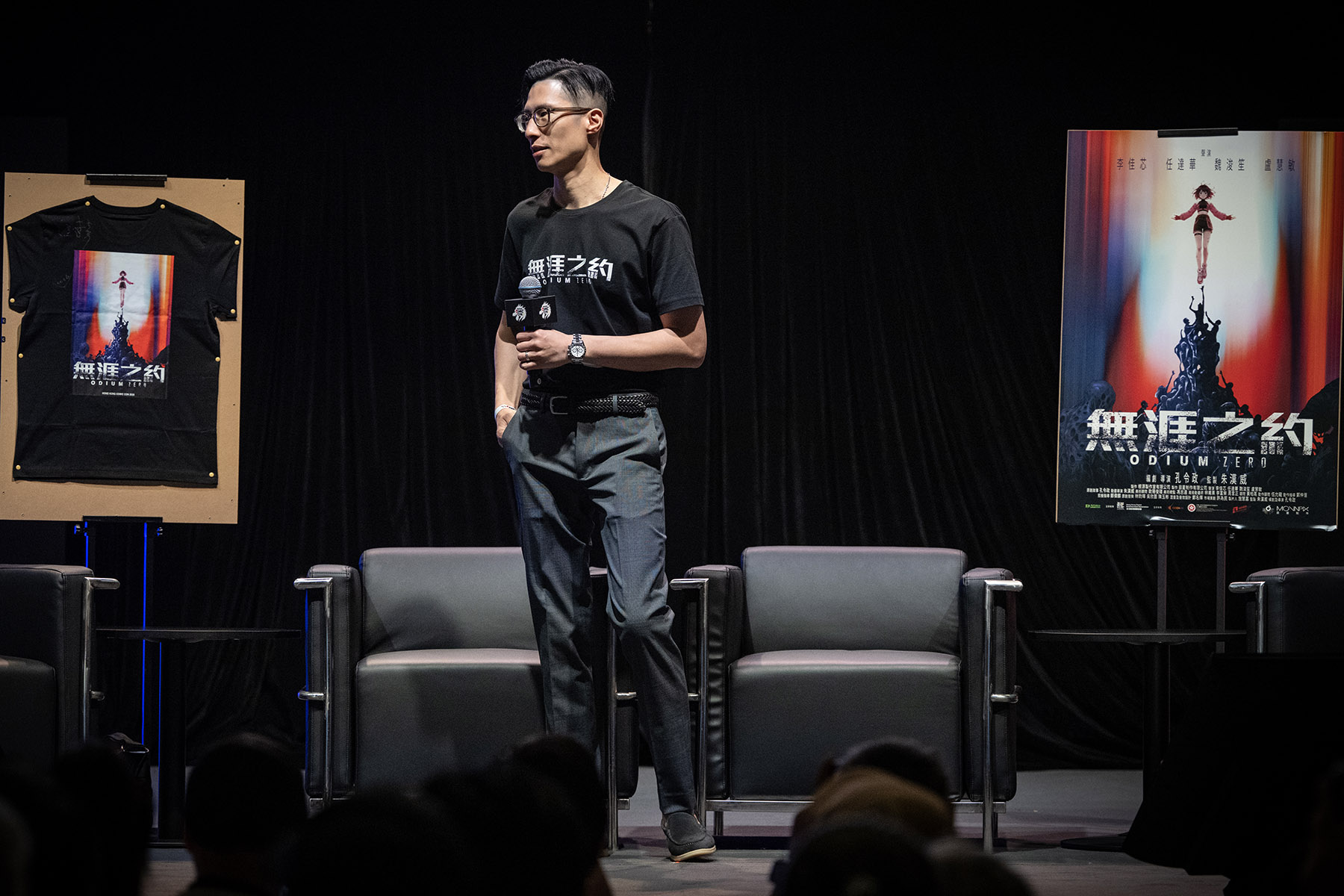
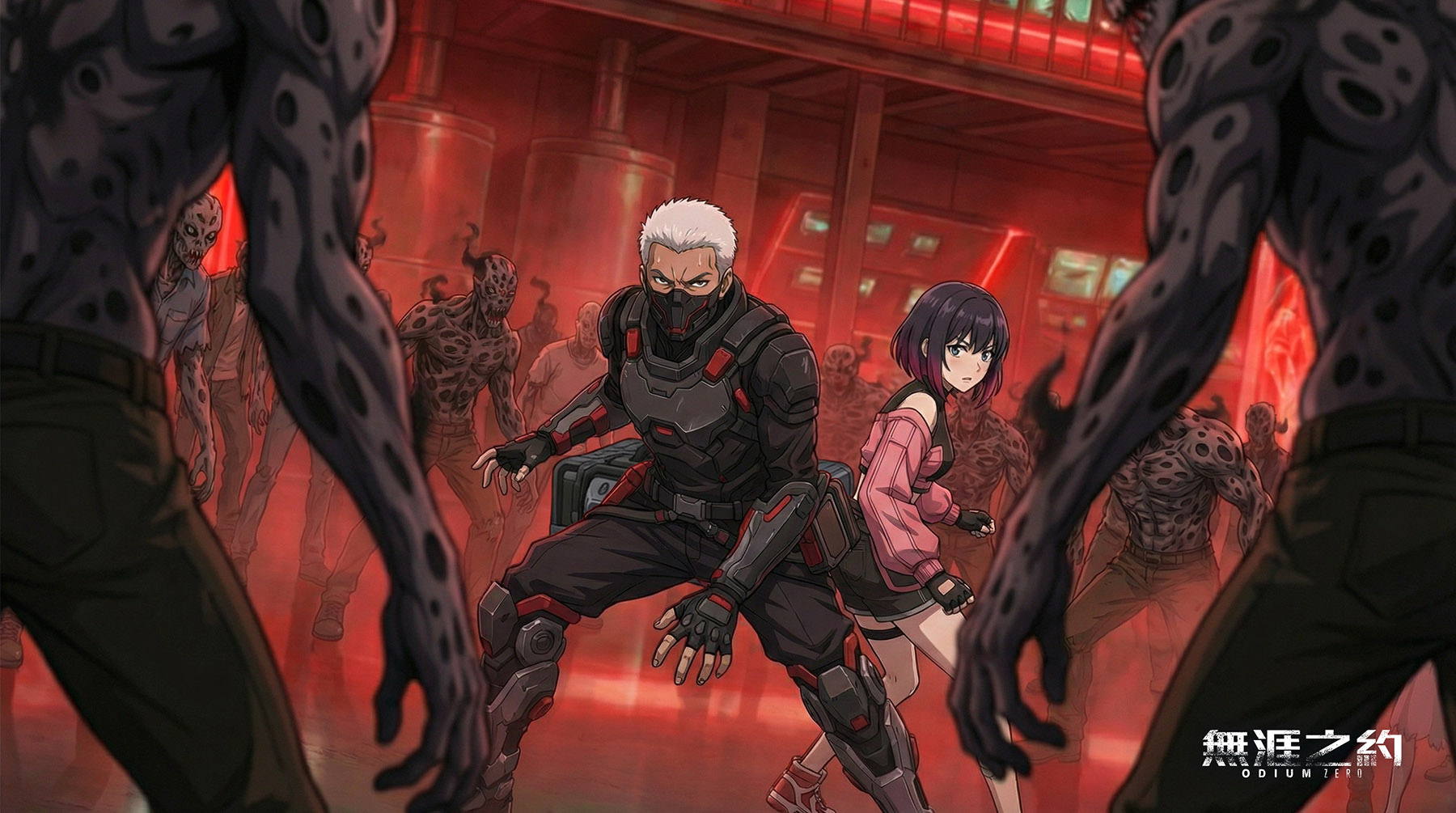
However, James LJ Hung argues that the pros of embracing AI far outweighs the cons. “AI facilitates the kind of ambitious world building that we want to do,” says the creator of the AI-assisted science-fiction and fantasy series Odium Zero — set in a pandemic-ravaged future, with the key characters pitted in a battle against mutated monsters. Its first installment is due for theater release in Hong Kong in September.
Hung officially launched the IP he and his team have been working on for two years at Hong Kong’s first Comic Con, in May. He says that without the input from AI, “I would never have imagined that we could walk up to that stage and share our content in just 12 months”.
If Hung has his way, Odium Zero will encompass a media universe of films, TV, games, collectibles and more.
“Hong Kong is a cradle for really talented writers, actors and directors, but when we want to tell a story that requires a bigger canvas, we’ve had to look elsewhere. AI can help make that happen here,” Hung says.
Government backing
The Hong Kong Special Administrative Region government is actively supporting the cause. A spokesperson for the Cultural and Creative Industries Development Agency (CCIDAHK) points out that the funding platform has rolled out several programs in aid of developing AI animation, including its AI-Assisted Animation Production Support Scheme (AIAAPSS) — which backed Odium Zero and is now entering its third edition. There is also the AI Academy, run under the banner of the Hong Kong International Film and TV Market (FILMART). Its first edition in March was focused on the industrial side of AI, running seminars and panels that discussed AI-assisted virtual production, copyright infringement and workflow, among others topics. The idea is to support “long-term, tech-driven development of the film industry,” in keeping with the “AI for Industries” initiative outlined in Hong Kong Chief Executive John Lee Ka-chiu’s 2025 Policy Address.
The CCIDAHK isn’t alone. Established in 1999, initially to support the development of the gaming sector, the Hong Kong Digital Entertainment Association (HKDEA) has expanded to include all forms of digital entertainment, and organized the Hong Kong Information and Communications Technology Award (HKICTA), which includes a prize for “Best Use of AI”.
In search of original voices
Currently, AI-based animation remains an outlier among animated films, be it features or shorts, and dominates in commercial endeavors. “Production houses use more and more AI — and the outcomes are actually worse,” says Matthew Chow, founder of Simage Animation Studio Hong Kong and a frequent collaborator of Toe Yuen, the maker of the Hong Kong-favorite McDull series. He acknowledges that Simage earns its revenue from advertising, gaming and outsource work, a situation that is unlikely to change in the foreseeable future.
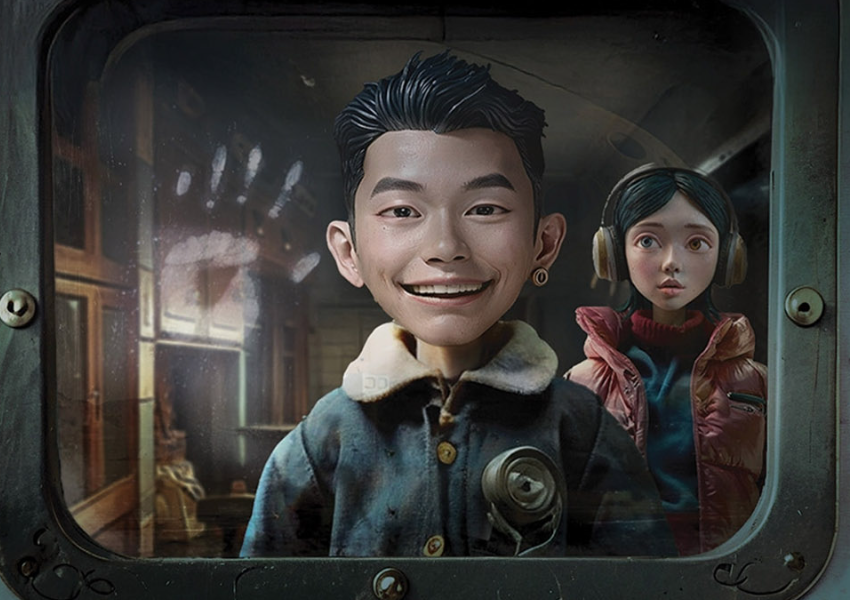
The first HKICTA AI prize was won by ManyMany Creations for the Kwai Bun -directed Nine Awaken. Advertised as a work that breaks the traditional animation mode, the film falls into a familiar pattern of exploiting technology to redesign visual environments, characters, sound, and camera work. With its depth of field, natural lighting and claymation — animation made using malleable clay sculptures — texture, the 12-minute sci-fi drama does not quite live up to the claim that it “showcases the boundless potential of AI in the creative field, injecting a new level of imagination and futurism into animation and marking a major milestone in the evolution of the medium”.
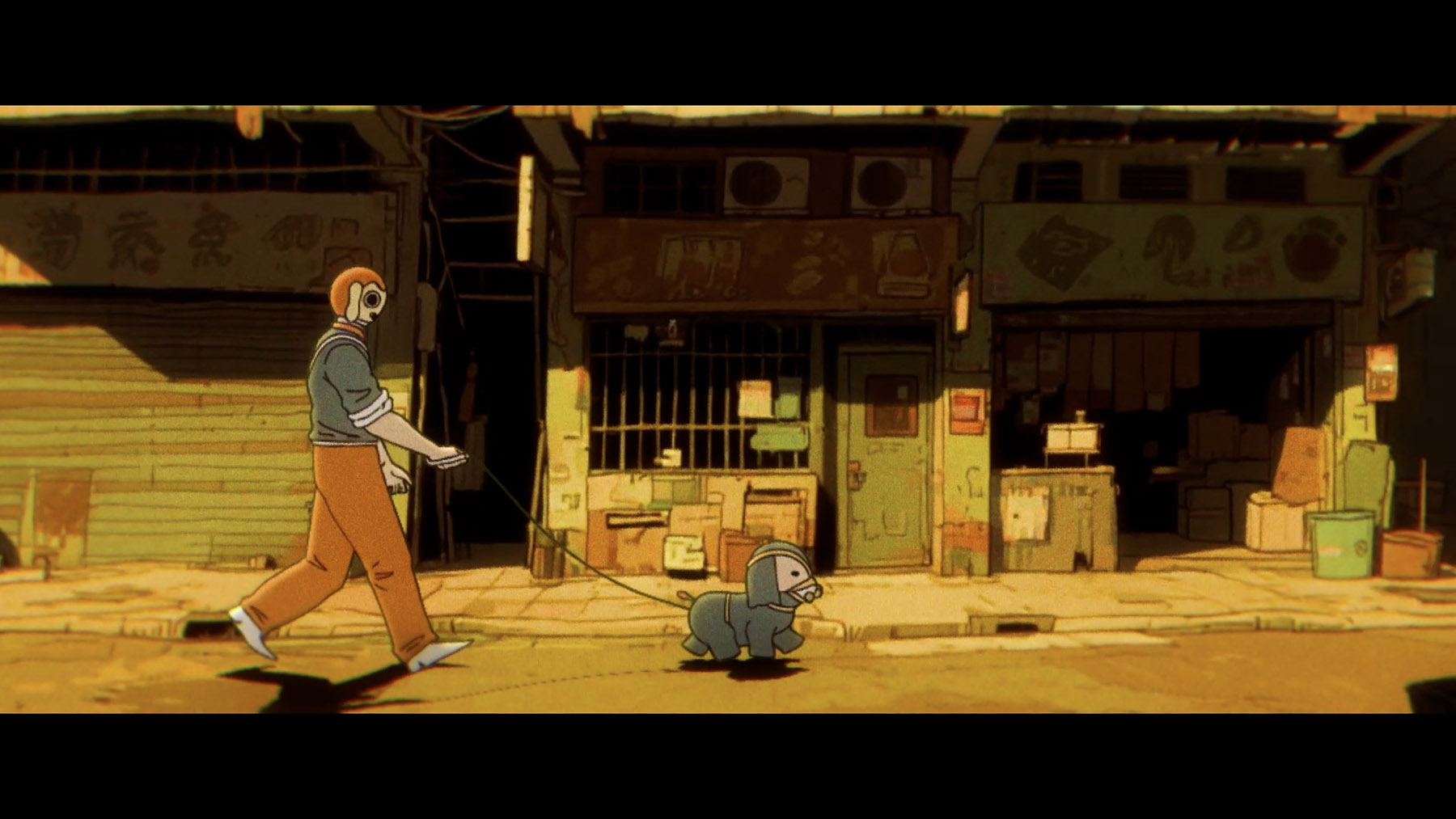
The film was among the one-to-15-minute AI films that made it to the first edition of the AIAAPSS. The inaugural selection was quite diverse, ranging from a homage to ’90s Hong Kong action — 924 Studio’s gonzo 2D-animation martial-arts flick, Kill Danny 1999 — to a story about fulfillment of teenage ambition, The Dream of Helena by Astro Heart. The comic robot adventure in Free-D Workshop’s Roboy, and Intoxic Studio’s Blacky The Metal Arm Cat, a spin on kung fu drama, also figured on the list. Most of these are free to view on YouTube together with other AIAAPSS picks — Animazu Studios’ The 2nd Block, Nikopicto’s Planet Foodies, Takeaway by Pop Culture Studies and Artistry Discovery Lab, Vision Desire’s deTour, Morph Workshop’s Silili & Tree, and Depths of Light from StepC.
Many of these films feature the hallmarks of experimental animation — creative use of color, an enigmatic narrative, and unconventional artwork that bodes well for the future.
However, as Max Hattler, animator and associate professor at the School of Creative Media, City University of Hong Kong (CityUHK), puts it, “If AI is framed primarily as a way to do the same outsource work more cheaply, then we risk deepening the city’s role as a flexible backend rather than strengthening its position as a place where genuinely new kinds of animation originate.”

AI is no magic bullet
Despite government support seemingly ready to back new work and incubate AI-based projects, there is still a need to identify producers and distributors who understand the form, foster an adventurous commissioning culture, and build long-term infrastructure for independent studios.
Ruth Sik, a producer at Simage, points out that there’s a critical need for funders, as well as makers, to truly understand the format. While AI is supposed to cut costs, it’s not cheap. Hence five grants of higher value are more useful than 10 grants of not-enough.
Determining how best to use AI in combination with more traditional and analog techniques in order to create original content is perhaps even more crucial. The AIAAPSS films, while technically strong, ironically bear more than a passing resemblance to each other. Odium Zero has a strong Japanese anime tone.
ALSO READ: Homegrown comic icons
Both HKMU and CityUHK have incorporated AI into their curricula for animation, and at both institutions, AI is viewed as a tool rather than a replacement for creative vision. Hattler and his students see AI less as a magic bullet than as a new instrument inside a production ecosystem constrained by cost, time and vision, and the material it generates akin to found footage: something that can take newer forms in the hands of an artist.
The animator-academic believes that the city’s design sensibilities and cross-cultural position help drive AI-powered animation toward a transmedia continuum, and that original Hong Kong animation is best served by nontraditional exhibition spaces, including museums and art galleries, as well as nontraditional production models such as tech-powered hybrid work blending documentary and fiction, cross-media forms and installations.
“That allows local artists and small studios to punch above their weight without having to mimic the industrial scale of animation work made in Japan or the Chinese mainland,” Hattler says.
The writer is a freelance contributor to China Daily.
