

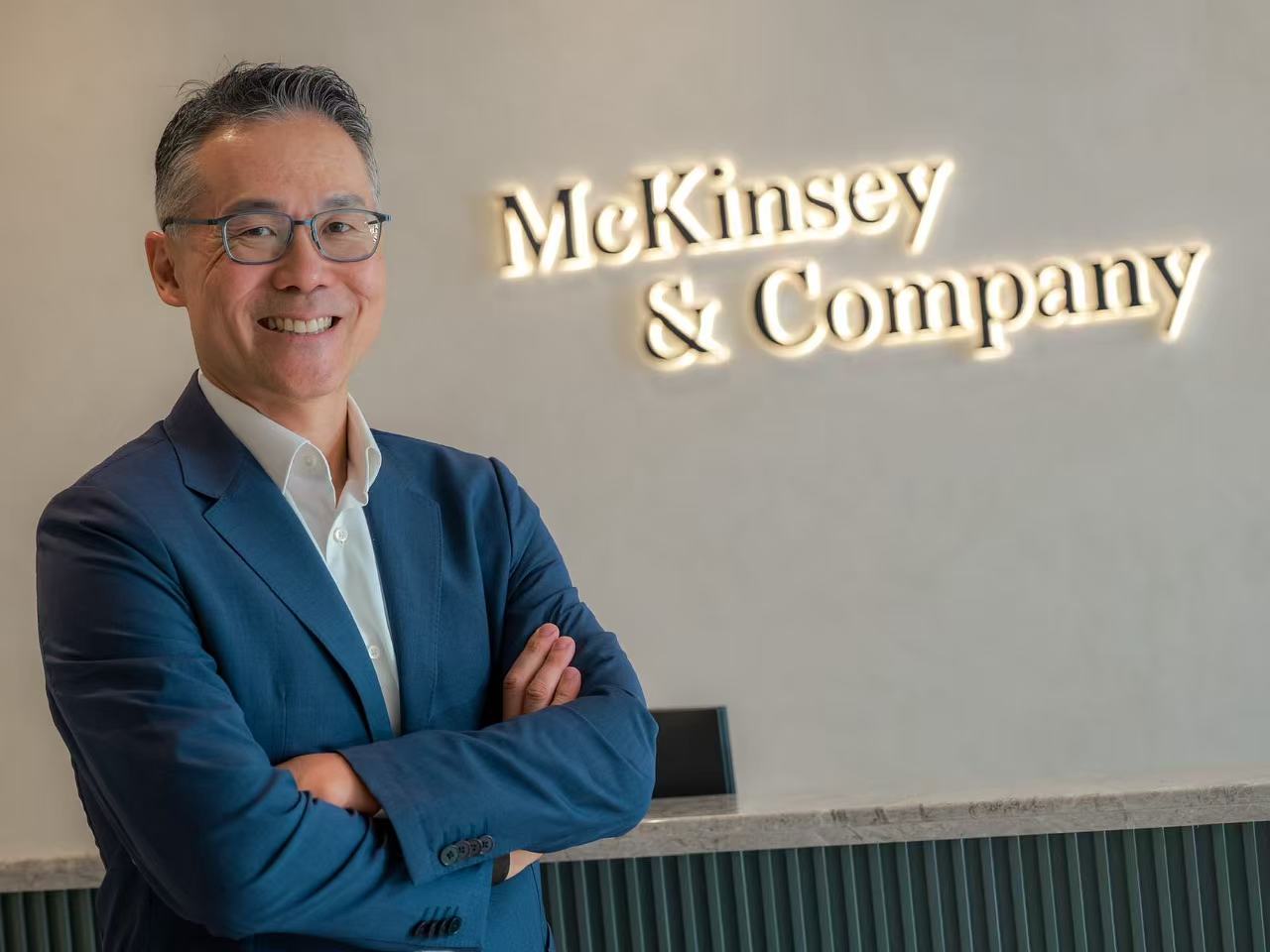
With advantages in traditional global exports and manufacturing, China is transiting to innovation-driven advanced manufacturing, and domestic consumption will gradually become the driving force for the country’s economic growth, said Joe Ngai, senior partner and chairman of the Greater China office at McKinsey & Co.
With geopolitical tensions and trade disputes, coupled with rising labor and production costs in China, as well as supply chain disruptions arising from the COVID-19 pandemic and the war in Ukraine, global enterprises in the last few years have been maintaining operations in China while expanding production to at least one other country to reduce risks and costs as well as to diversify their markets.
“In the last couple of years, although there are more trade barriers, China has exported more than ever before. The trade linkages between China and the rest of the world have grown even faster,” Ngai told China Daily in an interview.
Ngai is confident that while China moves up on the value chain ladder toward high-tech manufacturing, the country can still maintain competitiveness on the low-tech side.
“The scale of the Chinese market makes domestic manufacturing still competitive. That scale has enabled it to drive the prices and supply chain costs with more economies of scale even on the low-tech side,” Ngai told China Daily.
China is in some ways an innovation-driven economy, and innovation has been applied to the actual manufacturing process, driving the way toward advanced manufacturing.
“China is progressing from labor-intensive manufacturing into high-tech manufacturing. There are many parts of the economy that need capital investment and capacity and therefore have pretty good opportunities,” Ngai said.
“We are exporting not only hard goods, but also our methodologies and processes. The next phase of China growth is not exporting finished goods, but exporting ideas, intellectual property, and engineering capacity,” he added.
Ngai said that multinationals in the past brought many of their technologies and much of their know-how to China. “Now we may be seeing China bring its many technologies and know-how to other countries. As the next phase begins in the industrialization of other countries, I think China can play a very big role in helping that industrialization.”
The traditional export sector remains resilient and the country is transiting toward advanced manufacturing; Ngai therefore does not believe China has to change completely from a manufacturing economy into a pure consumption economy, even though consumption will be a force in Chinese economic growth.
“The Chinese consumer will spend, as they have plenty of savings and personal debt in China is actually quite low,” Ngai said. “In the last couple of years, there has been a slight confidence issue because of the plunging real estate prices, but as the market stabilizes, Chinese consumption will continue to grow.”
He added that the contribution of the consumption segment to the country’s gross domestic product will grow, but it will take time to gauge how fast the segment will expand.
ALSO READ: GDP now in 'medium growth' phase
Ngai said that Chinese consumer sentiment is recovering, but consumers are now more selective, sophisticated, experimental, and willing to try new things and look for value.
The Chinese economy in recent years has been embroiled in an involution characterized by excessive and race-to-the-bottom competition with aggressive price cuts and thin profit margins, which has occurred across a wide range of sectors. Cut-throat competition is also associated with overcapacity, excessive supply, and low capacity utilization.
At the microeconomic level, excessive price competition can be very frustrating for a company, as prices keep dropping and there may also be oversupply issues. But taking the macroeconomic perspective, competition induces a lot of innovation and new thinking.
“If I have to lower my cost by 30 percent, I need to think of my product in a very different way. Involution drives a lot of innovation and competitiveness for Chinese companies today. It has created companies that become very competitive world-class players,” Ngai said.
For example, the domestic electric vehicle market in China has been characterized by falling prices, oversupply and aggressive players expanding capacity. Meanwhile, Chinese EV car manufacturers have become the most competitive brands in Brazil and European countries.
Faced with involution, China's consumer market has become more complex and segmented; therefore, future marketing strategies for businesses in China need to be more tailored to new consumers.
“Customer orientation needs to be more precise. That sophistication — the degree of detail, the degree of customer listening sensitivity — is probably the overriding theme for every single company,” he said.
Therefore, there will be no one-size-fits-all strategy for companies doing business in China, but the overarching theme is “precision, professionalism, more localization and faster iteration because the Chinese market moves too fast and is too competitive for you to sit still.”
As a senior partner at McKinsey & Co for 25 years, Ngai has worked with many Chinese companies and multinationals.
“I am fascinated by how this market can continue to surprise us. China is a market where there are always more questions than answers. When you have a mindset capable of thinking about both sides of the coin, your company will be more successful,” Ngai said.
