

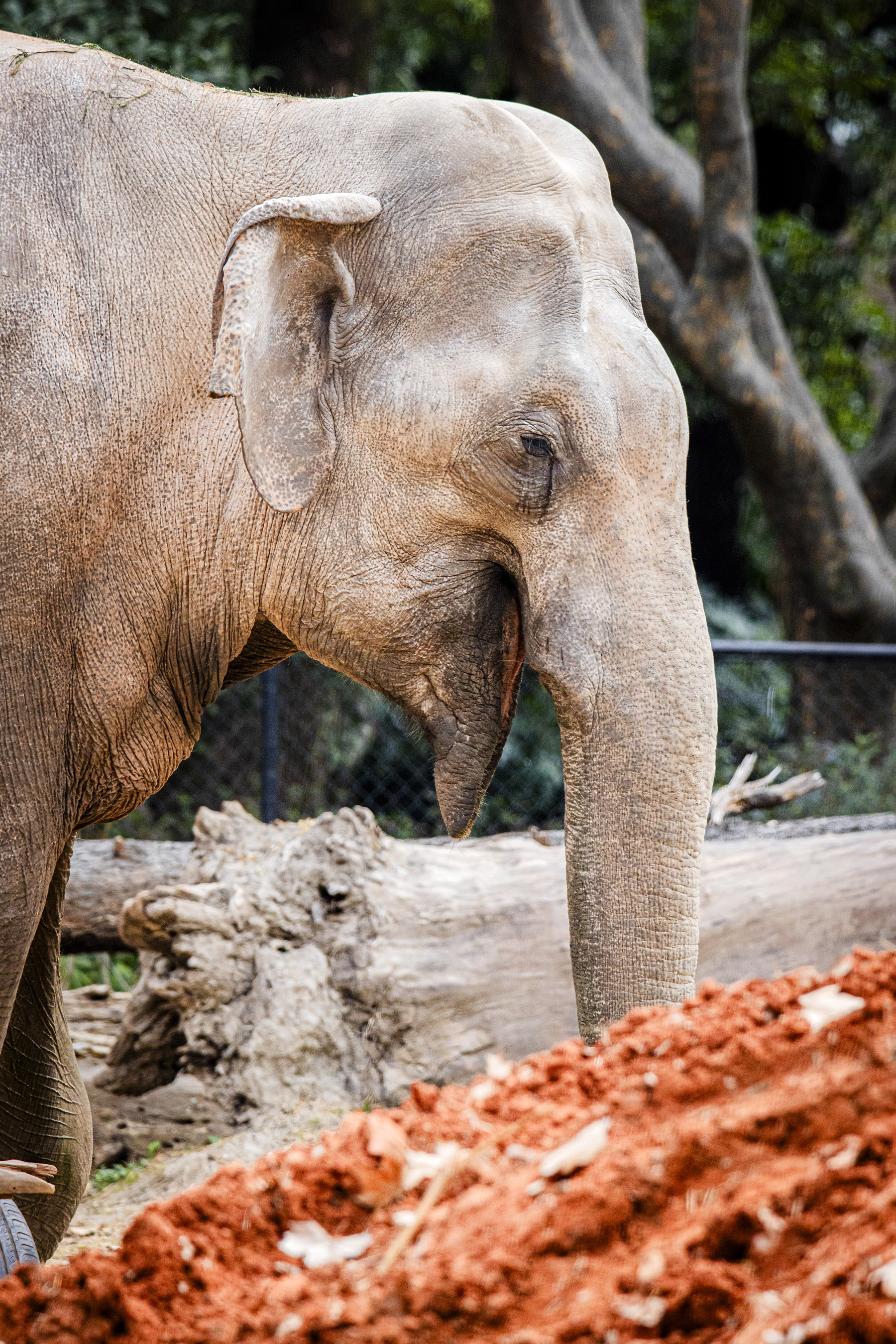
The oldest living male Asian elephant raised in captivity in China, Bamo, died on Sunday at the Shanghai Zoo. He was 65.
Bamo, who died at 1:16 pm, held the record for the longest-lived male Asian elephant in the studbook of the Chinese Association of Zoological Gardens.
Born in Myanmar in 1961, Bamo first came to China in 1967, initially residing at the Beijing Zoo. He moved permanently to the Shanghai Zoo in 1973, spending 53 years in the city and becoming the longest occupant of the zoo's elephant enclosure, as well as a cherished fixture in the childhood memories of countless local residents.
"I had been with him for nearly eight years," said Liu Chang, Bamo's 34-year-old full-time keeper.
Despite his advanced age, Liu said Bamo maintained the playful heart of a mischievous child. "During on-site explanations, he loved to spray water at me — his way of demanding attention and snacks," Liu recalled.
Liu noted that Bamo was exceptionally intelligent and often traded items for treats with his keepers."He would tear off chains or branches from enrichment items and swing them around with his trunk. We would trade corn and watermelon for them, and he would gently drop the items in front of us. He was very sensible."
As Bamo aged, time left its marks: his molars deteriorated, his spine curved, and he began gradually losing weight. To ensure his comfort, the zoo implemented a systematic health management program for elderly elephants, which Liu credited as crucial to Bamo's longevity.
"Given his tooth deterioration, we cut his food into smaller pieces and switched to frequent, smaller meals, adding a little each time to encourage him to eat more," Liu said.
Beyond meticulous dietary care, the park constructed two specialized training walls for positive reinforcement training under protected contact. This enabled staff members to safely and effectively conduct foot care, oral examinations, and ear temperature checks.
ALSO READ: Rescued wild elephant calf in Southwest China makes good recovery
The outdoor exhibit area was also enhanced with pools, sprinklers, sand piles, and red earth mounds, while soft resting beds were added to the indoor enclosures for added comfort.
"We undertook a major renovation of the pool in 2023 and installed sprinkler systems," Liu said. "Elephants love playing with water and enjoy spraying themselves."
To cater to the elephants' need for mental stimulation, the husbandry team frequently replaced feeding devices and other enrichment items."We had to continually refresh the enrichment content, as he would lose interest after interacting with the same items a few times," Liu added.
Since 2025, the Shanghai Zoo has enlisted elephant care experts from the United States on two occasions to provide on-site guidance in behavioral training, foot care, and elderly elephant management to maximize Bamo's comfort.
However, Bamo's appetite declined sharply in late May, and he occasionally appeared restless. Despite continuous adjustments to his diet and various nursing efforts by the care team, his condition did not improve. On Saturday morning, Bamo's hind legs began to show noticeable unsteadiness, and he collapsed in the early hours of Sunday.
"The elephant house feels so empty now," Liu said. "For eight years, my day began with checking on him — his condition, eating habits, and spirit. Now, there's a huge void in my heart.
"As a keeper, the best way to honor Bamo is by updating our husbandry practices and caring better for the remaining elephants," Liu added.
Bamo fathered eight calves, significantly enhancing the genetic diversity and population of captive-bred Asian elephants. Liu said Bamo witnessed the evolution of the Shanghai Zoo from basic facilities to a comprehensive breeding environment. The elephant's late-life care protocols and daily husbandry practices have since become a standard for zoos across China.
Contact the writers at heqi@chinadaily.com.cn
