

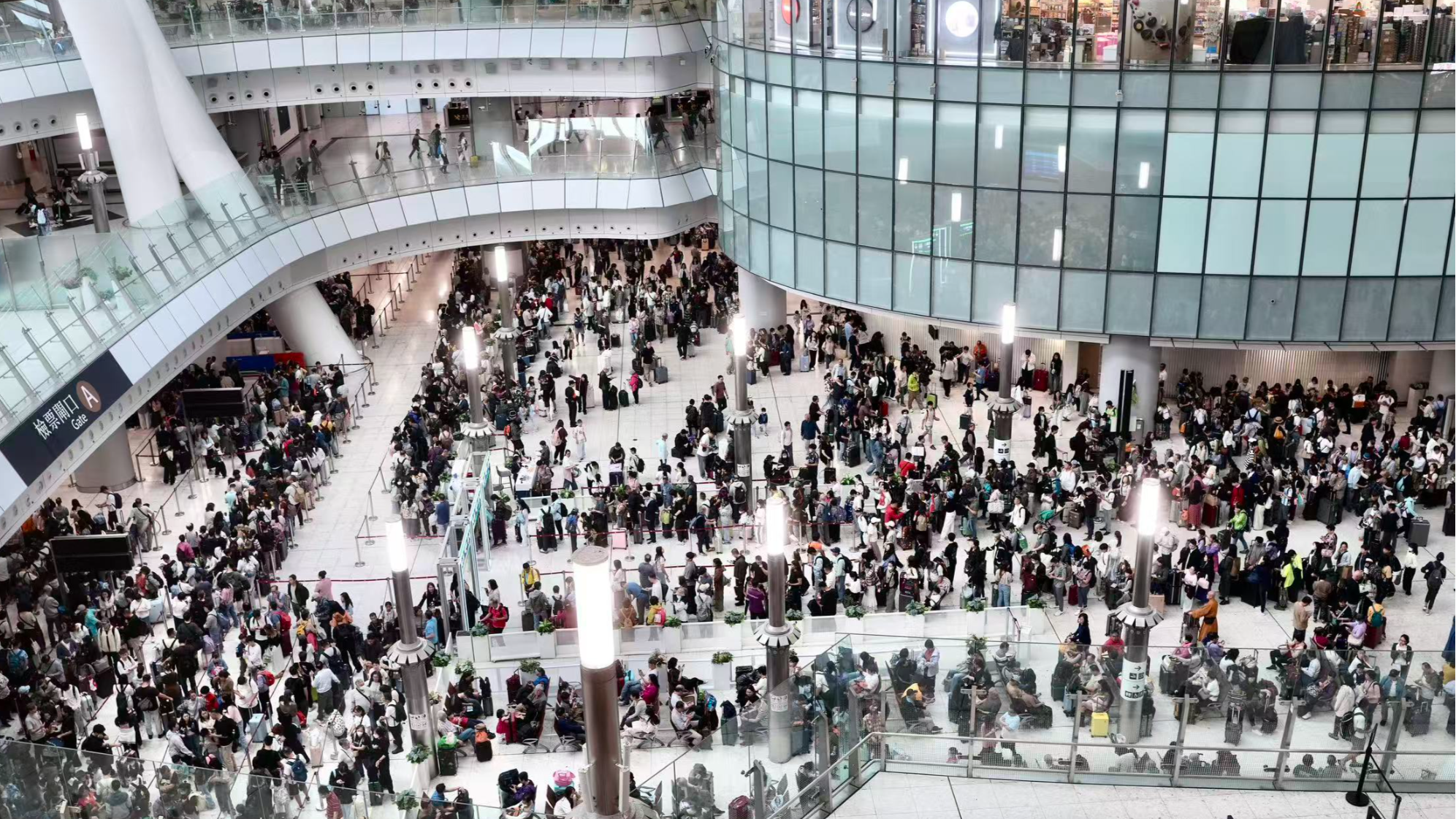
Experts believe that the Guangdong-Hong Kong-Macao Greater Bay Area’s rapid population growth, which leads the nation, reflects the region’s strong industrial appeal and efforts to improve living standards, further strengthening its competitiveness amid the nationwide slowdown in demographic growth.
Cautioning that this trend brings new challenges for urban governance, they look forward to converting the demographic dividend into momentum for cultivating talent and fostering innovation.
Regions across the nation recently released their figures for permanent residents by the end of last year; five cities in the Greater Bay Area ranked among the top 10 nationwide for population growth in 2025. In terms of the data of 2024, only three cities in the region made the list.
Among the cities which have released the figures so far, Shenzhen, Dongguan, and Guangzhou ranked first, second, and third, respectively, while Foshan and Huizhou came in sixth and seventh.
Shenzhen topped the list with a population increase of 259,000, bringing its permanent resident population to over 18 million. Dongguan, with a population increase of 229,600, jumped from 10th to 2nd place.
Last year, the permanent resident population of Guangdong province increased by 790,000, with approximately 500,000 of those being migrants from other regions —far exceeding the figures for other provinces.
Gong Xiaofeng, director of the Greater Bay Area emerging industry development research institute at Shenzhen University, said that the southern cluster’s improving innovation ecosystem and urban infrastructure, along with the well-established industrial and supply chains of its emerging industries, hold great appeal for young people and entrepreneurs.
Its large-scale recruitment drives and heavy investment in public services have further enhanced such appeal, he added. Through last year’s “Millions of Talents Gather in Guangdong" initiative, the province has attracted over 1.1 million college graduates to stay in or relocate here for employment and entrepreneurship.
In the past five years, Shenzhen’s spending on key public services such as housing, education, and healthcare totaled 1.6 trillion yuan ($236 billion), accounting for nearly 70 percent of its fiscal expenditure.
Hu Gang, founding president of the Urban Research Association of South China, said that the concentration of population demonstrate the achievements of the Greater Bay Area’s industrial upgrading, adding that the region has showed strong resilience amid the new demographic normal characterized by a declining birth rate and an aging population.
The Greater Bay Area boasts a robust industrial cluster centered on electronics and information technology. In particular, its production of drones and service robots accounts for 80 to 90 percent of the national total, providing a vast number of jobs with competitive salaries. Furthermore, industrial collaboration and resource sharing among different urban clusters in the region continue to deepen, Hu added.
Wang Mei, a senior researcher of China Development Institute who has a deep understanding of the Greater Bay Area’s labor market and public services, believes that the population inflows will help secure a sufficient pool of human resources for the region’s future development. They will also feed back into economic development and strengthen the momentum for natural population growth.
She suggested that while improving its modern infrastructure system, the Greater Bay Area should increase investment in the comprehensive development of its people — such as creating an environment more conducive to youth development and childbearing — so as to further build up its human capital.
To address the increasing pressures on urban governance that come with population growth, Gong suggested that cities such as Shenzhen improve land-use efficiency, raise per-capita GDP, and enhance traffic management.
He added that amid the trend of integrating manufacturing and service industry in the Greater Bay Area, population growth in Chinese mainland cities also benefits the development of Hong Kong’s service sector.
Gong emphasized that as competition for talent intensifies nationwide, it’s significant for the Greater Bay Area to leverage its international links and actively attract overseas talent through opportunities such as hosting APEC meetings.
