

A student-led arts project uses musical theater to give rural children space to express emotions, cooperate and find their voices.
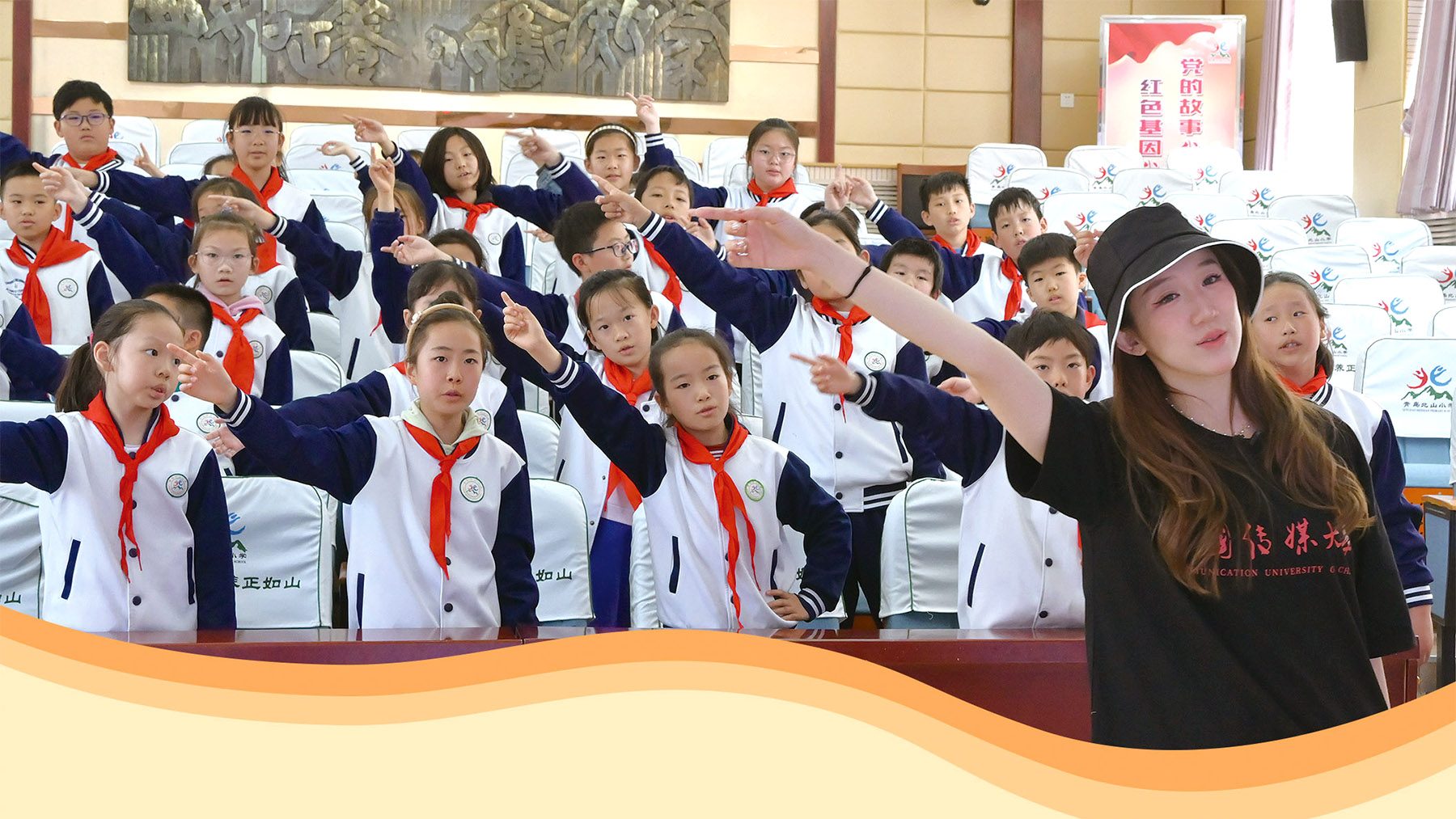
Cai Dongjun raised one hand gently, humming the opening notes of a melody as sunlight streamed into a rural classroom. In front of him, the children watched closely before beginning to follow his lead — a small turn, a lifted arm, a line sung softly at first and then with growing confidence.
For Cai, a 22-year-old vocal performance major at the Communication University of China (CUC), the scene has become a familiar part of his public welfare work. Since 2022, he has been introducing musical theater to rural children who have limited access to arts education.
During those visits, Cai encountered a reality that left a deep impression on him.
"Not every child receives quality education or emotional support," he said. "Some come from difficult family backgrounds, and you can sometimes sense a kind of silence in them that is hard to describe."
The experience felt personal to Cai. As a child, he also struggled with insecurity and self-doubt, but music gave him a way to express himself and gradually rebuild his confidence.
That personal connection inspired him to found Shengyu Tongxin, or Voices Healing Young Hearts, a public welfare initiative that brings musical theater and arts education to rural children. The program is designed not only to teach performance skills, but also to create a space where children can express themselves, learn to cooperate and grow emotionally.
Over the past four years, the initiative has expanded from a small volunteer effort into a broader program. Cai and his fellow volunteers have traveled to 18 regions across China, worked with more than 40 rural schools and reached over 1,500 children.
At the center of the initiative is an original musical, Yuyan Laixin, or Letters from the Swift, developed by Cai's team. The one-hour production is made up of several interconnected scenes based on the everyday experiences of left-behind children, touching on themes such as family separation and struggles to fit in at school.
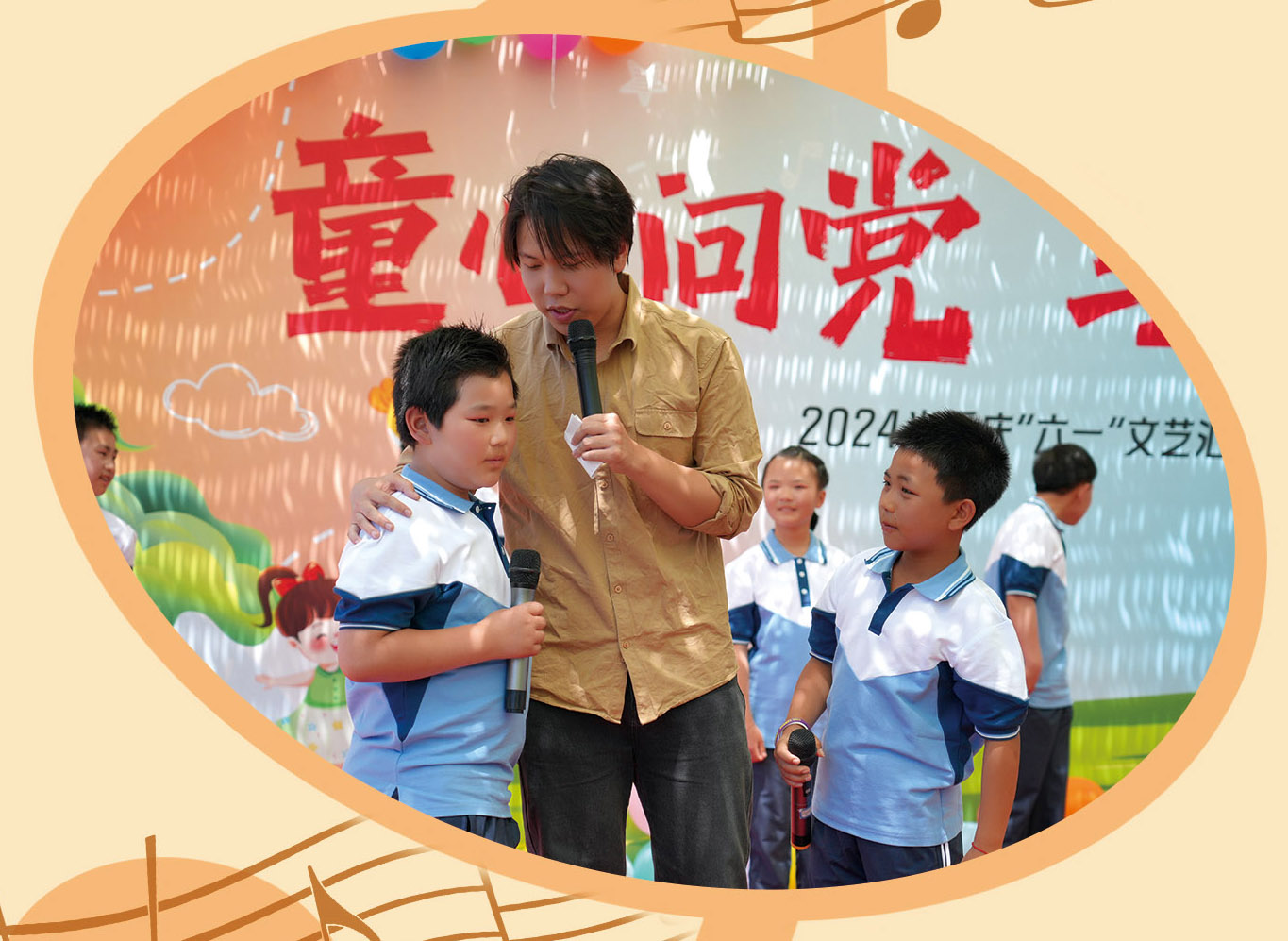
To make the production accessible to children with varying abilities, the team revised the work repeatedly.
"The first version took about four months to complete," said Shi Yuming, a core team member from CUC. "We then adapted it many times with guidance from professional composers, teachers and psychological counselors to make it better suited to children."
The team simplified the vocal ranges, shifted more of the performance into ensemble scenes and adjusted the staging so that more children could participate comfortably. Rather than focusing on polished technique, the program emphasizes self-expression and the joy of being on stage.
That goal is often reflected in small changes.
In Huozhou, Shanxi province, the team worked with a boy whose teacher had described him as disengaged and struggling academically. Instead of allowing that label to define him, the volunteers encouraged him to take on a small leadership role in the chorus.
Over time, he became more involved in rehearsals and began to show a stronger sense of responsibility. By the final performance, he had been cast as one of the main characters and carried the part with confidence.
For Cai, moments like this make the demanding work worthwhile.
"There were times when I felt completely exhausted," he said. "In every session, I was fully involved — demonstrating melodies, correcting pitch, teaching movements and encouraging the children to step onto the stage. But all the effort has proved deeply rewarding."
A broader view
As the project has expanded, it has attracted a growing network of student volunteers and young professionals to help with teaching, coordination and outreach.
Among them is Liu Yukuan, a 21-year-old broadcasting and anchoring major at CUC who works directly with children in the classroom. He has noticed that while some children are eager to participate, others need more time before they feel ready to sing, move or perform in front of others.
Rather than pushing them, Liu adjusts his approach based on each child's temperament, offering patience and encouragement as they gradually become more comfortable.
"I've learned to slow down and see things from their perspective," he said."Sometimes what they need is not pressure, but time and support."
Another volunteer, Zhu Zhu, a musicology major at CUC, helps coordinate resources and organize activities. Although she is not directly involved in teaching, she sees her role as essential to keeping the program running smoothly.
"I'm not the one on stage teaching or performing, but I find great fulfillment in working behind the scenes," she said."It helps ensure that music and arts education resources are available to children in need."
For Zhu, public welfare should not end with a single visit or performance.
"It requires long-term commitment. What matters is making sure these resources continue to reach the children," she said.
According to Cai, the project has also built partnerships with institutions such as Beijing Normal University, bringing in students specializing in music, education and media to create a more structured support system.
For the volunteers, the mission is simple: to give more children the opportunity to experience art — and, through it, gain confidence in their own voices.
"Art should be accessible to everyone," Liu said.
Contact the writers at guojiatong@i21st.cn
