

Stretching across some of northern China's most dramatic landscapes, these sections of the fortification combine history, solitude and natural beauty, inviting visitors to experience them in a more authentic way, Wang Ru reports.
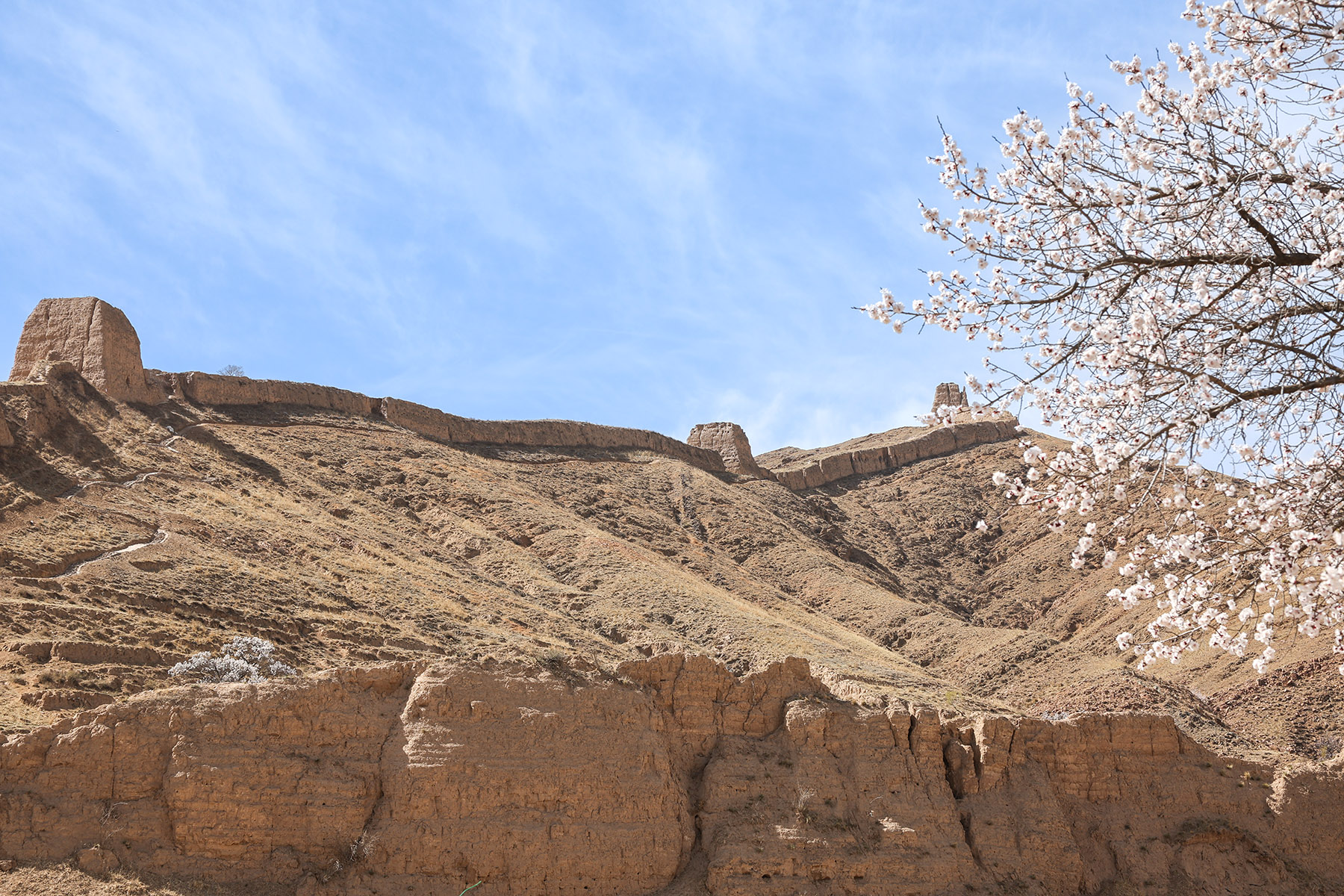
1. Li'erkou in Datong, Shanxi province
In spring, visitors to the Li'erkou Great Wall can see the season paint a scene of stark contrasts. The ancient rammed-earth structure, rugged and taupe-colored, stretches its earthen body across the rolling terrain. Suddenly, the view softens: apricot trees burst into clouds of delicate pink and white blossoms. Petals flutter like gentle snowflakes against the time-honored watchtowers, weaving a quiet story where military history meets the tender breath of spring.
Built in the Ming Dynasty (1368-1644), this section is famous as the place where two sections of the Great Wall intersect, one running from north to south and the other from east to west. This feature is linked to changes in the plans made during its construction.
READ MORE: Ancient armor opens wide
The original plan would have led to a defensive gap near the border of Shanxi and Hebei provinces. As a result, the plan was revised, and the wall was built back from a point near Li'erkou village, running along the mountain ridge to connect with the Great Wall in Hebei. This achieved a continuous line of defense, although the mistakenly constructed section has also been preserved.
For visitors wanting a quiet experience of this ancient structure without crowds of other people, this section is an ideal choice. Flagstone roads built in recent years make hiking easier while preserving the views of the surrounding landscape.
Visitors can also explore the Datong Great Wall Museum to learn more about the region's history. Nearby, Li'erkou village offers homestays.
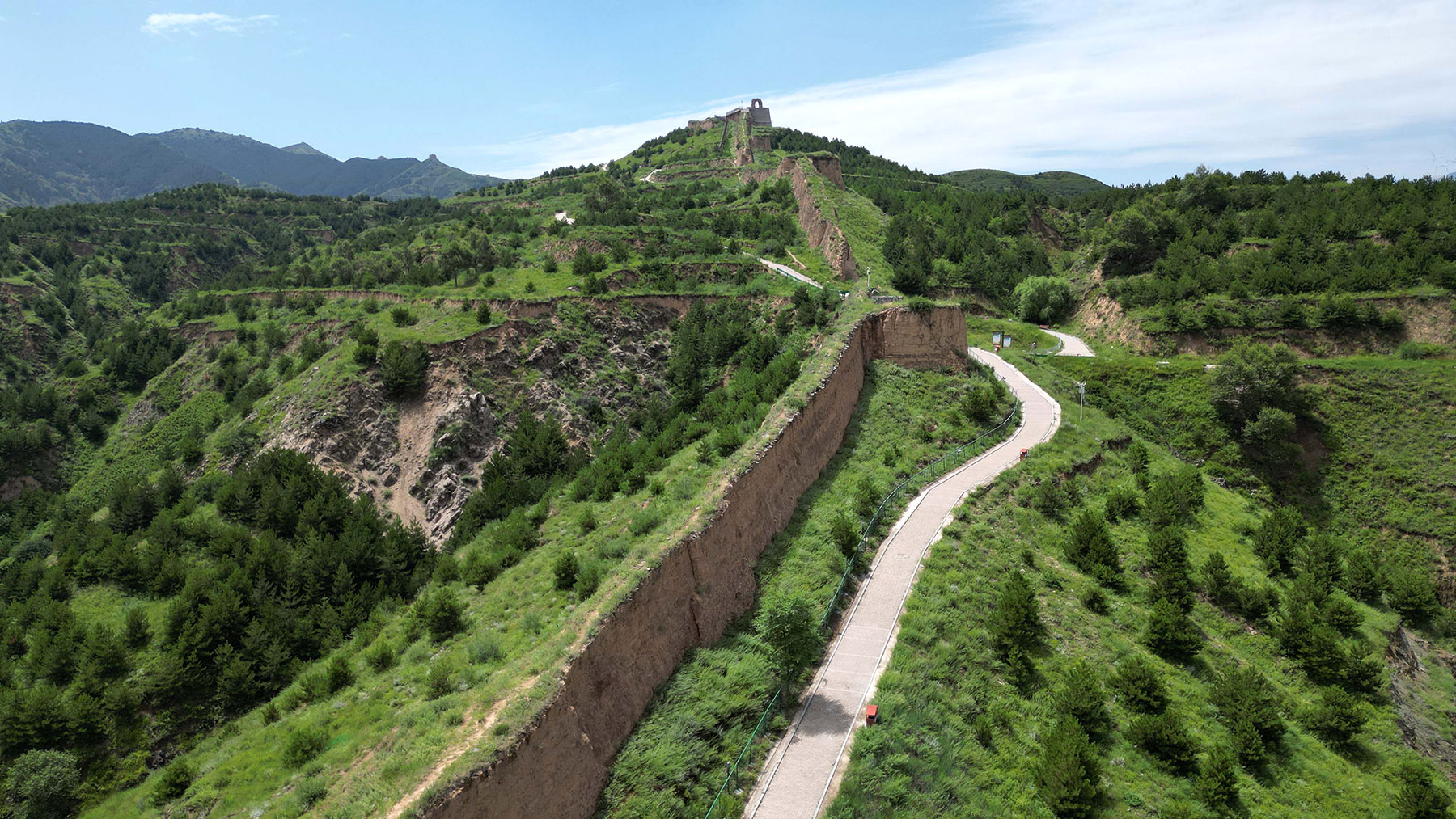
2. Guangwu in Shuozhou, Shanxi province
About 5 kilometers from the Yanmenguan pass, a key strategic point in Shanxi province, the Guangwu Great Wall once served as a crucial forward defense line within the Ming Dynasty defense system centered on Yanmenguan.
In recent years, this section has gained popularity online for its rustic charm. The section has been less restored than its counterparts elsewhere, thereby retaining much of its ancient grandeur, with mottled bricks and stones, and grass growing in the cracks.
One section of the Great Wall here is particularly iconic, the remains of a watchtower that people call Yueliangmen (the Moon Gate), named for its arched doorway that resembles the moon.
At twilight, when the rays of the setting sun pass through the doorway, the ancient structure has a solemn atmosphere, as if a guardian witnessing generations passing through the ages.
This section is especially good for hikers who are interested in ancient history.
Even today, the inscriptions on the stone plaques embedded in some of the watchtowers' archways remain clearly visible.
Sunlight streams down, casting a warm, golden veil over the bricks and stones. The grass grows even more vibrantly in the interplay of light and shadow.
Here, antiquity and life merge, painting a tranquil picture of harmony between time and nature.
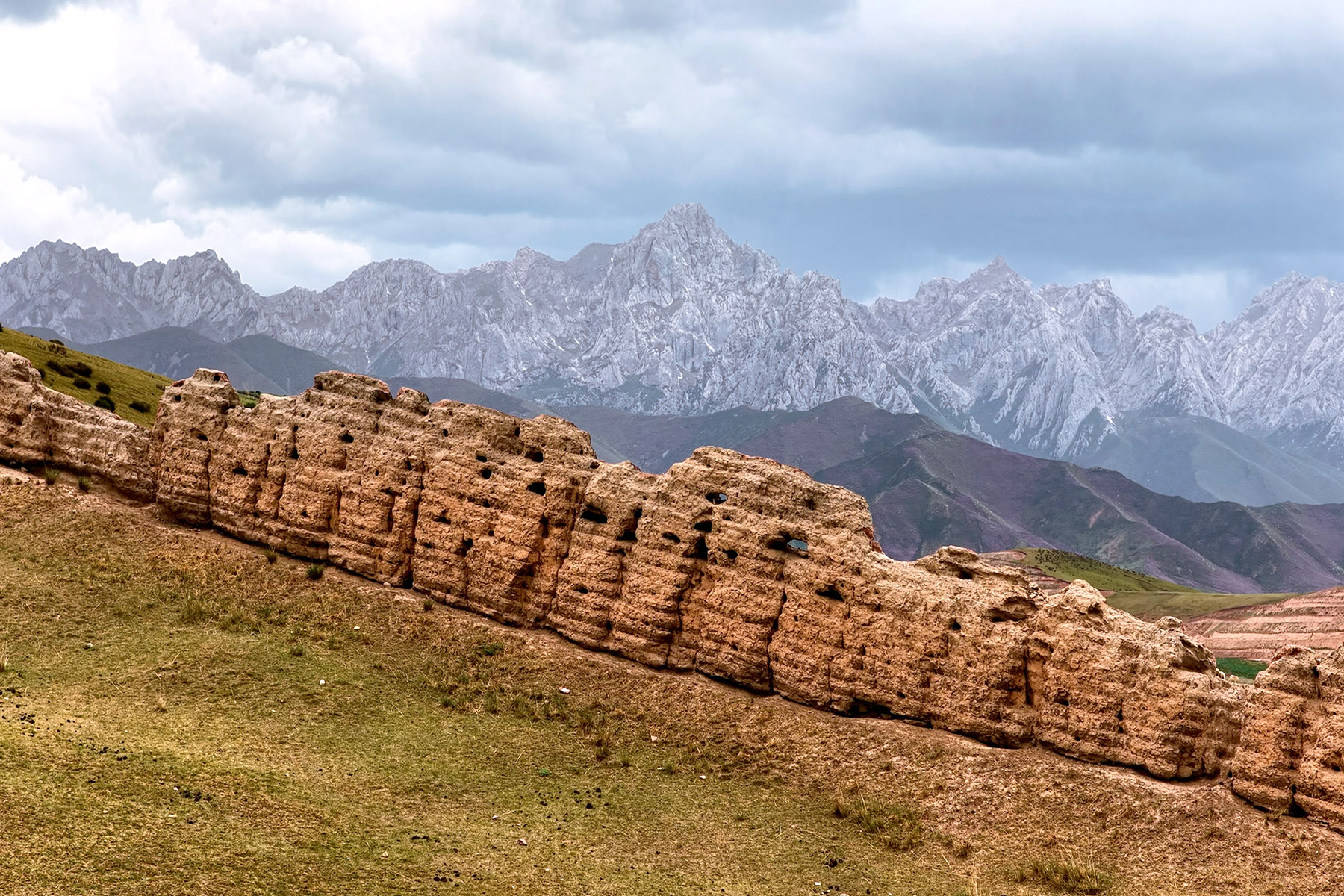
3. Wushaoling in Wuwei, Gansu province
Wushaoling is located at the crossroads of the Loess Plateau, the Qinghai-Tibet Plateau and the Mongolian Plateau, and is one of the highest sections of the Great Wall.
Therefore, from a single vantage point, a condensed panoramic view of Northwest China gradually unfolds. Highland grassland seems to extend to the sky.
To the south, the Maya Snow Mountains, a branch of the Qilian Mountains, stay white all year round, their peaks glittering under the sun. Turn east, and thousands of ravines and gullies can be seen cutting through yellow earth, where the eroded remains of the Great Wall wind like a pale dragon. Looking west, the vegetation thins and the faint outline of the Gobi Desert appears, stretching toward the Hexi Corridor, the main artery of the ancient Silk Road, with a raw, empty vastness.
More than 2,000 years ago, Emperor Wu of the Han Dynasty (206 BC-AD 220) ordered the construction of this part of the Great Wall after general Huo Qubing reclaimed the Hexi Corridor following victories in various battles. Since that time, historical figures like Han envoy Zhang Qian and Tang (618-907)Buddhist monk Xuanzang passed by Wushaoling on their journeys to Xiyu (Western Regions). Ming Dynasty rulers also built part of the Great Wall at Wushaoling.
Now, sections from both the Han and Ming periods can be seen. Standing beneath a beacon tower, with strong winds sweeping through the grass and flocks of cattle and sheep dotting the mountain slopes, one can sense the profound weight of history and the changes that have occurred over millennia.
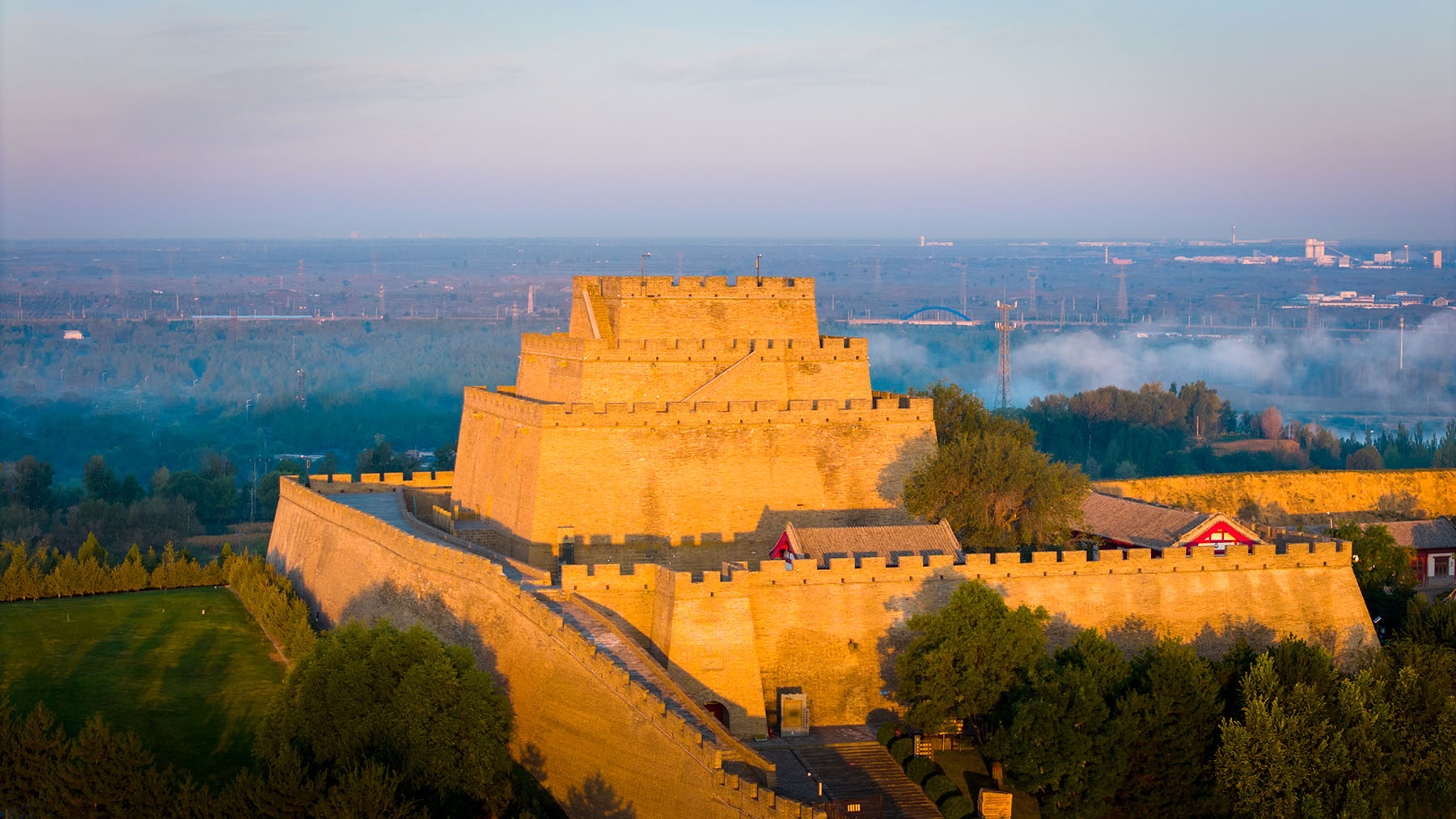
4. Zhenbeitai Tower in Yulin, Shaanxi province
Normally, it is the curving walls snaking through mountain ranges that form people's typical impressions of the Great Wall.
But the heritage covers not only the walls themselves but also passes, beacon towers and observation outposts.
Zhenbeitai in northern Shaanxi province stands as a large rammed-earth military observation tower and command post built during the Ming Dynasty.
The existing four-story structure, more than 30 meters high, offers a vivid lesson in military history.
The tower had several uses: first as barracks and storage; second for patrols and defense; third as a command center; and finally as a lookout station, providing distant views across the surrounding lands.
The compound can be explored by visitors wanting to better understand its defensive functions.
This scenic area is accessible to both the elderly and the very young, as the steps are gentle and easy to climb. From the top, the modern city of Yulin can be seen on one side and the Maowusu Desert on the other, creating the sensation of standing astride two worlds.
The remains of two ancient cities also exist here, where Mongolian people traded with their Han counterparts, suggesting that the post may have been more about commerce and administration than warfare, and that it helped maintain communication and exchange.
The site reminds us that the true Great Wall did not separate people with brick and stone, but connected them with trade, dialogue and ordinary people's aspirations for a peaceful life.
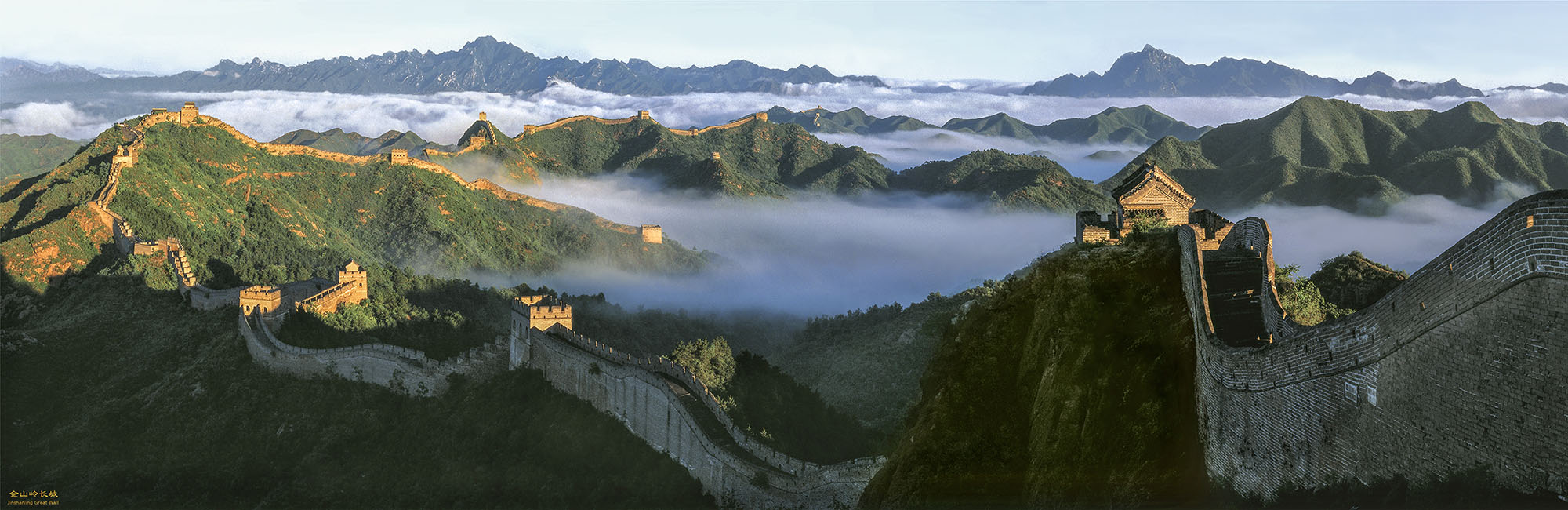
5. Jinshanling in Chengde, Hebei province
Located on the border between Hebei province and Beijing, the Jinshanling Great Wall is hailed as one of the most beautiful sections of the structure. It winds through lush hills, punctuated by watchtowers and guardhouses.
What makes Jinshanling unique is the variety of its watchtowers and defensive structures. The designs change with the terrain, so no two towers are exactly alike. Visitors will find towers with square, round or flat bases, and with roofs shaped like boat canopies, domes, or octagons with pointed tops. There are also multi-windowed lookout towers and storehouses. Scattered across the ridgeline, these towers form a complete and well-coordinated defensive system.
ALSO READ: Reviving cultural greatness
The section was originally built at the beginning of the Ming Dynasty and rebuilt when Ming general Qi Jiguang guarded the northern frontier.
Thanks to its high altitude and dense vegetation, Jinshanling is cool and pleasant in summer, making it an ideal summer retreat. It's also the perfect location for photographers to capture different landscapes across different seasons without having to dodge crowds of tourists. Sunset is particularly spectacular; at dusk, the setting sun dyes the sky blood-red, warming the old walls with a soft orange glow.
Ma Jingna contributed to this story.
Contact the writer at wangru1@chinadaily.com.cn
