

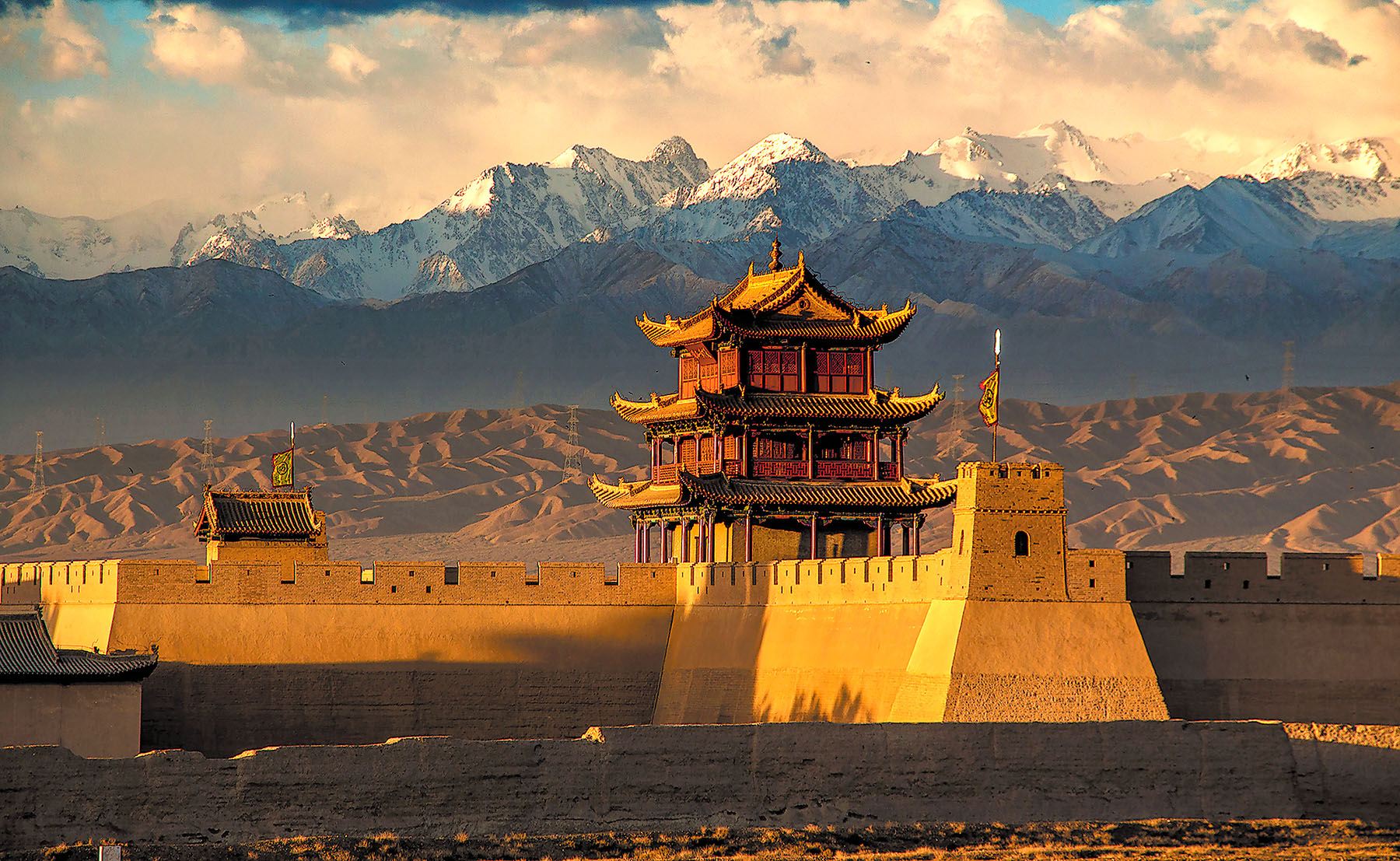
Before I visited it in person, the Great Wall existed in my mind only as a single, unbroken line, like a dragon's spine stretching across the map of northern China. Over the years, I visited several sections, but none truly reshaped my understanding like its westernmost outpost — the Jiayuguan pass in Gansu province.
I first explored it years ago during a trip with a friend along the popular loop through Qinghai and Gansu provinces in Northwest China. Visiting Jiayuguan felt inevitable. Since childhood, we had known it as the western end of the Great Wall and the strategic gateway to the ancient Silk Road.
But it was only when I stood there on a summer morning that I realized how sophisticated its design truly was.
READ MORE: Ancient armor opens wide
Near the entrance stands a statue of Ming Dynasty (1368-1644) general Feng Sheng on horseback. His left hand points ahead while the right grips a sword, his cloak frozen in the wind. More than 600 years ago, Feng recognized the military value of this location and proposed building the pass there.
About half an hour later, standing on the city wall and looking out at the distant mountains, I finally understood its strategic importance.
The pass was built on a natural channel only 15 kilometers wide, the narrowest point of the Hexi Corridor, the main artery of the ancient Silk Road, between the Heishan Mountains and the Qilian Mountains. Therefore, it controlled the only passage between the heartland of central China and the vast deserts of Central Asia.
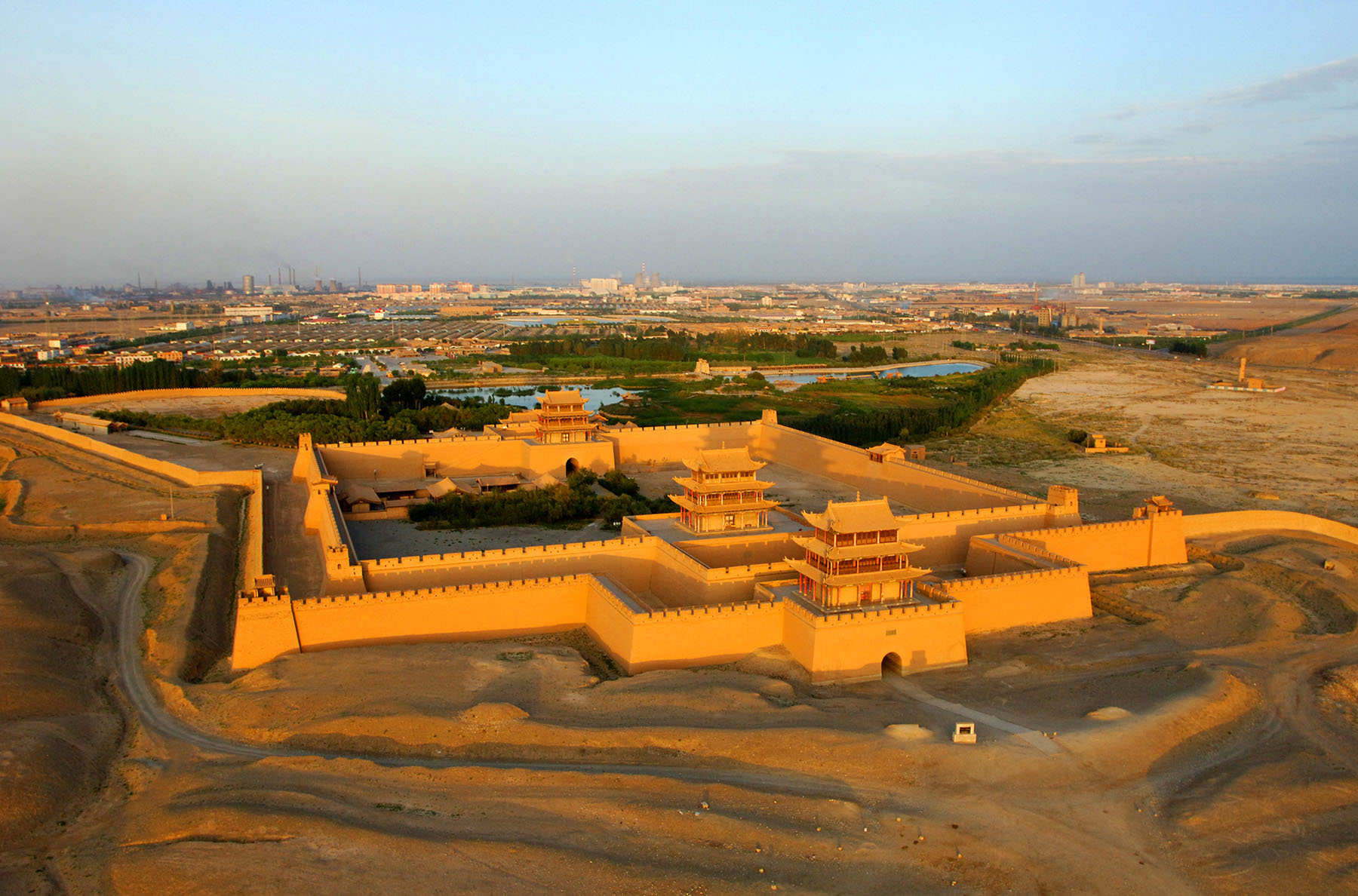
Its surroundings made the fortress even more formidable. To the north stretched a vast desert, while the Qilian Mountains rose to the south as a natural defensive barrier.
"If anyone wanted to bypass Jiayuguan to attack the heartland, they would have to cross nearly 70 kilometers of desert," a tour guide told us.
"That was too dangerous and difficult, so the pass became the only realistic route. That's why it was fortified so heavily."
The choice of location amazed me. It reminded me that even without modern technology, military strategists understood how to use mountains, rivers and deserts to their advantage. At that moment, the old Chinese saying — "One man guarding the pass can hold back 10,000" — no longer sounded symbolic. It felt tangible.
No wonder Feng became known as one of the founding generals of the Ming Dynasty. Under his initiative, and through the labor of countless unnamed builders, the fortress was expanded over generations before its completion in 1539 as a sophisticated defense system.
Today, Jiayuguan remains an intricate complex of rammed-earth structures. Restoration efforts have preserved much of its original appearance, allowing visitors to understand how the fortress functioned.
Two separate walls surround the complex. Even if invaders breached the outer wall, they still faced another barrier inside, buying defenders valuable time.
The fortress faces west, with Jiayuguan Gate welcoming travelers arriving from that direction. Between the outer gate and Rouyuan Gate lies a wengcheng, a defensive enclosure designed to trap and delay attackers. Beyond Rouyuan Gate stands the inner city, where soldiers once lived. On the eastern side sits Guanghua Gate, protected by another wengcheng.
Every detail of the layout served a defensive purpose. Human ingenuity seemed embedded in every corner. In that era, people truly made the best use of their experience and vision in building this pass.
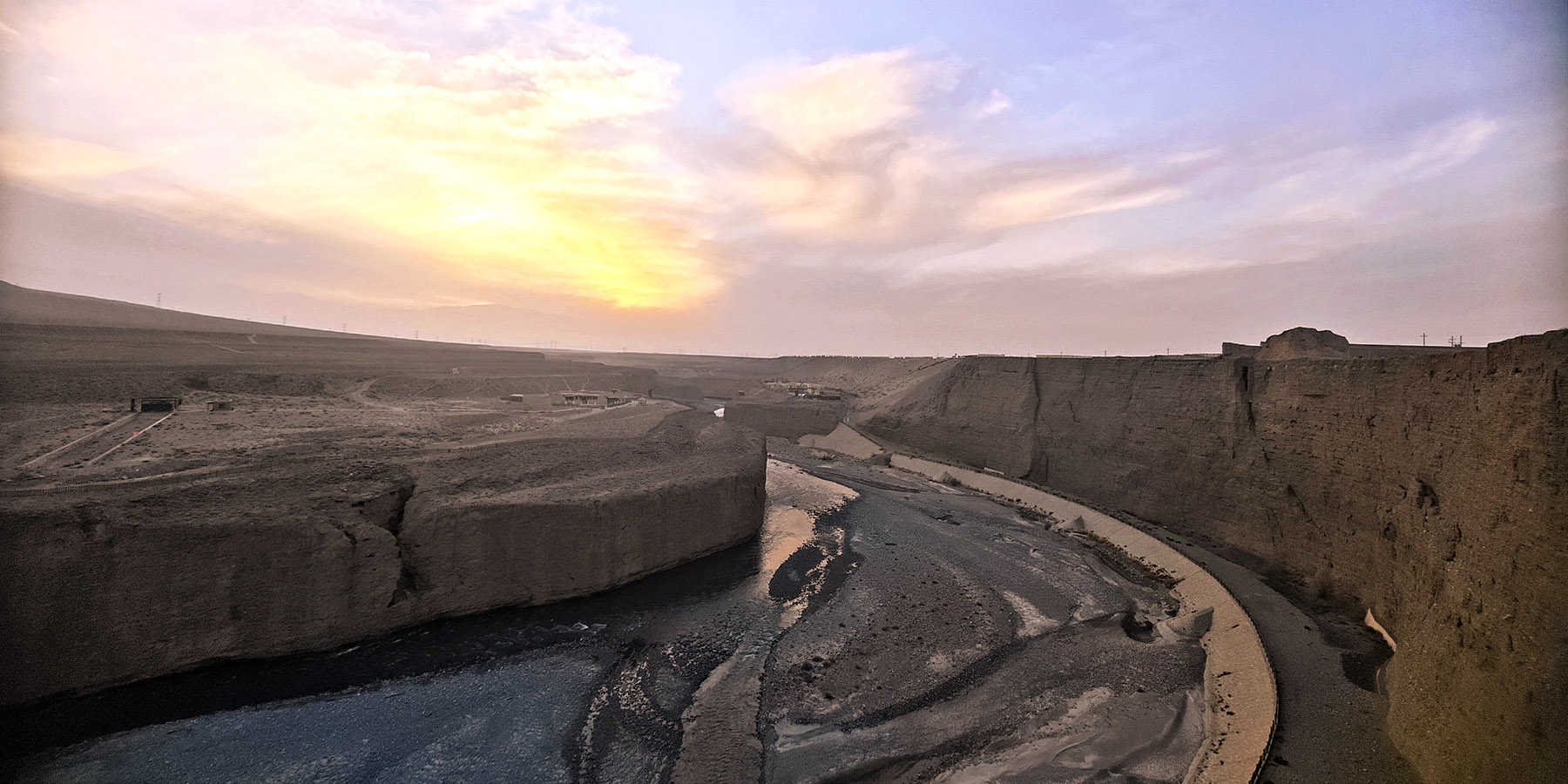
Standing on the narrow path between the two walls, I watched sunlight fall across the raw earthen surfaces, giving them a rugged beauty. There were few tourists around, so my friend and I began taking photos.
Through my camera lens, my friend appeared tiny against the towering walls. And yet centuries ago, people no larger than her had built this place, defended it and passed beneath its gates. That contrast between human fragility and achievement struck me harder than the desert wind.
"Why are you hesitating? Come take photos!" my friend called out.
As she walked toward me along the ancient road, I suddenly felt the strange closeness of past and present, as if time had briefly folded together.
Near Jiayuguan Gate, we came across a small crowd gathered around a roadside stall offering visitors an interactive "pass certificate" experience.
During the Ming Dynasty, travelers heading west into Xiyu (Western Regions, a historical term used to describe modern-day Xinjiang Uygur autonomous region and Central Asia) needed official travel permits similar to today's passports.
ALSO READ: Reviving cultural greatness
"Where are you from? Why do you want to go to Xiyu?" the stall owner asked, playfully acting as head of the fortress.
Once satisfied with the answer, he hand-wrote a certificate, charging between 30 and 100 yuan ($4.4 to $14.7).
The experience reminded me that although Jiayuguan was originally built for defense, it ultimately became something greater — a bridge between civilizations. Through this corridor, Chinese silk and porcelain traveled westward to Central Asia, the Middle East and East Africa, while foreign ideas, religions and literature entered China in return.
A pass may be built to keep people out, but it ends up letting them through — not just the merchants and monks on the Silk Road, but also memories. Jiayuguan taught me that the strongest walls aren't the ones that divide; they are the ones that, centuries later, still have the grace to open their gates.
Ma Jingna contributed to this story.
Contact the writers at wangru1@chinadaily.com.cn
