

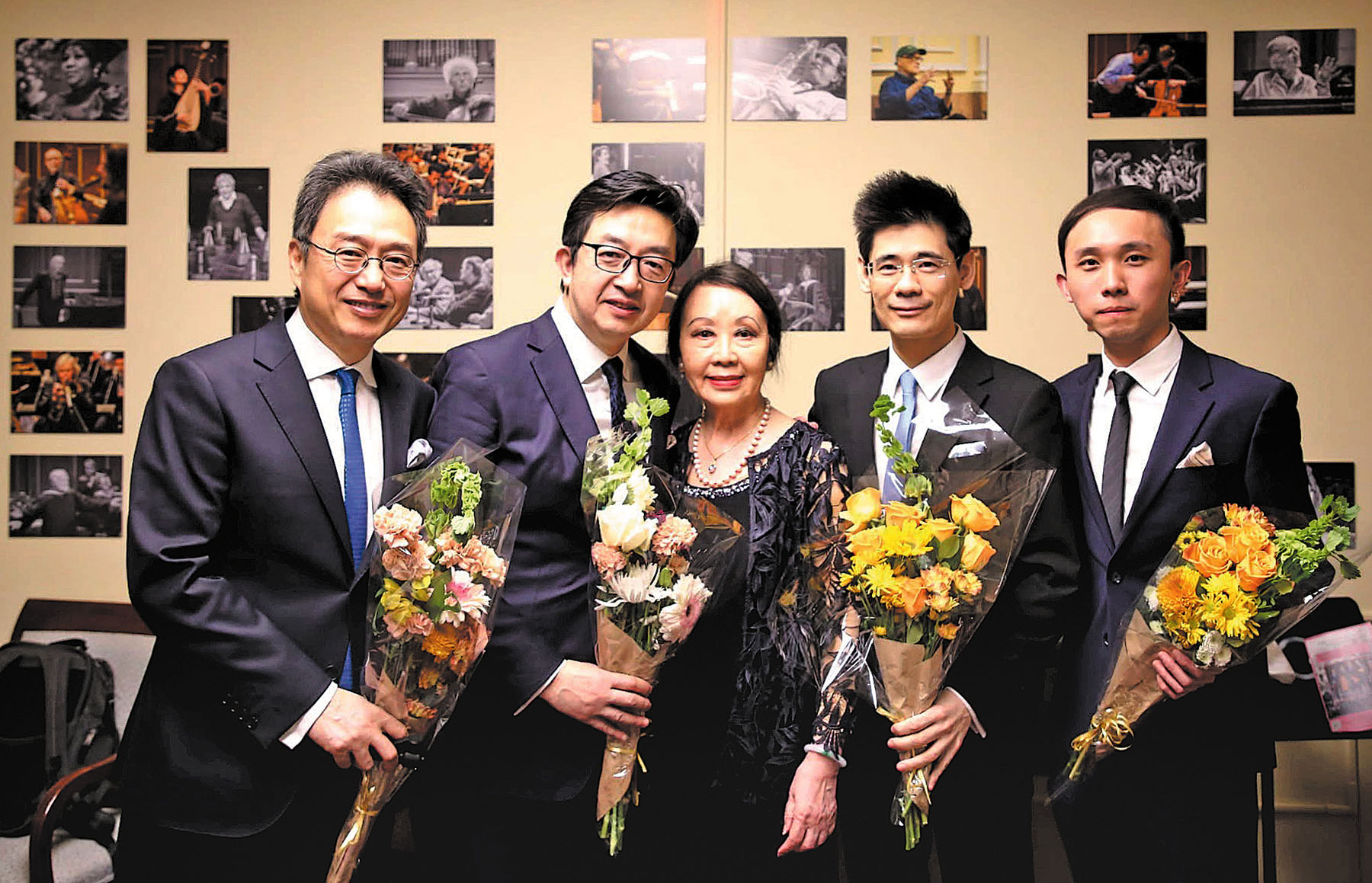
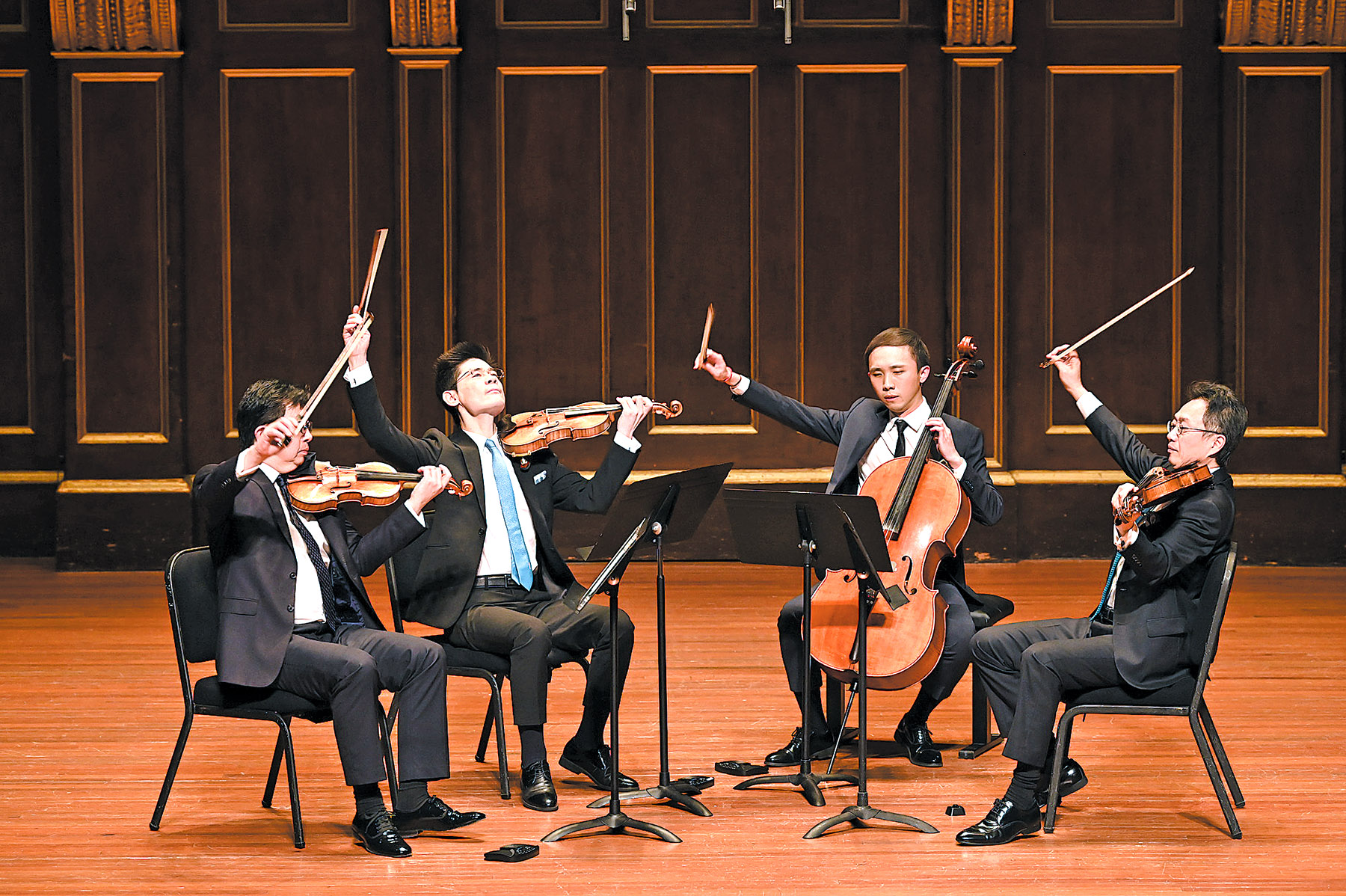
From April 9 to 19, the Shanghai Quartet embarked on a highly anticipated tour across the United States, performing in Washington DC, Boston, Maine, Florida, and concluding at the Chamber Music Society of Lincoln Center in New York.
Their program was a delicate interplay of Eastern and Western musical traditions, featuring composer Tan Dun's evocative Feng Ya Song, Franz Joseph Haydn's String Quartet in G minor, Op. 74, No. 3, or "Rider", George Gershwin's Lullaby, and Antonin Dvorak's American Quartet.
But beyond the music itself, this tour became a poignant reflection on time, mentorship, and the enduring power of cultural exchange.
Formed at the Shanghai Conservatory of Music in 1983 by first violinist Weigang Li and his brother, viola player Honggang Li, the Shanghai Quartet has toured worldwide and joined The Tianjin Juilliard School in the fall of 2021.
READ MORE: Music underscores shared quest for harmony
The quartet now consists of cellist He Sihao, violinist Yu Xiang and the two founding members.
For second violinist Yu, Boston, the capital of Massachusetts, has always held a special place in his heart. Yu first experienced the Shanghai Quartet as a student at the New England Conservatory, sitting in the audience during a performance of Johannes Brahms' Piano Quintet with pianist Hung-Kuan Chen.
It was only his second live encounter with the quartet, the first having been in Shanghai. Years later, Yu returned — not as a student, but as a performer, stepping onto the same Jordan Hall stage at the conservatory as a member of the ensemble he once admired.
The Shanghai Quartet's program elegantly reflected a dialogue between cultures. Tan's Feng Ya Song brought contemporary Chinese textures to United States audiences, merging traditional tonalities with modern compositional techniques.
Haydn's String Quartet in G minor Op. 74, No. 3 and Gershwin's Lullaby offered Western classical and US sensibilities.
Czech composer Dvorak's work served as a mirror of cultural exchange. The American Quartet was composed in 1893 when Dvorak was in the US, serving as director of the National Conservatory of Music of America in New York. He was inspired by the music he encountered there, but he composed it through a European classical lens, with the piece a blend of cultural influences.
Joseph Polisi, president emeritus of the Juilliard School, who now serves as its chief China officer, attended the performance, underscoring the deep bonds connecting Chinese and US musical institutions.
Reviewed by Lee Eiseman in The Boston Musical Intelligencer, "angelic" Yu was praised for his inner voice, He and Weigang for matching tones "marvelously", while the young cellist "brought an extravagantly romantic sensibility to the bottom line with the ever-elegant Honggang".
New York, however, carried the weight of history for Weigang who reflected on his journey back to the city. The quartet's New York debut in 1987 launched their international careers.
Weigang said the quartet arrived in the US in August 1985 to continue their music studies. From September 1985 to May 1987, they were enrolled at Northern Illinois University. During that time, the school offered them a remarkable opportunity: their very first performance in New York. The concert took place on March 2, 1987.
"We prepared diligently for that performance. I remember our program included Mozart's String Quartet No. 19 in C major, K. 465 and String Quartet No. 3 by Bela Bartok, followed in the second half by Brahms' String Quartet No. 1, Op. 51, No. 1," Weigang recalled.
"Looking back, that concert probably captured the Shanghai Quartet at its finest, just four years after our founding. Oddly enough, when we finished playing, we didn't feel anything extraordinary," he said.
ALSO READ: Quartet marks 40 years of supreme harmony
He also fondly remembers that after the concert, a woman in her 50s came backstage, introduced herself as Patricia Winter, and asked a simple question: "Are you looking for a manager?"
"We had never met her before, but her timing was perfect. Naturally, we were very interested, and that marked the beginning of our connection with her, which would become a pivotal part of our career," said Weigang.
In 2020, the Shanghai Quartet members returned to China and began teaching at The Tianjin Juilliard School.
"After living and working in the US for almost 40 years, this is our first performance in New York since returning to develop our careers in China. At the same time, this is also the Shanghai Quartet's first New York appearance with the new lineup featuring Yu Xiang and He Sihao, which makes it especially significant," he said.
