

Caretakers help in bringing secretive subspecies back from the brink
Editor's note: As protection of the planet's flora, fauna and resources becomes increasingly important, China Daily is publishing a series of stories to illustrate the country's commitment to safeguarding the natural world.
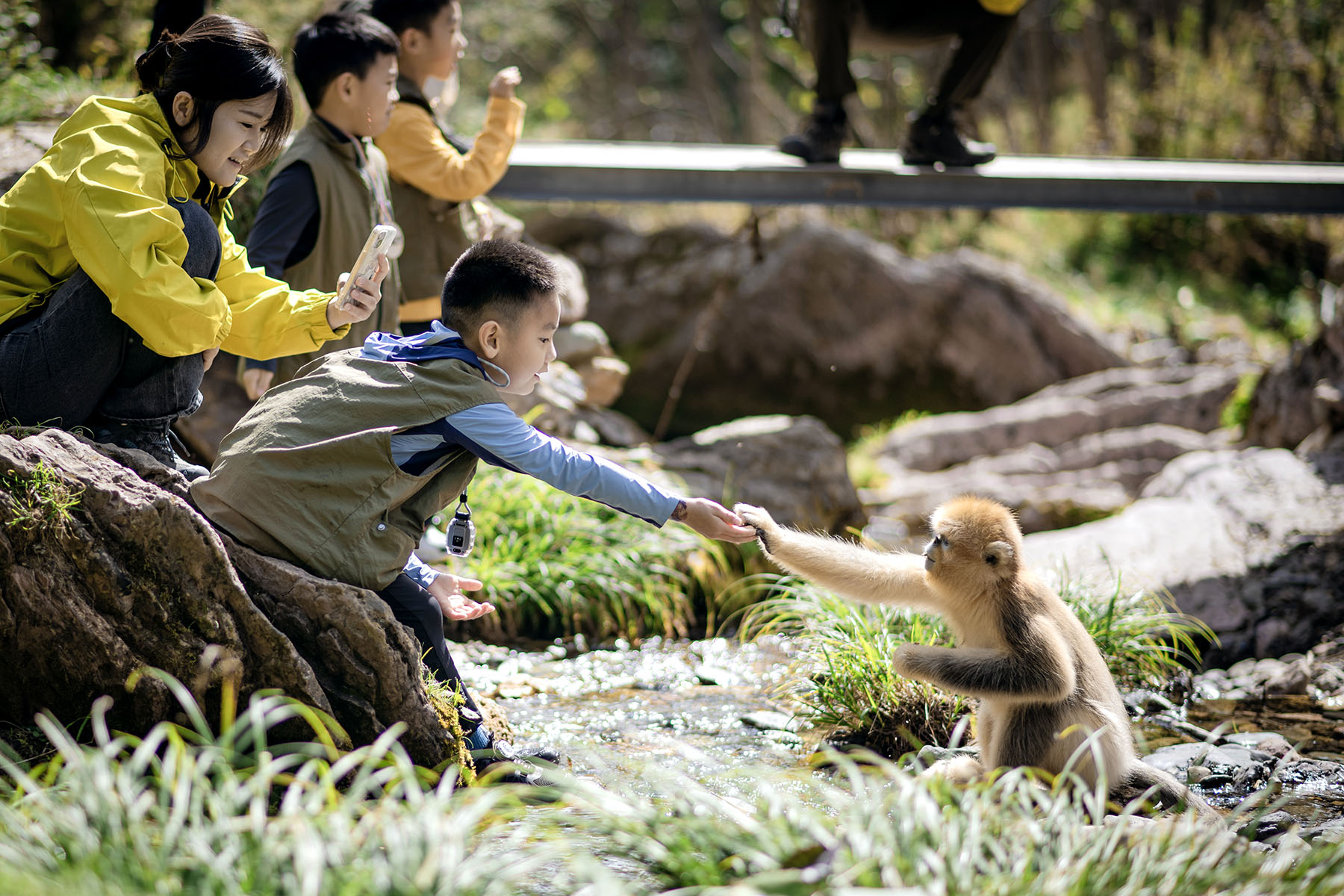
Attracted by the caretaker's closed fist, a 65-centimeter-tall golden snub-nosed monkey swings gracefully through the branches of Shennongjia in Central China's Hubei province.
When the fist reveals nothing, the monkey — a 25-kilogram male named Beike (meaning "conch") -taps the caretaker and tugs at his sleeve. He eventually finds two peanuts in the other hand, swiftly seizing and cracking the rare treat.
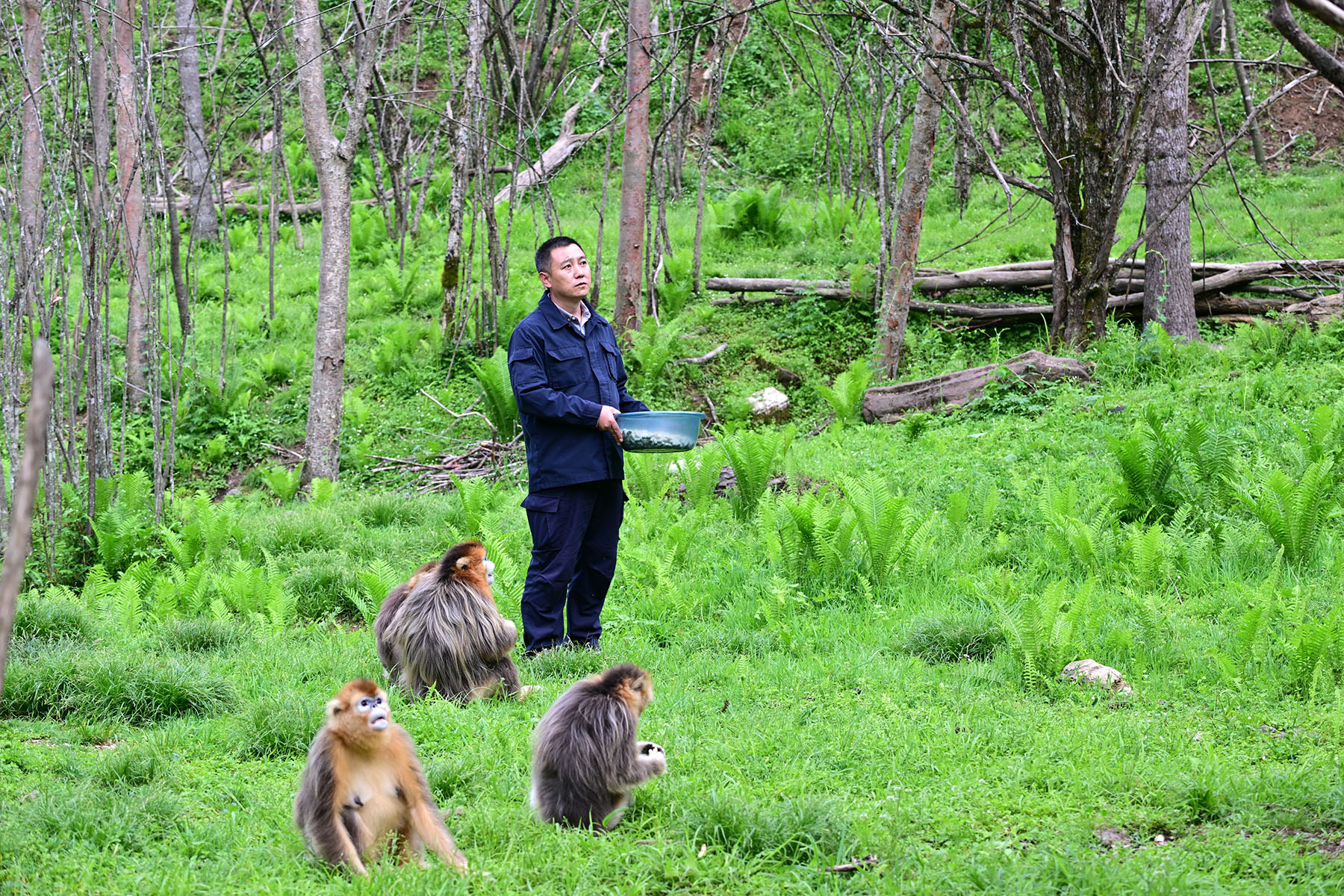
"This monkey recently won a battle to become the new head of his family," said Yang Jingyuan, director of the scientific research institute at the Shennongjia National Nature Reserve. He looks on as dozens of monkeys dart through the canopy, grooming one another and occasionally tussling in the dappled sunlight.
READ MORE: Conservation passion for the wild at heart
After four decades of conservation, the Shennongjia golden snub-nosed monkey, the rarest subspecies of the golden snub-nosed monkey, has bounced back from near invisibility.
Its population has tripled to 1,618 individuals across 11 groups, roaming a habitat of 401 square kilometers- a resurgence made possible by policy support, scientific management and technological empowerment.
The comeback
With a life span of around 20 to 25 years, the golden snub-nosed monkey is classified as a first-class State-protected wildlife species.
In 1978, the belief that golden snub-nosed monkeys did not inhabit Hubei due to the region's climate and geographical conditions was challenged when a group of Chinese scientists unexpectedly collected two specimens in Shennongjia.
In 1980, Professor Liu Minzhuang from East China Normal University in Shanghai confirmed the presence of golden snub-nosed monkeys in Shennongjia, extending the species' distribution eastward by around 500 km from Sichuan province into Hubei.
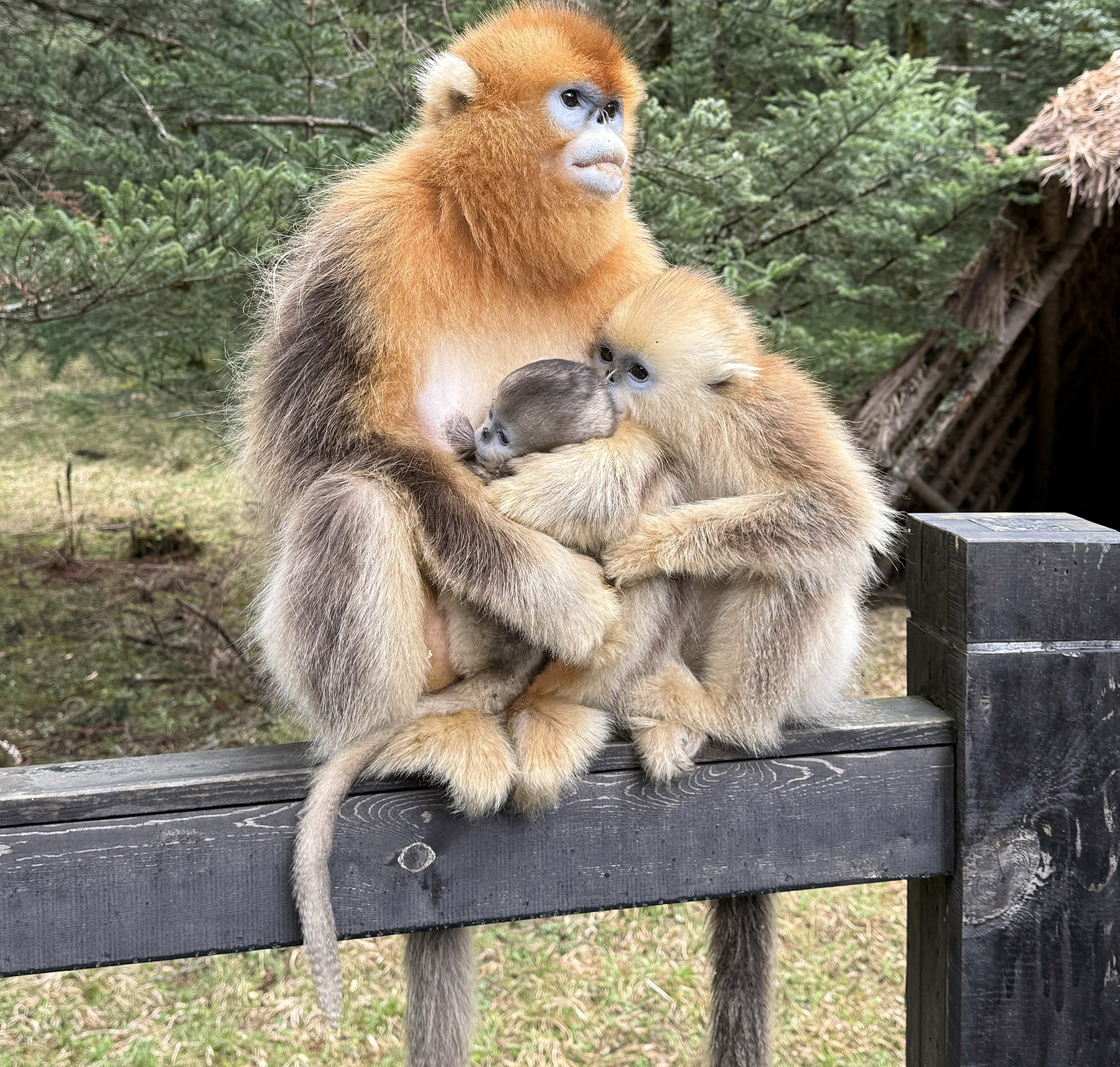
However, the discovery coincided with a period of severe deforestation and hunting. By the 1980s, the population of this subspecies had plummeted to just 501 individuals clinging to a mere 85 sq km of habitat. To stem the tide, Shennongjia was designated a provincial reserve in 1982 and upgraded to national status in 1986. In 2024, the subspecies was officially designated as an independent conservation management target, reflecting its unique genetic diversity and morphology, including its iconic upturned nose and a tail that often exceeds its body length.
"The 2024 designation recognized both the culmination of decades-long field research and the species' protection value," caretaker Yang said. As early as 2005, scientists had selected one of the 11 groups — the very group that includes the family Beike now leads — as their focal study group for long-term behavioral and ecological monitoring.
At that time, the group had 105 individuals and inhabited a natural valley in Dalongtan, northeast Shennongjia. The group had a well-organized social structure of eight family units and one all-male unit.
Golden snub-nosed monkeys typically have a hierarchical social structure. Each group consists of dozens to hundreds of monkeys, organized into several family units and one or more all-male units. Each family unit is led by an adult male, who lives with its wives and kids. The all-male unit, made up of adult males who have lost their position as family head and those who have left their families after the age of four, is responsible for the security of the whole group and for training the younger males.
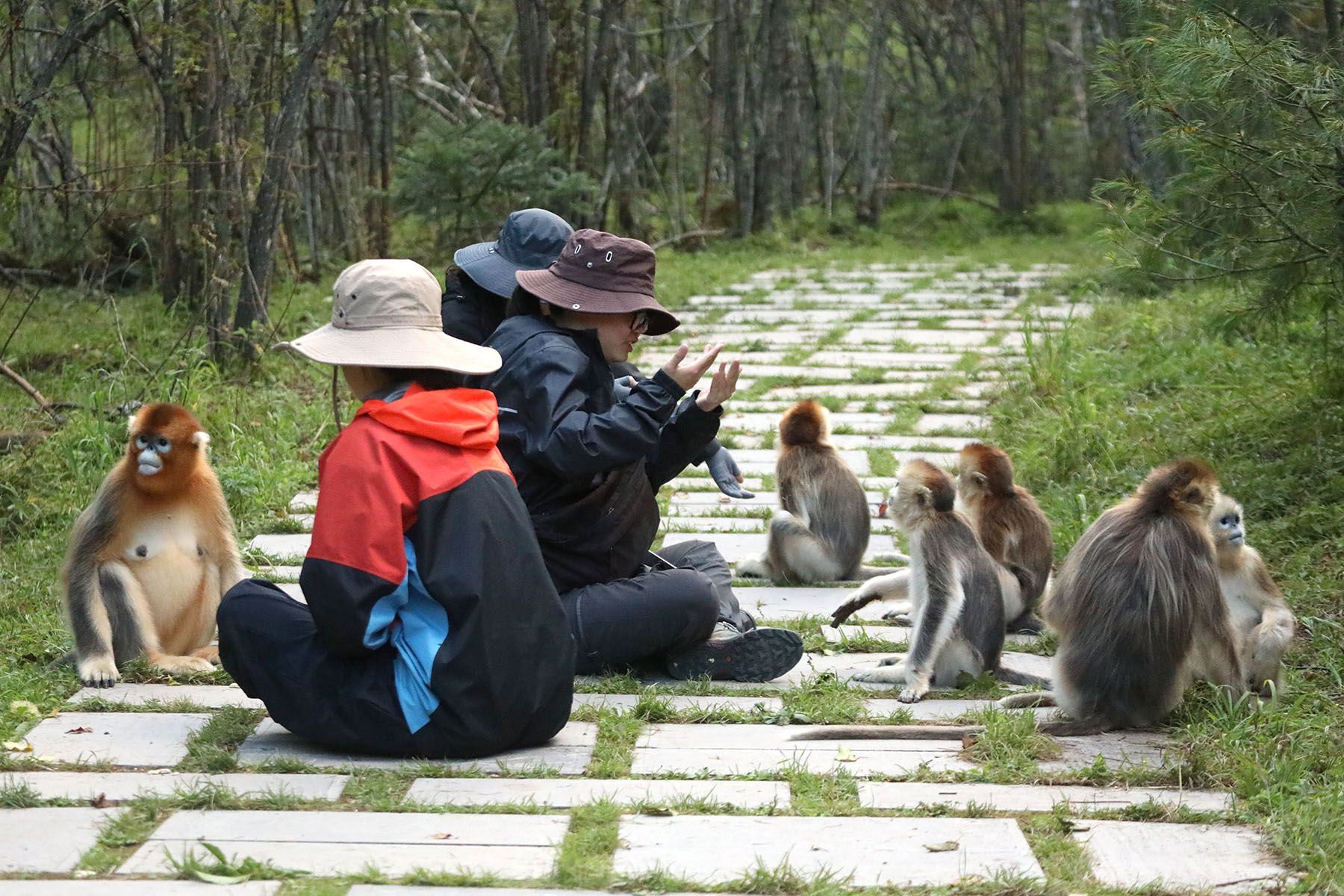
For close observation, researchers built simple living quarters, set up monitoring plank walks and established the Dalongtan Golden Snub-nosed Monkey Research Base in 2005. Through continuous tracking and observation, they identified winter food shortages as one of the key factors driving the population toward endangerment.
To address the problem, the research team conducted a diet supplement experiment, where apples, oranges and pine nuts were stuck onto branches and coated with moss to mimic wild fruits. But no monkey dared to approach — a stalemate that was finally broken when a male, later named Dadan (meaning "bold"), became the first to take the food.
A few months later, the monkey group began to regularly accept the supplemental food, which opened the door for researchers to systematically observe their feeding, reproduction, social behavior and even individual personalities.
Yao Hui, deputy director of the scientific research institute, said that the Shennongjia golden snub-nosed monkey typically lives at altitudes above 1,600 meters, where vegetation is limited — about 60 percent of their diet is tree bark and lichen, supplemented by bird eggs, insects and soil for protein and trace elements.
"As a result, during winter when food intake is severely insufficient and nutrition is lacking, their fur turns grayish; around July and August, however, it becomes a beautiful golden color," Yao said.
Yao underscored that human intervention remains minimal -researchers only provide a small amount of supplemental food during extreme winter shortages. The overall approach is to let the monkeys live as naturally as possible while working to restore their natural habitat.
Measures included the construction of 25 ecological corridors, which facilitate the reconnection of fragmented habitat patches and promote gene exchange among different monkey populations. Additionally, more than 20 sq km of degraded habitat has been restored to expand their living area.
For residents living in areas where the monkeys are distributed, the reserve has relocated them and organized skills training to help them transition to new livelihoods. Training programs focus on ecotourism, herbal medicine cultivation and green agriculture, empowering former forest dwellers to step out of the deep mountains and embrace sustainable lives.
For those living in peripheral regions, they receive alternative energy subsidies to replace coal and firewood with electricity, reducing the human impact on the monkeys' habitat. Additionally, a comprehensive electrification transformation project at the Dalongtan base was completed in 2024, with a large number of photovoltaic panels installed to power most daily needs such as cooking and heating. This initiative not only reduced fire risks but also further minimized human disturbance to the monkeys' habitat.
"Most rescue cases at the local rescue station are reported by villagers- a vivid microcosm of the shift from loggers to guardians," Yao said.
Tech empowerment
Peng Linpeng, director of the information management center at the Shennongjia reserve, highlighted the importance of a rounded, three-dimensional monitoring network for the recovery of the Shennongjia golden snub-nosed monkey population.
Established in 2025, the network goes beyond regular patrols, integrating satellite remote sensing to monitor broad habitat changes like forest pests and diseases. Drones, being more precise and cost-effective, support routine comparative monitoring, deter illegal activities, and collect high-definition three-dimensional geographic data for emergency command and dispatch.
"Considering the species' lofty living requirements, we have set up water quality monitoring stations at the sources and outlets of rivers flowing into the Yangtze and Hanjiang rivers, as well as air quality monitoring stations at elevations ranging from 600 to 3,000 meters," Peng said, adding that highly sensitive smoke detectors have been installed to warn of fire risks.
ALSO READ: Bird survey takes wing to produce comprehensive record
For real-time wildlife tracking, high-altitude cameras equipped with artificial intelligence have been deployed, offering a detection range of up to 1,000 meters to automatically track, identify and record animals upon their appearance. Over 700 infrared cameras have been installed, with 50 of them capable of real-time transmission. Supplemented by acoustic detectors, monitoring has turned from manual tracking in the past to a highly efficient, precise and automated approach.
"All technological means are designed and deployed for the sole purpose of wildlife protection, rather than for purely academic research," Peng said.
As a flagship species, the recovery of the Shennongjia golden snub-nosed monkey from the brink reflects the ecological prosperity of the reserve — which, with just 0.03 percent of the national land area, is home to more than one-tenth of China's vascular plant and vertebrate species — a thriving reality under the watchful eyes of caretakers, local villagers and cameras.
Contact the writers at limenghan@chinadaily.com.cn
