

Nature reserve in Sichuan sets example for harmonious co-existence
At 5 am on a recent trek, when the mist was still clinging to the high ranges stretching across the north of Sichuan province, Xiao Mei was already halfway up a mountain.
A backpack was pressed against her shoulders. Inside were memory cards for an infrared camera, notebooks and spare batteries. On other treks she also carries a sleeping bag and dry food when heading to one of the six remote field camps. Some of the camps have no electricity, no phone signal, and experience weather extremes.
"The longest I have stayed out was five days," she recalled. "You carry everything on your back."
The 36-year-old is head of the research and monitoring division at the Tangjiahe National Nature Reserve, which is located in Qingchuan county, Guangyuan city. Established in 1978 and designated a national nature reserve in 1986, Tangjiahe covers 40,000 hectares. Its focus is on conserving forest plants and wildlife. The primary conservation objectives are rare wildlife species, such as the giant panda, golden snub-nosed monkey and rare plant species, including the dove tree (Davidia involucrata), which is known as "a living fossil", and Fritillaria cirrhosa, or chuan bei mu in Chinese, a highly valued herb used in traditional Chinese medicine.
Xiao has spent 12 years in the park. However, when she first arrived, she almost left in the first three days.
She did not grow up dreaming of becoming a conservationist. She studied plant protection at an agricultural college in Chengdu, the provincial capital, where she was born and raised, and spent two years selling fertilizer in the city's rural outskirts.
"When I applied for Tangjiahe, it was just a job," she said frankly. "I didn't have a strong concept of what a nature reserve really meant. I liked plants. I saw that the dove tree, a nationally protected species, was here, so I applied."
The region was still recovering from the 2008 Wenchuan earthquake, ecotourism was underdeveloped, infrastructure was limited and life was quiet.
"I couldn't accept it at first. The work felt monotonous. You had to endure loneliness. On my third day, I wanted to leave," she said.
What changed her mind was not policy or promotion, but the forest itself.
"During patrols, you see things you can't see in the city — plants growing to their own rhythm, animals moving freely. There's a feeling that all living things have a spirit. That's when I began to calm down," Xiao said.
She started reviewing infrared camera footage, sorting through patrol data, and noticing patterns. Curiosity replaced restlessness. "You begin to ask: What is missing in the data? What haven't we understood yet?" she said.
Tangjiahe is described as one of the ecological cores of the giant panda national park. Its subtropical mountain forests have largely escaped large-scale logging. The forest regenerates naturally, with minimal human disturbance. Population pressure inside the reserve is low, and wildlife encounter rates are unusually high.
"In some reserves, you need luck to see animals," Xiao said. "Here, if you enter at random, you can see many."
Tangjiahe's wild giant panda population is remarkably stable. Thirty-nine pandas were recorded in earlier surveys and by 2025, monitoring data confirmed a total of 41.
Since 2016, the reserve has built a DNA archive for the panda population, collecting genetic samples from more than 30 individuals annually. "Every year, we basically confirm over 30 individuals through DNA. It's very stable," Xiao said.
Animal encounters
But numbers alone do not capture the drama that unfolds every spring.
Between March and April, Xiao and her team conduct intensive field monitoring during the panda breeding season. Since 2015, they have tracked courtship rituals and combative behavior, sometimes camping at nearly 3,000 meters above sea level.
In April 2025, she witnessed a first — three wild pandas appearing simultaneously in the same area. "In the past, we usually saw one or two," she said. "Three at once is very rare."
She remembered the sound — loud clashes echoing through the valley. "At 2,900 meters, you hear the fighting before you see them,"Xiao said.
One of the most fascinating behavioral patterns she documented was in 2024, when a female panda climbed into a tree during estrus. Below her, three males rotated positions, effectively "taking shifts" waiting for mating opportunities.
"The males start scouting about a week in advance," she said. "The tree the female chooses is usually one that allows her to observe the surroundings clearly."
In 2025, her team captured rare footage of two pandas successfully mating — an invaluable addition to long-term behavioral records.
Due to the familiarity of the sight, she said that seeing a wild panda no longer fills her with overwhelming excitement.
"Because we've recorded so many through infrared cameras. It's relatively easy to encounter them here," she said.
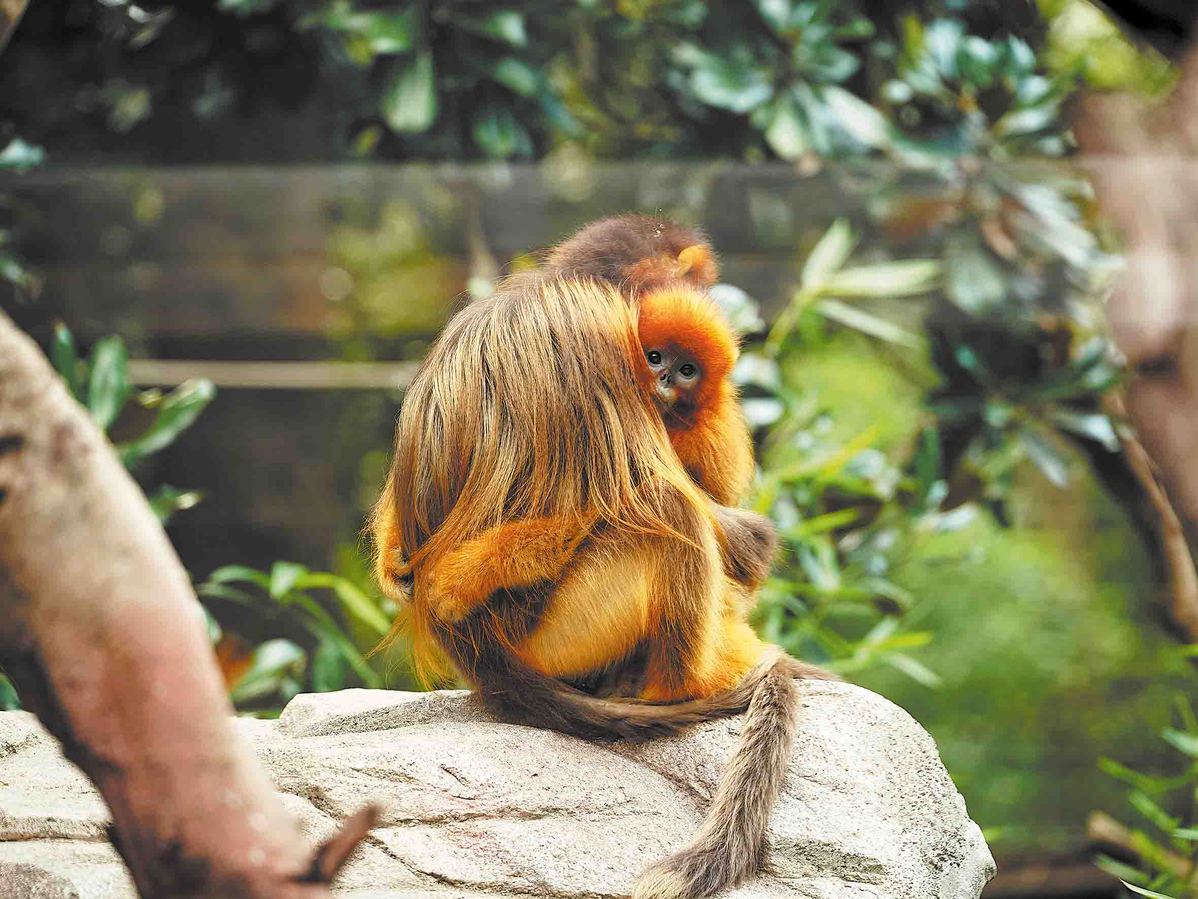
Tangjiahe's golden snub-nosed monkeys number around 800 and are organized into seven to 11 large social groups that constantly split and merge. Their activity altitude overlaps significantly with pandas.
In 2022, Xiao witnessed something that left a deep impression on her.
"A mother monkey carried her dead infant for two or three days," Xiao recalled. "She stayed at the edge of the group. Even when she searched for food, she held the baby."
Her facial expressions were unmistakable. "You could see grief. She avoided contact with the others. It felt no different from human mourning," she said.
Moments like this reinforce Xiao's belief that wildlife conservation is not "abstract management". "When you see that, you understand — life is life. The pain is real," she noted.
Tangjiahe's monitoring network now includes more than 400 infrared cameras. Xiao leads a small four-person research office overseeing ecological data management, supported by 36 field investigators in protection stations. Universities and research institutions assist in data analysis and publication.
Since 2019, she has shifted from front-line patrols to project leadership — coordinating data screening, managing monitoring systems and initiating research collaborations.
From mapping the full movement of individual pandas, to establishing continuous monitoring of golden snub-nosed monkeys, to expanding bird monitoring — including Sichuan's first dedicated bird monitoring station — and transforming infrared data into species interaction analysis and accessible public science education, her ambitions are clear.
"We have the data," she said. "Now we must use it better."
Forest bounty
When Xiao arrived, NGOs were already working with local communities. Over time, a full economic chain of ecological transition has developed. The reserve supports over 1,000 residents in surrounding buffer areas. Many once relied on hunting, foraging bamboo shoots, and wild harvesting — "living off the mountain".
Through targeted support, that has shifted. Villagers are trained as rangers and wildlife instructors and former hunters now patrol forests. Traditional beekeeping produces premium honey as the reserve provides designated pesticide-free zones and sales channels.
Also, crops vulnerable to wildlife damage — corn and rapeseed — have been replaced with species animals avoid, such as peonies and wasabi, which have steady sales. "It's a chain. Beekeeping, homestays, natural education. As the environment improves, incomes improve," she said.
Psychological adjustment is just as important as compensation to the locals, according to Xiao. "At first, people resisted. Now they fully support protection; that transformation took decades," she said.
In October 2025, the Tangjiahe National Nature Reserve, in partnership with Nanjing Hongshan Forest Zoo in Jiangsu province, opened an exhibition, which allowed the public to better understand the reserve's concept and its biodiversity efforts, as well as the condition of wild animals in their natural habitats.
Xiao was also invited to give a lecture about the reserve as part of the zoo's Nature Life Carnival: International Sharing on Sustainable Development initiative.
In its third year, the initiative invited international guests and zoos to talk about issues including zoo exhibition design, conservation efforts occurring outside of natural habitats, and urban biodiversity conservation.
Shen Zhijun, head of Nanjing Hongshan Forest Zoo, said the zoo's role is much more than just a place to see animals.
"It's a living testament to the power of connection, collaboration, and sustainability in wildlife conservation," he said. "As the zoo continues to inspire and educate, it is clear that the institution's work is not only about preserving species but also about fostering a sense of responsibility and empathy for the planet's most vulnerable creatures."
With more than 6 million visitors annually, Nanjing Hongshan Forest Zoo is one of the most popular zoos in China and home to around 3,000 animals and 260 species.
"Our core goal has always been to bridge the gap between nature conservation and the daily lives of people," Shen added. "By doing so, we hope to raise awareness about wildlife protection, showing visitors that protecting wild animals and their habitats is something they can relate to in their everyday lives."
Shen said zoo workers went to the Tangjiahe National Nature Reserve and were impressed by the staff's conservation efforts and how they encouraged local villagers to engage in beekeeping. "It not only helps preserve biodiversity but also provides an additional source of income for the community," said Shen.
The Tangjiahe exhibit featured a striking stone sculpture at the entrance, replicating the reserve's official emblem. Cutting-edge digital technologies, including AI and virtual reality, allowed visitors to experience rare species of animals from Tangjiahe as if they were standing in their natural habitat.
"What we want is to spark curiosity and respect for wildlife," said Shen. "We want to inspire people to visit Tangjiahe and see firsthand the wild habitats where these animals live."
Beyond boundaries
Nanjing Hongshan Forest Zoo's research also feeds back into global wildlife protection efforts. Through studies in animal behavior, nutrition, and reproduction, the zoo contributes to scientific advancements that improve conservation strategies of species both in captivity and in the wild, Shen noted. The zoo's collaborations with conservationists help to ensure the survival of endangered species.
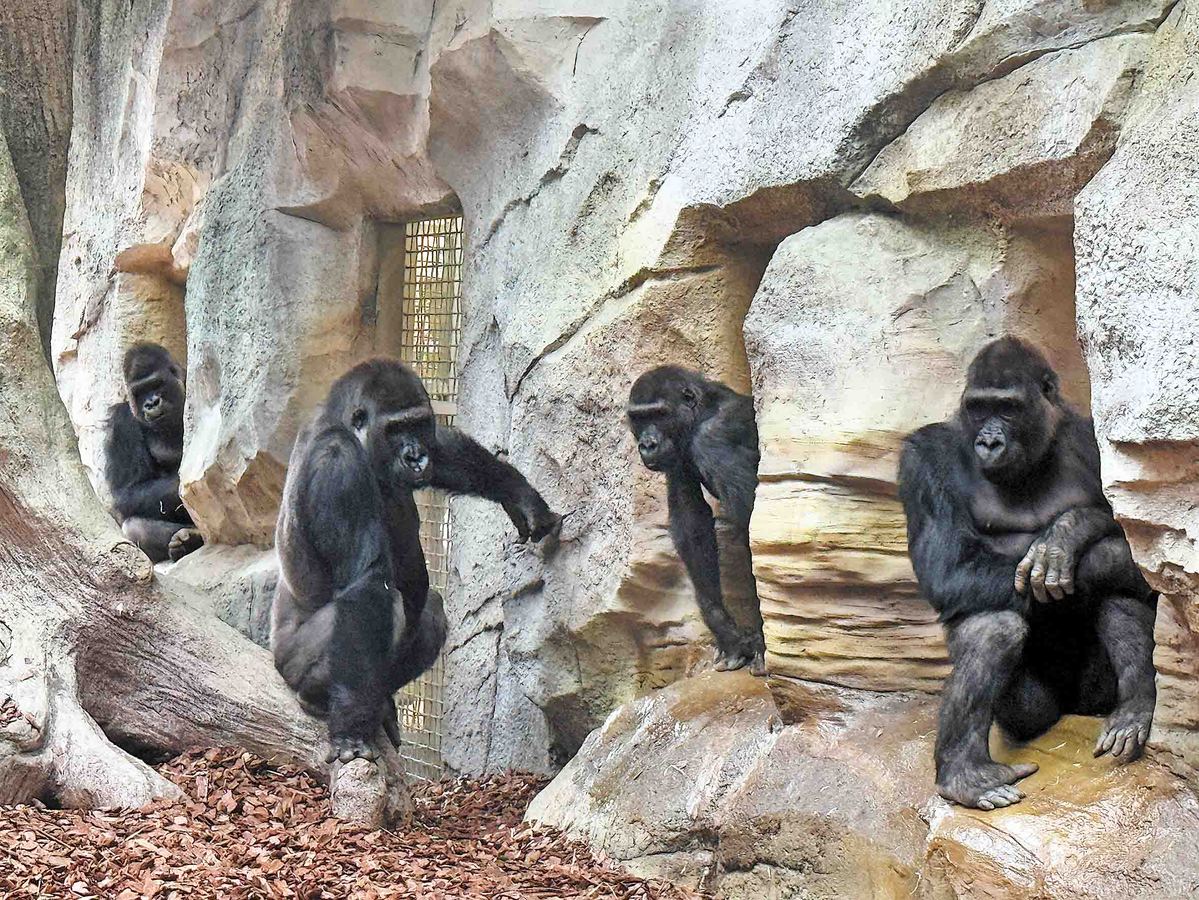
In February 2025, four large gorillas from the Royal Burgers' Zoo in Arnhem, the Netherlands, arrived at Nanjing Hongshan Forest Zoo. They were introduced to the public on Oct 18.
Arun Idoe, park manager at Burgers' Zoo, also joined the zoo's Nature Life Carnival: International Sharing on Sustainable Development initiative. He spoke on ideas about protecting species in their natural habitats and supporting their survival through professional care and breeding under human supervision.
Founded in 1913, Burgers' Zoo is family-owned and covers 45 hectares. It is home to around 500 different species and welcomes over 1 million visitors each year.
The organization is managed by three curators, four assistant curators, and seven head keepers. Together, they oversee seven distinct areas, supported by 60 to 70 animal keepers who ensure the daily operation of the entire zoo, according to Idoe.
When talking about the true meaning of a zoo, he said: "If a zoo not only allows you to encounter species that are extinct in the wild, but also invites you to walk through a real desert, rainforest, or even a living coral reef, its purpose has already gone beyond mere observation."
"And if that same zoo not only breeds endangered animals, but also works hand in hand with local communities to protect 450 square kilometers of nature reserve — where, then, are its boundaries?" he said.
"Perhaps the modern zoo is no longer just a place to see animals, but a place where conservation, education, and immersive experience come together — reshaping the relationship between people and the natural world," he noted.
