

Global fund managers have advised investors to maintain a balanced portfolio of both technology shares to capture growth and real assets to hedge against rising inflation caused by soaring energy prices and geopolitical tensions.
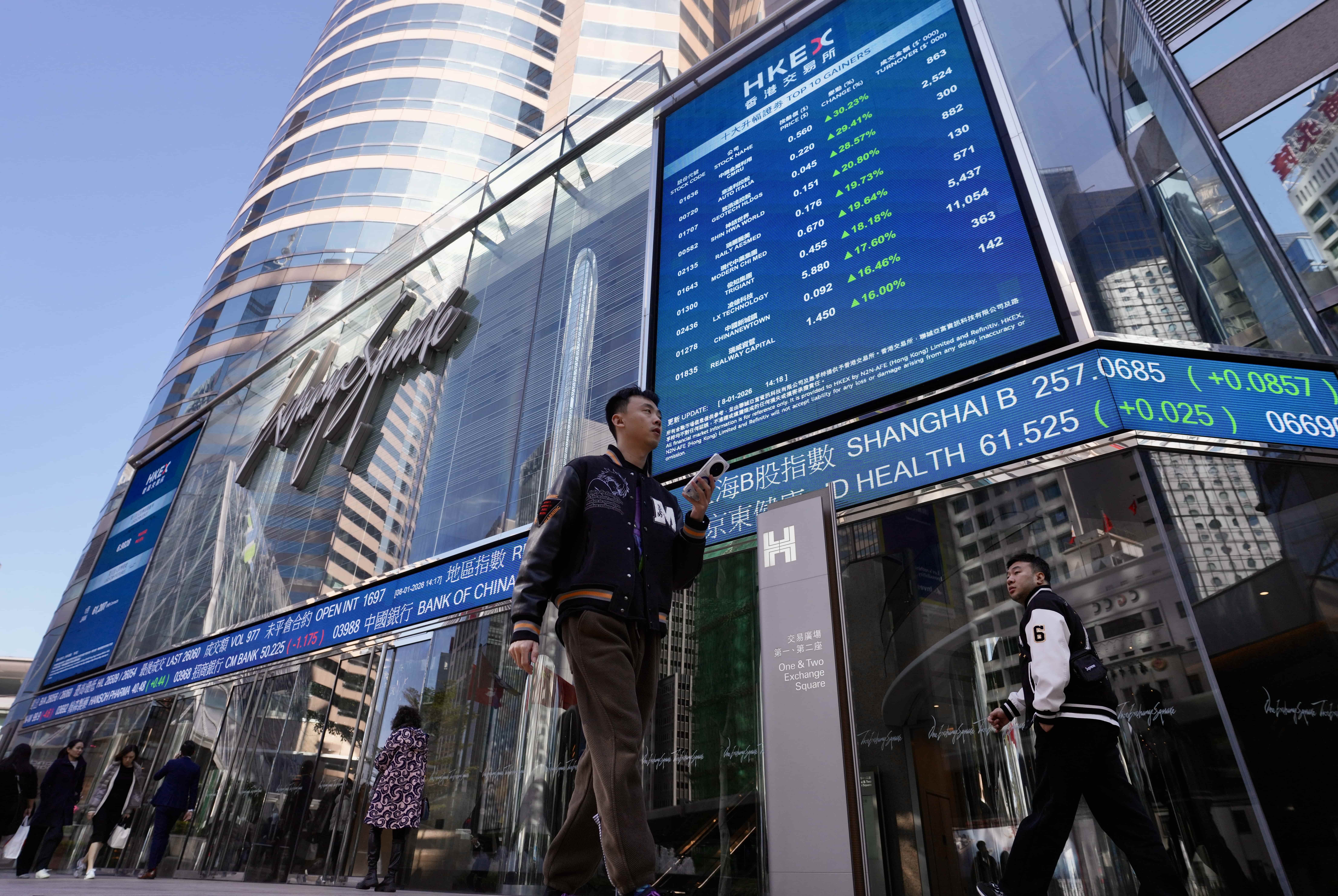
Hong Kong’s equity market benchmark Hang Seng Index (HSI) slipped 1.3 percent on the last trading day of April to finish at 25,776 points on a market turnover of HK$291.5 billion ($37.3 billion).
The Hang Seng China Enterprises Index — a barometer of Chinese mainland companies — lost 1.4 percent to close at 8,681 points, while the city’s technology stock gauge — the Hang Seng TECH Index — decreased 0.8 percent to close at 4,871 points.
The HSI posted a monthly increase of almost 4 percent from March this year. In the first four months of this year, the index gained just 0.56 percent.
At the April Federal Open Market Committee meeting, the United States Federal Reserve on Wednesday announced that the target range for the federal funds rate remained unchanged at 3.5 to 3.75 percent, in line with market expectations.
ALSO READ: Hong Kong’s local debt market becomes surprise funding hotspot
“The market generally considers that the path of US monetary policy remains quite uncertain, and depends on developments in US inflation and labor market, especially as oil prices have remained elevated amid continued tensions in the Middle East region, with the impact on US inflation still to be observed,” the Hong Kong Monetary Authority (HKMA) said in its Thursday statement.
The HKMA added that the future trend of US interest rates is quite uncertain, which may influence the interest rate environment in Hong Kong so the public should carefully manage interest rate risks when making decisions about property purchase, investment or borrowing.
Wilson Wong, investment management general manager at Bank of China (Hong Kong), cautioned investors to remain prudent as the negative impact on the real economy due to high energy prices may gradually become apparent throughout the year.
READ MORE: HKMA follows suit as Fed holds rates amid inflation worries
“Furthermore, the continued expansion of the US fiscal deficit and the increase in government debt issuance may keep long-term interest rates high, thereby putting sustained pressure on the mortgage market, corporate financing costs, and asset valuations,” Wong noted.
Hang Seng Bank suggested an investment strategy capitalizing on the growth opportunities presented by artificial intelligence while simultaneously allocating real assets to hedge against inflation.
“Sectors with high barriers to entry (semiconductors, fiber optic communication equipment, and data centers) are expected to continue to be sought after. However, investments should include traditional infrastructures, raw materials, energy, new energy, and utilities that can provide a defensive stance against rising inflation risks,” said Belle Liang, chief investment officer for Investments and Wealth Solutions at Hang Seng Bank.
READ MORE: AIA's new business value climbs in Q1 on strong mainland, HKSAR demand
Dah Sing Bank said Hong Kong’s stock market may face increasing pressure amid the ongoing US-Iran conflict, the Chinese mainland's lowered economic growth target, limited room for further stimulus from the central government, and weaker-than-expected corporate earnings.
But the bank is still optimistic over the prospect of the HSI in a medium horizon.
“If the Middle East conflict ends sooner that eases pressure on interest rates, the mainland economy can regain momentum, and the pace of the monetization of artificial intelligence technology can be accelerated, this could support the performance of Hong Kong stocks in the medium term,” the bank said.
Value Partners Group said the valuation of Hong Kong and H-share equities is becoming more appealing after the recent market correction. The fund manager expects any positive development can lead to a good rebound when the market is lowering the expectation for this year’s earnings.
