

Handmade revival echoes through shadow puppetry as tradition adapts creatively for contemporary audiences worldwide, report Xing Wen and Zhu Xingxin in Xiaoyi, Shanxi.
Originally a gaming slang for skillful manual play, shoucuo (hand-rubbed) has recently gone viral on Chinese social media, describing things made entirely by hand in a simple, low-tech manner.
This modern appreciation for handmade authenticity finds a natural parallel in one of China's oldest theatrical forms — shadow puppetry, an art that has embodied this same earnest, unpolished patience for more than 2,000 years.
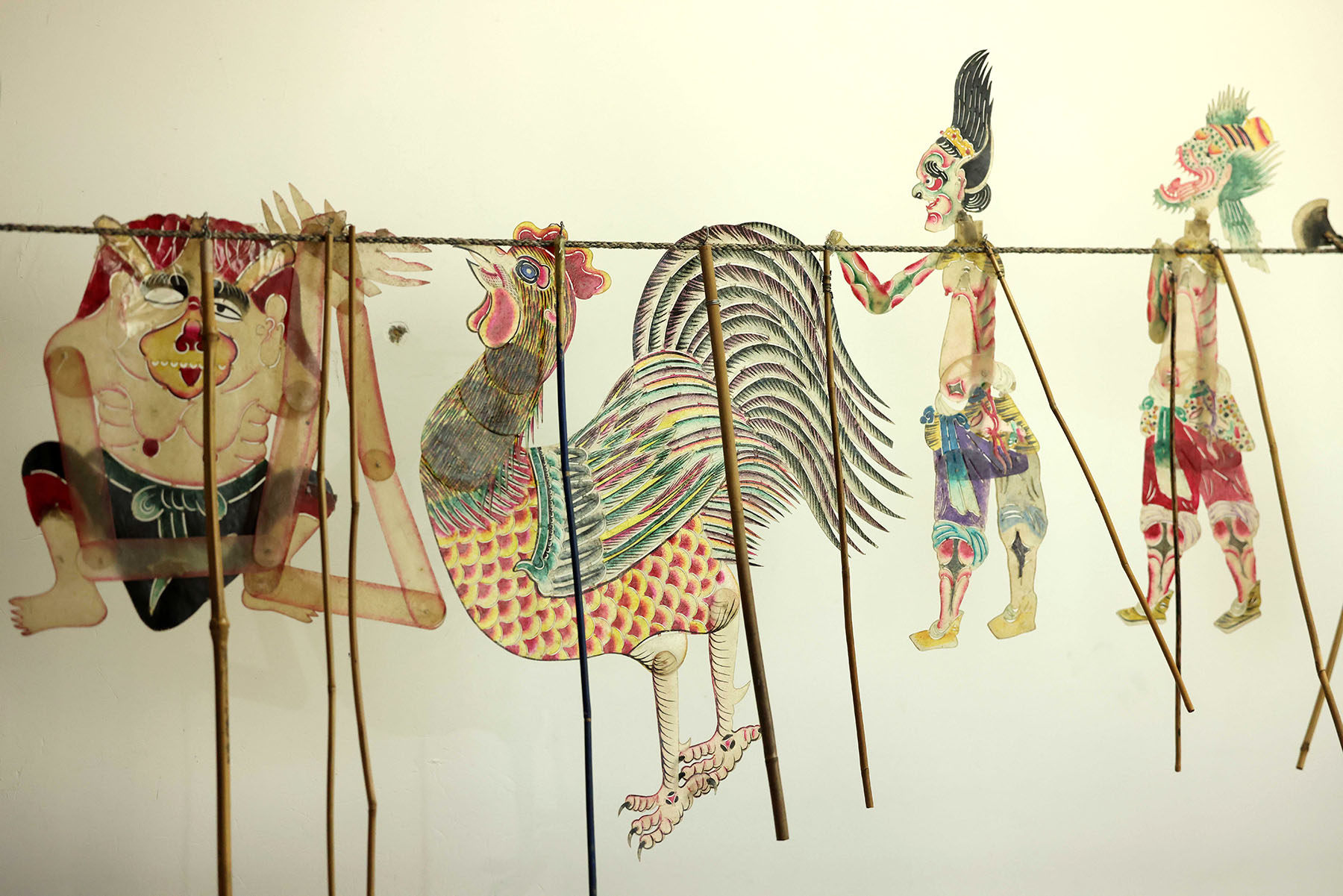
For instance, Xiaoyi in Shanxi province, one of the earliest birthplaces of Chinese shadow puppetry. Here, practitioners still make every puppet from scratch: selecting leather, drawing designs, carving each delicate piece, applying colors, and stitching segments together — all entirely by hand.
READ MORE: The art of light and shadow
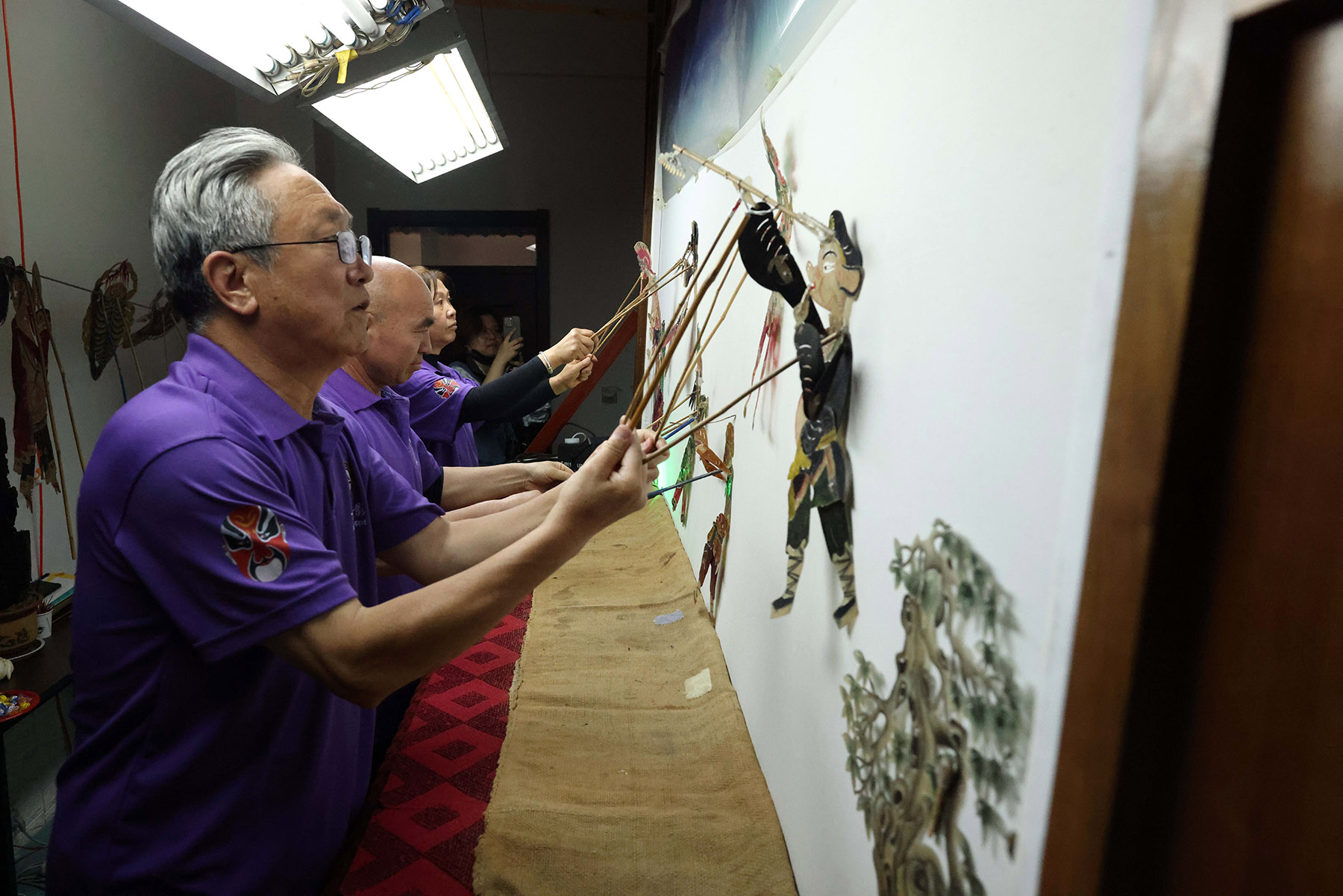
The stage is equally modest: a paper screen stretched over a wooden frame, typically about 1.75 meters wide and 1.21 meters tall. Behind it, a rapeseed oil lamp casts a soft glow through the paper.
No modern technology, no electricity, just a lamp that has burned the same way since the Qing Dynasty (1644-1911).
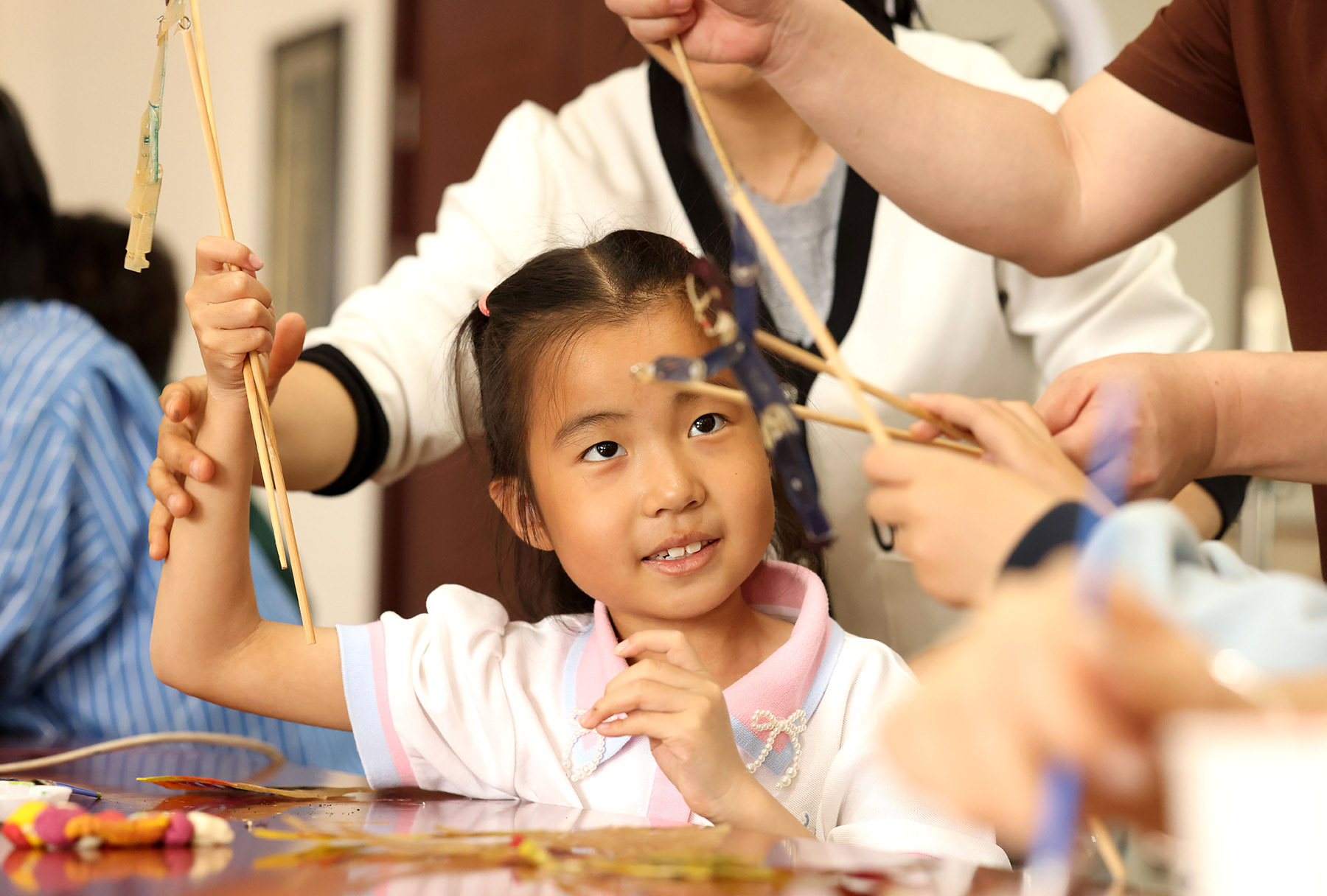
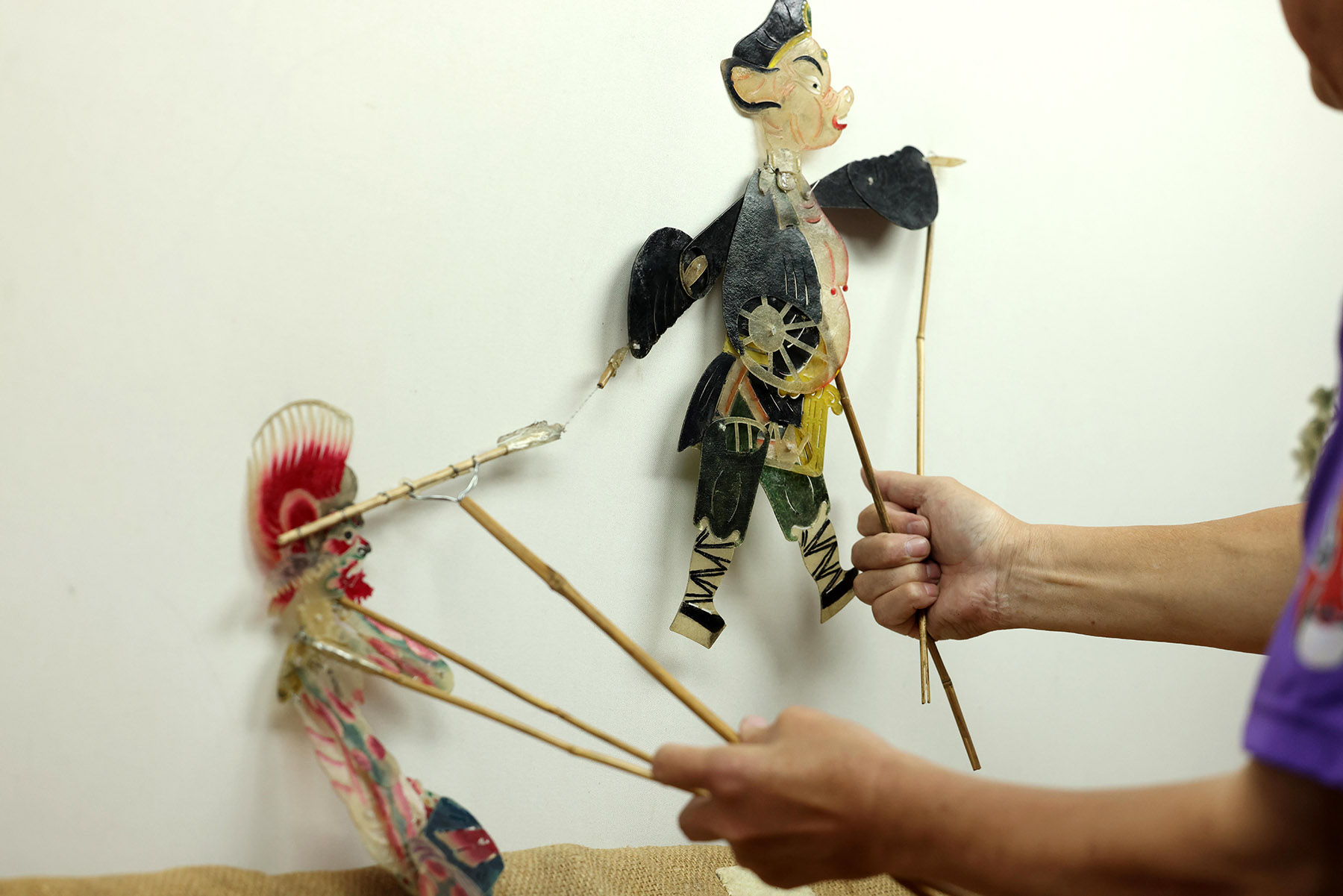
As the music begins, led by the piercing tones of the suona (double-reed instrument), performers' fingers move deftly behind the screen, manipulating thin rods to bring the puppets to life.
Epic tales then unfold in flickering shadows.
At every step, this time-honored art reveals a handmade spirit — the quiet ingenuity of turning the simplest light into a world of stories.
"Xiaoyi shadow puppetry features a bold, unrefined style, simple, exaggerated, and powered by strong, forceful lines that create a better visual effect," explains Guo Weiwei, a 39-year-old shadow puppetry craftsman and performer.
Guo incorporates contemporary aesthetics into traditional puppet designs, creating cultural products such as shadow puppet bookmarks, decorative lamps and wedding gift boxes.
He also regularly posts on short-video platforms, documenting how he transforms raw cowhide into lively, expressive figures.
Shadow puppetry was inscribed on China's first list of National Intangible Cultural Heritage in 2006.
Hou Jianchuan, an eighth-generation representative inheritor of this intangible cultural heritage, has long been thinking about how to attract modern audiences to the art.
Once hugely popular in Xiaoyi, shadow puppetry performances were commonly staged during temple fairs, weddings and harvest celebrations.
Born in 1961, Hou grew up immersed in the art.
"I grew up watching shadow puppetry performances," he says. "It's something that lives in my bones."
Hou once worked in a local troupe performing a dialect-based opera.
His life's path changed after he paid a visit to Wu Haitang, an elderly master of shadow puppetry. Hou found Wu living in a dilapidated cave dwelling. The precious shadow puppets Wu had collected throughout his life were stored in a broken box, covered in a thick layer of dust.
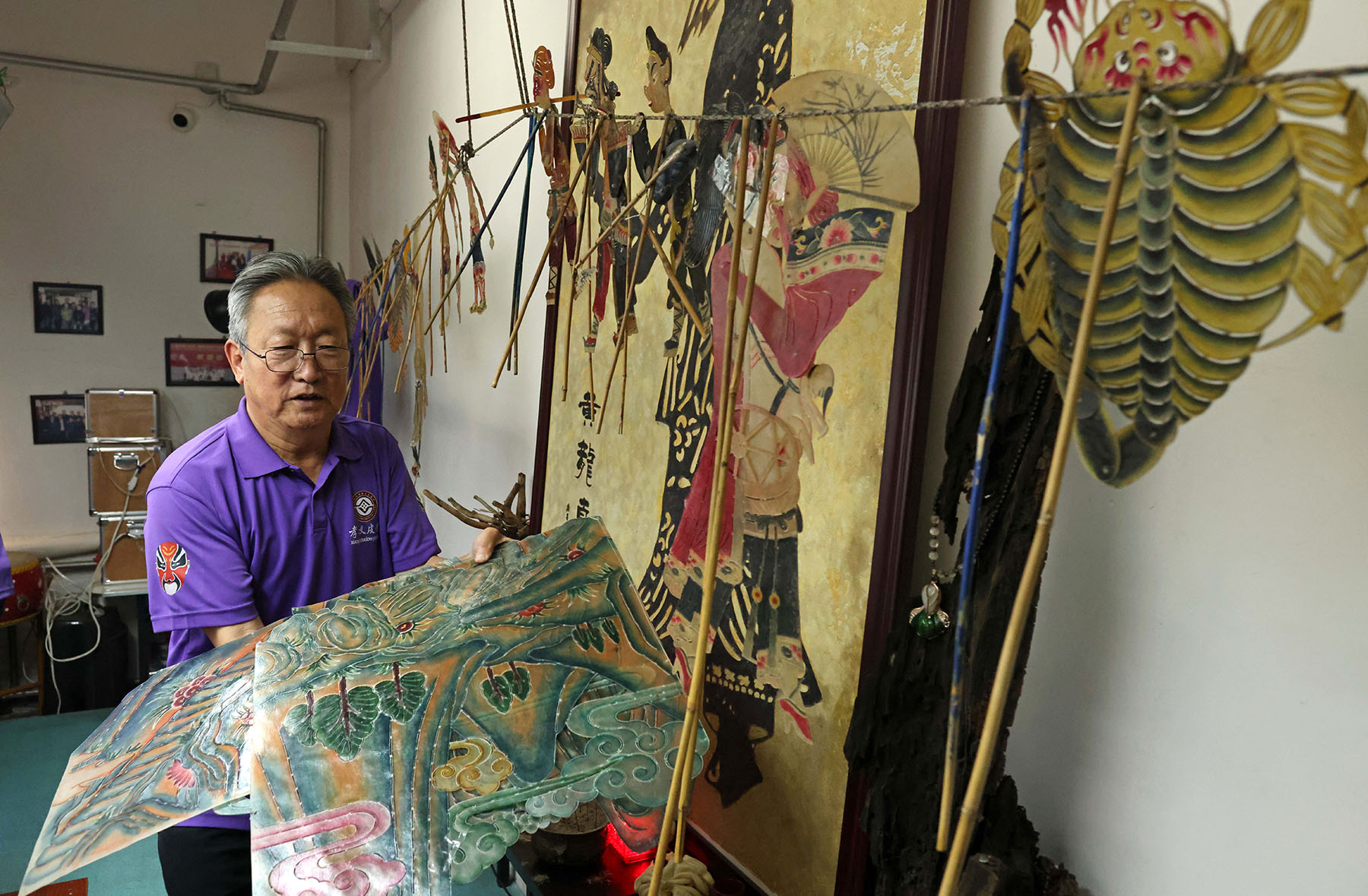
The sight made Hou question whether the art that had shaped his childhood had lost its place in modern society.
Unwilling to accept that fate, Hou immediately apprenticed himself to Wu, starting with the most basic techniques of puppet manipulation.
And so, a former opera performer became a shadow puppeteer behind the screen.
In addition to preserving traditional scripts and techniques, Hou has also been trying to create new productions.
In one project, he teamed up with the Yungang Research Institute to use digital technology to capture high-resolution images of the grottoes' monumental Buddhist statues, preserving every detail of the carvings.
The images were then scaled down for shadow puppet production, bringing the stories of the grottoes to life on stage.
The production went on to become a resident performance at the site for 15 years.
"Cultural tourism at scenic sites and the development of beautiful villages both urgently need distinctive cultural content," Hou says.
His workshop has trained more than 300 students in the art of shadow puppetry.
"Once they master the craft, they can return to their hometowns, set up performance spaces in village settings, and adapt local stories for their shows."
ALSO REAED: Team fuses puppetry with digital media
In 2016, Hou brought Xiaoyi shadow puppetry to San Jose in the United States. For a performance of the Chinese love story of Liang Shanbo and Zhu Yingtai (The Butterfly Lovers), Hou chose to use music from the opera Romeo and Juliet as accompaniment. The performance ended with a waltz, preserving the traditional form of shadow puppetry while blending in elements of Western culture.
"To reach global audiences, we cannot abandon our traditional local singing styles and artistic core. At the same time, we can make good use of music as a universal language," Hou says.
"Beyond that, we need to continuously enrich our stories, so that they have the power to transcend cultures and resonate with audiences everywhere."
Contact the writers at xingwen@chinadaily.com.cn
