

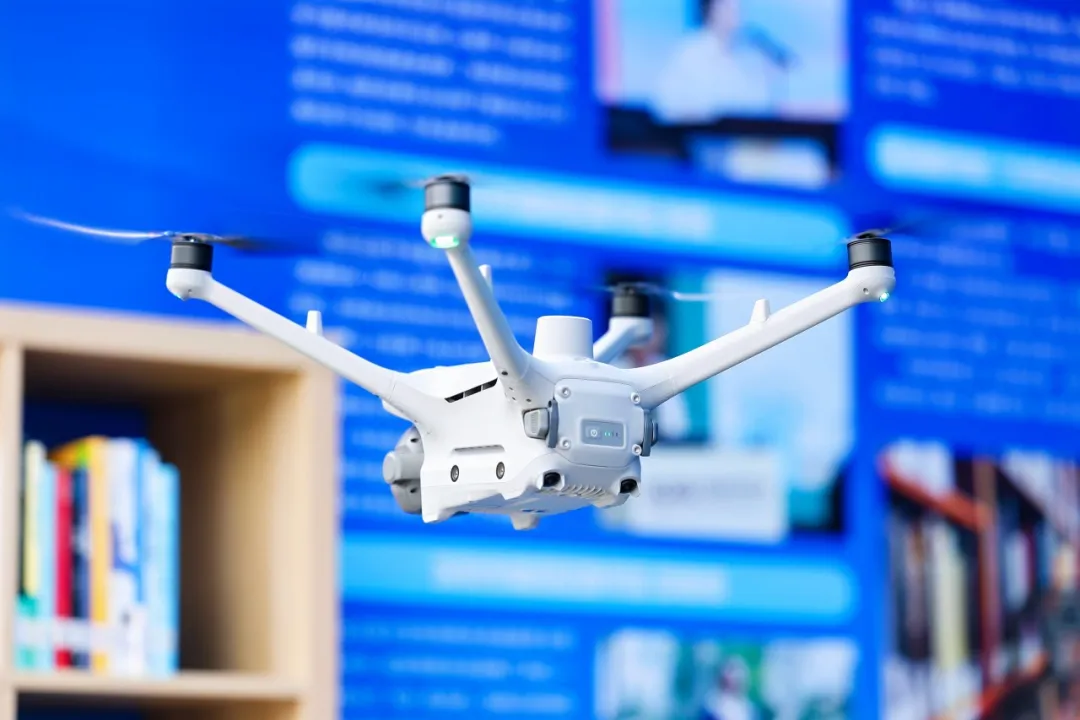
After the closing hours of Shenzhen’s Futian District Library, a new, diminutive staff member is hard at work. It doesn’t turn pages, but it flies.
The nimble drone glides silently between bookshelves, its camera scanning row upon row of book spines, performing an inventory task that once took humans days in a matter of minutes.
The newly-launched pilot project – drone-enabled intelligent library inventory system — is aimed at solving a perennial problem of library books put on the wrong shelves.
Traditional library inventory is a painstaking, labor-intensive process. For a small community branch with a collection of around 5,000 books, a manual count could take up to a week. Even with the help of handheld Radio Frequency Identification (RFID) devices, it required about two days.
This inefficiency led to the chronic "in library but not on shelf" issue that plagues libraries and frustrates readers worldwide.
Futian District Library’s innovative solution integrates autonomous flight, LiDAR, OCR visual recognition, and a cloud management platform.
After the library closes, the drone autonomously initiates a cruise mode, weaving through aisles to conduct a full-coverage inspection of high, middle, and low shelves. It captures the spine information of each book and synchronizes the data with the library's collection management system in real-time, all without any human intervention.
When the system's AI-powered recognition engine identifies a misplaced book, it send its specific location to the system. This information can then be used to dispatch a robot to complete the reshelving task.
ALSO READ: Booking a stronger future
The results are striking. For a 5,000-book collection, the drone system completes an inventory in approximately 30 minutes — a nearly 30-fold increase in efficiency over the traditional two-day manual process. Its accuracy in identifying misplaced books reaches 99 percent.
Consequently, reader search efficiency has more than doubled, significantly improving the borrowing experience.
This report is based on information from original Chinese reports published on the official website of Shenzhen Special Zone Daily and the WeChat public account of Futian District Library.
