

Jingdezhen's charms and modernity cement its status, appreciation in art world
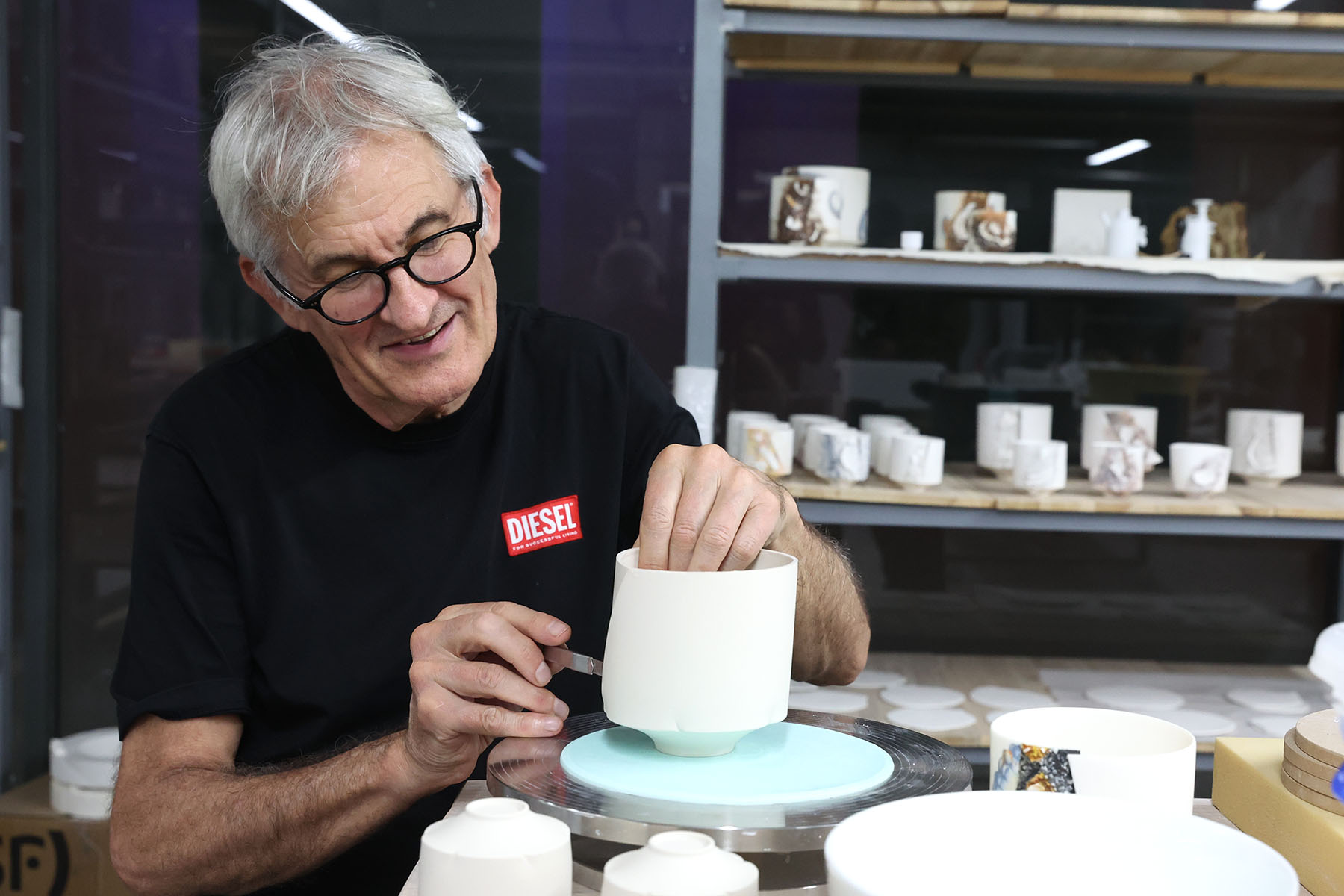
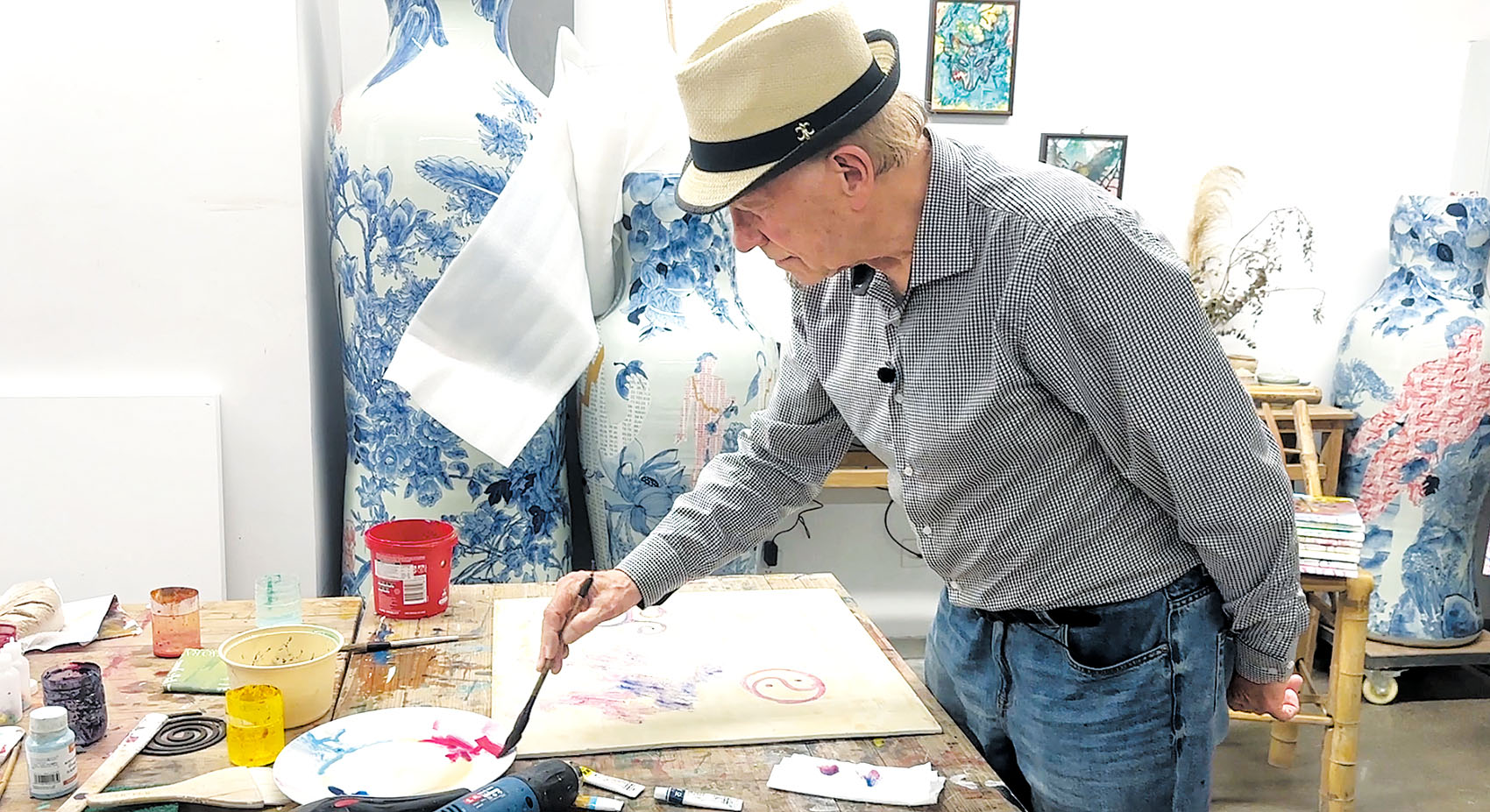
At the center of Canadian artist Philip Read's studio in Jingdezhen, Jiangxi province, sits a porcelain plate he treasures above all other pieces. Across its illustrated surface, a river is depicted running through the city and dividing it into two distinct worlds. On the upper side is a modern version of Jingdezhen, marked by the familiar corporate logos of KFC and McDonald's. On the other lies a quieter landscape of tiled roofs, small bridges, fields and water — slower, calmer, and somehow still able to hold its own against the rush of contemporary life.
For Read, the plate is more than a favorite work. It is the city itself.
"It is both modern and international, but if you look a little further, Jingdezhen is still calm, still able to make you focus," he said. "That is part of its charm."
That sense of duality — of a city that feels open to the world without losing the texture of its own life — helps explain why Jingdezhen has become an increasingly magnetic place for artists, designers and travelers from abroad.
Known for over 1,000 years as China's porcelain capital, the city was named a UNESCO Creative City of Crafts and Folk Art in 2014. In recent years, it has drawn growing international attention through artist residencies, exhibitions, creative markets and cultural exchange platforms.
Artistic attraction
But for Read, the story began long before Jingdezhen was spoken of as an international hub for ceramic art and cultural exchange.
His fascination with Chinese art dates back more than four decades to his student years in North America. The more he learned about classical Chinese painting, the more strongly he felt pulled toward China. That interest eventually brought him to Jingdezhen for the first time in 1989.
"Jingdezhen is renowned for its porcelain," he recalled. "I was a watercolor painter and I also did ink painting. And the city seemed to be a very strong cultural city at the time. It's rough but really powerful. It fascinated me."
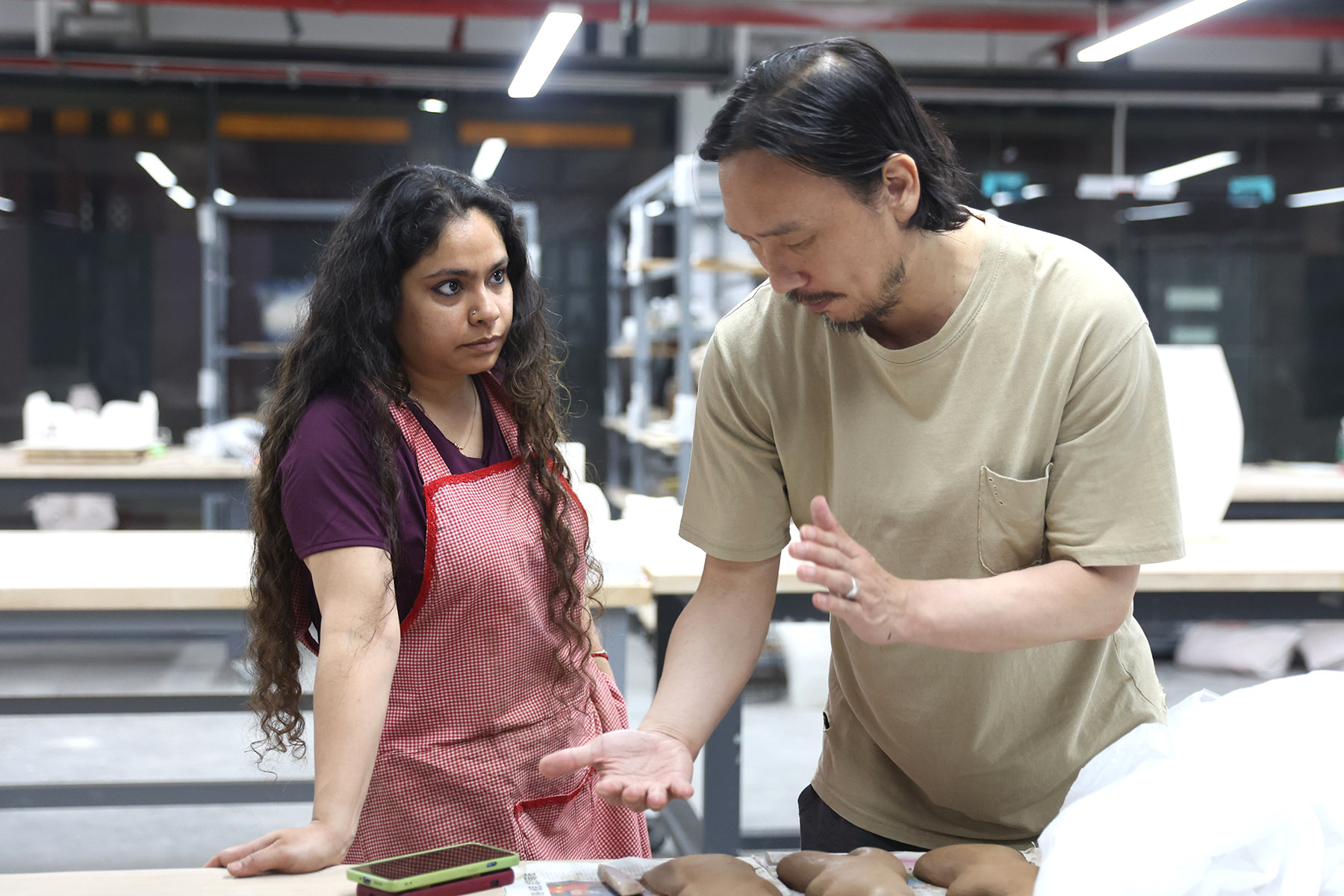
During that short visit, he made a bamboo cup while sitting at an ancient kiln site in what is now the Taoyangli historical and cultural district.
"It was an ancient kiln site for at least 400 years," he said. "That made it more profound. I felt like I was surrounded by the history and the culture."
He returned in 1996 as an artist-in-residence at a local college for half a year. Over time, his ties to the city deepened.
Read came back to the city again and again. He opened his own studio years later and began spending much of the year in Jingdezhen.
What stayed with him, he said, was not simply the city's reputation for ceramics, but the feeling that its cultural life had never been completely severed from ordinary people.
"I think the true heart of China and Chinese culture and the arts is here," he said. "Eventually, more foreigners will come over and stay for a long time because of the incredible art and culture and history, but also the people living here."
Cultural landmark
Today, that pull can be seen across the city, though perhaps nowhere more clearly than at Taoxichuan Ceramic Art Avenue, a district Read sees as one of the most vivid expressions of Jingdezhen's contemporary global presence.
Built out of the former Universe Porcelain Factory, Taoxichuan began renovations in 2013 and officially opened to the public in 2016.
Since then, it has grown into one of Jingdezhen's bestknown cultural landmarks, hosting short-term residencies for more than 800 artists from over 50 countries, incubating more than 3,000 startups and generating more than 110,000 jobs across related industries. The district welcomed 12.25 million visits in 2025 alone.
Yet, what gives Taoxichuan its character is not simply scale.
The old factory buildings are still there and so are the smokestacks. But inside and around them are galleries, studios, museums, cafes, markets and performance spaces.
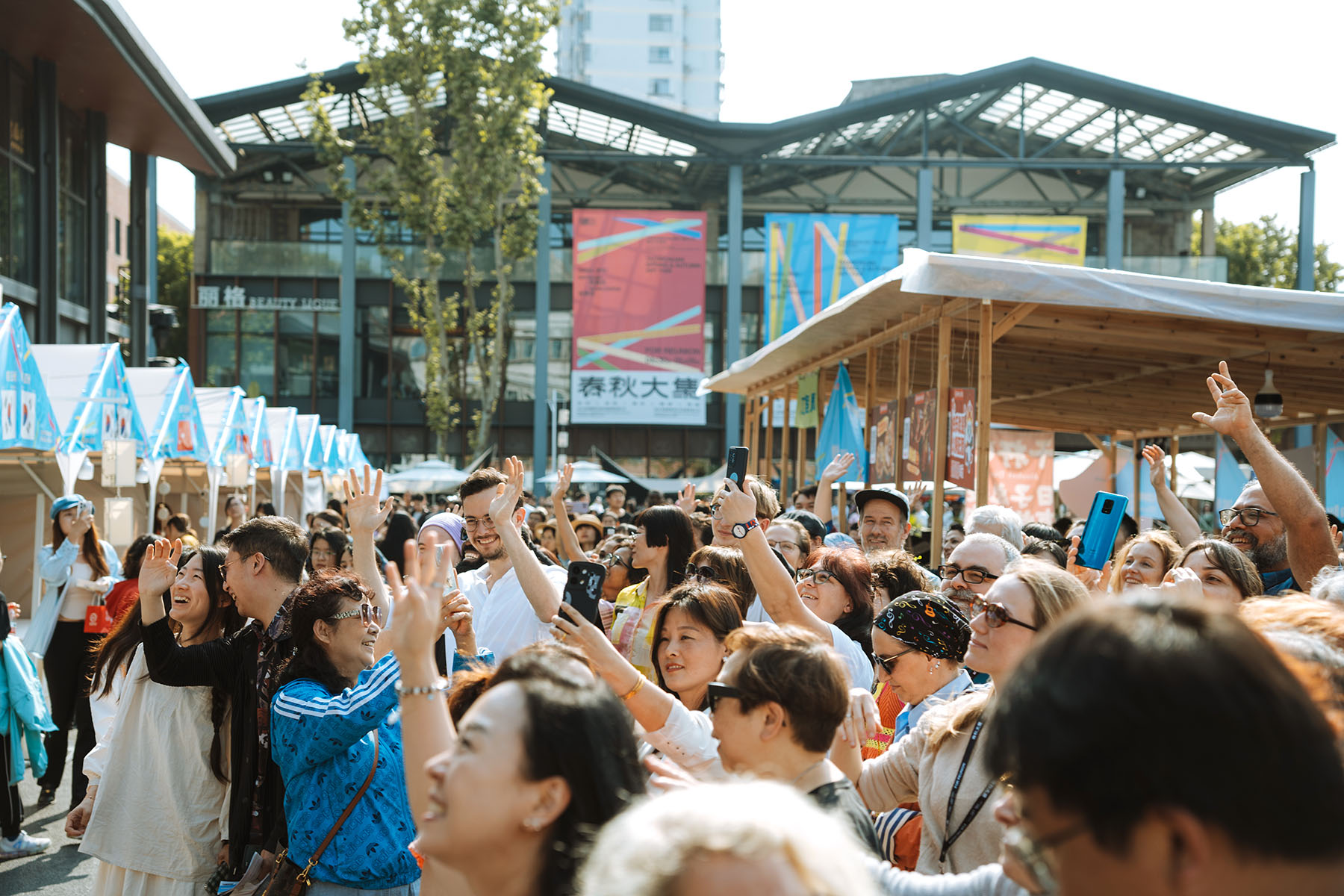
On weekends, visitors wander through ceramics stalls and exhibitions while artists from different countries talk about glazing, firing and form. The place feels contemporary, but not uprooted.
Liu Zili, executive deputy director of the Jingdezhen National Ceramic Culture Inheritance and Innovation Pilot Zone, once framed the idea in simple terms: the old factory was part of the memory of the "porcelain capital", and the city wanted to keep that memory alive.
That choice matters. In many places, redevelopment wipes away industrial memory in the name of renewal. In Jingdezhen, the opposite seems to be at work: the city has tried to build the new out of what was already there.
The result is not just a cultural district that looks fashionable, but a place where the past remains visible in the shape of the present.
And the city's international pull does not end at its most visible urban landmark.
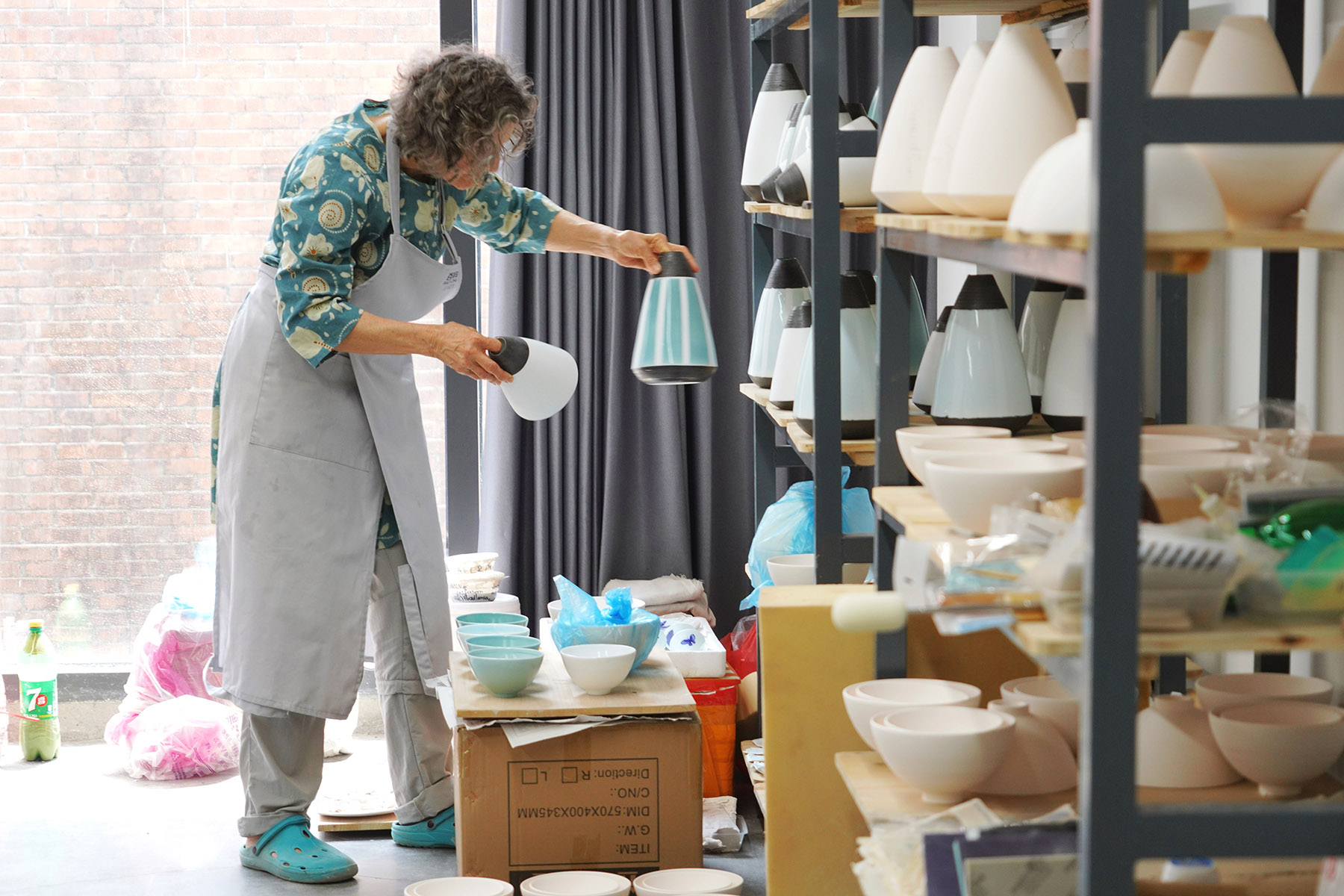
In Xianghu village, one of Jingdezhen's ceramic hubs, foreign artists have also found a different rhythm of life and work. Among them is Spanish artist Jaume Ribalta, who has settled there with his own studio and become immersed in the pace of the countryside.
For Ribalta, Jingdezhen was an obvious choice.
The city, he said, feels like an "art utopia" — a place with a deeply artistic atmosphere and a warm, free-spirited environment.
"Over the years, I've created a series of zodiac teacups, each featuring a different Chinese zodiac animal," he said."I've grown to love this traditional cultural element and have continued to incorporate it into my work."
"Engaging in conversations with young ceramists and students and exploring how to blend tradition with innovation is key to keeping my inspiration alive," he added.
What artists like Ribalta have found in Jingdezhen is not just a site of production, but a living ecosystem — one in which kilns, clay, students, craftspeople, villages and markets still exist in close reach of one another.
The city's international appeal, in that sense, is not built only on spectacle. It is also built on the possibility of staying, making and entering into a longer conversation with the place.
Flagship event
If Taoxichuan embodies the city's contemporary creative energy, the annual China Jingdezhen International Ceramic Expo represents another side of that opening — one that is more formal, more public, and more consciously outward-facing.
First held in 2004, the expo has gradually grown into one of Jingdezhen's flagship international events. During the 2025 edition, the city launched the 1819 Ceramic Carnival, which brought ceramic culture into the streets through float parades, markets, exhibitions and performances woven into daily urban life.
According to official figures, the carnival drew 480,000 visits, generated 570 million yuan ($82 million) in on-site transactions and drove 2.73 billion yuan in related consumption.
The expo has also given artists a reason to return.
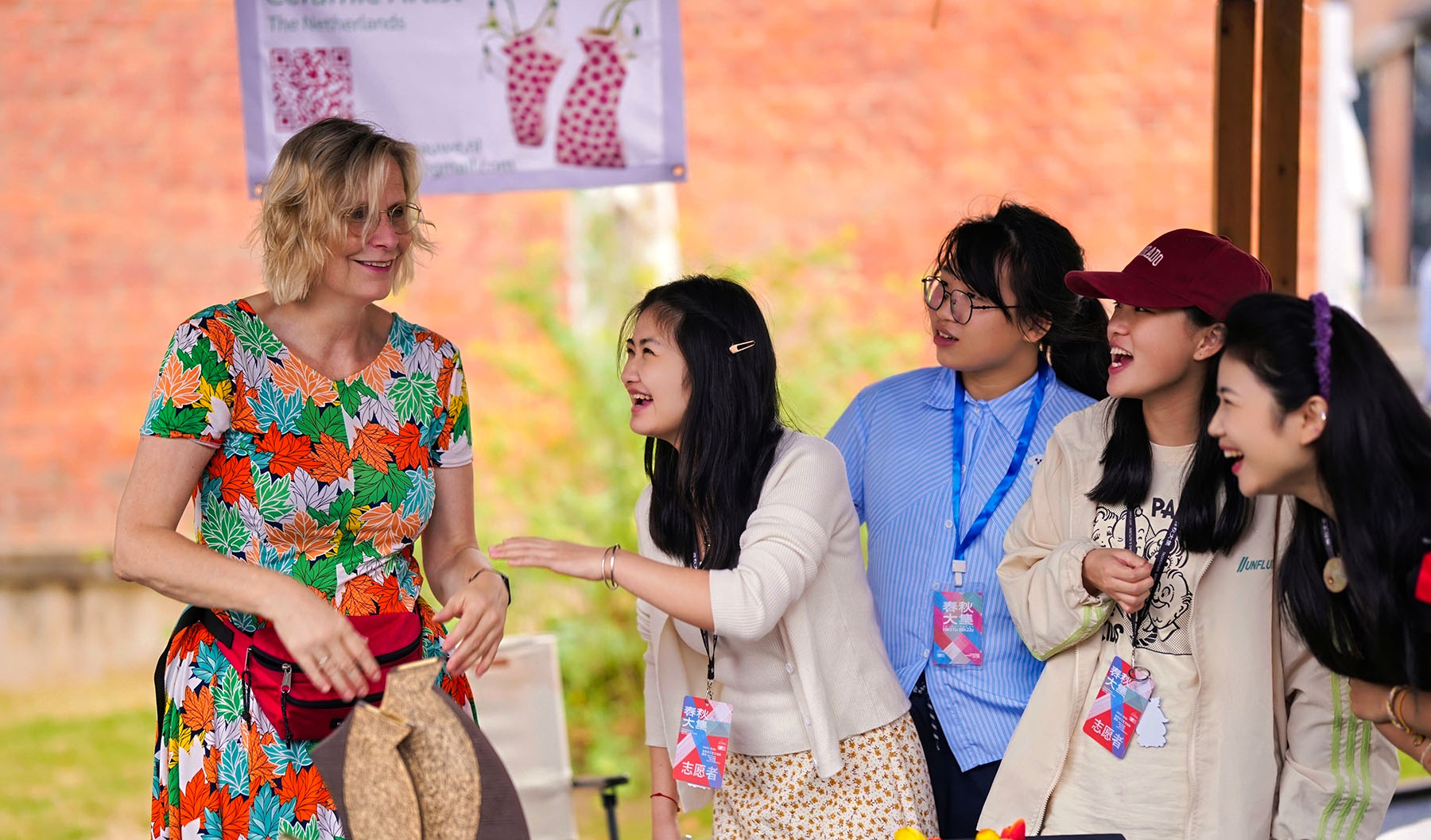
French ceramic artist Manon Valle came back to Jingdezhen for the third time during the 2025 expo, joining its artist-in-residence community. For her, the city offers something that is increasingly rare: a place where artists from different cultures can meet not only briefly, but meaningfully.
"It's really important to meet people who are not from your own culture. It allows us to grow," Valle said.
And yet, to speak of Jingdezhen as if it were only now becoming international would be to miss something essential.
The city has carried that quality for centuries.
"When you look at the blue and white, that is not all Chinese," he said. "That's influenced by the Middle East and Europe. So Jingdezhen is a nice mirror reflection of how internationalism can be embraced on all sides," said Read.
History bears that out.
American historian Robert Finlay, author of The Pilgrim Art: Cultures of Porcelain in World History, has been cited as stating that Jingdezhen porcelain in the 16th century helped trigger the first wave of globalization in human history.
Along major maritime routes linking Asia, Africa, Europe and later the Americas, porcelain moved outward from China carrying not only goods, but also tastes, technologies and ways of seeing.
UNESCO has likewise noted that for hundreds of years, ceramics from Jingdezhen traveled over land and sea along the Silk Road, serving as a medium of cultural and commercial exchange between the East and West.
Fang Lili, a scholar at the China National Academy of Arts and a distinguished chief professor at Southeast University, said the city's global character is not an added layer, but something embedded in its making.
Jingdezhen, she said, entered overseas markets on a large scale as early as the Song Dynasty (960-1279). During the Yuan Dynasty (1271-1368), Persian and Arab merchants came to China for trade.
Later, with the establishment of the imperial kilns in the Ming (1368-1644) and Qing (1644-1911) dynasties, the city became increasingly industrialized, drawing large numbers of farmers into urban craft production and growing beyond the scale of a merely local center.
ALSO READ: Still singing after all these years
That long continuity may be why Jingdezhen's global appeal today feels less like a newly packaged image than something that has simply taken on a new form.
The cafes, residencies, exhibitions and markets are now part of the landscape. So are the villages, the kiln sites, the clay and the accumulated memory of exchange.
For Read, that pull has always felt personal as much as historical.
This year, he wrote a song about his feelings for Jingdezhen. In its opening lines, he tried to capture what keeps drawing him back:
Your whispering voice echoes in my heart.
I must return.
Like the sun's gravity captures the Earth.
A relentless force of nature.
In spite of ourselves.
Contact the writers at zhaoruinan@chinadaily.com.cn
