

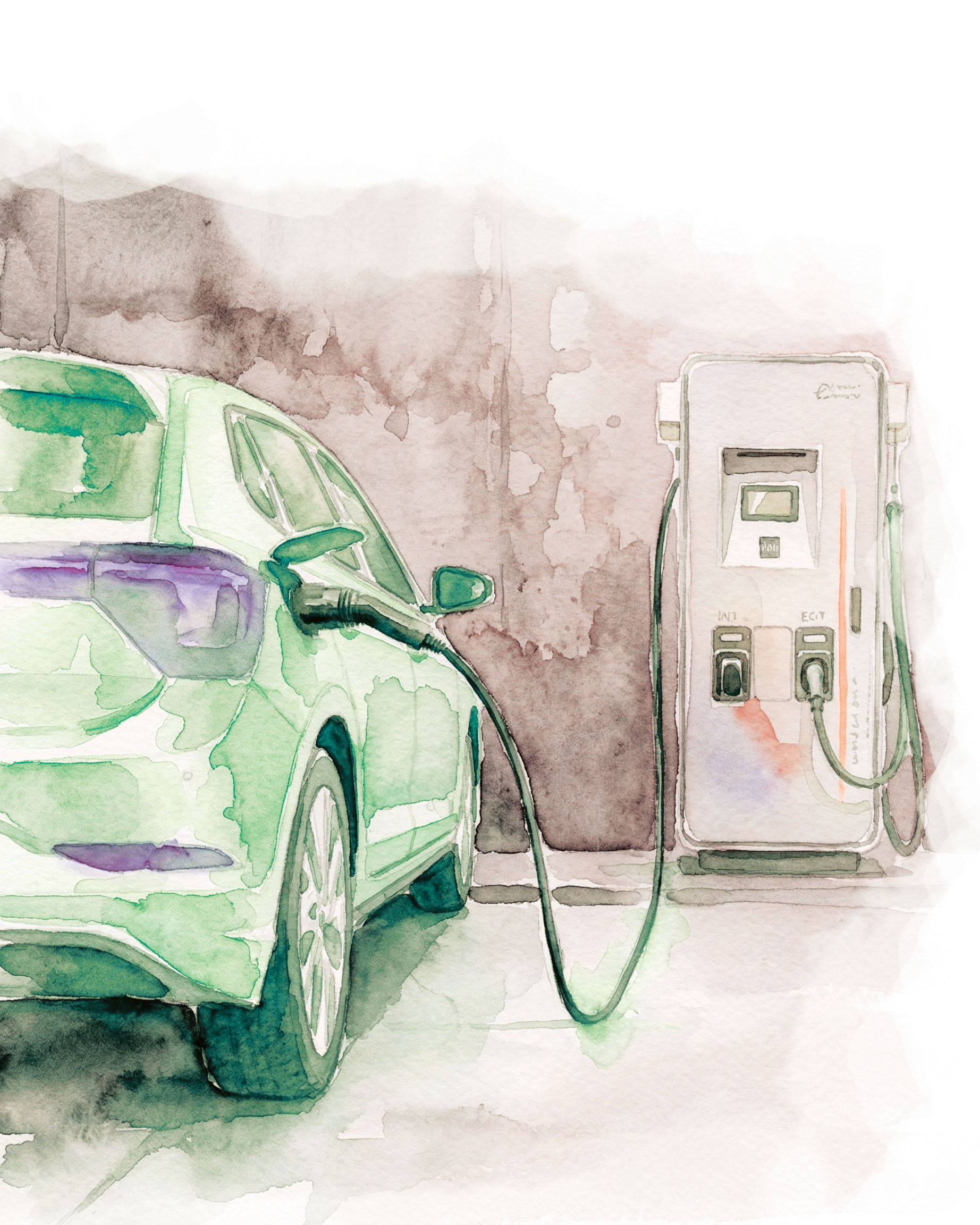
Escalating tensions in the Middle East are pushing a global fuel supply crisis, driving oil prices higher and making electric vehicles a more compelling alternative for consumers in world markets, including Asia and Europe.
EVs from the Chinese mainland, in particular, have proven to be popular.
According to the China Association of Automobile Manufacturers, China’s new-energy vehicle exports soared 110 percent year-on-year to 583,000 units in the first two months of this year.
A similar trend is gaining momentum in Hong Kong, riding on the huge popularity of mainland EVs. Featuring advanced technology and configurations at competitive prices, these brands are becoming a mainstream option for local consumers, rather than merely a replacement, experts say.
READ MORE: Volatile oil prices speed up EV shift urgency
The Hong Kong Transport Department’s latest figures indicate that BYD — China’s largest maker of new EVs — surged to the top of the city’s private first-car registration rankings last year with 9,751 units, becoming the first mainland brand to clinch the overall sales crown in the special administrative region. United States magnate Elon Musk’s Tesla followed closely with 9,193 registrations.
Among the top five best sellers, Chinese brands, including Zeekr, GAC Aion and XPeng, claimed four spots. In total, 37,467 EVs were first registered in 2025 — a year-on-year increase of nearly 13 percent. Among the first batch of registrations, electric private automobiles accounted for more than 70 percent.
Hong Kong’s strong uptake of electric vehicles was primarily driven by the HKSAR government’s tax incentives. However, one of the perks — the first registration tax concession — expired at the end of last month. Launched in 2018, the program allows owners to receive a maximum first registration tax concession of HK$172,500 ($22,011.97) if they scrap an old petrol-powered private automobile and register a new electric vehicle.
The concession’s expiry has triggered a pre-deadline surge in demand. According to the Hong Kong, China Automobile Association, several dealerships have recorded daily sales of more than 500 electric vehicles, while BYD announced a single-day sales record of more than 800 units in Hong Kong.
Raymond Cheung, chief operating officer at BYD Hong Kong, shrugged off fears of a post-policy sales drop. “Our confidence in the long-term trajectory of Hong Kong’s EV sector remains steadfast,” he says, adding that while there may be an initial period of volatility as the industry adjusts to the policy change, sales momentum remains strong.
To adapt to the Hong Kong market, several mainland automakers have equipped their EVs with traditional Chinese-language interfaces and Cantonese navigation systems. “We’ve calibrated the suspension systems of our vehicles to account for the city’s distinctive topography,” he says.
“The ascendancy of Chinese automotive brands in the Hong Kong market is a microcosm of the overall elevation in China’s industrial capabilities,” says Cheung. Mainland EV makers have not only met, but have surpassed, in many areas, international benchmarks in electrification, digitalization, the “three-electric systems” (battery, motor and electronic control), precision engineering, and interior aesthetics, cementing their global leadership.
Another key significance of their success in Hong Kong is that it serves as an important reference for exploring other Asia-Pacific markets.
“As a right-hand-drive market, Hong Kong provides a vital blueprint and operational template for our expansion into other key RHD territories in the Asia-Pacific and parts of Europe,” Cheung says.
“Chinese brands offer significant low-price advantages without compromising on quality,” says Wan Zhixi, a professor of innovation and information management at the University of Hong Kong.
China’s automobile sector has evolved from focusing solely on electrification to prioritizing intelligence and smart technology, he adds.
Leading Chinese EV brands, in close collaboration with the nation’s technology giants, are investing heavily in autonomous driving, smart cabins and vehicle-to-grid integration.
Hong Kong’s EV market has transitioned from being policy-driven to market-driven, says Ringo Lee Yiu-pui, honorary life president of the Hong Kong, China Automobile Association. He believes the city’s EV business is undergoing a structural adjustment.
ALSO READ: Cities on green wheels
By offering innovative designs, extended driving ranges, and cutting-edge intelligent features, combined with significant cost advantages, he says mainland automotive brands have served as a high value-for-money choice in the SAR’s market.
The local market faces several challenges, according to Lee, including insufficient fast-charging infrastructure, limited consumer awareness regarding EV range and after-sales maintenance, and an underdeveloped second-hand EV market. Efforts are underway to address these issues.
The Updated Hong Kong Roadmap on Popularization of Electric Vehicles, released in February this year, outlined the government’s short-term target to increase the number of public and private parking spaces equipped with charging infrastructure to about 200,000, capable of supporting over 300,000 EVs.
This also responds to national priorities. During this year’s two sessions, a draft of the environmental code was submitted to the fourth session of the 14th National People’s Congress, highlighting the country’s strong commitment to prioritizing ecological industries and promoting the rule-of-law-based modernization of human-nature harmony.
Contact the writers at akirawang@chinadailyhk.com
