

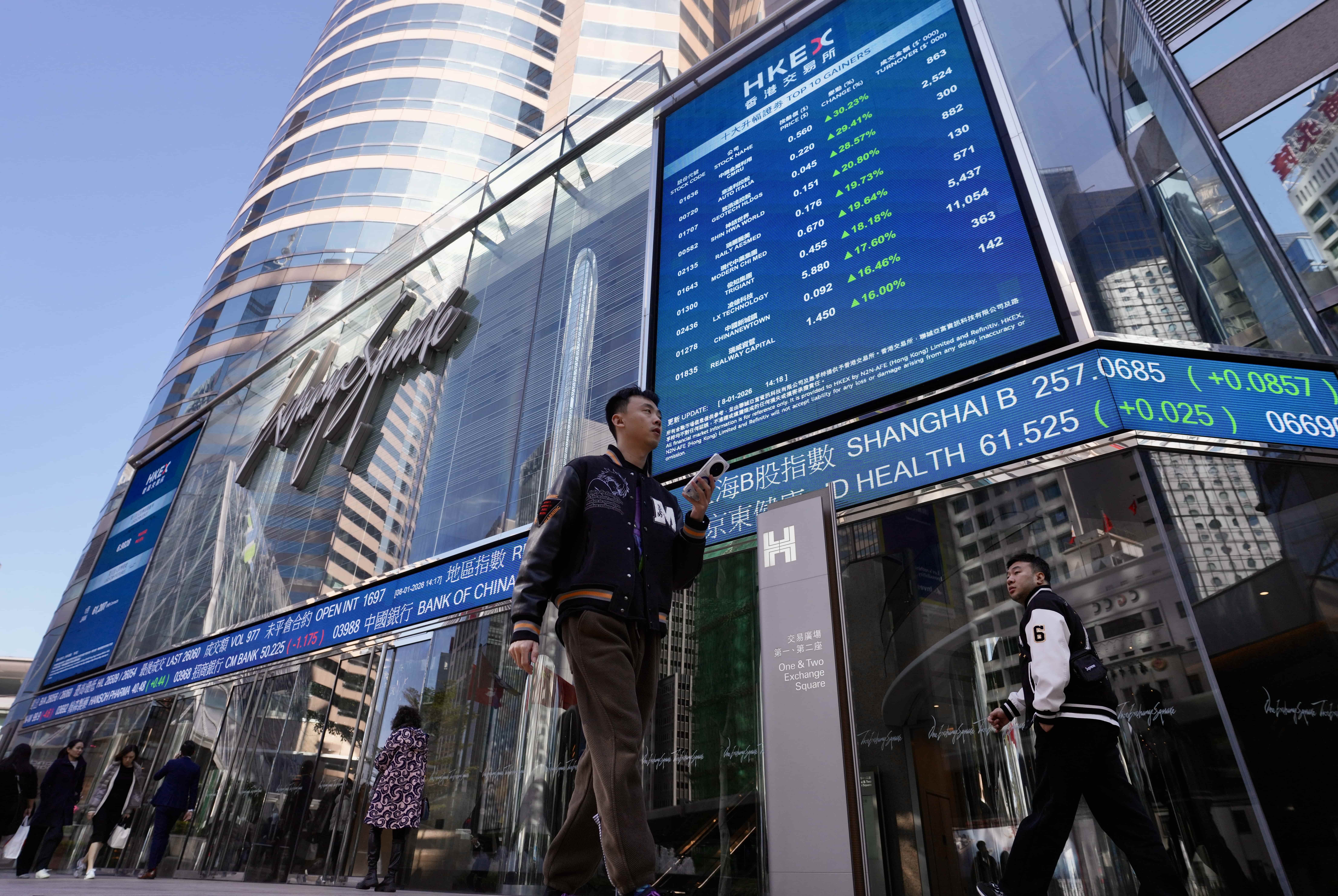
Hong Kong stocks were on a tear on the first trading day after a five-day holiday break, as technology shares rebounded and investors’ nerves eased following news that the United States and Iran had agreed to a two-week ceasefire.
Analysts say the city’s equity market is poised to sustain its momentum, buoyed by robust initial public offering fundraising and expectations of stronger international capital inflows as market players seek more diversified portfolios to hedge against geopolitical risks.
Sentiment brightened markedly on Wednesday as Middle East tensions showed signs of easing, propelling the benchmark Hang Seng Index to open more than 656 points higher and extend gains to around 817 points during intraday trading. The rally moderated later in the session, and the gauge closed at 25,893.02 points, up 3.09 percent.
ALSO READ: HK stocks advance on return from break, tech index surges 5.22%
The Hang Seng Tech Index, which tracks the 30 largest technology companies listed in the special administrative region, jumped over 5 percent to 4,923.25 points, led by the technology sector. The Hang Seng China Enterprises Index — a barometer of Chinese mainland companies — advanced 2.61 percent to 8,677.31 points.
Semiconductor Manufacturing International Corp was among the best performers, up 10.10 percent to HK$56.15 ($7.16). Meituan soared 10.28 percent to HK$88.50, while Alibaba and Xiaomi both gained more than 6 percent. Conversely, oil and energy stocks suffered as crude prices slumped on news of the US-Iran truce. CNOOC Ltd dropped over 3 percent to HK$26.12, while PetroChina Co Ltd lost 1.95 percent.
Thomas Ip Hon-tak, vice-chairman of the Hong Kong Securities and Futures Professionals Association, said overall sentiment was buoyant, largely driven by easing Middle East tensions.
READ MORE: US, Iran agree on 2-week ceasefire
“Over the past month, the conflict in the Middle East had driven up oil prices and dampened risk appetite,” he said. “The ceasefire news spurred a rebound in sentiment, sending oil prices lower and benefiting sectors such as airlines and consumer goods, while capital rotated out of safe-haven assets — such as certain energy stocks — into risk assets.”
Ip said short-term volatility is likely to persist as the conflict remains unresolved, but added that investors are still “optimistic but cautious”.
Edward Au Chun-hing, southern region managing partner of Deloitte China, said geopolitical tensions have sparked volatility and a flight to defensive assets, “yet they have also catalyzed a profound structural shift”.
As more investors pivot from tactical plays to structural diversification across Asia amid uncertainties, Au said Hong Kong’s position as the region’s primary fundraising hub has been solidified, and he believes the trend will continue to underpin the city’s capital market.
READ MORE: Chan: Global investors raise asset allocations in Hong Kong
The Hong Kong SAR once again ranked as the world’s top IPO fundraising venue in the first quarter of 2026, with 40 new listings raising HK$109.9 billion, according to Deloitte’s latest report. That represents a 167 percent year-on-year rise in the number of IPOs and a 504 percent surge in proceeds.
Au said the deep pipeline of Chinese IPO applicants — backed by strong capital needs and ambitions to expand globally — will provide a resilient backbone for Hong Kong’s IPO market this year.
Deloitte forecasts that Hong Kong will remain among the world’s top three IPO markets in 2026, with around 160 listings raising at least HK$300 billion by year-end.
Financial Secretary Paul Chan Mo-po on Sunday said IPO issuers from emerging sectors — including artificial intelligence, semiconductors, robotics, autonomous driving and biotechnology — are flocking to Hong Kong. Currently, more than 500 applications are in the pipeline, he said.
Contact the writer at gabylin@chinadailyhk.com
