

As technology advances, AI and personalized ceremonies are transforming mourning, reflecting shifting attitudes toward remembrance and emotional connection.
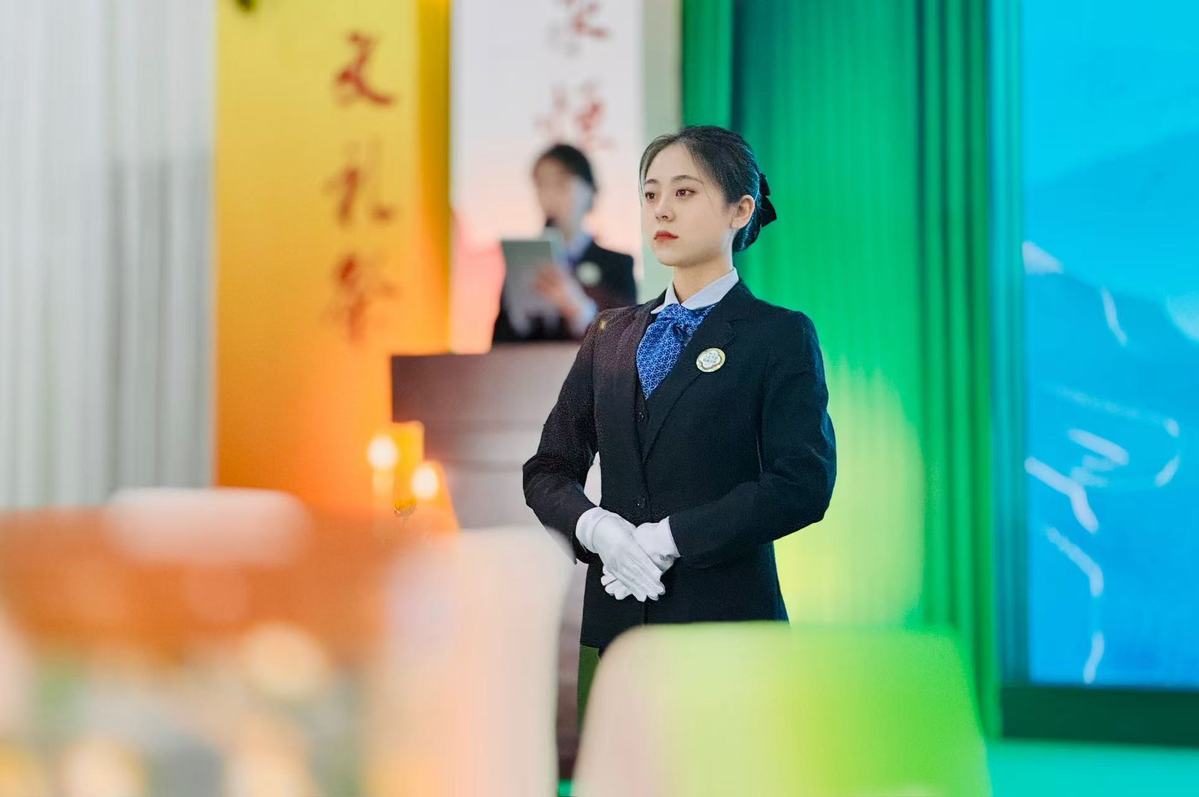
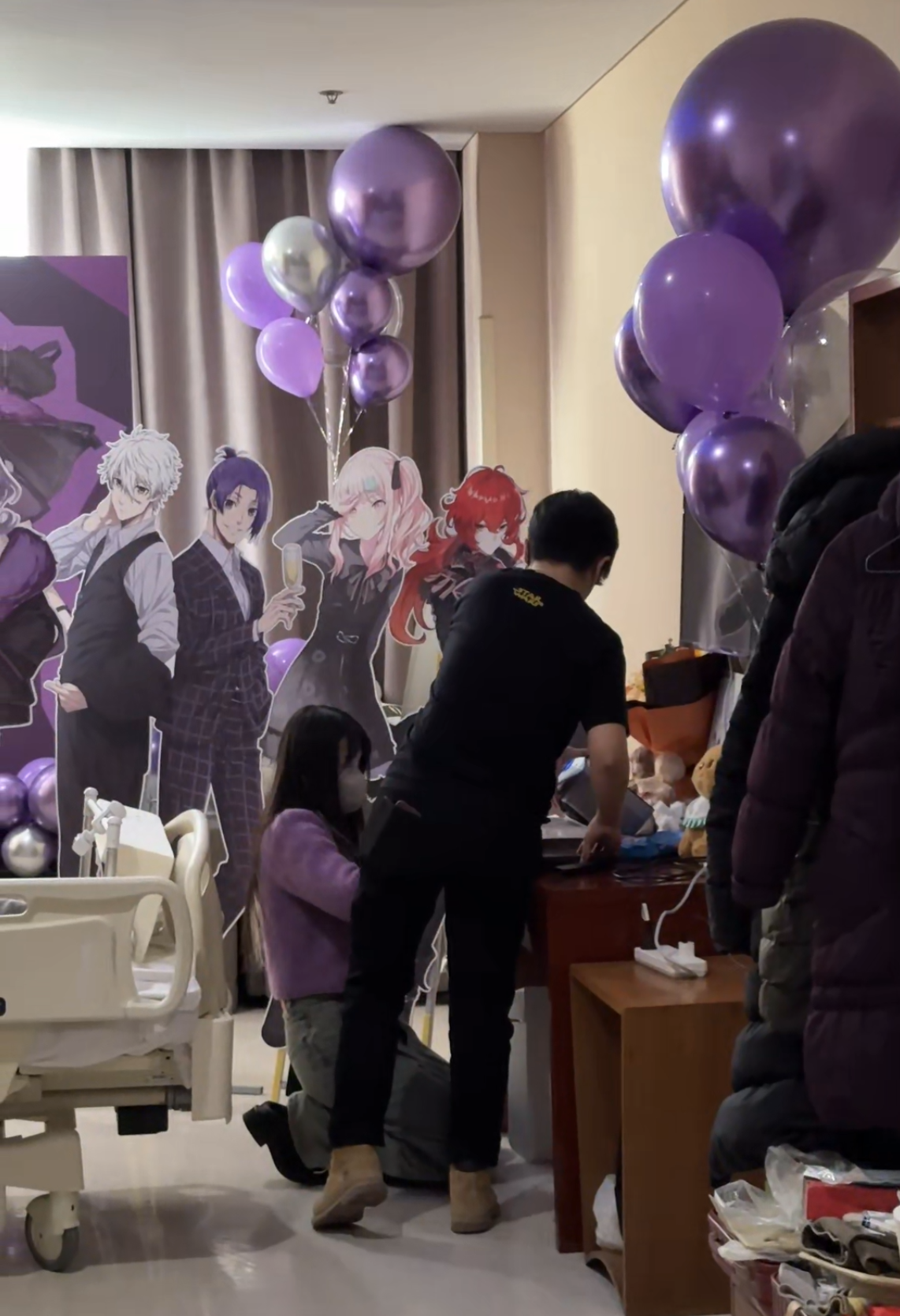
When 17-year-old Bonny (pseudonym) was nearing the end of her life from cancer, her family and friends held a living funeral at her hospital bedside. The theme was two of her favorite things: purple and anime. Instead of the sorrow and tears of a traditional funeral, the room was filled with warmth, laughter, and the people she most wanted to see.
Li Yu, 36, helped organize the ceremony. She is a product designer at GuiCong, a funeral brand that creates personalized memorial services.
"The biggest difference between a living farewell and a conventional funeral is simple: the person being honored is still there," she said. "It gives them and their loved ones a chance to fulfill final wishes and find comfort. In a way, it's like a graduation ceremony for life."
At first, Bonny's mother had been preparing for the funeral she thought would follow her daughter's passing. But as they talked, another possibility emerged. Bonny hoped to see her best friends one last time, eat happily with them, and enjoy a few ordinary, beautiful moments together. With her condition worsening quickly, Li's team had only two days to make it happen.
They transformed the hospital room, filling it with life-size cutouts and cosplayers dressed as Bonny's favorite characters. They also created a video in which Bonny's self-designed anime character entered a game world and began a new life.
"I wanted the theme to be hope, not an ending," Li said. As the character turned to say goodbye and walked toward a new adventure, her eyes filled with tears.
For Li, experiences like this reveal a broader shift in how younger people think about death: mourning is no longer defined only by solemnity and restraint. It can also involve comfort, personality, and expressions of love. And that shift becomes especially visible during Tomb Sweeping Day, or Qingming Festival — observed on April 5 this year — when questions of remembrance come to the forefront.
Grief goes digital
One of the most visible changes is the growing role of AI in mourning.
That is what inspired Xu Xiangpeng, 36, founder of the AI app Wanzai. The app allows people to create digital versions of deceased loved ones for text chats, voice calls, and even video conversations.
Xu shared a story from one of the app's users: a grieving mother who traveled to the Hulunbuir grassland and video-called her late son, showing him the vast landscape. "This is where we agreed to come together," she told him.
On her screen, however, was not her real son, but an AI-generated replica through Wanzai. The young man had died of cancer, and through this digital encounter, the mother found a way to express her longing and love.
"It's not about replacing the dead or refusing to accept loss," Xu said. "It is about making remembrance more tangible."
The idea grew out of an earlier project launched a decade ago, which helped families preserve the digital data of the deceased. Even then, Xu's team noticed a deeper need: people wanted more than archived information — they wanted something they could interact with.
"They hoped to remember, and in some way continue the relationship," Xu said.
So, in late 2023, with rapid progress in large language models, Xu's team rebuilt the product into what would become Wanzai.
"In Chinese culture, death is a final goodbye. After that, stories begin to fade. We hope technology can slow that fading, allowing ordinary people — not just the historically famous — to leave something lasting behind," Xu said.
Even in more traditional funeral settings, technologies like AI and livestreaming are starting to play a role as well.
Liu Jiaqi, now 22, entered the funeral industry three years ago after attending a relative's service. As she watched her family's quiet, unspoken grief — pain with no clear outlet — she began to feel that a farewell should be more than a formality.
"A funeral is the last stop for the departed, but the first step for the living to let go," she said.
Liu later joined Shenyang Fuyou Funeral Service, where she helps design ceremonies that reflect the life of the person being remembered. She listens closely to families, gathering fragments of a life and shaping them into a farewell with emotional meaning.
For this reason, she doesn't like to call herself a "funeral celebrant". Instead, she sees her role as a "curator of lives".
For Liu and her team, technology has become an important tool. Livestreaming allows children living overseas to attend a parent's funeral from afar. Holograms, digital displays, and online memorial spaces help reconstruct memories and give families new ways to express grief.
One case left a deep impression on her. A retired teacher passed away while his children were abroad, unable to return to the funeral because of the pandemic. Devastated at missing his final farewell, they relied on Liu's team to bridge the distance.
The memorial hall was filled with his calligraphy and potted plants, reflecting his love of teaching, gardening, and poetry. Old photographs were carefully restored, and a short film traced the arc of his life. Most moving of all, his voice was reconstructed using AI.
On the day of the ceremony, his children joined via livestream. As they heard their father's familiar voice and watched his life gently unfold before them, they wept, bowing and laying flowers from afar.
"Moments like that show what technology can do at its best," Liu said. "It doesn't take away grief, but it can help hold it. It can make a farewell feel less cold and procedural, and more personal, more intimate, more human."
Even so, these new forms of mourning remain controversial. Critics question whether AI replicas and digital conversations with the dead go too far. Some dismiss them as attention-seeking. Others consider them disrespectful, eerie, or even inauspicious.
Xu, however, sees it differently. He believes these tools meet a real emotional need among people who have lost loved ones. Early users of Wanzai, he said, were more tolerant of technical limitations than he had expected. When the app launched in 2024, voice cloning was still far from seamless. Yet one user wrote in a review: "I heard my mother's voice. It's only 60 percent accurate, but when she said my name, I cried."
Wanzai's user data also suggests that people's relationship with AI-mediated mourning evolves over time. According to Xu, many users initially spoke to AI replicas about pain, anger, or disbelief. Gradually, however, those conversations shifted toward sharing updates about everyday life. While emotions varied from case to case, they tended overall to become more positive.
For Xu, these reactions point to something deeper than technology itself.
"Everyone misses the people they've lost," he said." That's why I believe most would welcome a truly realistic AI — one that sounds and behaves like them — especially during festivals or in life's hardest and happiest moments, as a way to keep sharing those moments with them."
Contact the writers at zhangdongyue@i21st.cn
