

Financial stability and energy supply bolster city’s growth amid global risks
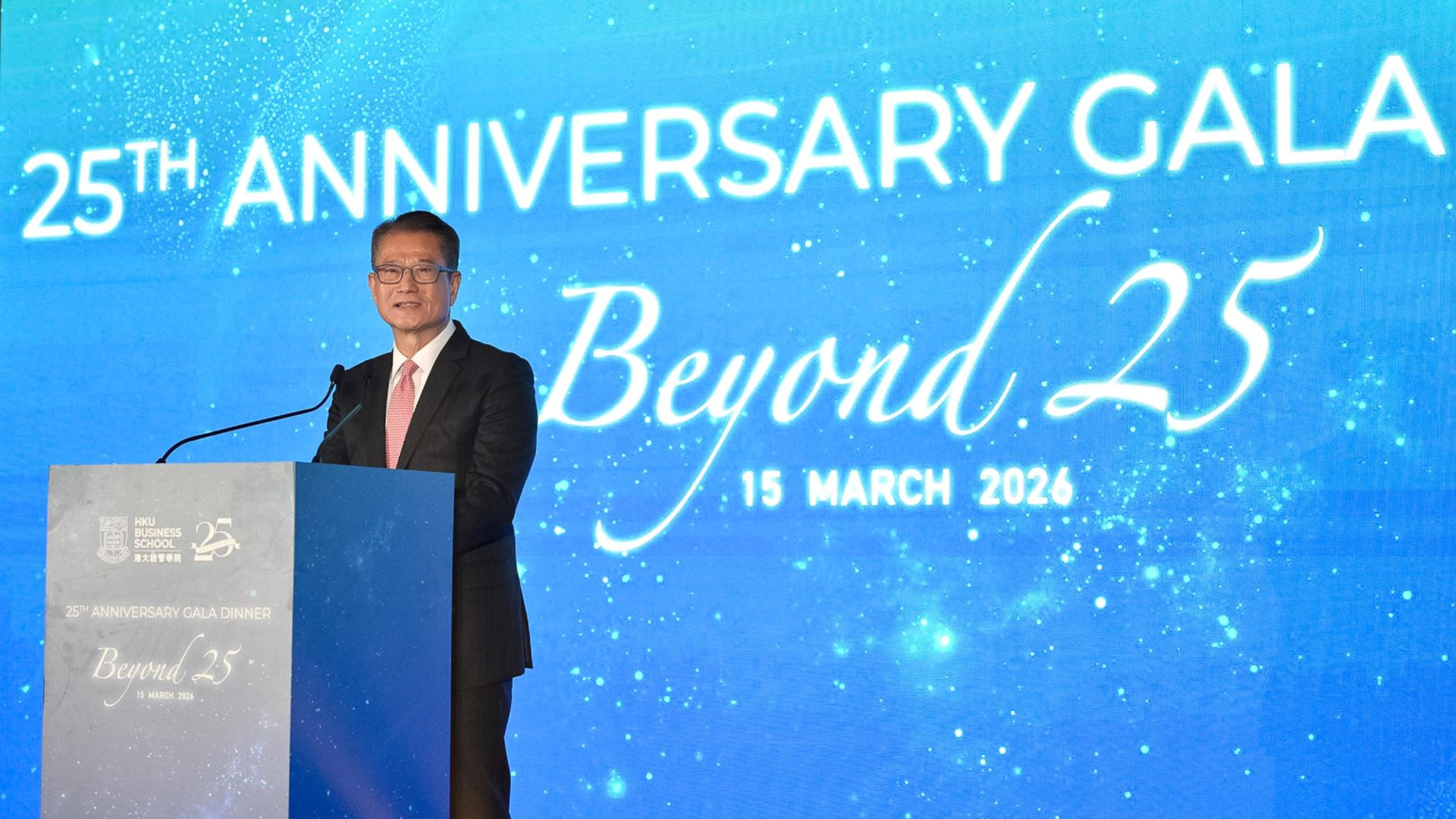
Hong Kong must highlight security at the core of its development while consolidating the foundations of security through high-quality development amid a constantly changing international landscape and greater geopolitical competition, Financial Secretary Paul Chan Mo-po said.
“Only by adhering to the principle of balancing development and security can Hong Kong create new prospects amid changes and write a new chapter of greater prosperity, stability and accelerated progress,” the finance chief said in his Sunday blog ahead of this year’s National Security Education Day, which falls on April 15.
The 15th Five-Year Plan (2026-30) outlines “coordinating development and security” as one of the six principles to be adopted to promote economic and social development over the next five years. As a free and open world financial, trading, shipping, and innovation and technology center, the special administrative region must continuously balance development and security by preventing risks before they occur, he said.
In financial services, the SAR government has always adhered to security, continuously and closely monitoring the situation of various markets and their interrelationships, as well as establishing a strong buffer.
ALSO READ: Chan: HK gains growth amid global headwinds
The Linked Exchange Rate System provides a reliable anchor for local currency and financial stability; the capital adequacy ratio and liquidity of the banking system are also far higher than international standards; securities firms have sufficient funds, and securities trading is conducted in an orderly manner,” Chan said.
The SAR has long served as a “testing ground” and “firewall” for the country’s reform and opening-up, helping the Chinese mainland to deepen capital market reforms and preventing the transmission of overseas risks to the mainland.
“Only through innovation within a safe and controllable risk framework can we build a more resilient, dynamic, and competitive financial system, providing better conditions and capabilities to withstand external shocks, and continue to develop,” he said.
The Hong Kong Monetary Authority recently granted the first batch of stablecoin issuer licenses under the Stablecoins Ordinance as a concrete example of balancing security when promoting innovative market development.
“Our principle regarding stablecoins is that they have considerable potential to address pain points in economic activities concerning cross-border transactions and payments, while the bottom lines of financial stability, anti-money laundering, and protection of users and consumers must be upheld. The HKMA adopts a cautious and gradual approach to licensing, with strong compliance capabilities being one of the key considerations,” Chan explained.
READ MORE: Hong Kong’s strengths to aid global green transition, says Chan
A stable energy supply is also crucial to social welfare and economic operation. About 80 percent of Hong Kong’s petroleum products are imported from the mainland and, with the nation’s strong support, the SAR’s energy supply has remained stable despite oil prices having skyrocketed, fueled by the Middle East crises since late February.
“The government has established an inter-departmental task force to monitor the dynamics of the fuel market. It has proposed four short-term measures, including subsidies for diesel prices to support industries and public services that are significantly impacted by the fuel price increases. The relevant funding has been swiftly approved by the Legislative Council, and we’re accelerating the implementation of the details,” Chan said.
In the medium-to-long term, the government will continue to actively promote the city’s green energy transition, including strengthening regional cooperation to gradually increase the proportion of zero-carbon energy, moving toward the “net-zero generation” target set by the Hong Kong’s Climate Action Plan 2050, and increasing the diversity and resilience of energy structure.
“We plan to increase the proportion of zero-carbon energy generation to about 60 to 70 percent by 2035. The latest transmission system enhancement works are expected to be completed this year so that Hong Kong can gradually introduce more zero-carbon electricity,” Chan said.
“National security involves various aspects, such as finance, energy, technology, food and overseas interests, and these are all interconnected. We must firmly establish a holistic view of national security and comprehensively enhance our capabilities in risk prevention and responses to emergencies,” he added.
Contact the writers at oswald@chinadailyhk.com
