

Through street food and storytelling, a Chinese vendor in Finland brings regional flavors to the Arctic, strengthening people-to-people cultural ties.
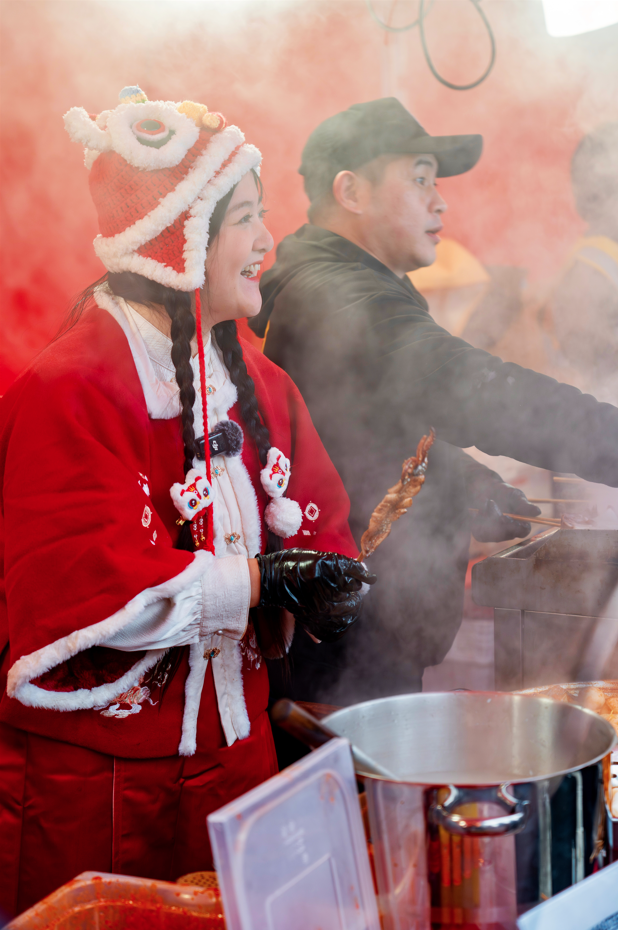
In Helsinki, Finland, February temperatures often dip to minus 15 degrees Celsius. Yet despite the biting cold, the city comes alive each year with celebrations for the Chinese New Year.
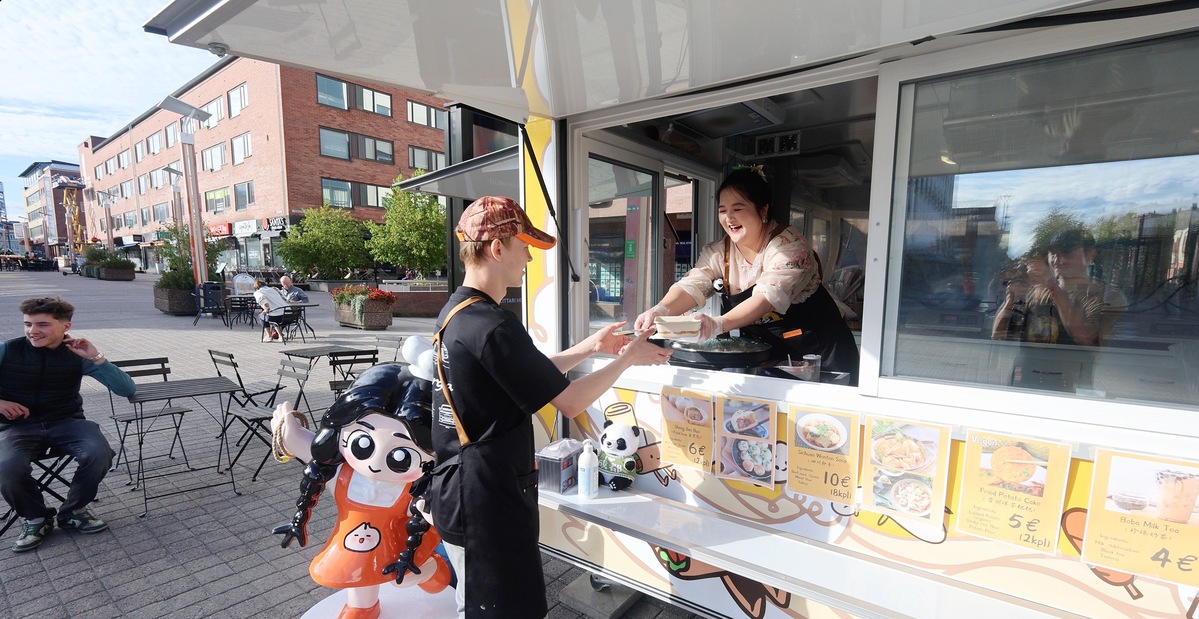
At one bustling food stall, shengjianbao — crispy, pan-fried stuffed buns — sizzled on a hot griddle, their steam rising into the icy air. A long line of visitors from around the world stretched far beyond the counter, with some people waiting nearly an hour for a taste.
"This is the busiest day I've ever seen," said vendor Fu Yuqi in a vlog she posted last month, her eyes sparkling with excitement. "We worked 11 hours straight — there was no time to rest."
READ MORE: Chinese culture enthralls people in Finland, Estonia
Originally from Chengdu in Southwest China's Sichuan province, Fu has spent the past 15 years living in Rovaniemi, a northern Finnish city within the Arctic Circle. Before starting her food stall, she worked as a game concept artist and was also a popular food vlogger on Bilibili, China's video-sharing platform, where she has more than 2.2 million followers.
"I often post vlogs of cooking Chinese dishes for my Finnish family," Fu said. "Sitting together and sharing a meal — it's a small moment, but many viewers in China find it deeply comforting."
Her perspective changed after she helped at a friend's food booth. Serving dishes directly to strangers and seeing their reactions in real time gave her a sense of connection she had never experienced through online videos.
Rovaniemi, known as the home of Santa Claus, draws tourists year-round with its Arctic appeal, Fu explained."That's when I realized that a mobile food business could reach a much wider audience," she said.
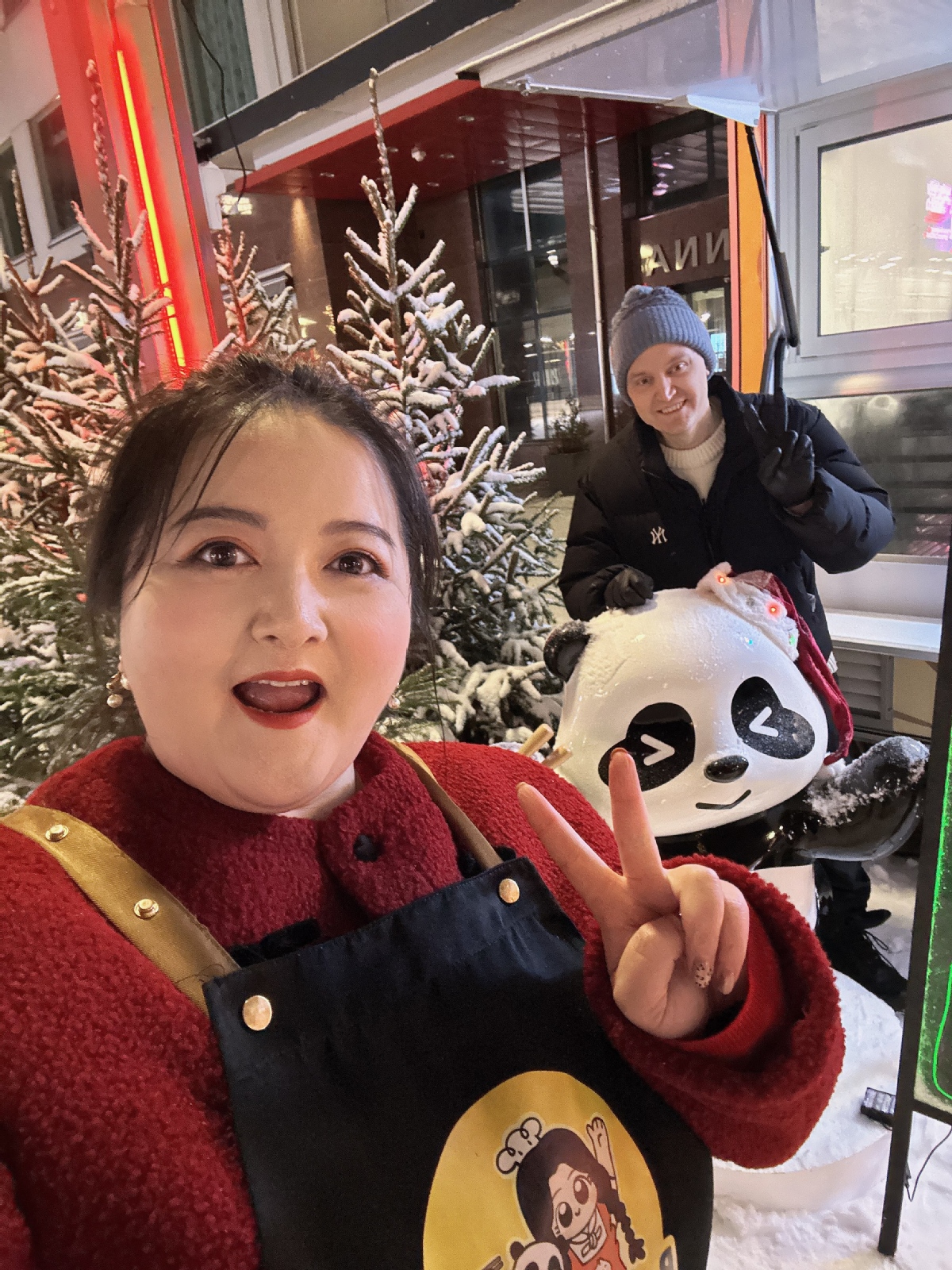
Fueled by this insight, Fu purchased a secondhand food truck and transformed it. The vehicle is decorated with playful illustrations of classic Chinese dishes — dumplings and jianbing (Chinese pancakes) — alongside miniature figurines of her cartoon likeness and a panda.
"I'm from Sichuan, the home of pandas," she explained. "When people think of China, pandas are often the first thing that comes to mind. It immediately signals that this truck offers authentic Chinese cuisine."
But a cute truck alone was not enough to guarantee success.
Fu's first hurdle was obtaining a Hygiene Passport, a certificate required for all food vendors. The exam includes technical questions in Finnish, using specialized food-industry terminology. Undaunted, she took on the challenge and successfully earned her credentials.
Her next challenge was sourcing ingredients. With only a small Chinese community in Rovaniemi, authentic products were hard to come by.
"When planning my menu, I start with what's available locally," Fu explained. But as her offerings expanded, so did her need for specialty ingredients.
"Making dim sum (Cantonese cuisine), for example, requires tapioca starch, which is nearly impossible to find here," she said. To work around this, Fu turned to local Chinese restaurant owners, ordered from other cities, or even imported ingredients from abroad.
The process is both time-consuming and expensive. "The food truck often runs at a loss," Fu admitted. "But as a food vlogger, I share videos of my work, and occasional sponsorships help offset some of the costs."
Connecting through food
What matters most to Fu, however, is the connection she builds with her customers.
Her first outing, in August 2025, featured just three items: roujiamo (a Chinese meat sandwich), Sichuan cold noodles, and bubble tea.
"The first time, everything felt uncertain," she said. "I chose these dishes because they're approachable for people unfamiliar with Chinese food."
To her surprise, the food quickly drew a following — and with it came a stream of fascinating encounters. She recalls chatting with an elderly French man who shared stories of traveling through China and tasting Pu'er tea in Yunnan.
"It's a magical experience," Fu said."Each person who stops by may cross my path only once in a lifetime, yet through conversation, I uncover their stories — sometimes even ones that connect back to my homeland."
Over the past year, she has also built a loyal customer base. One particularly memorable visitor, a woman from Poland, surprised Fu by reading the word jianbing in Chinese.
"I love watching Asian street food videos on YouTube," the woman explained. She even brought up Dongpo pork, noting that the famous dish was named after the Song Dynasty (960-1279) poet Su Shi (also known as Su Dongpo).
"I could feel how genuinely curious she was about Chinese cuisine," Fu said.
Encounters like this have reinforced Fu's commitment to authenticity. She refuses to compromise on taste to suit local preferences.
"Many Chinese restaurants abroad tend to rely on sweet-and-sour or heavily sauced dishes, avoiding ingredients that international diners might not recognize," she said. "But that's not what I want."
To keep her offerings dynamic, Fu rotates her menu around themes inspired by different regions of China, pairing each with signature dishes, interactive challenges, and small cultural gifts.
For a Sichuan-themed event, for example, she created a "peppercorn challenge", where diners competed to see who could tolerate the most intense numbing-spicy sensation from Sichuan peppercorns. Winners received a panda toy capable of performing bianlian, or face-changing — a traditional Sichuan Opera art.
For Guangdong-themed events, she gives out lion dance figurines, and for Guizhou, miniature Miao-style headdresses as magnets.
"Through these small items, diners experience not just the food but also the culture behind it," Fu explained.
Fu's dedication has not gone unnoticed. Last year, in celebration of the 75th anniversary of China-Finland diplomatic relations, the Finnish Embassy in Beijing awarded her a certificate recognizing her contributions to cultural exchange.
The embassy also hosted a special culinary event for Fu, her Finnish family, and her fans.
Looking ahead, Fu plans to study traditional Suzhou-style pastries and learn the art of sugar painting in Sichuan, with the goal of bringing even more culturally rich treats to food lovers worldwide.
"My food truck is a small window into Chinese cuisine. Through it, people can discover dishes they might never encounter otherwise and connect with the depth and diversity of China's culinary heritage," she said.
Contact the writers at mengwenjie@i21st.cn
