

Ancient motifs reveal how artisans expressed belief, shaped identity, and reflected changing views of nature, Wang Qian reports.
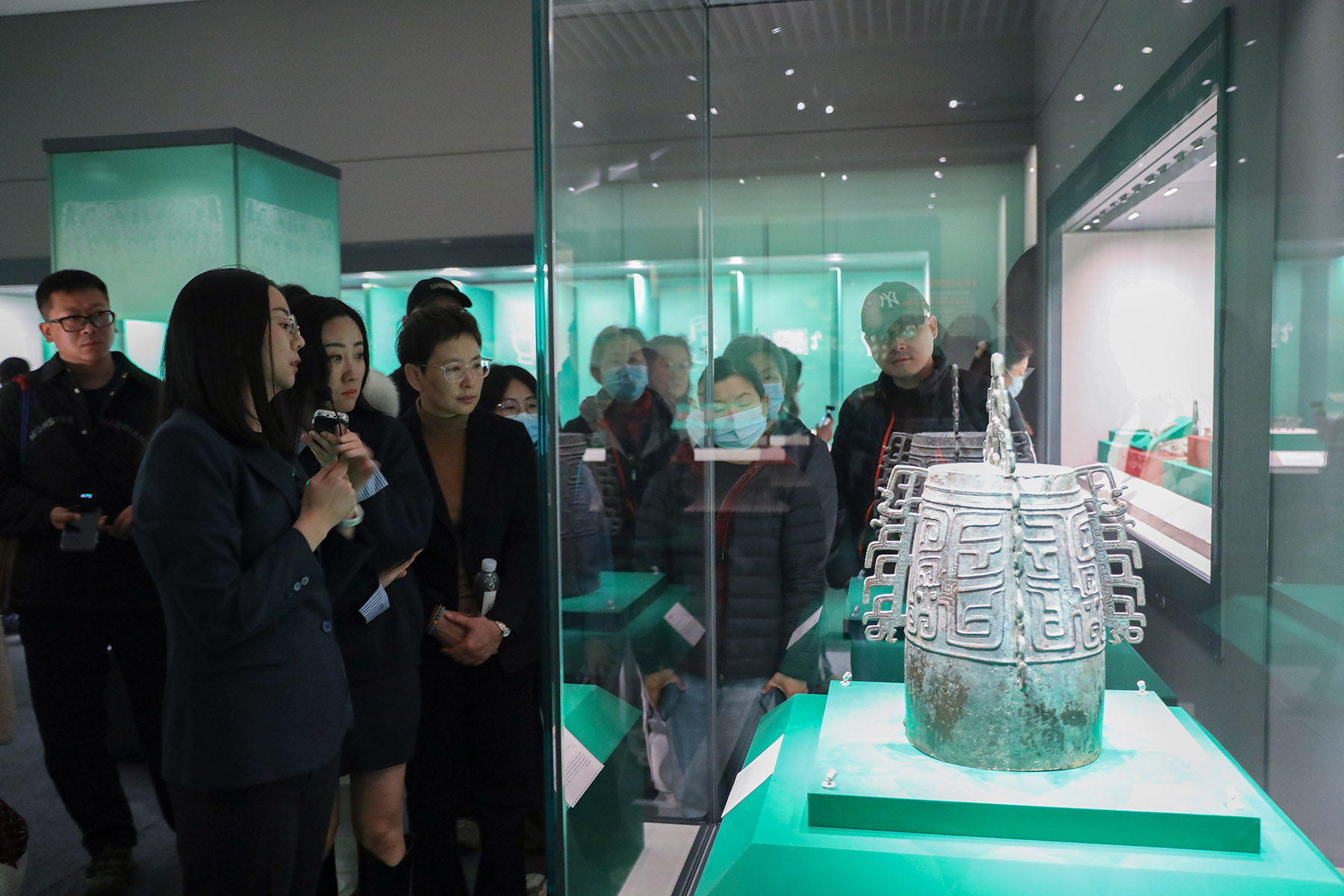
Patterns of Chinese civilization are more than mere decoration. They form a sophisticated visual language, a coded system where aesthetics meet philosophy. Across millennia, artists and craftsmen embedded their understanding of the universe, social order and spiritual beliefs into the intricate lines of bronze vessels, the flowing curves of silk brocades, and the delicate stems painted on porcelain.
To decode these patterns is to decipher the very essence of Chinese culture, its aspirations and its perception of harmony between nature and humanity. It is this visual code that the Museum of Wu in Suzhou, Jiangsu province, seeks to unravel in its ongoing exhibition, Decoration and Patterns of Ancient China.
Running through May 6, the event gathers more than 370 cultural relics from 29 institutions across the country to narrate an 8,000-year visual journey, tracing how the encoded language evolved from the Neolithic era to the late imperial period.
The challenge was formidable: how to present the vast universe of Chinese ornamentation in a coherent way. The curatorial team devised a dual-framework logic. The exhibition opens with the philosophical concept of the wuxing (five elements), a foundational schema of Chinese thought, establishing the core idea that the dao (way) carried.
It unfolds along a vertical timeline divided into four narrative chapters: Qi (Inception), Li (Beauty), Guang (Radiance), and Hua (Splendor). At the same time, it presents horizontal classifications of motif types and stylistic developments.
"The wuxing philosophy is something deeply familiar to Chinese audiences. We wanted to plant a seed of curiosity from the very beginning," says Ji Meijiao, the exhibition's curator. "By invoking a framework so deeply embedded in the Chinese consciousness, we guide the viewers to look beyond formal beauty to the ontological and cosmological depths beneath."
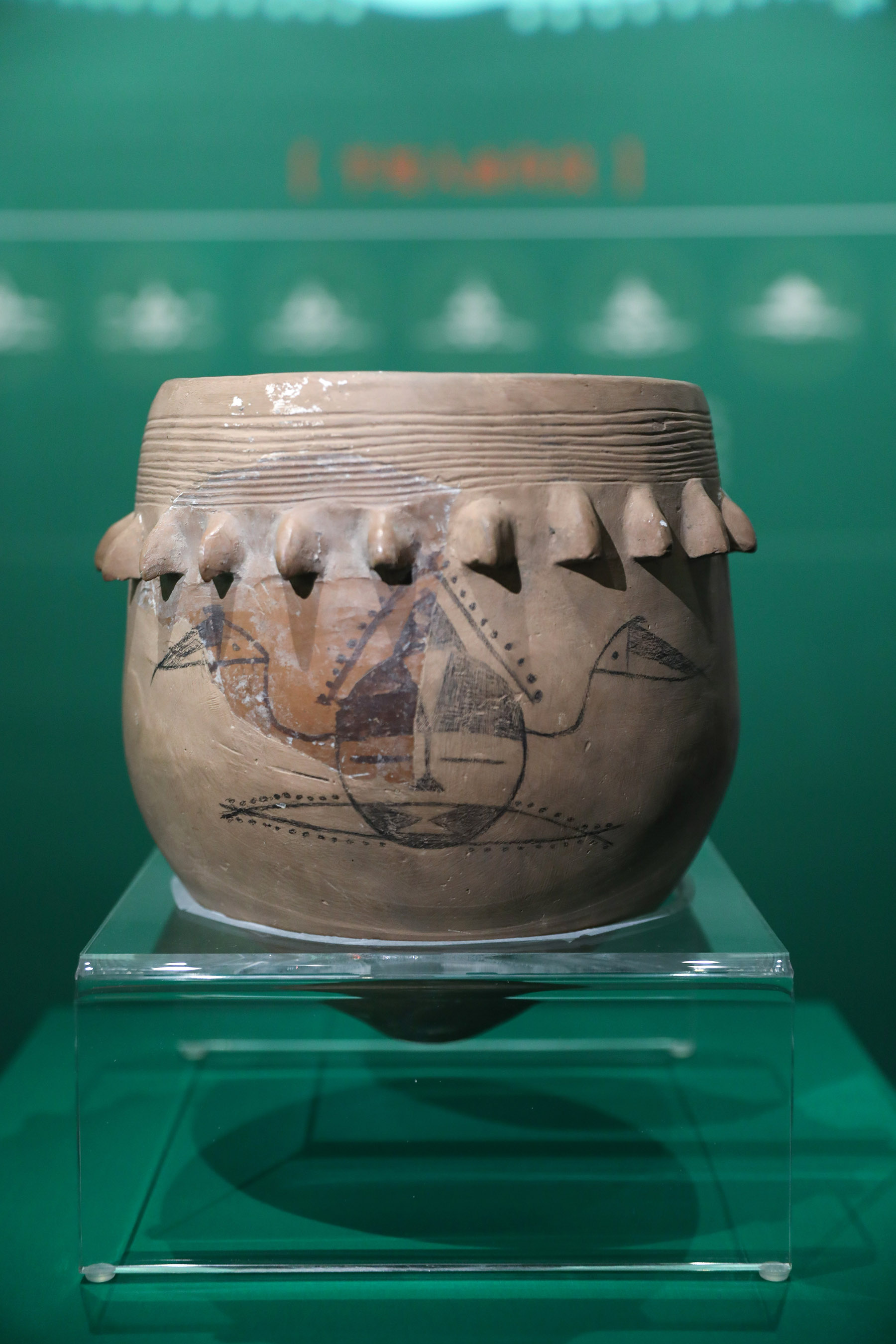
Among the carefully selected artifacts, a Neolithic painted pottery basin from the Yangshao culture, adorned with a mysterious human-face-and-fish design, hints at early spiritual beliefs. The exhibition's centerpiece, a cong ritual jade tube from the Liangzhu culture in the Yangtze River Delta, dating back 4,300 to 5,300 years, carved with an intricate deity-beast motif, unlocks a world of astonishing social complexity.
READ MORE: Henan artifacts bring early civilization 'to life'
"The Liangzhu deity-beast pattern can be interpreted in several ways," Ji says. "It may represent a mythical construct reflecting early religious beliefs. Alternatively, the 'deity' might represent a shaman or priest, and the 'beast' a totemic animal, suggesting the emergence of social stratification, including a priestly class."
The motif appears exclusively on the jade objects placed in elite burials, reinforcing its role as a symbol of spiritual authority and political power, a visual cornerstone of Liangzhu's social order.
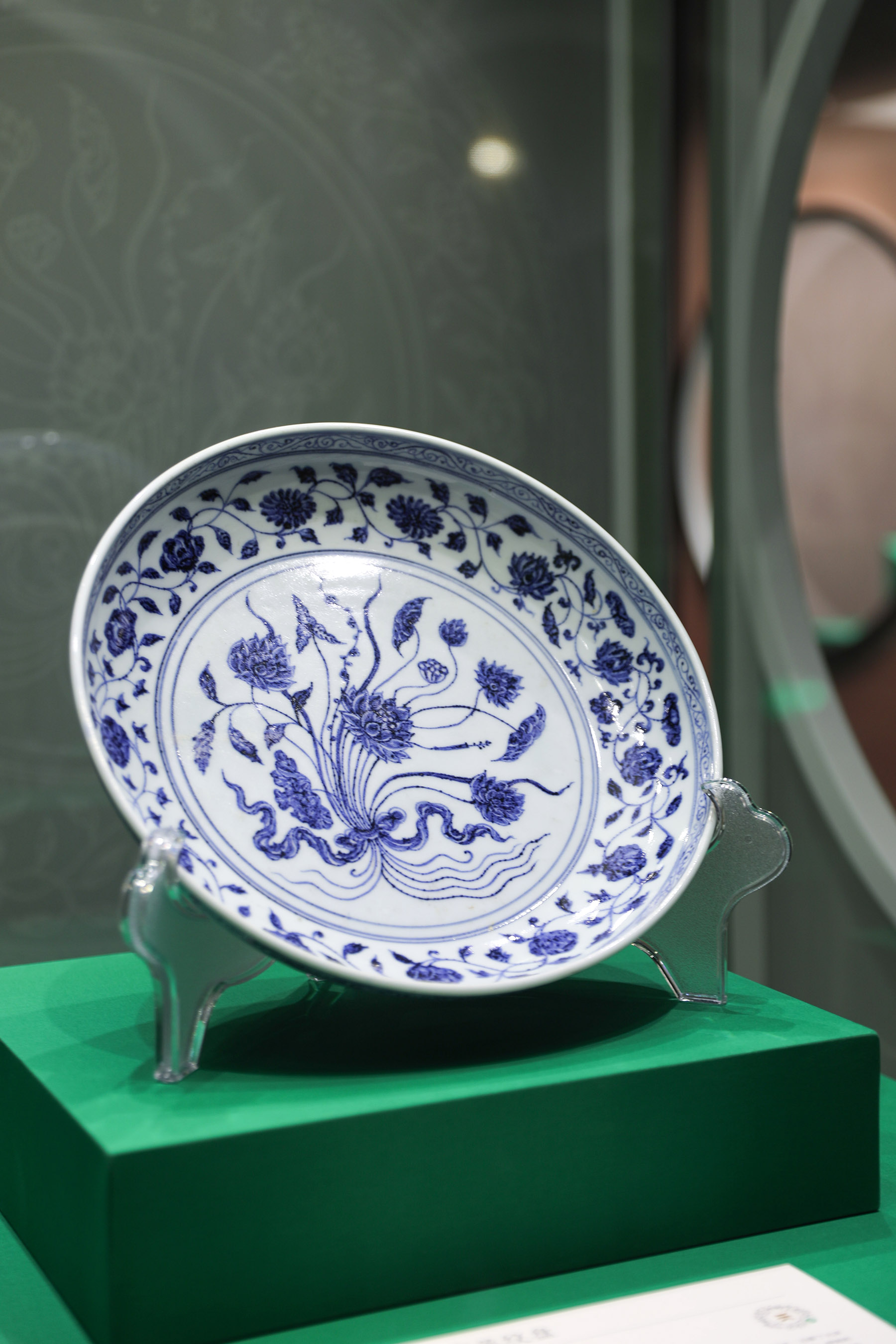
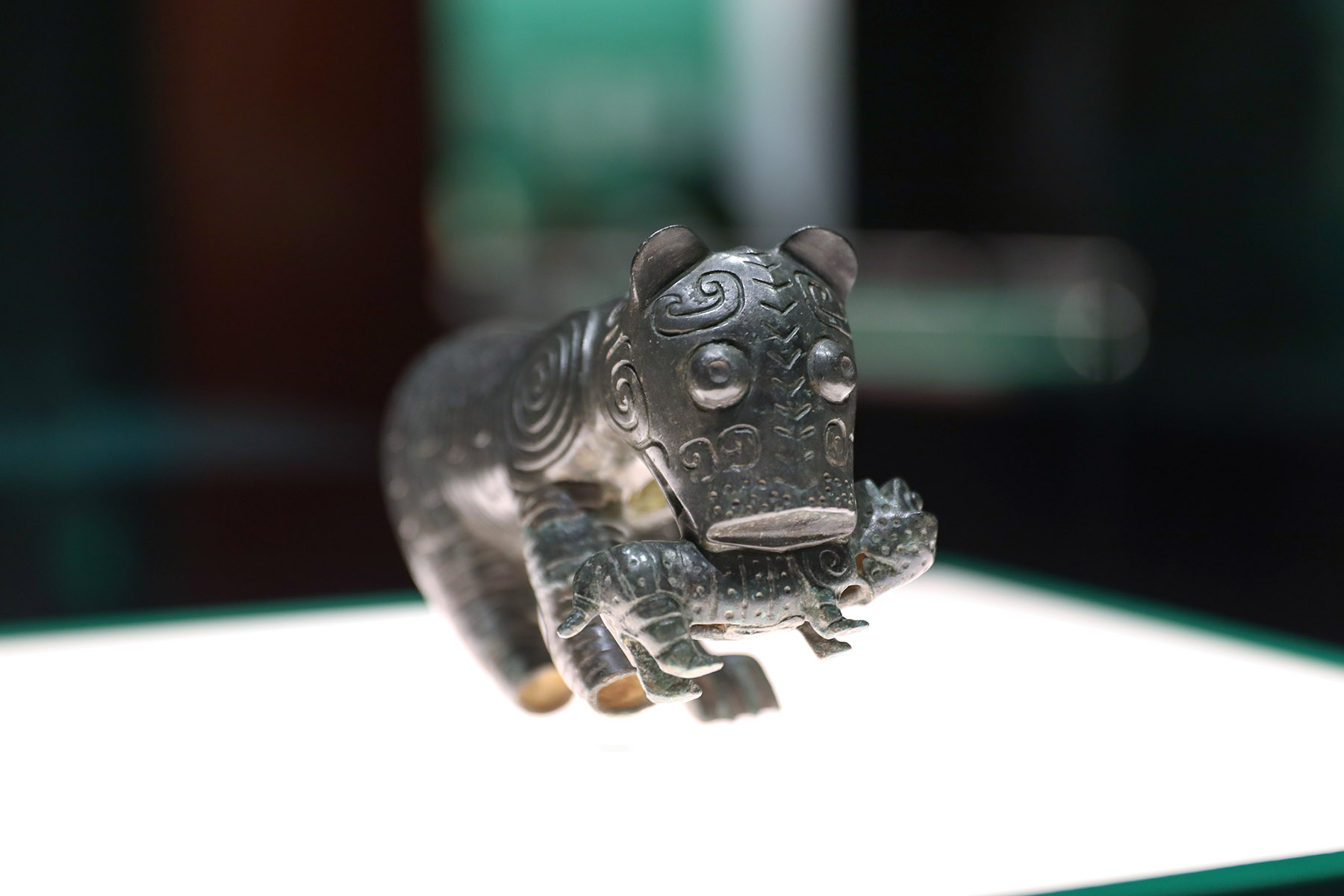
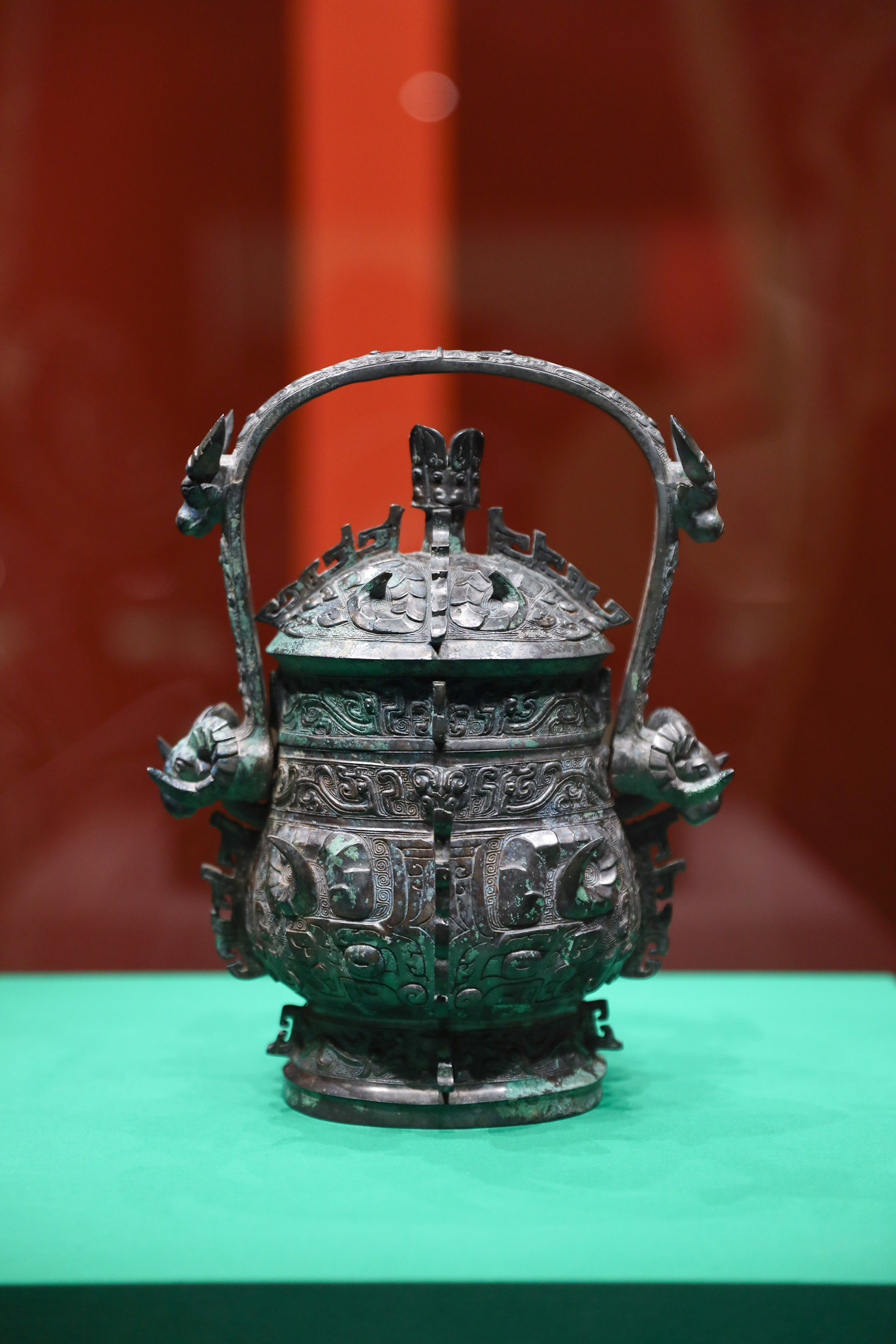
The exhibition traces the evolution of the visual language, mirroring the transformation of the Chinese psyche. The intimidating taotie (glutton) masks on bronze ritual vessels during the Shang (c.16th century-11th century BC) and Zhou (c.11th century-256 BC) dynasties embody an era of awe for the divine and ancestral spirits. Centuries later, the flowing lotus scrolls on ceramics from the Ming (1368-1644) and Qing (1644-1911) dynasties reflect a shift toward finding inspiration in nature and expressing secular wishes for prosperity and happiness.
In the eyes of Chen Zenglu, director of the museum, the engagement with traditional patterns is ultimately a service to the present and future. Drawing a parallel with the Great Exhibition of 1851 in London, which gave birth to the Victoria and Albert Museum and showcased Britain's industrial and artistic supremacy, Chen highlights a compelling contemporary reality: China has grown into a global manufacturing powerhouse, yet its design language has not achieved comparable international recognition.
"The visual vocabulary embedded in our cultural heritage is incredibly rich," Chen says. "But much of it still lies hidden in museums and archives, waiting to be rediscovered and reinterpreted."
True to the museum's "industry-friendly" vision, the exhibition is not a static look backward. It also seeks to connect ancient design with contemporary creativity. One of the most popular innovations is an artificial intelligence-powered interactive experience where visitors can generate their own pattern designs and have them printed as latte art in the museum cafe.
"We want to make the 'cultural code' within these patterns accessible, especially to young people," Ji says.
The museum has developed more than 30 educational courses, including workshops and hands-on sessions. It has also created lightweight touring exhibitions and specialized courses for local schools, integrating pattern studies into art festivals and club activities.
ALSO READ: Lady Guoguo's digital spring outing
The exhibition also highlights Suzhou's historical role as a melting pot for design. A delicate blue-and-white "ice-prunus" porcelain bowl from the Qing Dynasty shows a pattern famously used in the lattice windows of Suzhou's classical gardens. Other pieces, like silk fragments with pearl-roundel motifs from the Northern Dynasty (386-581) and Tang Dynasty (618-907), vividly illustrate the powerful influence of Silk Road exchanges on Chinese ornamental art.
"Patterns are both a visual expression of ancient aesthetics and records of daily life, spiritual beliefs and craft culture," Ji says.
"Their evolution resonates with the development of Chinese civilization. To understand these patterns is to understand China."
Contact the writer at wangqian@chinadaily.com.cn
