

A time-honored masterpiece sparks long queues, viral souvenirs and online collectibles, showing how museums connect ancient art with modern audiences, Li Yingxue and Wu Yong report in Shenyang.
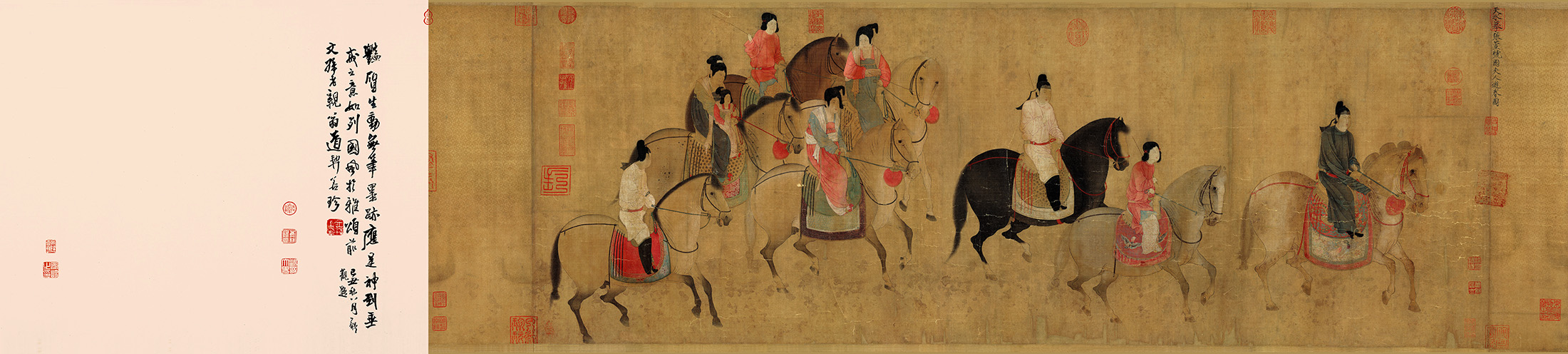
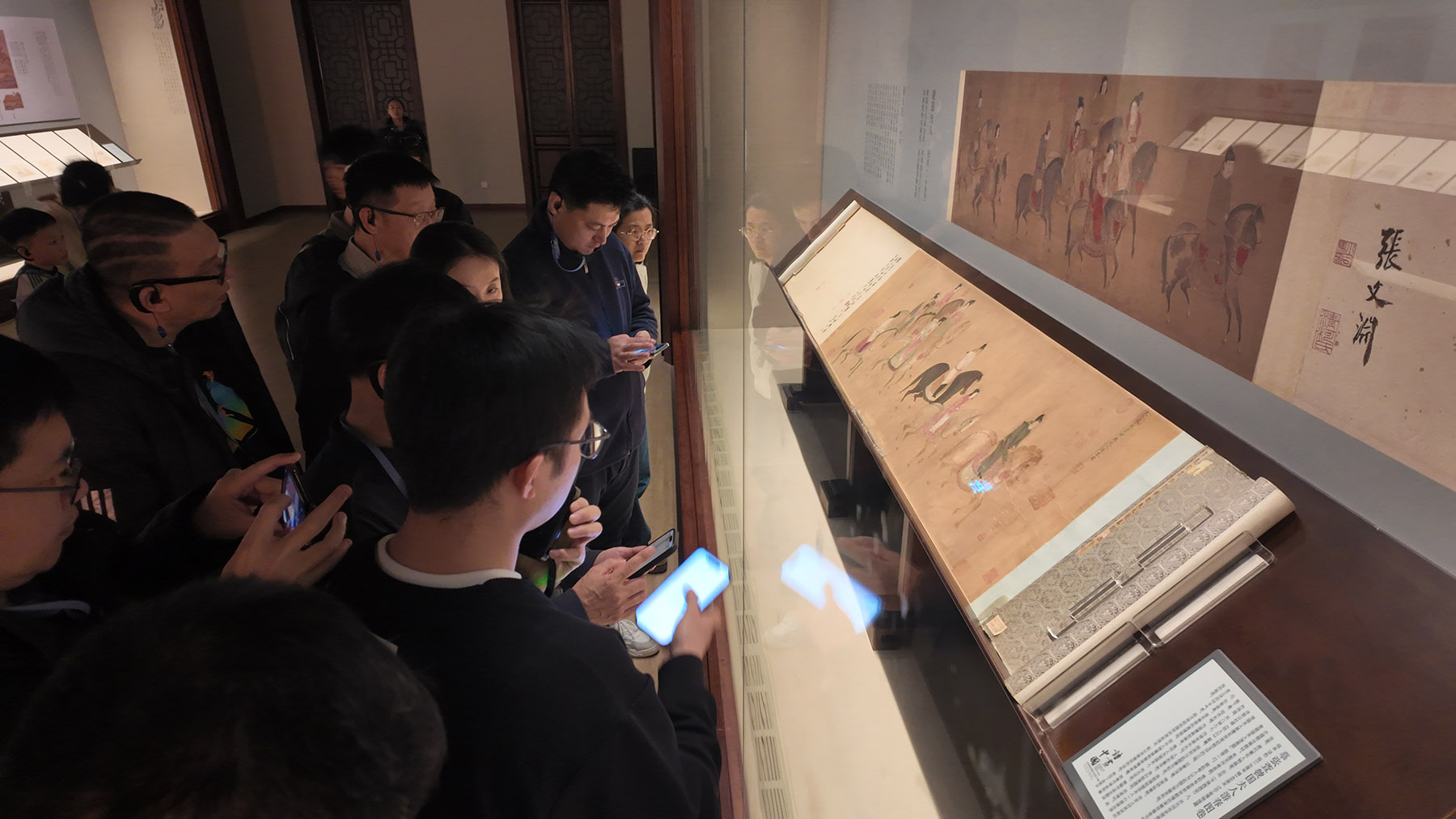
As spring gathers strength in March, the galleries of Liaoning Provincial Museum have taken on a poetic air. Visitors entering the exhibition China in Poetry and Painting: The Poetic Realm of Chinese Painting, running until March 29, encounter a delicate window into classical Chinese aesthetics.
Among the highlights is a Song Dynasty (960-1279) replica of the painting Lady Guoguo's Spring Outing — long regarded as one of the museum's most treasured works. The original work, created by Tang Dynasty (618-907) court painter Zhang Xuan, has been lost to time.
Yet, the most striking scene does not always unfold inside the exhibition hall.
READ MORE: Verse meets brush in timeless dialogue
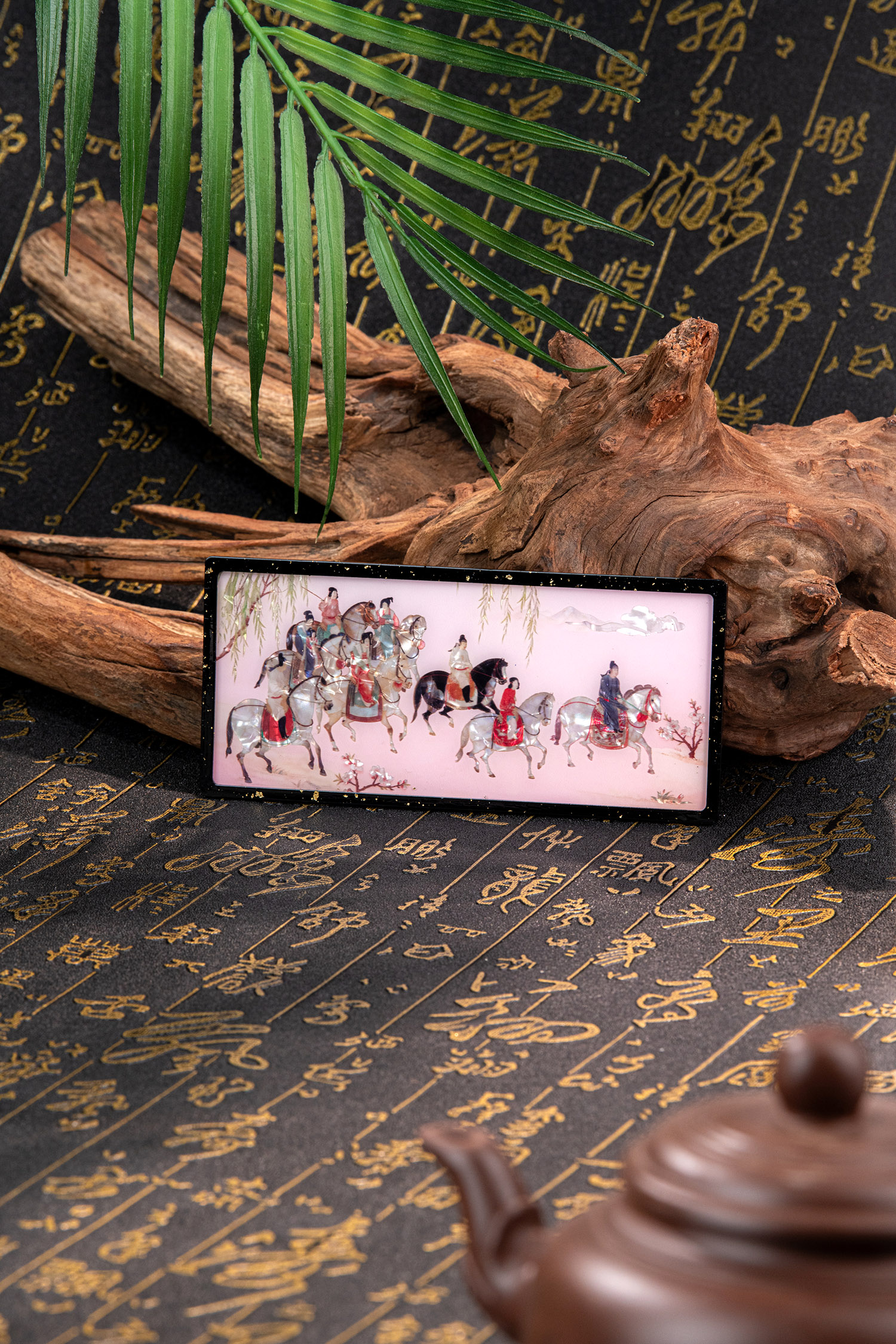
Each morning, even before the museum's cultural and creative product store opens, a queue begins to form outside. Those waiting are not only art enthusiasts — many are simply hoping to buy a small refrigerator magnet inspired by Lady Guoguo's Spring Outing. Designed to resemble traditional mother-of-pearl inlay, the magnet goes on sale twice daily, at 10 am and 3 pm.
When Xiaohongshu (RedNote) user Veena Coward arrived at 2:20 pm, more than 50 people were already ahead of her. She eventually secured one of the coveted items. "It looks really beautiful in person," she later wrote online. "It's worth the price."
The magnet quickly became an online sensation. Visitors to the exhibition competed to purchase it, while online sales channels reported equally strong demand. Another netizen, Nnnna, proudly placed the magnet in the center of her refrigerator collection, praising how "the mother-of-pearl glow looks stunning under different lighting".
What might once have been a niche museum souvenir has suddenly turned into a cultural symbol.
Around Lady Guoguo's Spring Outing, the museum has developed a range of derivative products, from practical household items to decorative pieces. It has also released digital collectibles based on the artwork. The response has been swift: when the digital collectibles first went online, subscriptions exceeded 10,000 within a single day.
From a Song Dynasty painting in a glass display case, to refrigerator magnets in kitchens, and now to digital collectibles in virtual space, cultural heritage is traveling across mediums — and reaching audiences in unexpected ways.
For the museum, the momentum reflects a deeper shift in how cultural institutions engage the public.
According to Zhou Yingqiu, head of the museum's cultural-creative division, sales of such products have surged in recent years. In 2023, the museum's cultural-creative revenue surpassed 10 million yuan ($1.45 million) for the first time, representing a year-on-year increase of 1,250 percent. The growth continued into 2024 with another dramatic rise of more than 534 percent, and the upward trend has persisted.
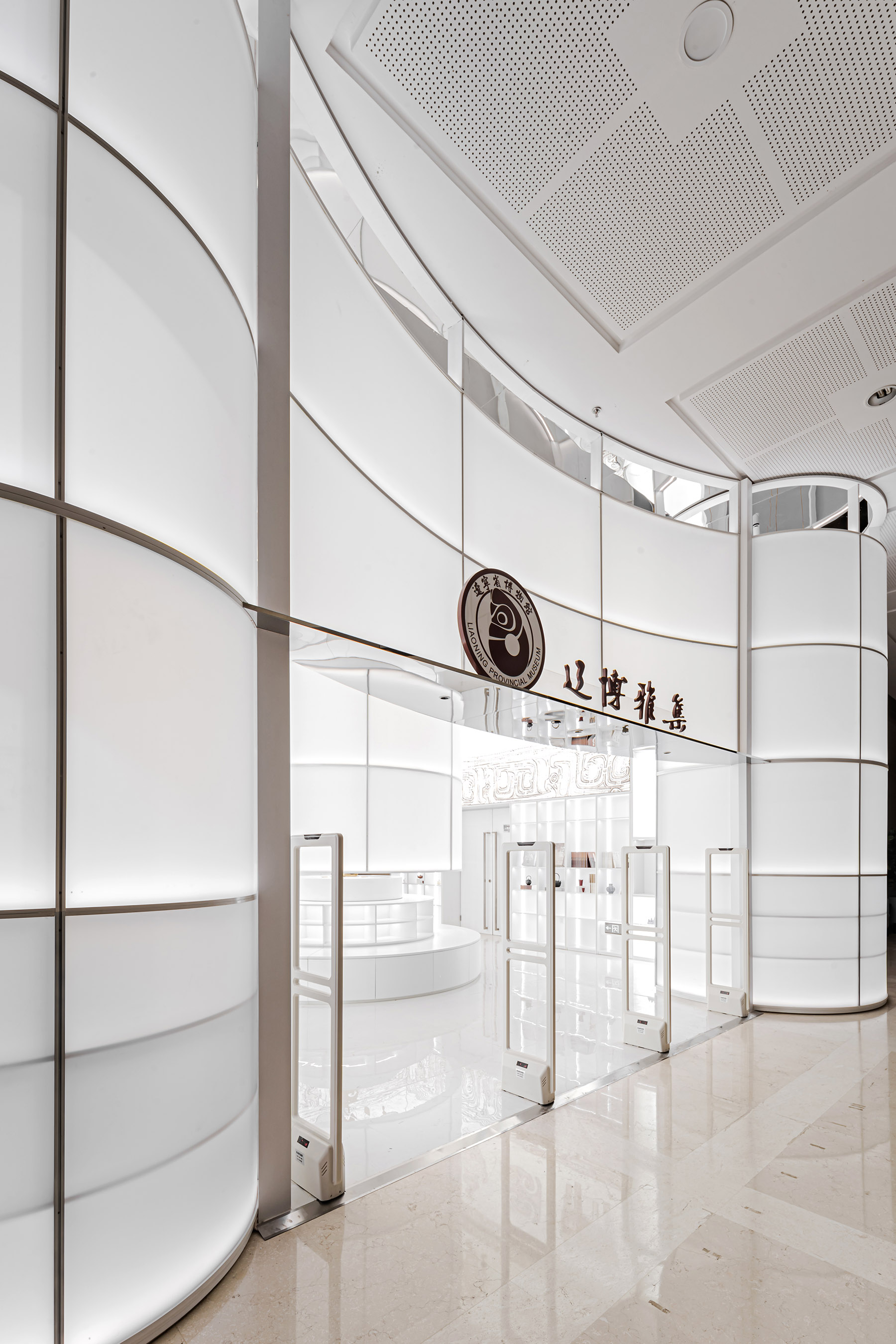
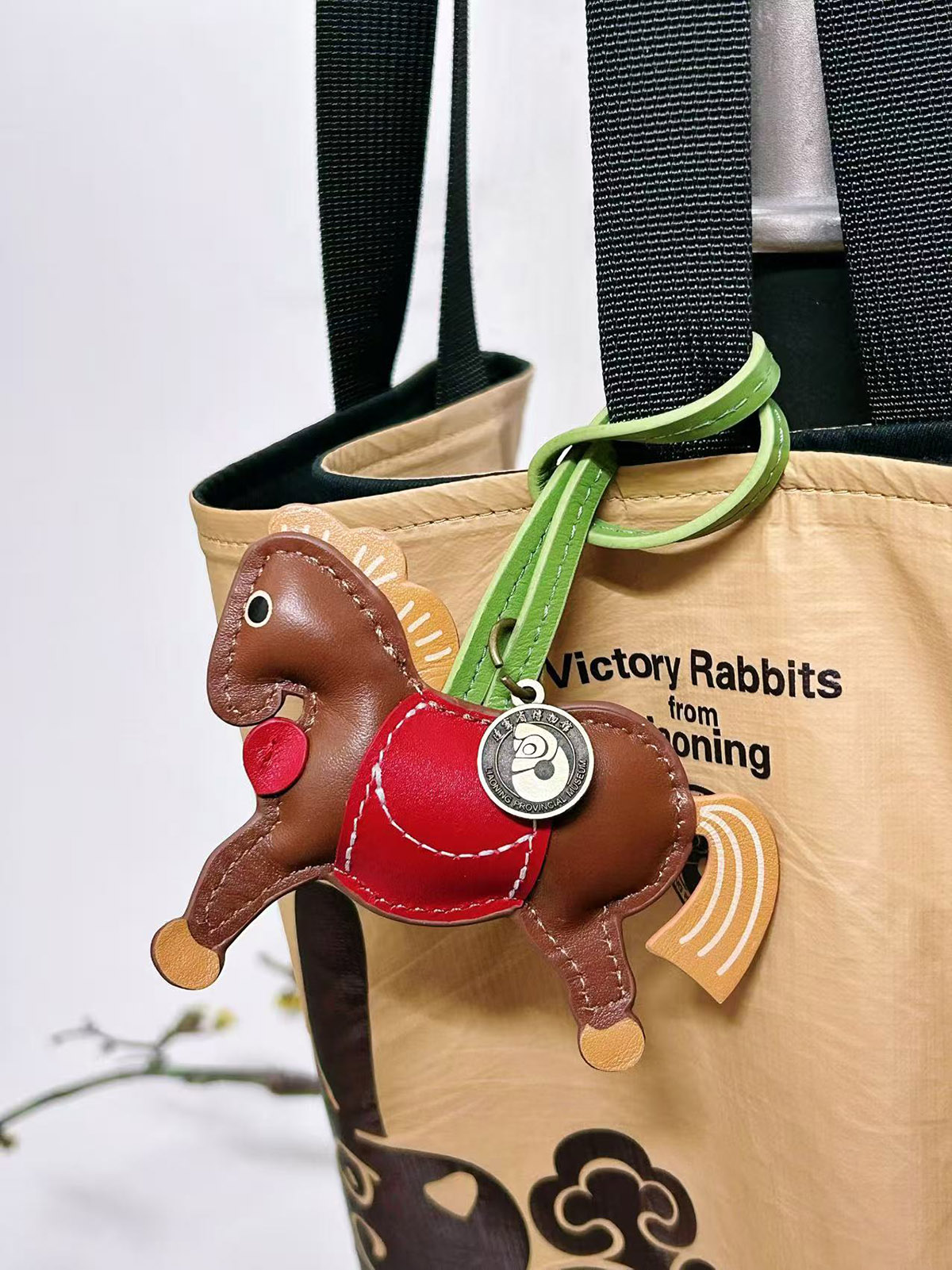
Today, the museum offers more than 2,000 cultural and creative products, ranging from stationery to home decor. Its self-operated store, Liaobo Yaji, has become a popular stop for visitors, while Liaobo Cultural Creations are increasingly seen as distinctive souvenirs representing Liaoning province. These products have also appeared at international cultural events in countries including the United States, Japan and South Korea, helping introduce the region's heritage to audiences abroad.
At the same time, the museum is exploring another frontier: digital collectibles.
The digital collectible based on Lady Guoguo's Spring Outing was officially released on Jan 25. Interest surged almost immediately. After going online on Jan 17, subscriptions exceeded 10,000 in a single day and have since approached 50,000.
The digital launch has had an unexpected effect: drawing visitors back to the physical museum.
"The subscription numbers really surprised us," Zhou says. "Lady Guoguo's Spring Outing is already a top-tier masterpiece — widely regarded as one of China's most famous surviving paintings and also the signature treasure of our museum. With the current exhibition bringing it back into the spotlight, the popularity naturally followed."
In Zhou's view, the response reflects a simple truth. "Good cultural content always has a market. Its appeal doesn't fade with time."
Since last year, the museum has launched 38 digital collectibles, each attracting fresh waves of attention. Zhou believes part of the appeal lies in the strength of the museum's collection. Many of its artworks, especially classical paintings, are widely recognized cultural icons.
Equally important, she adds, is the museum's approach to the digital format.
"We don't treat digital collectibles as something to release once and forget," she says. "There is a systematic plan and rhythm behind them. We adjust the pace according to user feedback and evolving demand, and continue operating them with users at the center."
In fact, digital collectibles are not merely an experiment but part of the museum's broader digital strategy. High-definition data capture, online exhibitions and interactive experiences all belong to the same effort to bring cultural heritage closer to the public.
Selecting which artifacts to digitize requires careful thought. The team considers whether a work contains compelling historical stories or cultural symbolism, and whether its aesthetic qualities can be effectively expressed through digital technology.

For calligraphy and painting, the digital format offers particular advantages.
"Our paintings from the Tang and Song dynasties have survived for more than a thousand years," Zhou explains. "Because of conservation requirements, they cannot remain on display for long periods. Digital collectibles allow audiences to appreciate them in ways that would otherwise be difficult."
Through the digital platform, users can rotate objects 360 degrees and zoom in on details often invisible behind exhibition glass.
To make this possible, the museum captures original data at hundreds of millions of pixels, ensuring ultra-high-definition source material. The resulting digital collectibles feature detailed 3D models and high-resolution viewing modes that allow users to enlarge specific sections of calligraphy or paintings. For long scrolls, animation functions re-create the gradual unfolding of the artwork.
For Zhou and her colleagues, accuracy remains paramount.
"We see digital collectibles as the 'digital twin' of cultural relics," she says. "It cannot contain even a single mistake."
Each item therefore includes an extensive information page, and all historical descriptions undergo strict review procedures. Artifact names and explanatory texts must be verified by the museum's researchers before publication and checked again prior to release.
Even the virtual viewing environment is carefully designed. The display platform uses a 3D engine to simulate museum lighting conditions, creating an immersive atmosphere that echoes the experience of standing before an artifact in a gallery.
Ultimately, Zhou says, the goal is straightforward: to convey the cultural meaning embedded in the museum's collection while reaching a broader audience.
The results are already visible.
Some digital collectible owners who had never visited a museum before have traveled to Shenyang specifically to see the original artifacts in person — a real-world confirmation of their digital purchase.
Meanwhile, the collectibles have sparked new forms of public creativity. When a digital collectible based on a lion-head goose painting by Ming Dynasty (1368-1644) artist Lyu Ji was released, netizens began using AI tools to create a series of humorous memes that quickly spread across social media.
Collectors have also organized cultural activities of their own. One calligraphy event invited participants to re-create cursive script works inspired by digital collectibles. Nearly 100 enthusiasts submitted entries, and more than 10,000 people took part in the voting. Some winning pieces were later auctioned and collected.
ALSO READ: Lunch at the museum!
Back at the exhibition hall, another quiet shift is visible.
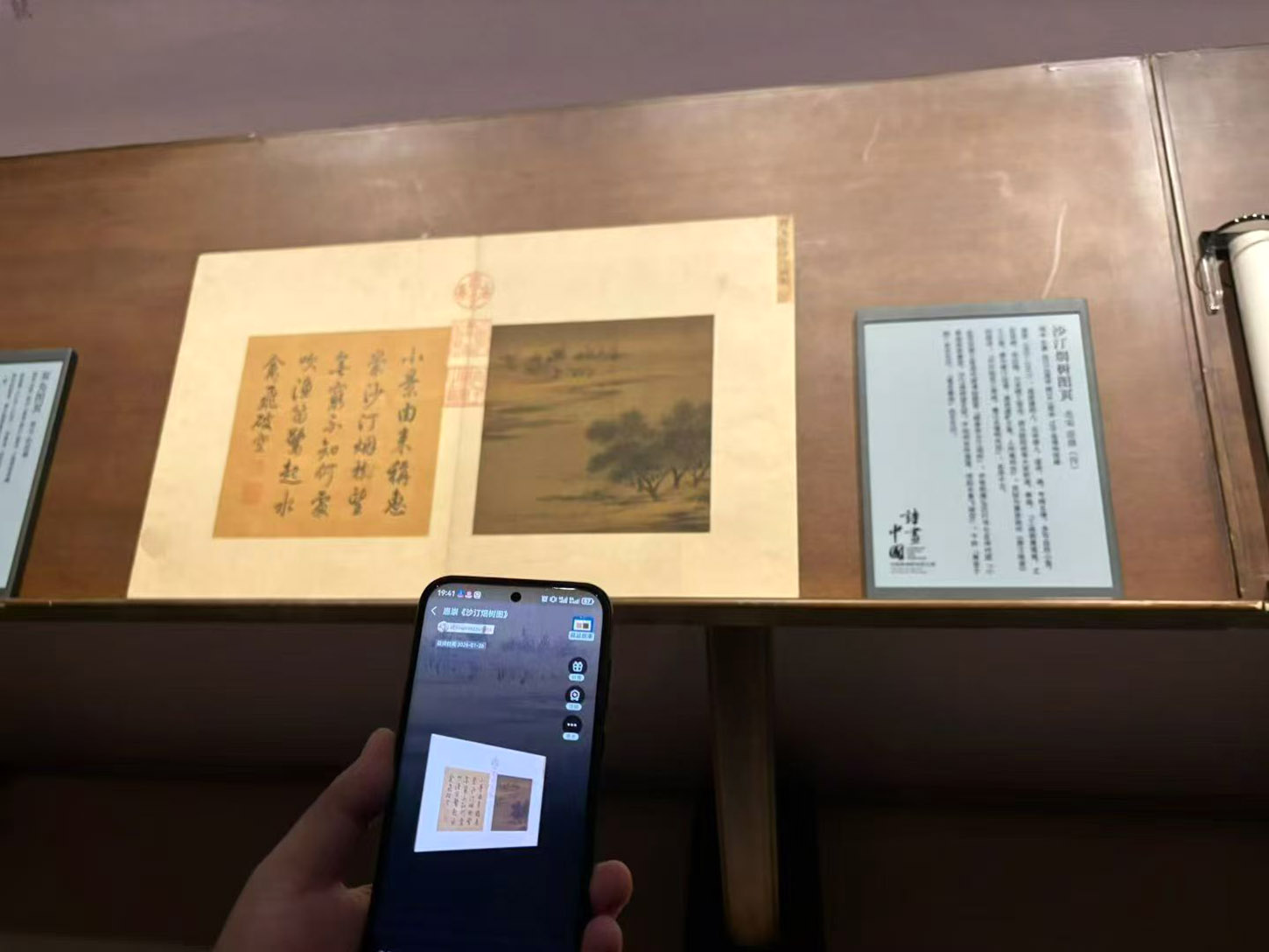
Young visitors often stand before the display cases with their phones raised, comparing images on their screens with the artworks inside the glass.
"That moment — when people discover something online and then come to experience it offline — is exactly what we hope for," Zhou says.
Many later share their discoveries on social media.
In doing so, she adds with a smile, they become something unexpected: "millions of volunteer museum guides".
Contact the writers at liyingxue@chinadaily.com.cn
