

HK-based GX Foundation’s project findings published in international medical journal
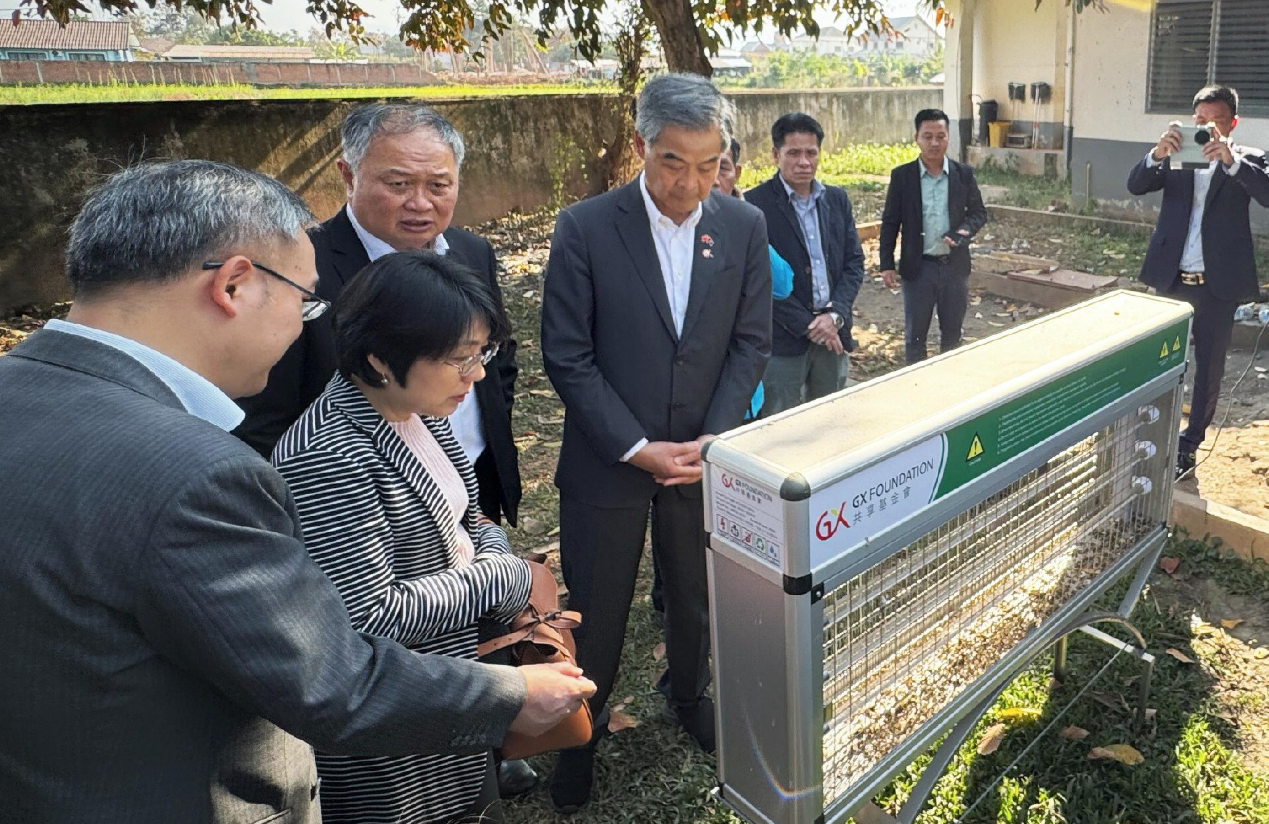
The latest project findings by GX Foundation, a Hong Kong-based non-governmental organization, in physical vector control in addressing dengue fever threats has been published in the international medical journal The Lancet on March 20.
The paper demonstrates that in an era marked by climate change, rapid urbanization, and increased population mobility, low-cost, low-tech, community-led physical intervention measures offer a viable path forward, addressing the shortcomings of traditional top-down, government-led prevention strategies.
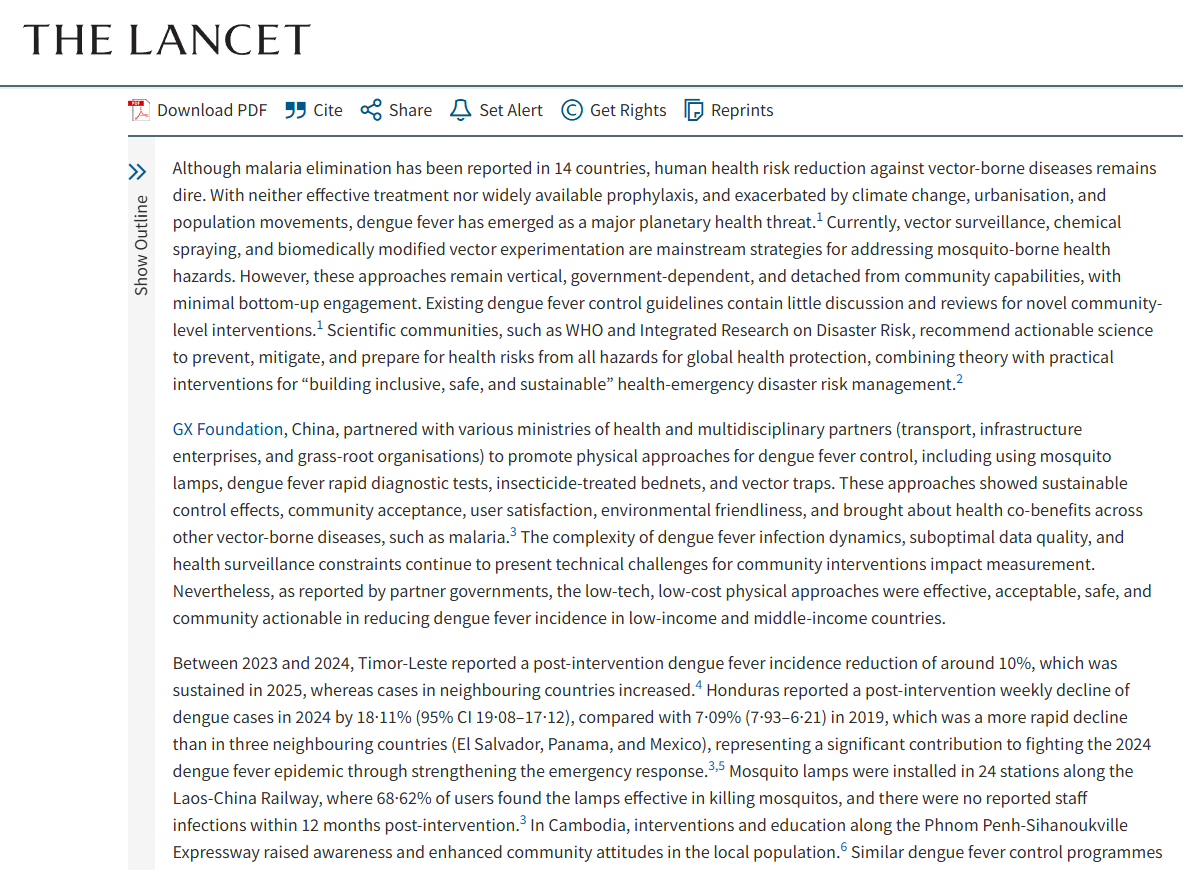
The article was helmed by Emily Chan Ying-yang, CEO of GX Foundation; and co-authored by Leung Chun-ying, vice-chairman of the National Committee of the Chinese People’s Political Consultative Conference and GX Foundation’s chairman; Caroline Dubois, GX Foundation’s Africa and youth director; Huang Zhe, GX Foundation’s senior project manager and head of data management; and Yung Louise, GX Foundation’s senior project officer.
READ MORE: HKUST starts free Alzheimer’s screening for 6,000 seniors
Key project achievements include Timor-Leste, where dengue incidence dropped by approximately 10 percent following GX’s interventions in 2023 and 2024. In Honduras, after GX’s intervention in 2024, the weekly decline rate for dengue cases reached 18.11 percent, significantly outpacing the 7.09 percent observed during the control period. In Laos, mosquito lamps installed at 24 sites along the China-Laos Railway proved highly effective, with no infections reported among staff in the 12 months following the intervention.
Emphasizing the dual nature of GX’s mission, Leung said the foundation is not only an “action-oriented” organization dedicated to long-term frontline work and international humanitarian relief, but also a research-capable and knowledge-based institution.
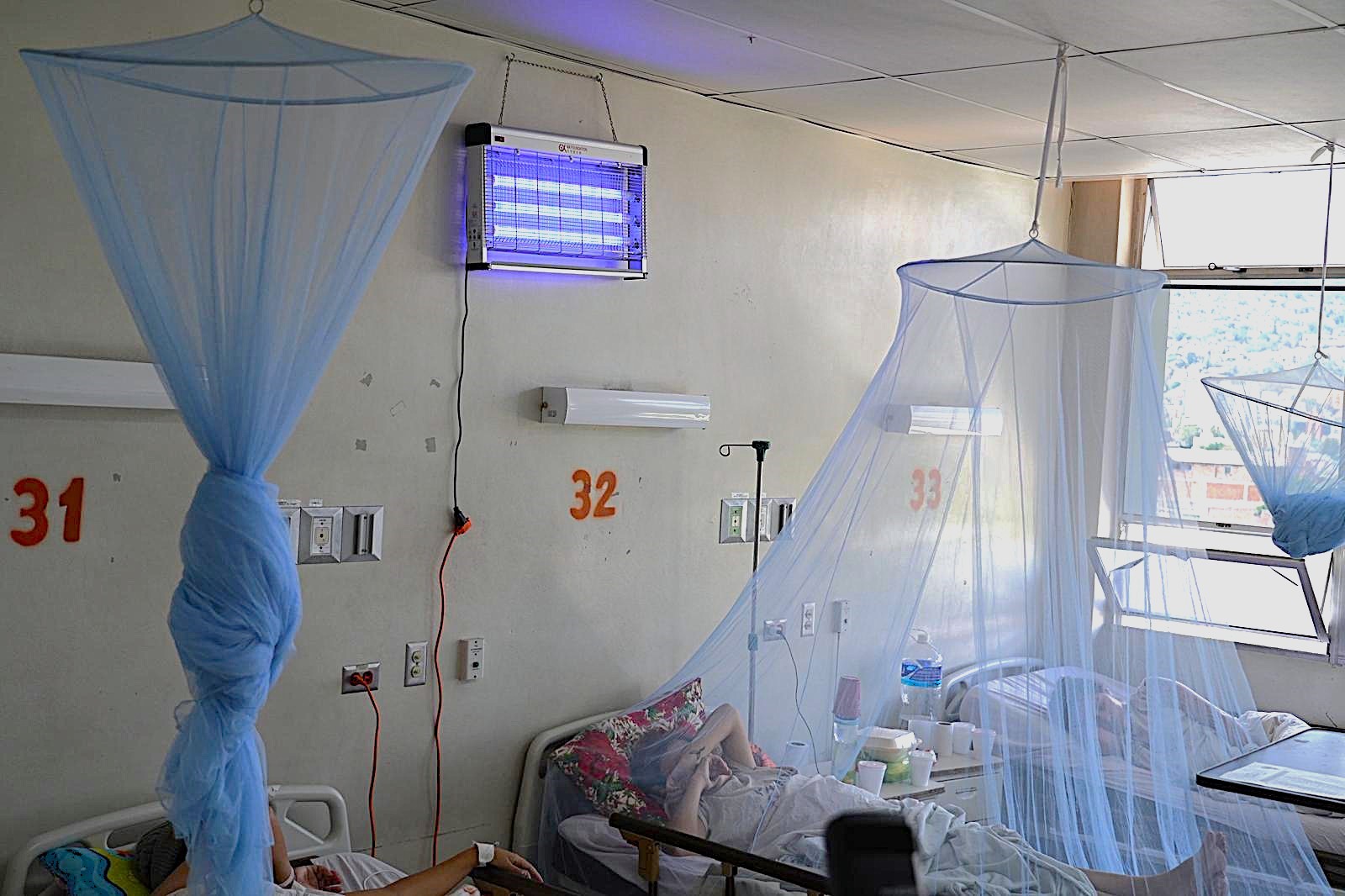
Building on the practical implementation of the “China Solution”, GX will continue to focus on diverse public health issues, systematically collate frontline experience, promote cross-sectoral exchange, accumulate practical wisdom, and contribute to the development of global public health scholarship, said Leung.
Chan said GX’s approach effectively stimulates proactive prevention awareness at the grassroots level, bridging the gap between government-led models and everyday public protection.
ALSO READ: Chinese scientists achieve breakthrough in optical, 6G communication
She said the publication of these findings once again in The Lancet signifies that the “people-oriented, context-specific” Chinese public health practice has garnered significant attention and authoritative recognition within the international academic community, while also injecting vital confidence and momentum into frontline work.
The foundation said it will continue to collaborate with health departments and academic institutions in partner countries to establish more robust monitoring systems, promoting cross-border exchanges and enabling more developing countries to understand and adopt the “China Solution” as a collective response to the vector-borne disease challenges intensified by climate change and urbanization.
Contact the writer at kelly@chinadailyapac.com
