

Epic drama follows divided realms as young leaders confront violence and choose mercy to reshape history, Xu Fan reports.
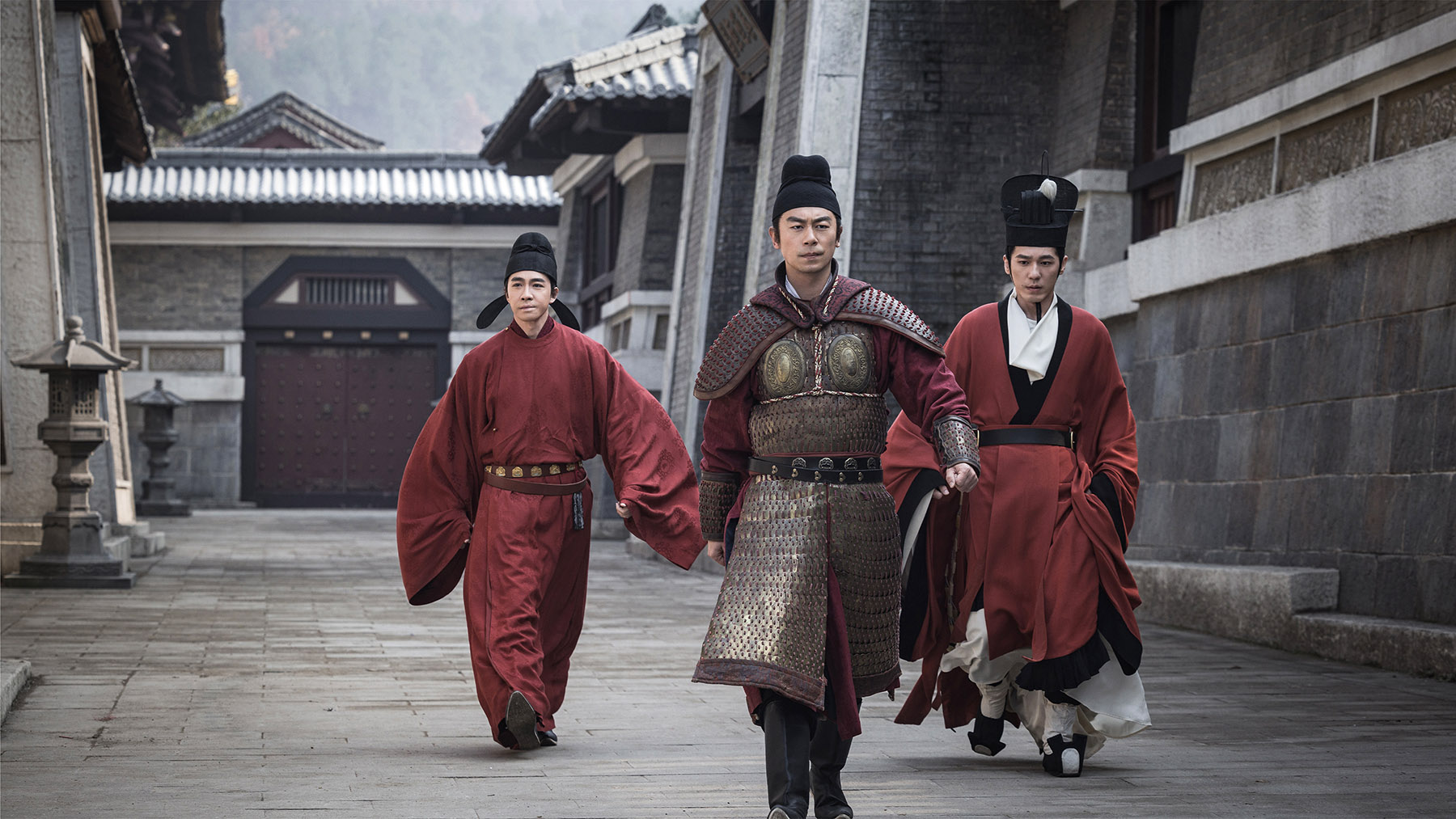
In just over half a century, regimes rose and fell in rapid succession, making it one of the most turbulent chapters in Chinese history.
This era, known as the Five Dynasties and Ten Kingdoms (907-960), is recorded in historical archives as a time marked by betrayal, slaughter, and widespread suffering. That fraught climate sets the tone for the opening scene of Swords into Plowshares, one of the country's most popular TV dramas this year.
In the gripping sequence, Zhang Yanze — a general notorious for his ferocity — orders his adopted son to kill civilians for military rations during a severe food shortage within the army. When the young man refuses and pleads for mercy, Zhang executes him without hesitation.
READ MORE: C-dramas gain global momentum
Dong Zhe, the scriptwriter of the drama produced by Huace Film & TV, told China Daily that the period ranks among the darkest in Chinese history.
"It could be reflected in the sharp demographic decline. Numerous people died from unnatural causes. The real history was far more brutal than what is portrayed on screen," he says, sharing that by the early Song Dynasty (960-1279), the country's population had dropped to 30 percent of what it had been at the end of the Tang Dynasty (618-907).
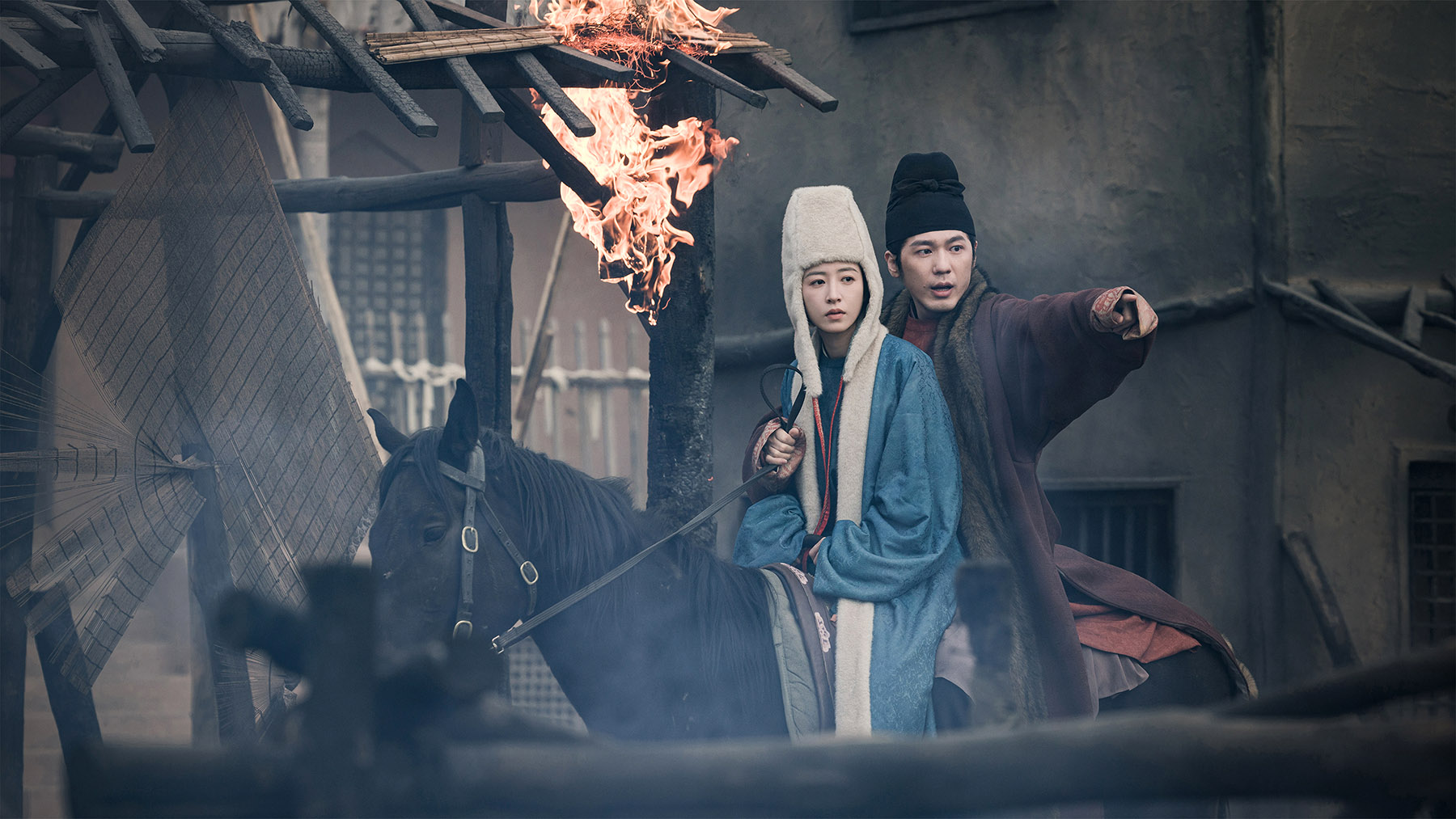
Hence, the title conveys a symbolic yearning for peace. The drama centers on three young men — Qian Hongchu, Zhao Kuangyin, and Guo Rong — whose fates prove decisive in restoring order to the chaotic era. They are, respectively, the ninth son of the ruler of the Wuyue Kingdom — a region that now encompasses Zhejiang province, parts of Jiangsu, Anhui, and Jiangxi provinces, as well as Shanghai; the son of an imperial army commander; and the adopted son of a warlord.
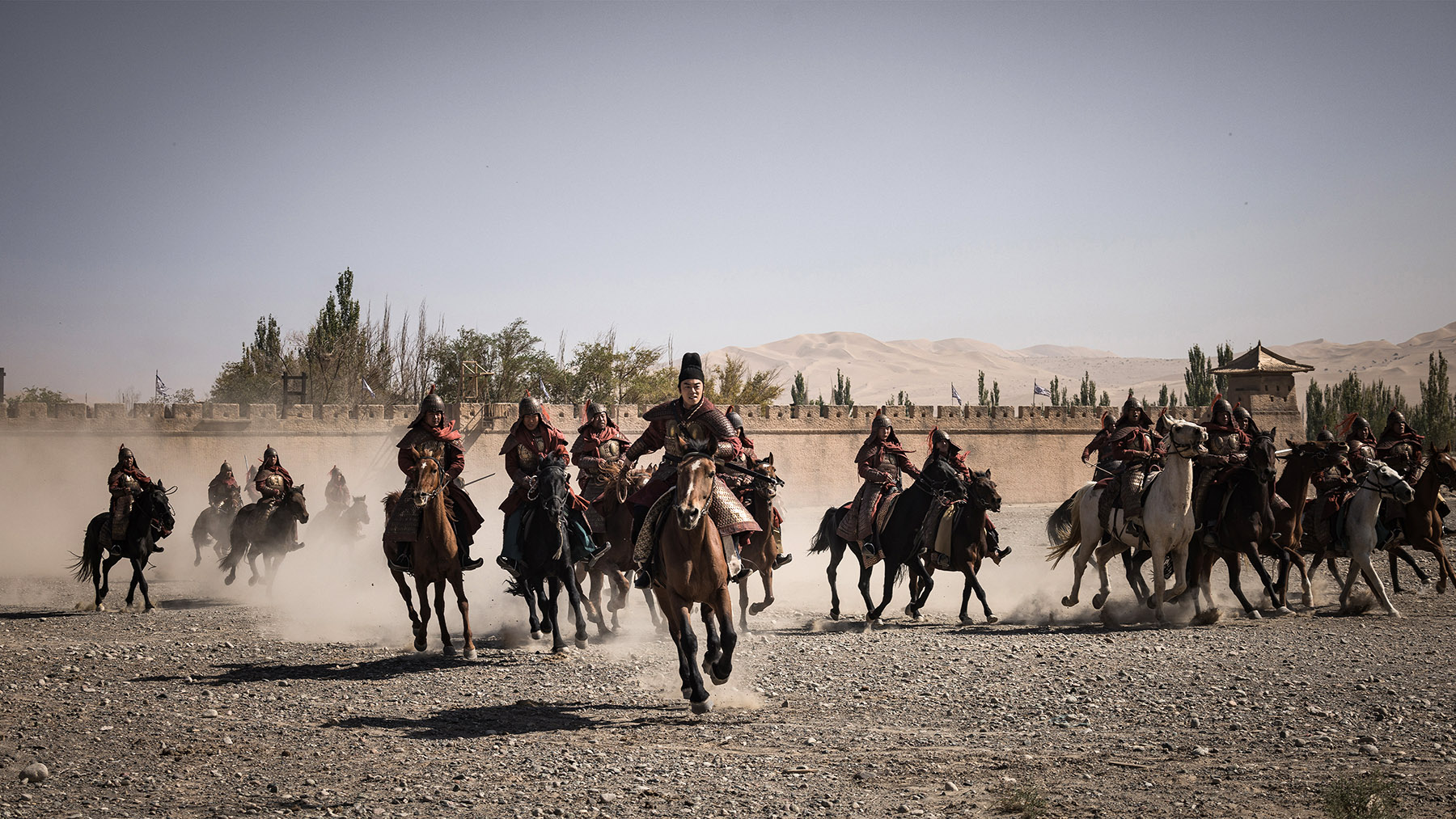
Depicted as joining forces in a battle to defend Kaifeng — then the capital of the Later Jin (936-947), the third of the Five Dynasties — from the brutal general Zhang, the three young men begin to realize their respective roles, guided by destiny toward their ambitions. Qian eventually ascends the throne as the king of Wuyue. Zhao becomes the founding emperor of the Song Dynasty (960-1279). Guo rises to become emperor of the Later Zhou (951-960), the fifth and last of the Five Dynasties, and is widely regarded as the most capable and benevolent ruler of his era.
Revisiting a rarely depicted period on screen, the drama has quickly gained popularity thanks to its exquisite settings, compelling narrative and refined dialogue. Since its premiere on China Central Television's CCTV-1 and its recent second run on three broadcasters — CCTV-8, Hunan Satellite Television and Zhejiang Satellite Television — the 48-episode series has generated over 2,000 trending topics, amassed 800 million clicks on the Chinese social media platform Sina Weibo, and accumulated 3.9 billion views on Douyin.
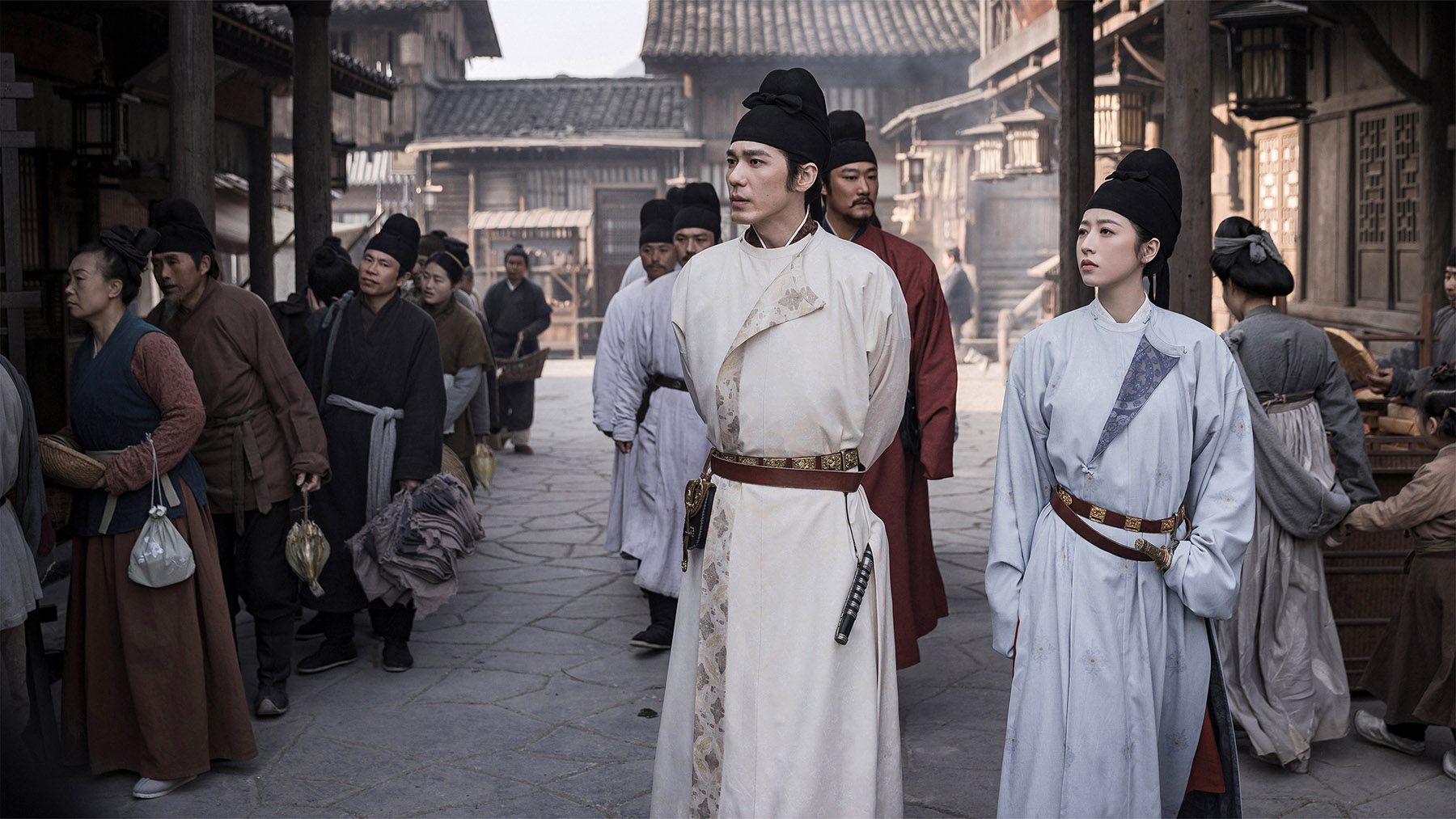
Reflecting the rising popularity of Chinese dramas in overseas markets, the series has also reached 73 countries and regions. Streamed on YouTube with 11 subtitle options — including French, Spanish, Portuguese and Polish — it serves as a window for international audiences to learn more about China's history and culture.
For Dong, who describes himself as a history enthusiast, the era was already familiar terrain when he was invited to write the script in the summer of 2021. He had previously written an alternate-history novel set in the same period, and his knowledge of the time was considerable.
Even so, the preparatory work proved far more difficult and complex than he had anticipated. Although Dong had read most of the major historical records covering the era, he found that only a handful mentioned the history of the Wuyue Kingdom.
The closest surviving text related to the period is Wuyue Beishi (History of the Wuyue Kingdom), which scholars of the Song Dynasty believed was written by the younger brother of Wuyue's last king. Regarded as the most reliable source for studying that history, the book survives only in part: roughly one-third has been preserved. The biography of Qian, the final king, remains fragmentary — barely half is intact.
"Wuyue was not among the most renowned kingdoms in Chinese history. However, its ruling Qian family has exerted a lasting influence over the centuries," Dong says, mentioning that the family's descendants include some of China's most prominent figures, such as Qian Xuesen, a pioneer of the country's space program, and Qian Sanqiang, revered as "the father of China's atomic bomb".
In addition, Wuyue — which produced large quantities of luxury goods such as high-end porcelain ware and jewelry during that era — engaged in prosperous trade with other Asian countries, exchanging these goods for their agricultural products.
The project ultimately demanded considerable time and patience — four months to reorganize and synthesize the historical materials, and another three years to complete the screenplay. Yet, the gaps in the record also created space for imagination.
King Qian's defining moment came when, as ruler of a kingdom, he made an extraordinary decision: to relinquish the throne of Wuyue and peacefully surrender to the Song Dynasty in order to spare his people the devastation of war. In 978, 18 years after Zhao established the Song Dynasty, Qian led more than 3,000 members of his imperial clan on 1,444 ships to Kaifeng to submit, bringing over 550,680 households under Song rule. Wuyue thus became the only regime in that turbulent era to achieve reunification without armed conflict.
"Though the tide of history may twist and turn, the allegiance of the people and the well-being of the common folk remain the ultimate measure by which all choices are judged," Dong says, reflecting on Qian's decision.
The screenwriter holds a particular fondness for Qian. When the protagonist first appears, he is depicted as a mischievous, high-spirited teenager from a coastal city, more adept at preparing sashimi than contemplating matters of state. But his carefree youth soon fades. He witnesses the horrors left by war — starving refugees driven to cannibalism — and endures the political turmoil that follows his elder brother's death, and is confronted with the severed head of his beloved uncle. These experiences sober him. Gradually, a deep longing for peace takes root, outweighing any desire for power.
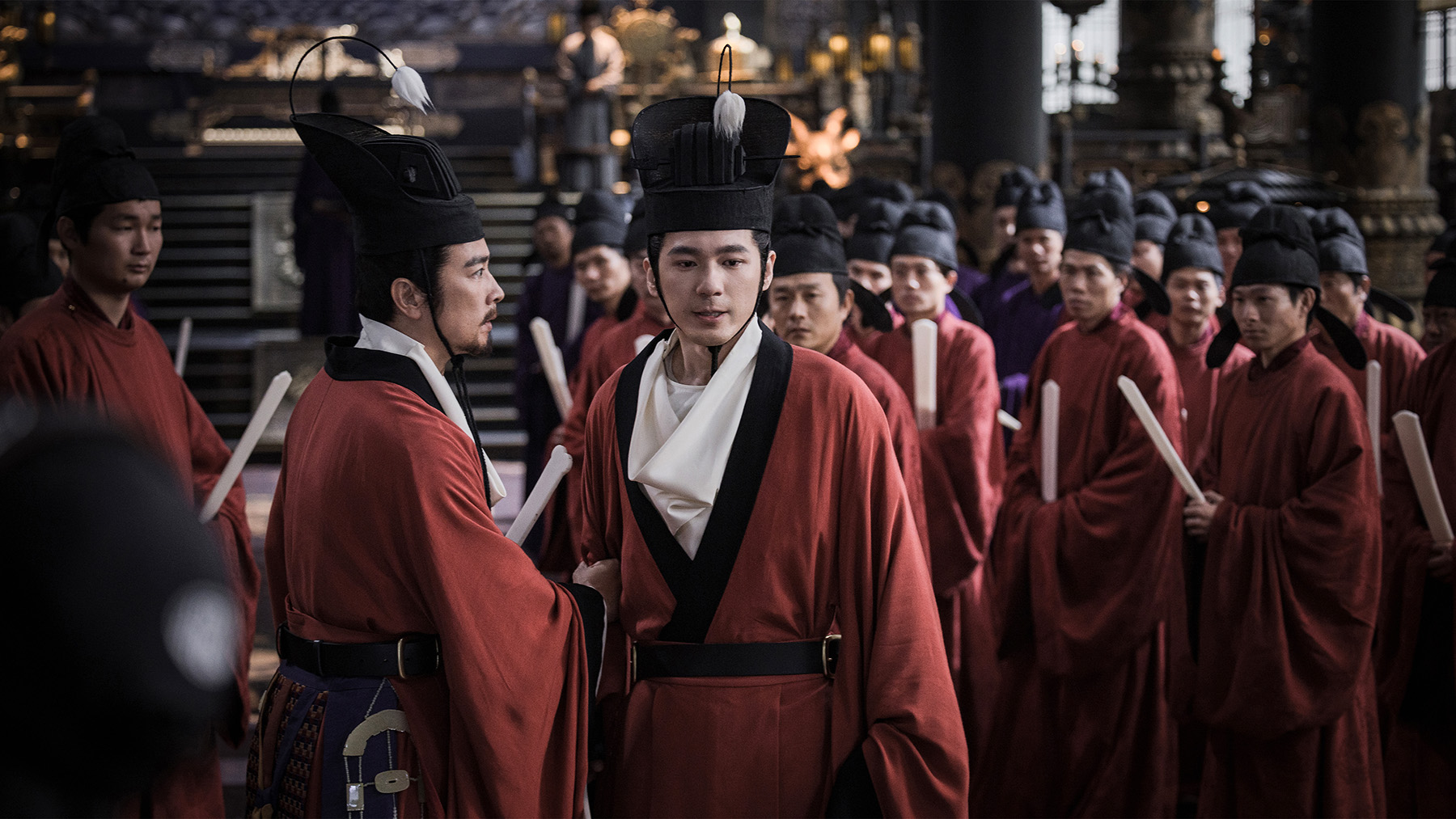
"That has made Qian a more profound and complicated hero, as each of his choices is not about winning more on the battlefield, but about losing less — at the cost of fewer innocent lives and less destruction of civilization," says Yang Lei, the drama's director.
As a historical epic, the drama features over 230 characters, based on real-life figures, with over 8,000 costumes tailored for shooting across more than 550 settings spanning areas exceeding 38,000 square meters.
"All the actors would come to me and tell me what kind of person their character was, when they were born, and what they might have done. Every actor was vividly telling their character's story, striving to find the feeling of that person truly living within history," recalls Yang.
ALSO READ: Soulful tunes of an antique land
When recalling the most impressive sequence, Dong and Yang both mention a quiet but emotionally resonant moment: the three young men, alongside Sun Taizhen — a brave woman who later marries Qian — make a wish after enduring a bloody battle and gaze upon the war-torn land beneath the sun. "May the day come when we can share a cup of warm wine together in a time of peace."
"It was an era marked by chaos and turmoil. Yet, heroic figures like Qian, Zhao, and Guo carried within them a deep yearning for peace and devoted themselves wholeheartedly to that goal. Such a longing — which still resonates with audiences today — forms the emotional core of the script," says the director.
Contact the writer at xufan@chinadaily.com.cn
