

From workshops to seasonal activities, students discover how labor teaches skills, fosters teamwork, and shapes character.
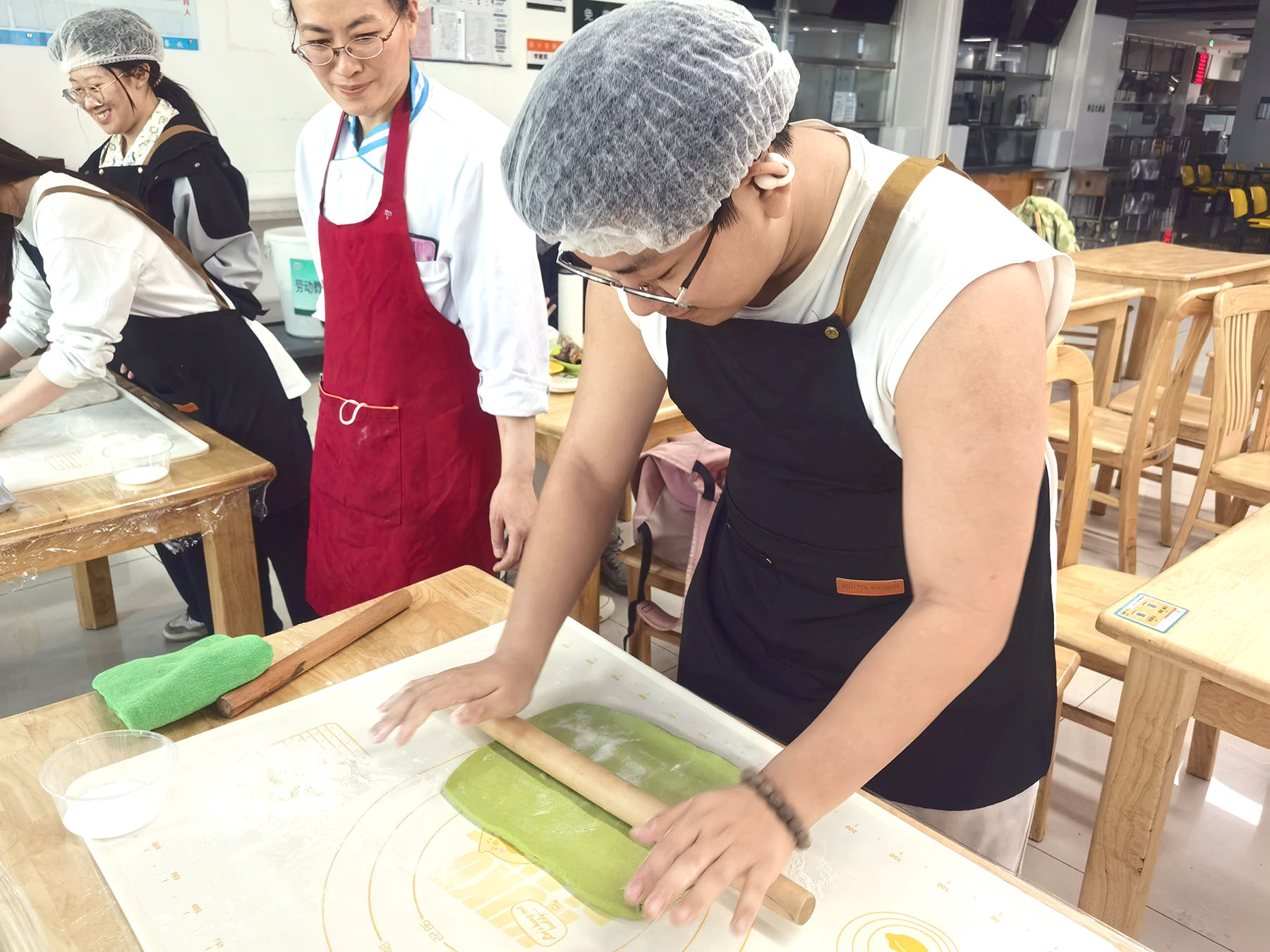
On April 1, just days before Qingming Festival, or Tomb-Sweeping Day, a lively cooking workshop took place in the cafeteria at Beijing Forestry University (BFU). At the counter, 19-year-old Li Tonghan carefully shaped a green rice ball — qingtuan, a traditional seasonal delicacy enjoyed during the festival.
"The workshop is very popular — around 80 percent of our classmates signed up," Li said. "The instructors are cafeteria staff who guide us step by step. Even those with no cooking experience can easily keep up."
For Li, a freshman studying mathematics with a demanding academic schedule, the two-hour cooking session offered a welcome break.
"Doing something with my hands really helps me relax," he said. "It also makes me appreciate the cafeteria staff's work even more."
READ MORE: From the village, for the village
This cooking class is part of BFU's broader initiative to promote hands-on learning and a strong work ethic, explained Chen Yuzhen, deputy Party secretary of the university's logistics support department. According to her, more than 20 similar programs have been introduced, covering campus services, daily life skills, and practical training for future careers.
So far, over 9,000 students have participated, with most sessions limited to 20 participants to ensure a more interactive experience.
"We hope these courses allow students to experience real-world campus work and develop greater respect for labor," Chen said. "At the same time, they acquire practical skills that will benefit them after graduation."
For many participants, these activities also help build confidence in handling unexpected situations.
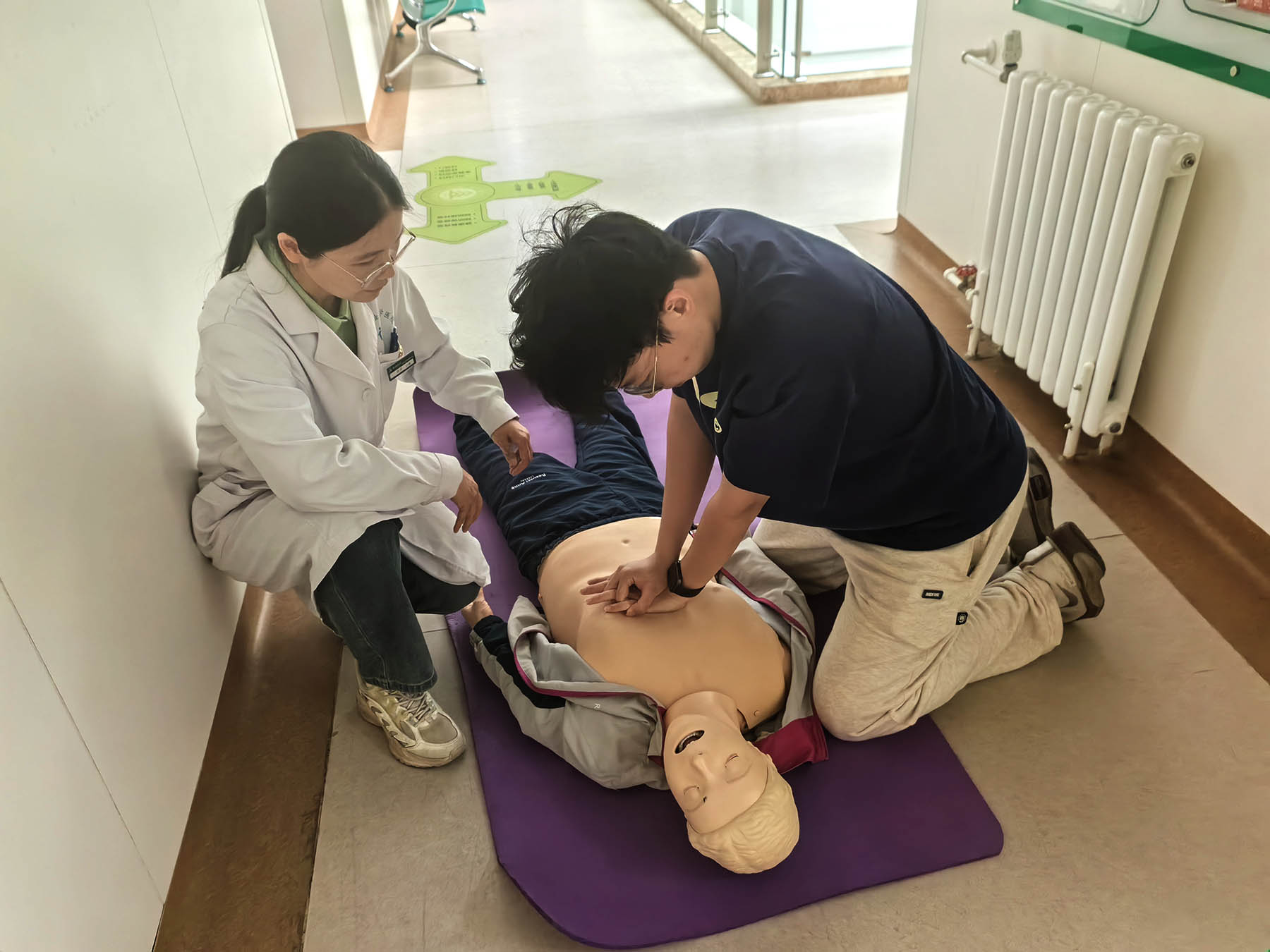
Song Linshuo, 19, enrolled in a basic first aid and health training course at the campus clinic, where students learned cardiopulmonary resuscitation (CPR), how to use automated external defibrillators (AEDs), the Heimlich maneuver for treating choking, and how to respond to snake or insect bites — skills especially useful for forestry majors like Song.
"After completing the session, I feel much more confident and capable. In an emergency, I'll be ready to take action and provide help immediately," he said.
According to Song, the university encourages students to participate in hands-on experiences from their very first year, a practice he finds particularly valuable. "Labor is everywhere. It's not just farm work — it includes cleaning, cooking, and everything we do in our daily lives," he said.
For example, his major involves regular fieldwork, such as carrying heavy tripods, taking measurements in the mountains, and drawing maps.
"No matter how advanced technology gets, there are always aspects of life we must still manage ourselves," he said."Creating things with our own hands brings a real sense of satisfaction."
Similar initiatives are being adopted by universities across China, integrating the spirit of hard work and practical skills into their academic programs.
A 2025 survey by China Youth Daily found that over 91 percent of interviewed college students reported that their universities had made these types of practical programs mandatory. Activities range from cleaning classrooms and assisting in cafeterias to farming and community service, forming a shared campus experience.
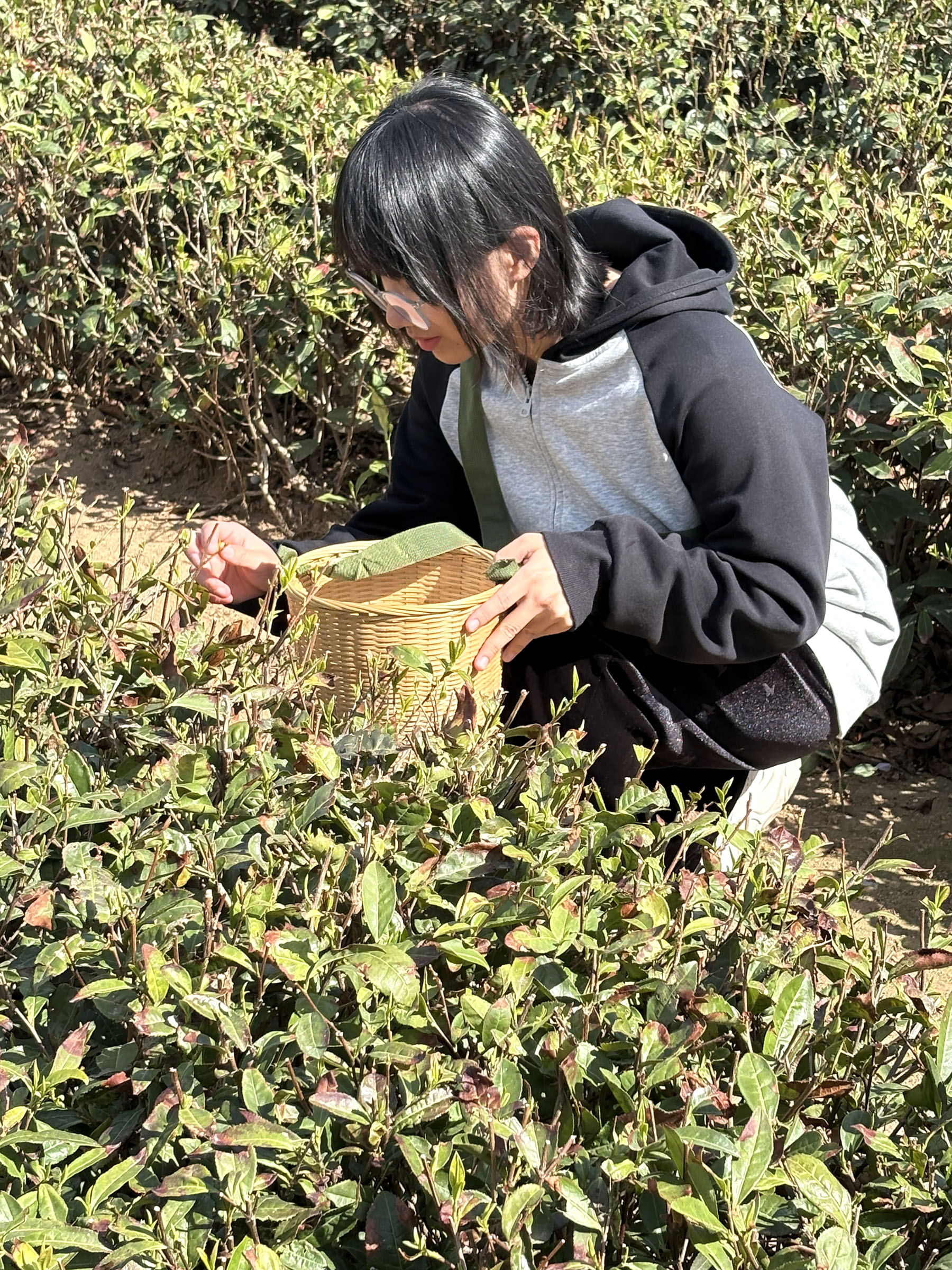
Among these students is 19-year-old Huang Hanbing, an accounting major at Ocean University of China in Shandong province. For her, a tea garden course during her first year left a lasting impression.
Carrying a small bamboo basket, Huang began her first lesson by picking tea leaves.
She soon realized that harvesting tea requires patience, a sharp eye, and precision because the leaves must be picked at just the right time to preserve their quality. When she finally plucked the perfect leaf, she instinctively brought it to her nose to appreciate its fresh, earthy fragrance.
"In that moment, the leaf felt like more than just a product," she said. "It embodied both nature and human effort. What we'd learned in textbooks — that labor creates value — suddenly felt real."
Throughout the semester, students follow the entire tea production process — from tending the plants and picking the leaves to processing and brewing the tea. Instructors include experienced workers from local tea enterprises as well as staff from the university's own tea garden.
For their final assignment, students submit both a written report and a jar of tea they've made themselves.
Though seemingly unrelated to her accounting major, Huang believes these courses help young people like her "become more well-rounded individuals".
"They allow us to see where every grain of rice comes from," she said."Instead of focusing solely on abstract theories, we also learn to respect the real world — a world shaped by effort and skill."
But the value of hard work isn't just about acquiring practical skills — it's also about forging connections and building a sense of community.
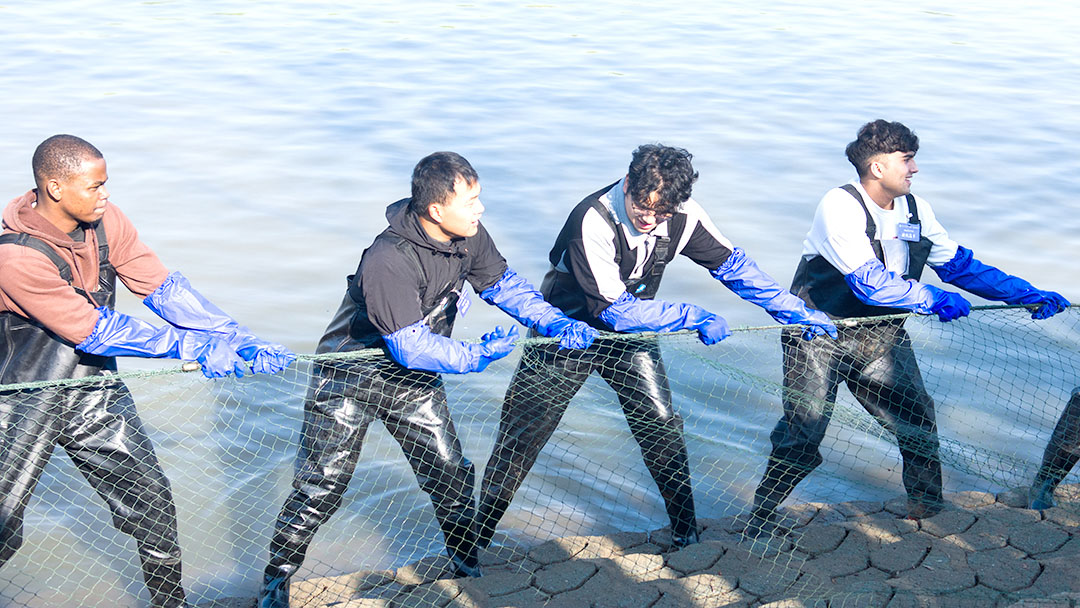
At Wuhan University of Science and Technology (WUST) in Hubei province, an annual fishing event brings students and faculty together to catch fish and share a meal. Held each winter at the university's Qinhu Lake since 2015, the tradition has been carried on for 11 years.
Lei Cheng, 24, a graduate student, first participated in 2020 and returned in 2025. He recalled that students would gather before dawn when the lake was still covered in mist. They waded into the water with fishing nets, standing in the mud and following the rhythm set by the instructors.
"The fish kept leaping, splashing water in our faces. We were exhausted, yet we laughed together," Lei said. "In our daily studies, we're often evaluated based on exams and grades. But here, I felt like I was truly contributing. I was creating something real, something that mattered."
The event attracted students from various faculties, even international students. "Although we didn't know each other, we became a team the moment we started holding the same rope," Lei said.
ALSO READ: Young leaders driving environmental change
Khan Majid, 24, from Pakistan, was one of the international students who participated. In 2025, he caught a 9.2-kilogram fish, earning the title of "fishing expert".
"The activity showed me how communication can happen so naturally," he said. "Language became less important — we used gestures, eye contact, and smiles. We worked side by side and developed our own way of communicating."
The fish were later cooked in the campus cafeteria and served for a token price of 0.1 yuan (about one cent).
"When you buy fish at a market, it's just food," Majid said. "But when you catch it yourself, it carries the taste of hard work and the bond of teamwork."
Contact the writers at mengwenjie@i21st.cn
