

Hougang, once a merchant and trade hub, continues to attract people to seek nostalgia in a bowl of soup and a sip of rice wine at dawn's first light, Wang Xin reports.
Many residents in Hougang village in Tinglin town of Shanghai's Jinshan district begin their day with a warm bowl of mutton soup and a cup of yellow rice wine.
Maoshi jiu, which means "drinking between 5 and 7 am", is an old tradition and part of the food culture of this area dating back hundreds of years.
Nestled along the waterways of Shanghai's suburbs, this market town was a hub for merchants and traders beginning in the late Ming Dynasty (1368-1644) and early Qing Dynasty (1644-1911). In the 1960s and 70s, it was still bustling with streets lined with shops, teahouses, grocery stores, oil mills, pharmacies, fabric stores, and butcher shops.
READ MORE: Expertise blooms in Singapore
With its extensive waterways, Hougang was once a busy dock where many boats would moor. Boatmen, who typically started their days before dawn, would sip rice wine to warm their bodies and gear up for the heavy physical work, especially during winter.
While such a tradition is generally shared across Zhejiang province, the rice wine is unique in Hougang for its perfect match with the local mutton soup. Zhou Huiyun, the 56-year-old owner of a local maoshi jiu restaurant, told China Daily that the local mutton features "a tender texture with rich umami, but no gamey taste".
Zhou started his business about a decade ago. He enjoys his busy days, and his restaurant is the largest of its kind in Hougang. He continues to be proud of his achievements and feels it is meaningful to carry on this long tradition, keeping the flavor of his hometown and providing a sense of belonging for the locals.
Every day begins extremely early. He wakes up at 1:30 am to prepare the soup, which needs to simmer gently for two and a half hours, ready to satisfy the first batch of customers around 4:30 am.
Zhou usually naps after lunch and then goes to the elderly local farmers' houses to pick up sheep for the next day. He spends several hours cleaning and cooking the freshest meat. When the day turns to dusk, it marks Zhou's bedtime, day after day, week after week.
"Every day is busy, but also fulfilling," says Zhou, with a smile.
Today, the locals no longer need such a special meal to power them up for work. It has gradually become a common daily meal and, furthermore, a bond connecting people rooted in this Hougang.
Gu Feng, a 45-year-old local resident who usually would have a small mutton "feast" once or twice a month, recently treated himself to a hearty bowl of mutton at Zhou's restaurant to mark his birthday.
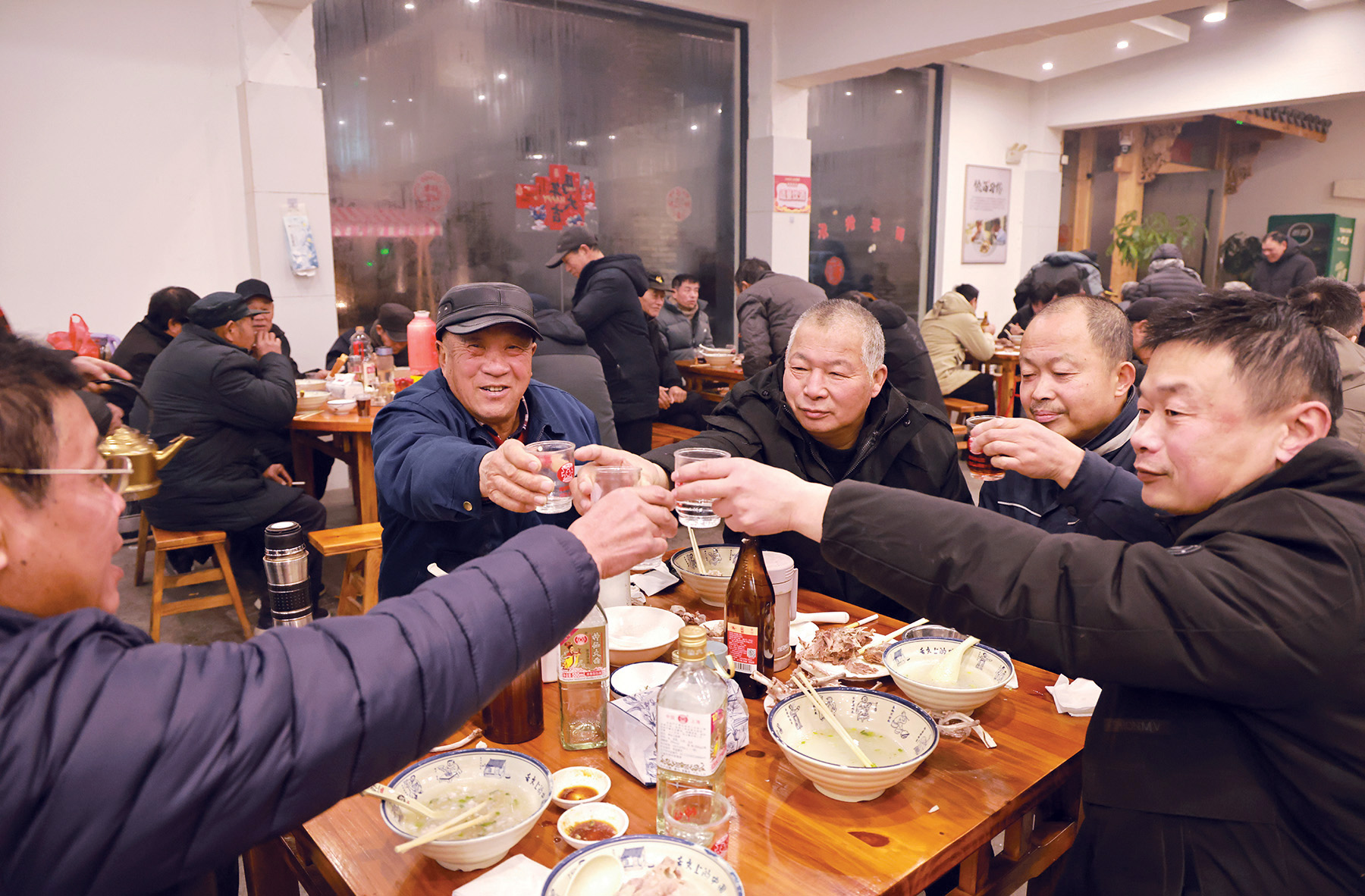
For 55-year-old Sheng Wenping, Zhou's restaurant is the first place he visits most of the week. He and his friends often enjoy the soup and slowly sip the rice wine, with casual chitchat as the appetizer.
"Mutton used to be a luxury in daily meals, but now it has become affordable as our lives get better …We are not tasting a meal, but tasting life," Sheng says, laughing.
Like Sheng, retired residents make up the majority of the restaurant's regular customers, whom Zhou regards as old friends or even family members. When Zhou scrambles to serve the full tables, the customers tend to themselves and even others. Many elderly people moving to the city center or other cities also gather from time to time at Zhou's place in search of nostalgic flavors and atmosphere.
"We know almost all the regular customers. People's relationships here are close. I treat them with sincerity, and they treat me the same. I feel busy, but I enjoy every day," says Zhou.

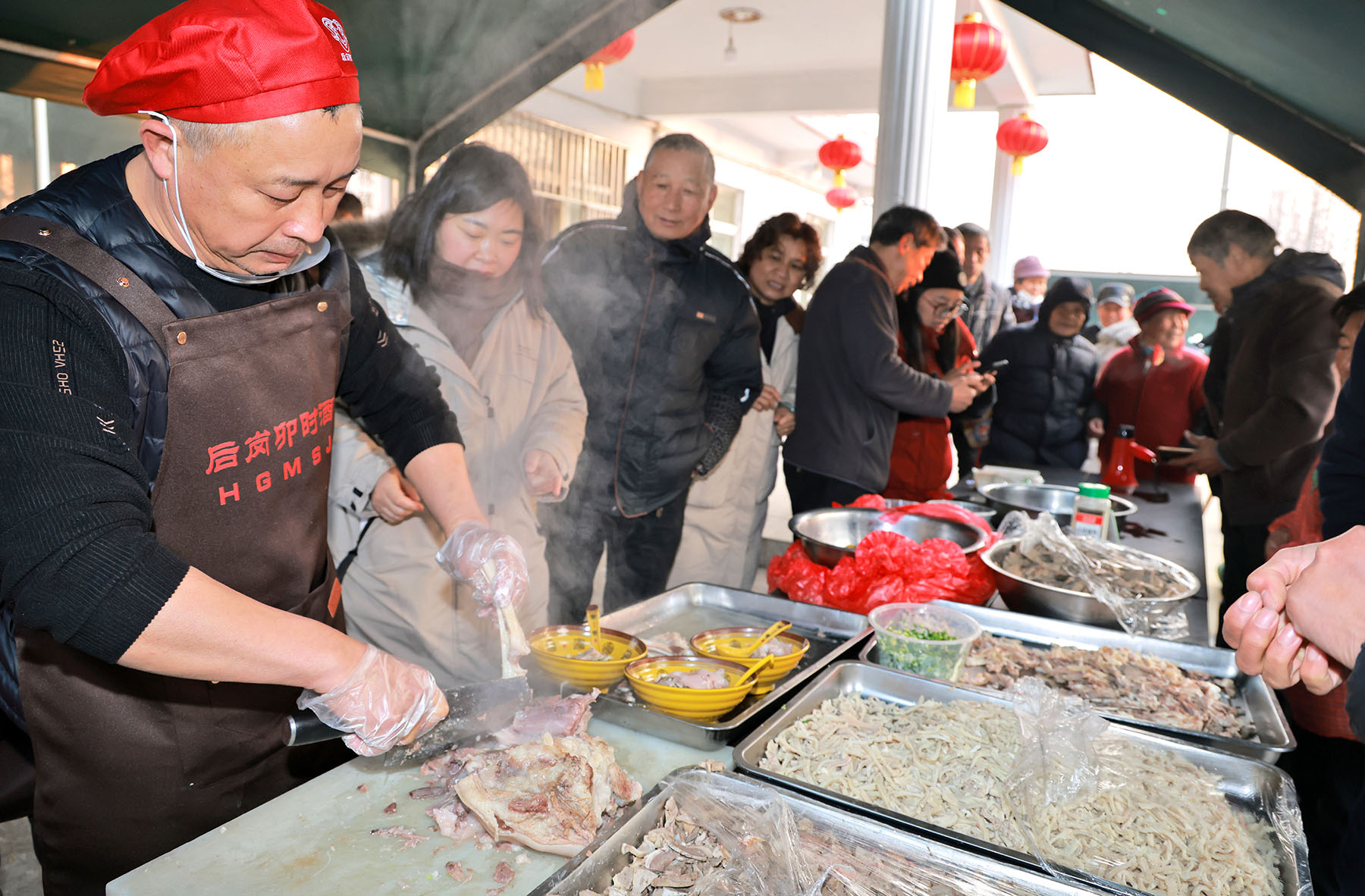
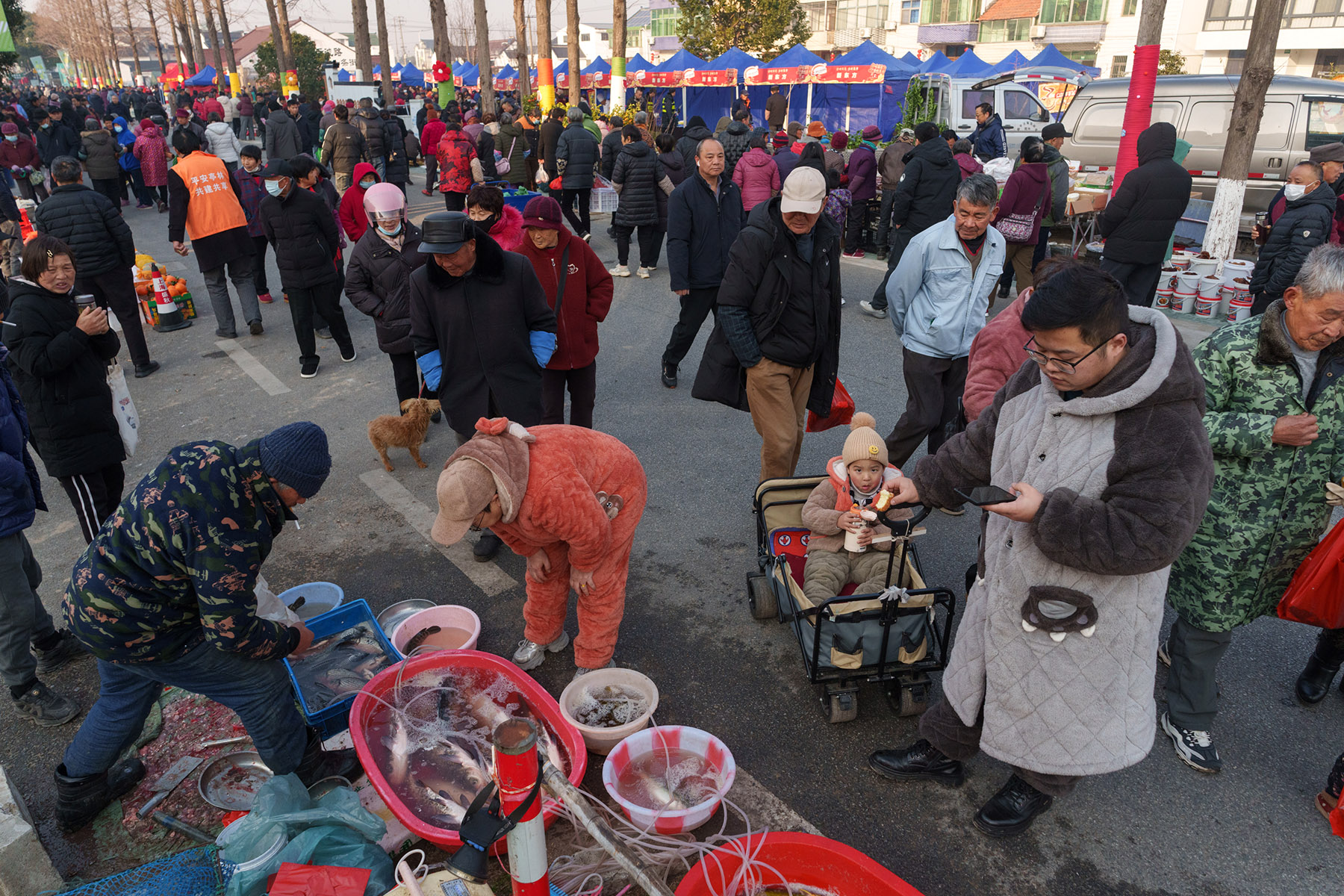
The freshness and warmth melting in each bowl of mutton soup also draws visitors from outside the town. At the Hougang country fair held on Jan 24 and 25, visitors from across the city queued at Zhou's stall at dawn's first light. Many of them saw the fair's notice on social media platforms a week before, and drove dozens of kilometers, especially for this healing sip.
Among them is Wang Yehong, 50, who excitedly brought her husband and dog to immerse themselves in the fair's lively vibe. At the fair, they bought fresh, earthy local specialties, such as meat, vegetables, snacks, strawberries and more, for the Chinese New Year holiday.
ALSO READ: The cultural master of Tinglin town
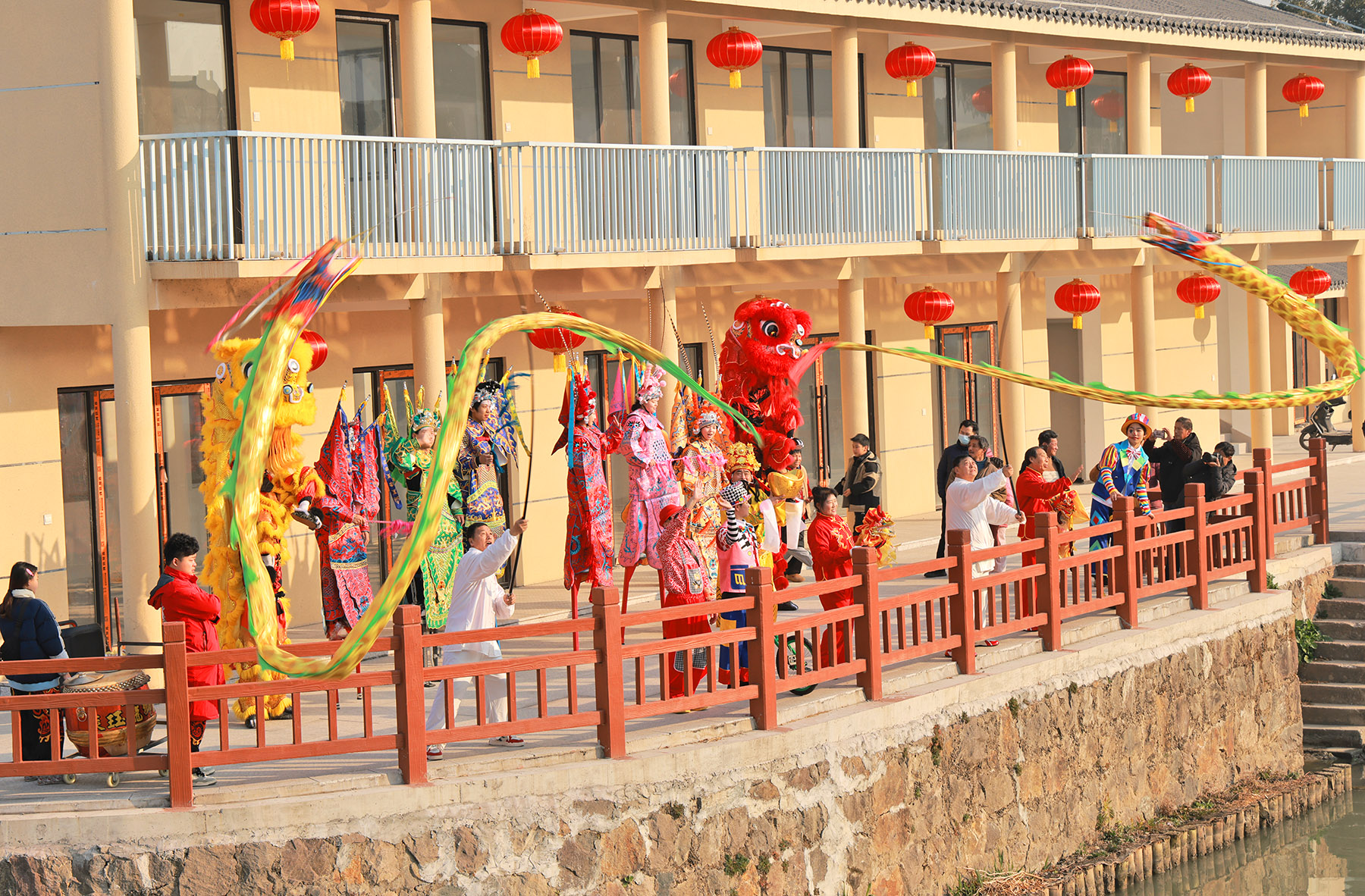
"With the country fair, we hope to revive the unique local flavors and festive atmosphere of our small town, painting a lively picture of rural vitalization in the Shanghai suburbs," says Li Shujian, deputy head of Tinglin town.
Contact the writer at wangxin2@chinadaily.com.cn
