

Renowned writer's classic inspires a new version as a dance drama that focuses on the fearless strength of the protagonist, rather than as a tragic character, Chen Nan reports.
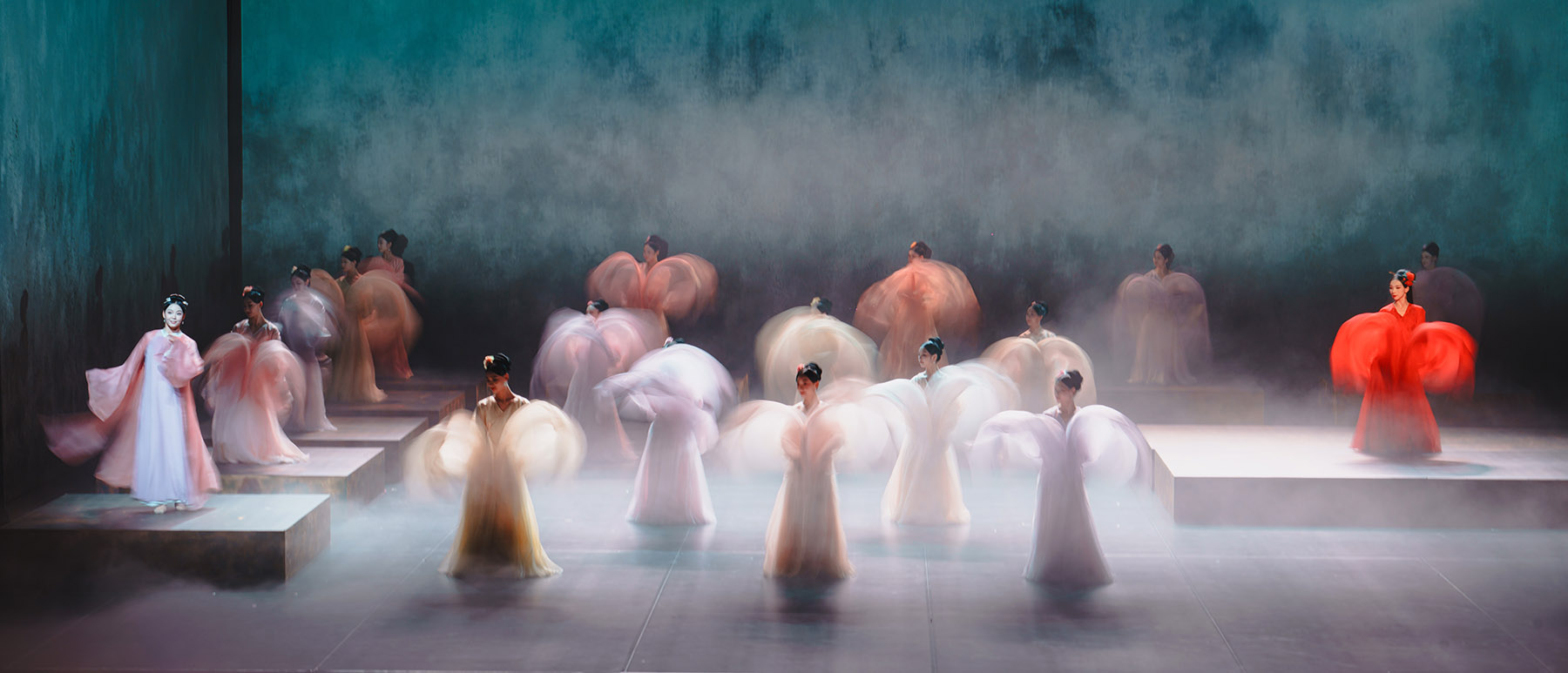
"Love begins without reason, and once begun, runs deep; The living may die for it; the dead may live again."
Four centuries ago, Ming Dynasty (1368-1644) playwright Tang Xianzu wrote these lines into his classic play The Peony Pavilion, giving Chinese literature one of its most feverish declarations of emotion — a love so intense it overturns life and death.
On a winter night in Beijing, that love story returned. Inside the theater, the stage did something unexpected: It stretched forward, a mirrored platform cutting through the darkness and extending straight into the audience, as if the pavilion itself had stepped off the page and come looking for an audience.
This is the set of Dream in Peony Pavilion, the latest dance drama co-directed and choreographed by Li Xing and Huang Jiayuan.
READ MORE: Documentary gives classic work a modern interpretation
After finishing his acclaimed dance drama A Dream of Red Mansions, adapted from the novel of the same title by Qing Dynasty (1644-1911) novelist Cao Xueqin, which premiered in 2021, Li told himself he needed distance.
"I actually thought, 'don't do another classical adaptation so fast'," he says.
He deliberately immersed himself in contemporary writing and realist subjects, searching for something grounded in the present.
Then, almost by accident, The Peony Pavilion found him.
"One day I reread interpretations of the Dream Interrupted scene and listened to some Kunqu Opera music," he recalls. "Suddenly, I felt something very strange. That scene about young love — it wasn't just romantic. It was full of life force.
"That's when I realized we shouldn't treat The Peony Pavilion as an old classical story. It's extremely contemporary," he adds.
That recognition, he says, felt like a creative impulse strong enough to "bring a flood".
"I found my point of entry. And I knew — I have to make The Peony Pavilion," he says.
The creative team spent nearly 20 months developing the production. Rather than faithfully staging Tang's script, Li made bold cuts. The story is distilled to six essential figures: Du Liniang, Liu Mengmei, Chunxiang, the Flower Goddess, Chen Zuiliang, and the Judge.
The focus is sharper now: a young woman's awakening; and her decision to love at will.
"We weakened the historical conflicts with feudal society," Li says."That's background. What matters more today is the individual — the passion for life, the desire to be free."
In other words, this isn't just a love story. It's about existence itself.
In the story, Du Liniang, a beautiful young woman who lived in a time when women were often confined by rigid expectations of virtue, family duty, and submission to social norms, falls in love with Liu Mengmei, a handsome scholar she meets in a dream.
After waking, her longing for him becomes so overwhelming that she dies from unrequited passion. In the underworld, Du persuades the Judge to grant her permission to return as a ghost so she can find him. After locating him at the temple where she is buried, their love affair rekindles. Liu's love is so powerful that when he opens her coffin, she comes back to life, and they live happily ever after.
Huang Huihui, one of the dancers portraying Du Liniang, says that the young woman isn't tragic. She's fearless: "What stayed with me most was her bravery and her determination, and the awakening of her self-awareness as a woman." To Huang, Du Liniang is not merely a young lady yearning for love inside the confines of a noble household. She is someone who gradually comes to recognize her desire, her will, and ultimately, her identity.
"People see it as a love story," she says. "But for me, it's also about learning to cherish yourself."
For dancer Wang Shengxi, the character Liu is not a fragile, romanticized scholar, but an ordinary young man driven by extraordinary sincerity. "I was drawn first to Tang Xianzu's dreamlike poetry and then focused on translating the character's inner world through the body," the dancer says.
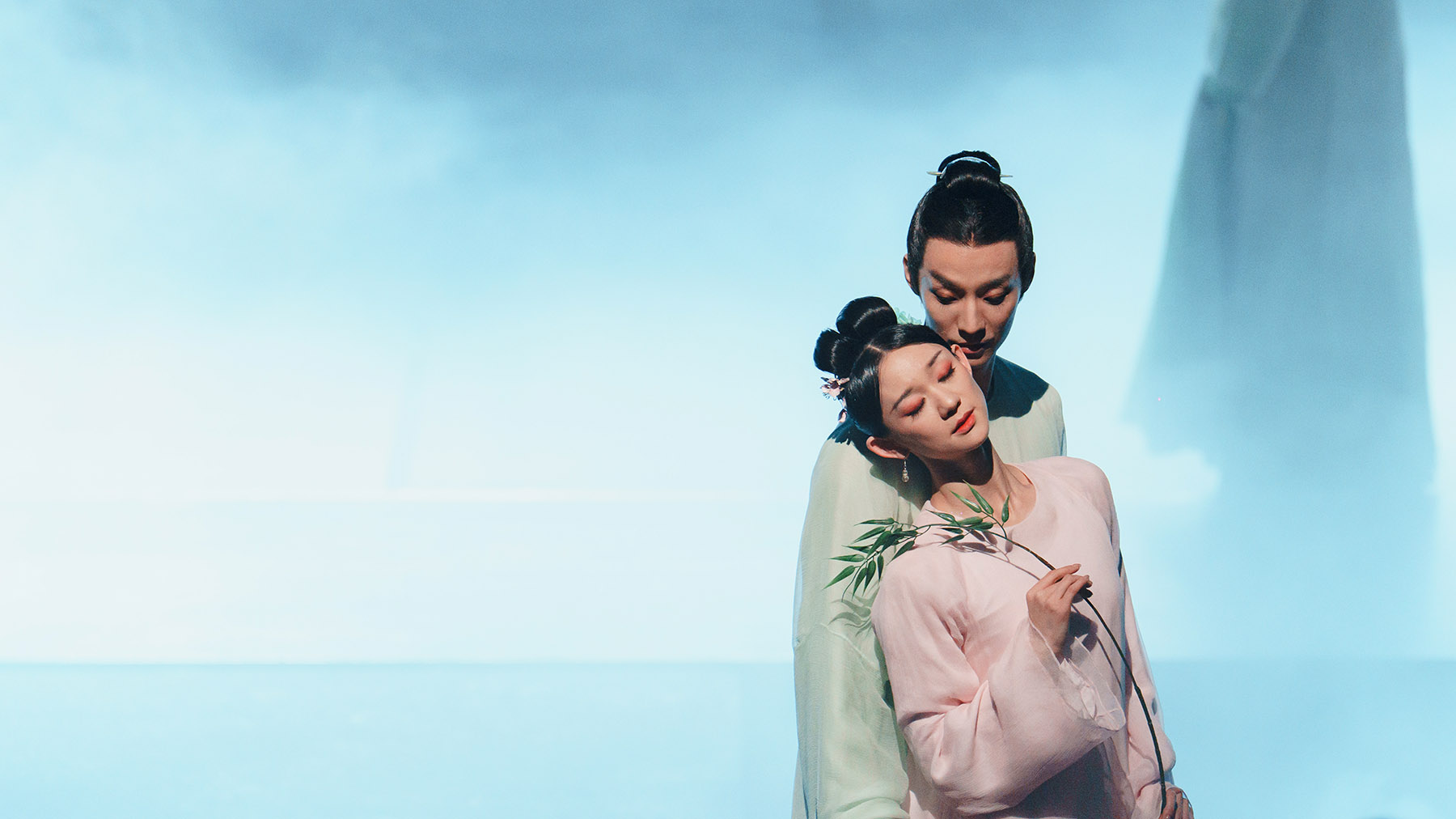
He built Liu's literati temperament from subtle details — restrained posture, measured steps, a quiet gaze — before revealing the courage beneath the calm. "Hesitant yet steadfast, this Liu dares to defy fate and even descend into the underworld for love," Wang says.
Playing Chunxiang, Du's devoted maid, is dancer Ma Chi. "It's a process of gradually realizing the bond with Du through rehearsal after rehearsal, performance after performance."
Initially, she saw Chunxiang as simply lively and cheerful, but over time, she added depth: "The emotional expression between Du and me ... was gradually cultivated and felt."
Sitting backstage before the premiere on May 30, 2025, is a moment that stands out. Ma recalls, "I felt like I was in a daze that, finally, I'm going to meet the audience. The whole process is like a plant you have been carefully nurturing."
In 2026, the dance drama continues touring at home and abroad, including the Hong Kong Arts Festival in March.
Li hopes the show carries something distinctly Eastern with it — a quietness, a restraint, a poetic density.
"It's different from Western classics," he says. "There's an inner flavor, a kind of controlled beauty that belongs to Chinese culture."
But he resists grand claims about it being a cultural export. Instead, he offers a gentler metaphor.
"Every production is just a seed planted in a dancer's heart, or in an audience member's heart," he says."Maybe it becomes love for contemporary art, maybe for classical literature. We don't know.
"But once the seed is planted, it will grow," he says.
Though classical literature has become one of his signatures, Li doesn't see himself as a "period" choreographer. His artistic life runs on two parallel tracks.
One is literary dance dramas like Dream in Peony Pavilion and A Dream of Red Mansions, in which he searches for the contemporary pulse within old texts.
The other is what he calls his "urban dance theater series". Works like The Hotel and The Station, which take place in modern architectural spaces — transient places where strangers brush past each other, carrying private emotions.
"The most important thing," he says, "is truth in people."
ALSO READ: The art of taking China to the world
In September and October 2025, the Global Masters' Showcase brought together the finest international creations and the strength of 24 outstanding Chinese dancers. The project, touring Beijing, Shanghai and Guangzhou, Guangdong province, staged three dance works: I Wonder Where the Dreams I Don't Remember Go, Yoann Bourgeois and Marie Bourgeois' collaborative work with Nederlands Dans Theater 1(NDT1); Cacti, a representative work by Alexander Ekman; and Minus 16 by Ohad Naharin.
"The experience opened a whole new world to me as a dancer," recalls Huang, whose participation in the project allowed her to experience contemporary dance for the first time.
"I grew up training in classical Chinese dance, and I have been dedicated to portraying different roles. But with this project, I explored myself with lots of impromptu movements, which was a process of self-discovery as a dancer," adds Wang.
Contact the writer at chennan@chinadaily.com.cn
