

US university's two-week trip across China opens eyes to fresh farming methods and ideas
When Cornell University student Abbie Jobe sat down for breakfast with her host family in Hebei province in January, she discovered that the peanuts and sweet potatoes on the table were grown by the family and shared with guests as part of everyday life.
"They gave us a lot of insight into how they practice subsistence farming and financially keep themselves stable," said Jobe, a senior majoring in agricultural sciences at Cornell in New York City.
Born and raised in New York, with family roots in Gambia in Africa, Jobe said the experience offered a perspective to classroom learning.
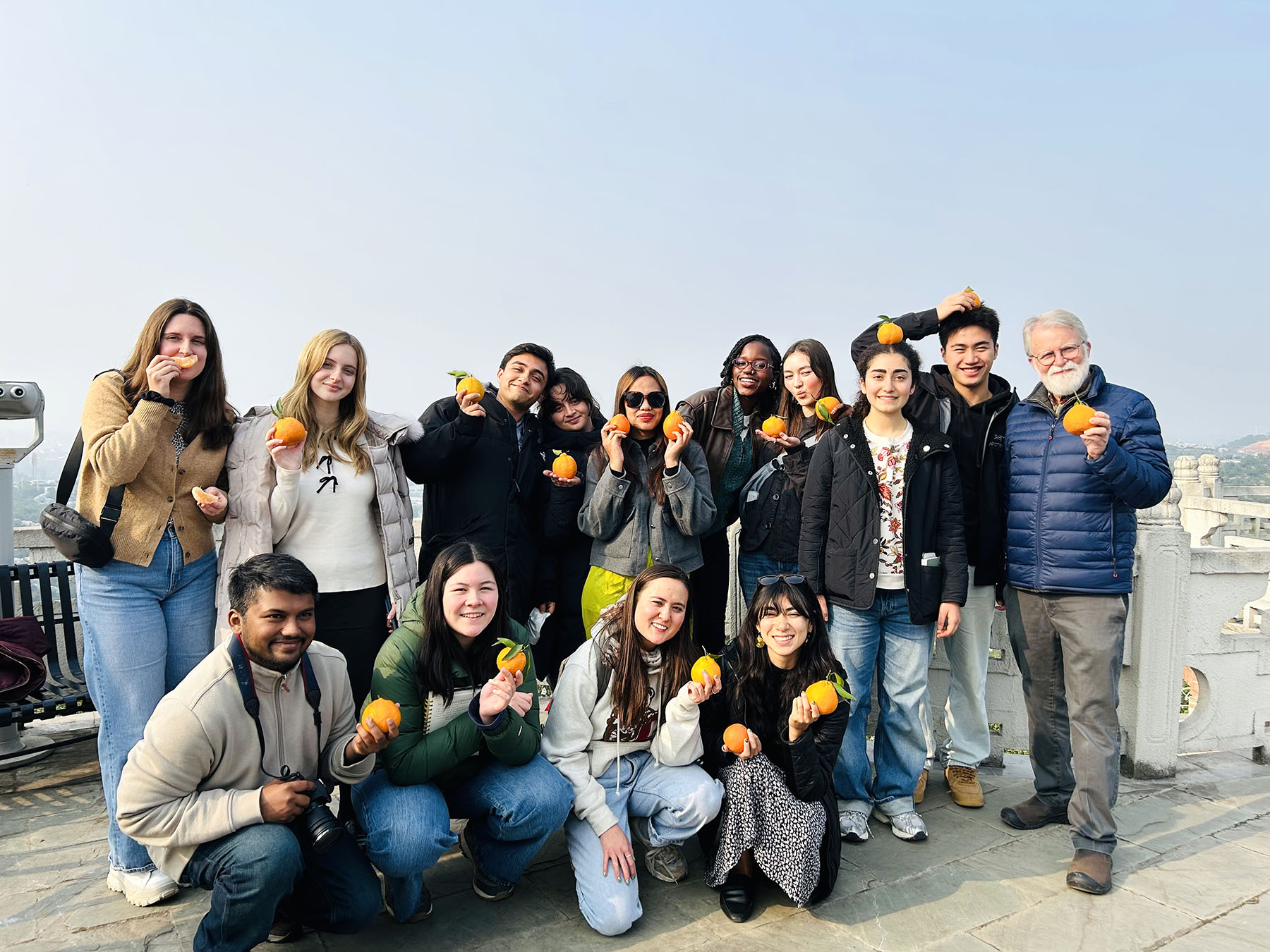
For Jobe and about a dozen fellow students and faculty members from Cornell, a two-week study trip across Beijing, Hebei and Sichuan provinces offered an immersive window into China's agricultural development and rural vitalization.
In Sanggang village, located in a mountainous area of Hebei's Yixian county, the students lived with local families, shared meals, observed farm work, and interviewed residents. Though only for three days, many said the experience revealed a side of China rarely seen in textbooks and news headlines.
Jobe's host family operates a small store near their home, and the father also works as a contract tiler. He returns to the community to share his skills with others who want to build their own houses.
To Jobe, this mutual support defines rural life in China. "The real essence of a rural livelihood is taking what you know and helping your neighbors grow," she said, contrasting it with what she described as a more "individualistic" approach in the US. "Here, people think about their neighbors. If they live a better life, you do too," she said.
That collective approach was highlighted in lectures by Ye Jingzhong, a professor at China Agricultural University, who has led research and fieldwork in Yixian for more than three decades. His team's work began in the late 1990s, when it supported basic infrastructure projects such as water supply and road construction.
After 2010, the team introduced the concept of "nested markets", reconnecting urban consumers directly with smallholder farmers. The program helped increase farmers' incomes while preserving small-scale agriculture and later drew national attention as an early form of consumption-based poverty alleviation.
Dallas Selle, a master's student in global development at Cornell, said the lecture and observations helped her better understand China's rural policies. "Land reform was the foundation," she said.
Giving rural villagers land was essential for sustaining their livelihoods. Then infrastructure created the basis for everything else, including culture, nested markets, and long-term development, she said.
China's approach differs from the US. "There's a stronger focus here on lifting entire communities together, starting from lower-income villages," she said.
When interviewing local residents, Gio Rodriguez, a senior studying global development, focused on the movement of rural labor. Rodriguez said he was struck by the outward migration pattern from the village and the gender dynamics that accompanied it. In the household he visited, the male of the family traveled to Beijing for months at a time for work, leaving his wife to manage affairs on her own.
Coming from a Mexican background, he said such an arrangement would often raise safety concerns, as women living alone for extended periods can be more vulnerable in Mexico. Observing how the family in the village navigated these dynamics offered him a different angle on how rural households adapt and maintain stability amid labor migration.
"This kind of rural-to-urban flow exists in both China and Latin America, though the cultural contexts differ," he said, adding that solutions like the Sanggang's nested market could offer insights beyond China.
Nor Anisa, a master's student in global development at Cornell University, said she would like to apply the participatory approaches she learned in Sanggang village when she returned to her hometown in Indonesia.
Personal connection
For Ariela Asllani, a public policy major who grew up on a farm in Albania before immigrating to the US, the trip was both eye-opening and personal.
"Farmers serve as the backbone of any nation," she said. "I wanted to see how China connects farms across provinces to urban cities."
After underestimating the winter cold in northern China, she fell ill during her homestay in the village. Volunteers from CAU helped arrange transport to a hospital in the neighboring county at midnight, where she received immediate treatment.
"It was unfortunate that I got sick, but it was incredibly warming to see how hospitable everyone was. I felt genuinely cared for and very safe," she said.
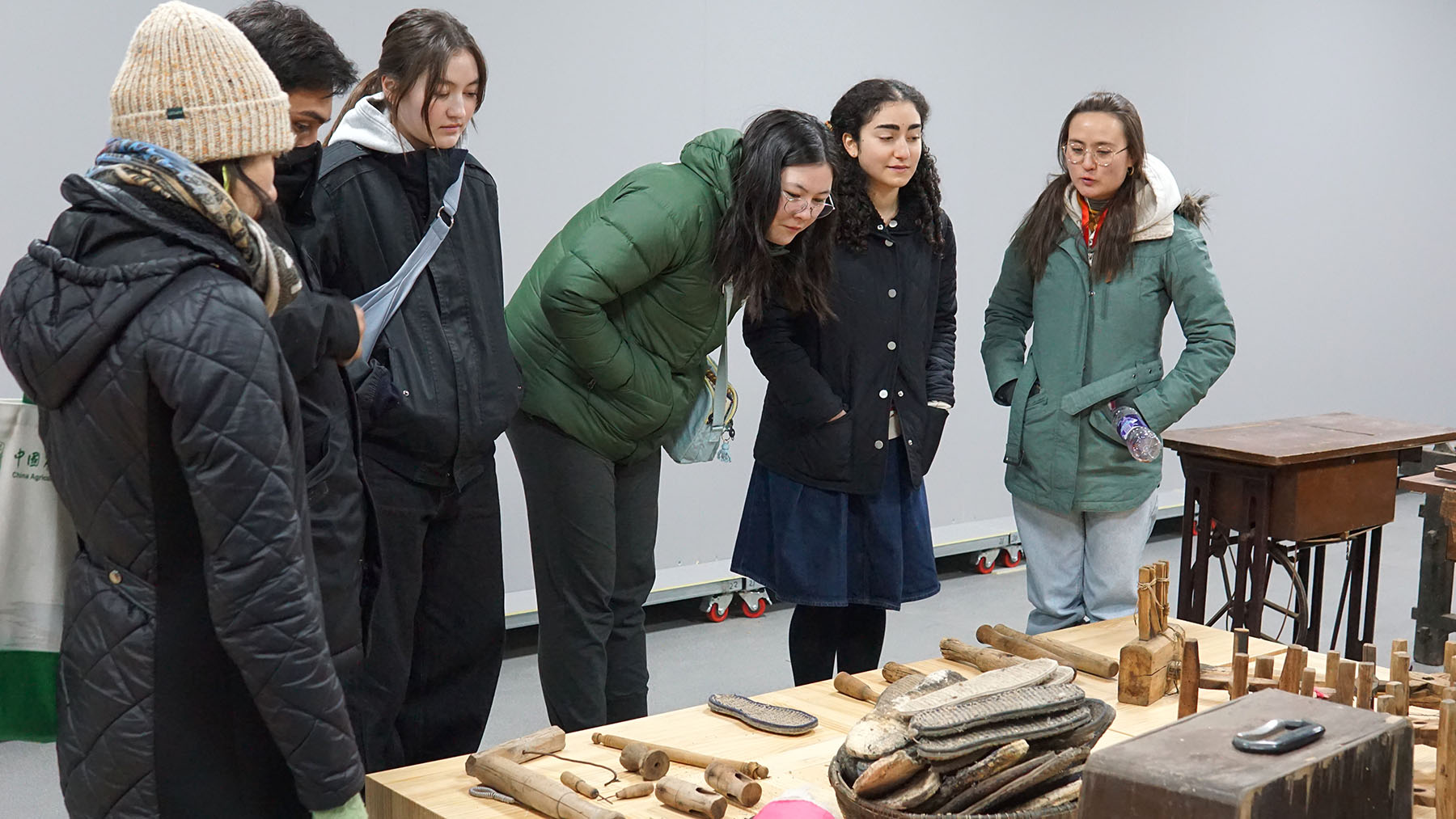
The study trip also took the group to Sichuan, where they explored bamboo-based industries in Qingshen county. At a bamboo industrial park, students learned how bamboo is processed into paper products and other materials through low-carbon and circular production methods. Staff explained how enterprises work with local farmers to raise incomes while promoting sustainable bamboo cultivation.
Elisa Benham, a master's student from the United Kingdom, said the visit challenged her assumptions.
"Before coming here, I expected to see environmental problems, thinking that growing agricultural production and supporting development would lead to more pollution," she said.
But instead, many sustainable practices have already been implemented in rural China, she said."Farmers are protecting and even enhancing the environment, reusing materials, and practicing resource conservation," Benham said.
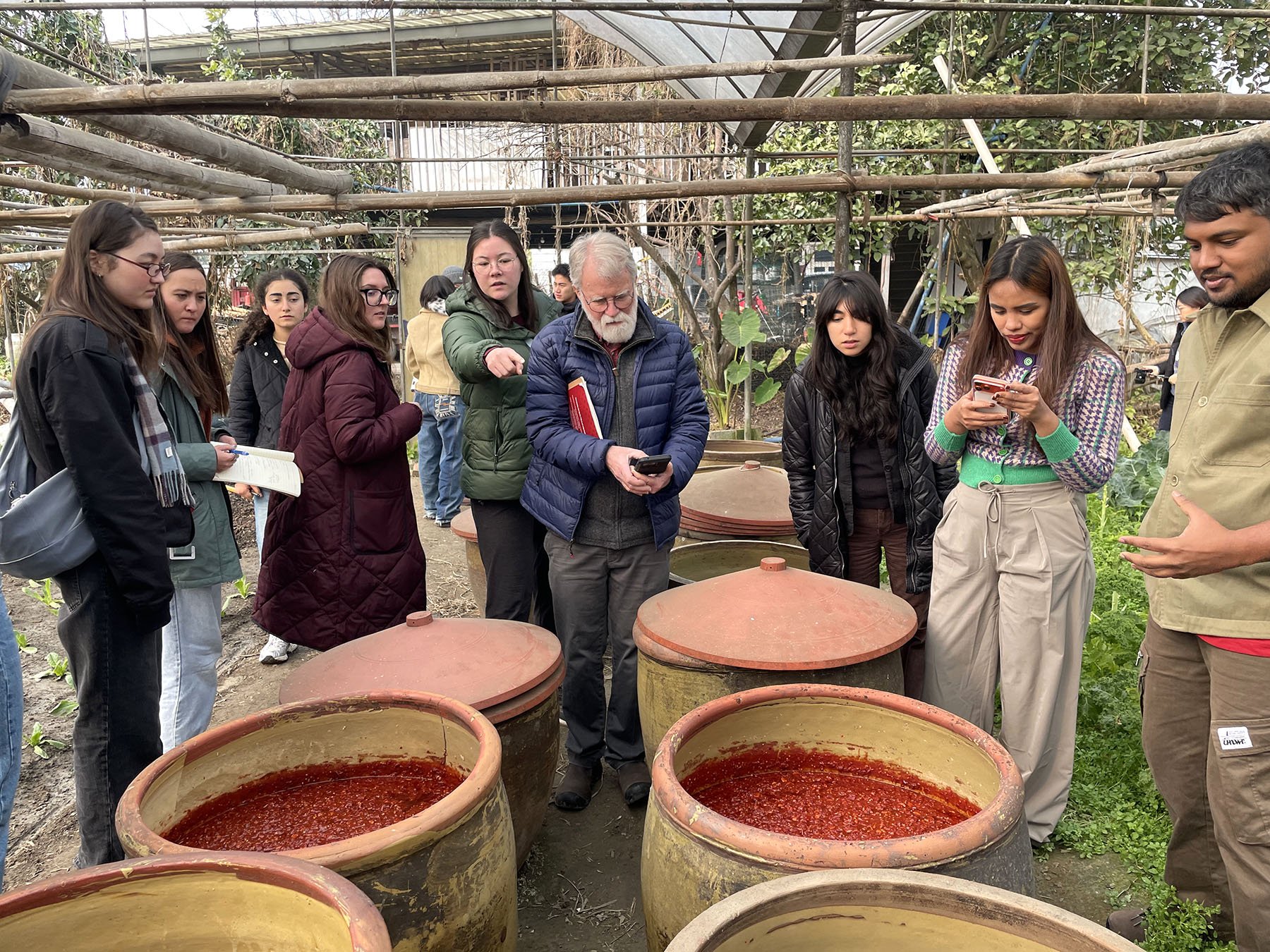
She observed smallholder farmers using drip irrigation and minimizing chemical inputs while selling directly to urban consumers seeking organic produce. Similar practices were evident on agroecological farms near Dujiangyan in Sichuan, where farmers used no fertilizers or pesticides.
Embracing innovation
The study trip was jointly organized by Cornell University and CAU, two of the world's leading agricultural institutions. The exchange program began online in 2021, with weekly virtual classes linking students from the two universities in real time. Faculty members from both institutions co-taught courses on food system innovation, while mixed student teams worked on practical projects.
Terry Tucker, a professor of agricultural development at Cornell and one of the initiators, said the goal was not necessarily innovation itself, but the process of learning to work transnationally across cultures and systems. Building on that foundation, Cornell launched a course on agrarian change in China last autumn, with the recent field trip forming a key part of the curriculum.
The experience has been enriching for both students and faculty members, said Tucker, who is also a part-time farmer in Pennsylvania. "While we often focus on differences, we share many common interests — especially around sustainability and climate change," he said, adding that the trip deepened his understanding of how agriculture intersects with culture and history.
"What impressed me most is how people here honor tradition while embracing innovation. Even small farmers skillfully use digital tools and apps to connect with markets and improve their practices," he said.
As China and the US are two major players in agriculture, food systems, and climate change, both sides need to figure out how to work collaboratively and sustain joint research, he added.
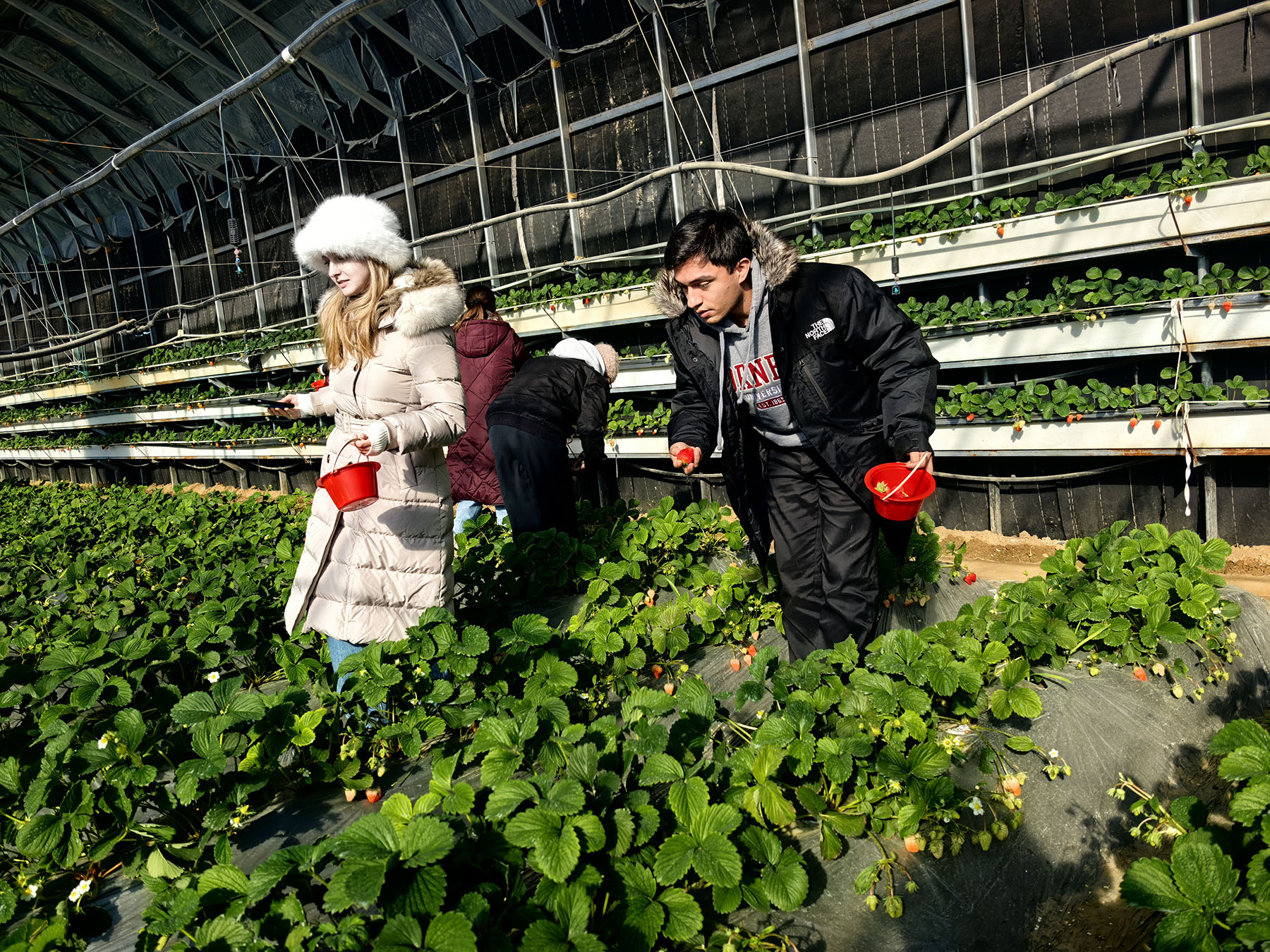
Liu Juan, an associate professor from CAU's College of Humanities and Development Studies and the main designer and coordinator of the study trip, said she aimed to show China's depth and diversity, especially the contrasts between north and south, cities and villages, tradition and modernity. In Beijing, students visited the Nongguangli market, and later headquarters of the delivery and lifestyle services company Meituan, seeing firsthand how fresh produce moves from rural areas to urban consumers through digital platforms. They also went deep into villages in Hebei and Sichuan, exploring the real and living China, she said.
One of the most unexpected highlights, Liu recalled, was the visit to a neighborhood wet market in the capital. "I thought it would be routine. But the US students were incredibly excited. What they wanted to see most was how Chinese people buy vegetables and live their daily lives," Liu said.
On the subway, students asked Liu to switch her Alipay app to English. "I showed them transportation, utility payments, government services, finance, even charity functions. They were stunned by how integrated everything was," she said.
Bharath Chandran, a master's student from India, said he was impressed by the integration of technology. "Our homestay farmer had been using mobile payments for years," he said. "It shows how digital tools can positively shape rural life."
In Sichuan's Qingshen county, the group visited a township government service center, where dozens of administrative tasks could be handled through online-offline integrated terminals. "That was another moment of real surprise for them,"Liu said, adding that it showed how digital governance reaches even the grassroots level.
Hu Rong, a 2025 master's student at CAU majoring in sociology and development, accompanied the travel group as a volunteer. Hu said she was surprised to find that the students from the US were fascinated by ordinary things such as how the Chinese shop, cook, or order food deliveries.
"I saw how much these young Americans appreciated village life. They were willing to dig into it and saw its value," Hu said, adding that it's important to build bridges of communication to foster mutual understanding.
Professor Ye said that unlike cultural experiences in Shanghai or Zhejiang province, places like Sanggang village made a deeper impression on the foreign students. "In one village, you can see national issues. That's the value of going deep," Ye said.
What surprised the visiting students most was China's comprehensive policy framework for agriculture, rural areas, and farmers.
"They were amazed by things like the annual No 1 central document and the scale of infrastructure investment," he said, adding that China's experience offered them a different development path to consider.
Building bridges
The field study not only deepened academic exchanges between Chinese and US universities in agriculture and rural development, but also provided international students with valuable on-the-ground experience. The program is a response to President Xi Jinping's 2023 initiative to invite 50,000 young US citizens to China for exchanges and study over the next five years. It is partly supported by the Young Envoys Scholarship program of the China Education Association for International Exchange.
Hu said observing how US students asked questions revealed different ways of thinking. "We might frame development in terms of rural vitalization, while they often bring in global climate change and sustainability perspectives," Hu said. That exchange helped both sides better understand the shared world they inhabit, she added.
Liu said such trips are powerful because they focus on reality rather than narratives. "For students from developed countries, this isn't about comparison alone, but seeing another development path to solve shared challenges," she said.
ALSO READ: Youth exchanges seen as vital to future of China-US relations
As the Cornell students returned home, many carried with them not just notes and photos, but deeper questions about China's agriculture and rural affairs.
Asllani said she is considering returning to China for a master's program through a fellowship, noting that perspectives from the West about China are complicated.
"I was nervous and didn't know what to expect when I first came here," she said.
"As I engaged with people and saw everyday life, I realized there were far more similarities than differences."
She added that the trip gave her a deep appreciation for the country, and also left her with a bittersweet feeling.
"As younger generations, through initiatives like Cornell coming to China, we can help build that relationship by sharing our real experiences when we return home and showing what life here is actually like," she said.
Wang Nasi contributed to this story.
Contact the writers at zhaoyimeng@chinadaily.com.cn
