

As more urbanites demand healthier, organic produce, renting a garden plot outside the city gains momentum for its peacefulness and sense of community
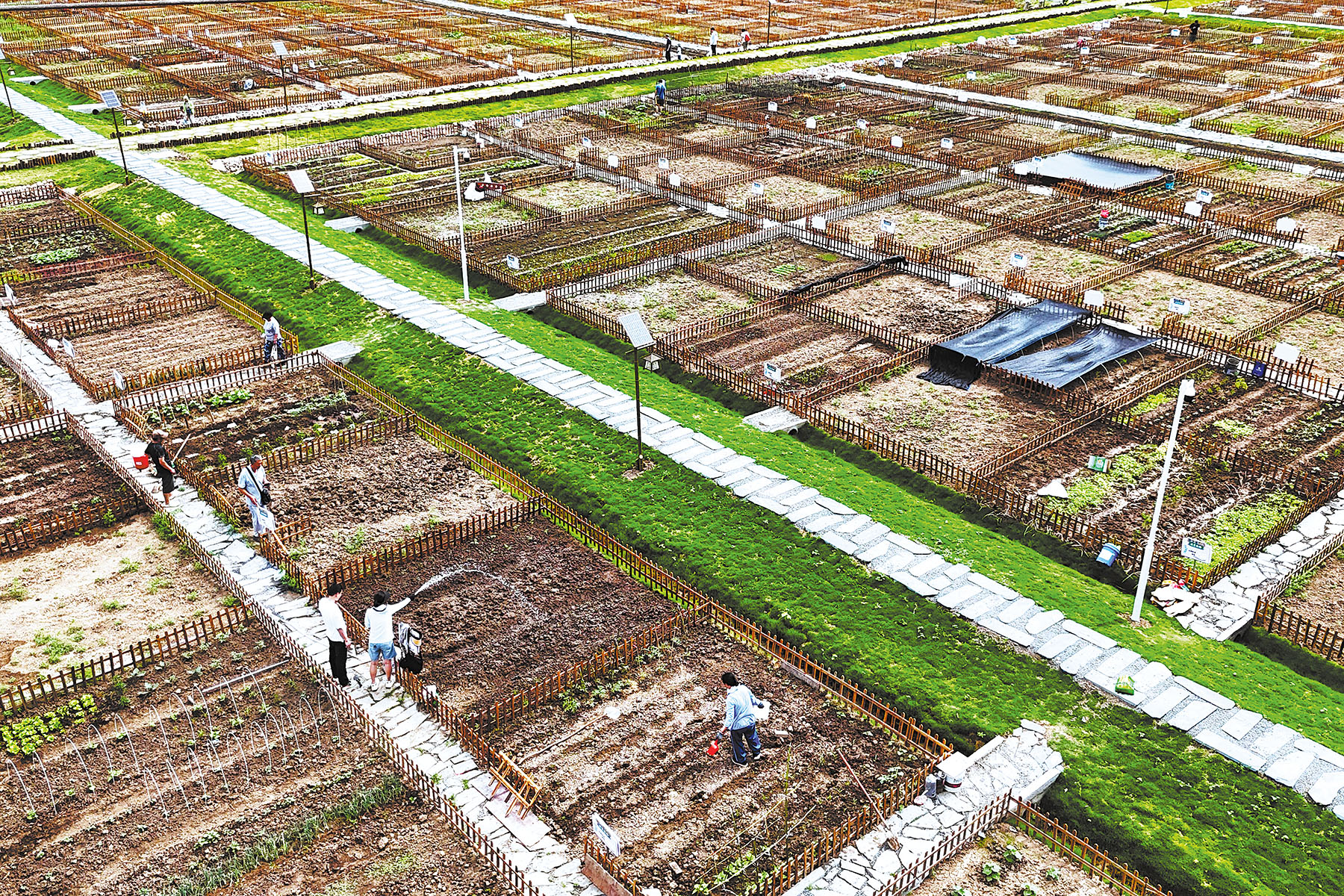
While most residents stayed warm in their heated apartments as Beijing braced for its heaviest snowfall in mid-December, Dai Wanli and her husband took their 8-year-old son to a shared vegetable garden in the Changping district.
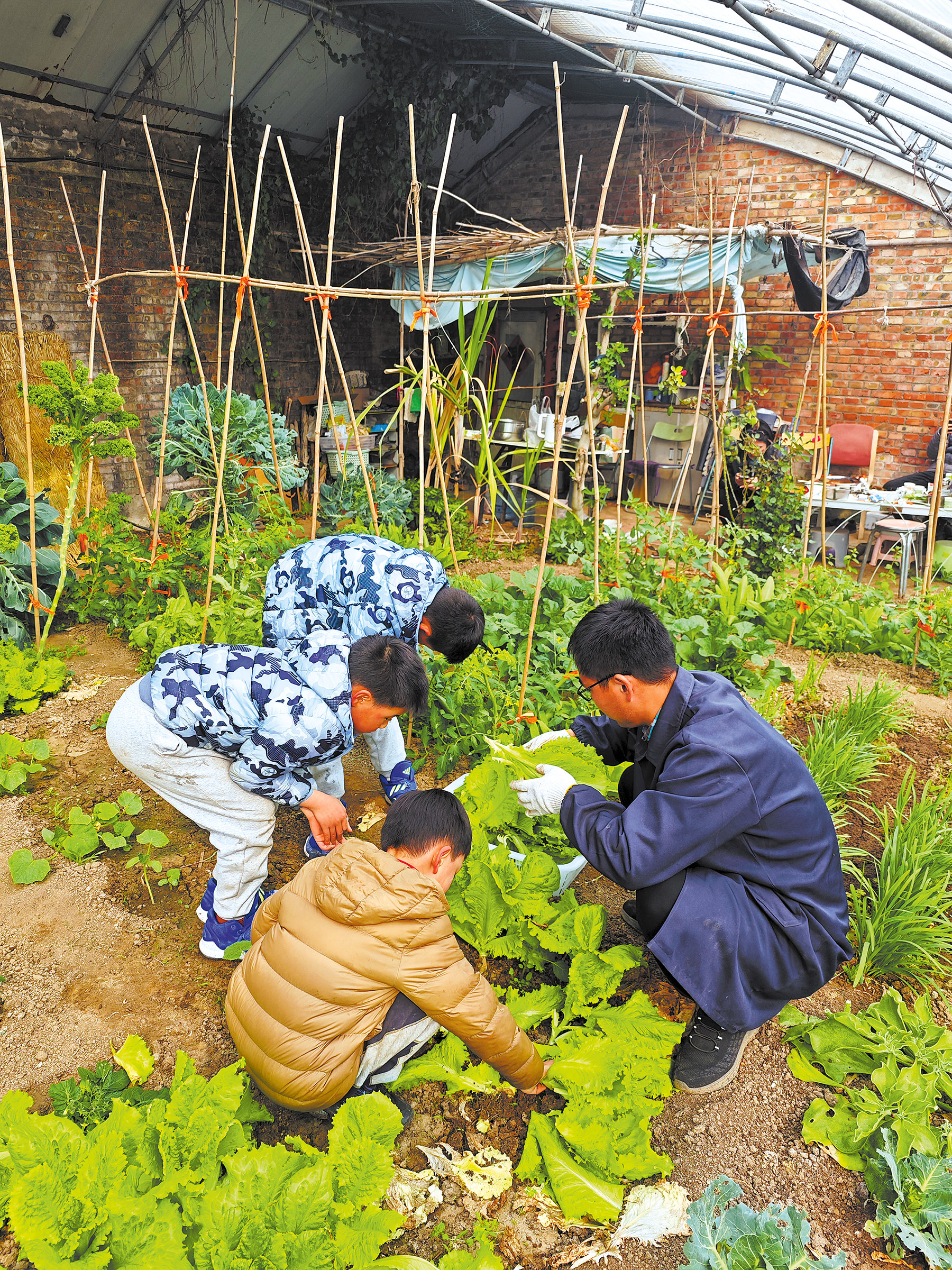
About an hour drive from their house in the capital, the family tends to a 1,000-square-meter greenhouse and surrounding plots in the northern suburb, practicing hobby farming on weekends.
Dai, a human resources manager, and her husband, who works in media, knelt in the soil, harvesting celery, radishes and broccoli. Their son followed, carrying a small basket and inspecting seedlings.
"During the week, we sit in offices, dealing with complex and intangible problems," Dai said. "Despite the physically tiring work, we feel relaxed and peaceful in the green and quiet countryside."
Dai's family is part of China's growing trend of "weekend farmers". Driven by the pursuit of better-quality food, a desire to escape work pressures, and nostalgia for rural life, urban residents are flocking to shared farms on the city's outskirts for a temporary retreat.
With a high demand for healthier foods, the couple decided to invest in a shared farm a few years ago. They started with two strips of land at a commercial farm in Daxing, south of Beijing, with an annual rent of about 16,000 yuan ($2,300).
The farm operates under a trusteeship model, where locals do the farming and tenants visit to pick produce. However, this did not satisfy Dai's husband, who grew up in rural Shandong province and had farming experience.
"We suspected they were still using chemical fertilizers to ensure the vegetables looked good for the customers. We were even unsure if the vegetables we picked were actually from 'our' plot," she said.
They moved to their current garden in Changping, sharing a larger area with three other families for 12,000 yuan per year. There are no staff to do the farm work, so the tenants do it themselves, with management providing water and electricity.
"We enjoy a deeper level of engagement than solely being consumers," Dai said, noting that the families appointed a leader to manage the agricultural calendar, bulkbuy seeds, and coordinate repairs.
Growing popularity
The rise of hobby farming is creating a unique economic interface between urban wealth and rural land. In China, where agricultural land is collectively owned and tightly regulated, urban residents are not allowed to purchase farmland. Shared vegetable gardens have emerged as a workaround that benefits everyone.
In rural villages — many of which are sparsely populated as working-age adults migrate to cities — these weekend visitors provide a much-needed injection of capital and renewed purpose.
Hu Kanping, a researcher at the China Ecological Civilization Research and Promotion Association under the Ministry of Ecology and Environment, has been both an observer and a participant in this trend for nearly two decades. He rents a plot in the Yifen land project in Nanyuan village, a rare patch of arable land just miles from downtown Beijing.
Launched in 2009, the project was designed to use fragmented farmland divided into "Yifen" plots measuring about 67 square meters, and leased to urban residents seeking hands-on farming experience.
For an annual rent averaging 3,300 yuan, tenants are responsible for every step of the farming process, from planting to harvest, with guidance from local farmers.
The village employs residents — often experienced farmers — to teach agricultural skills and help manage the plots. "The project has created jobs for local farmers and increased their incomes, while also ensuring the protection of basic farmland," Hu said. He added that soil quality has improved as urban growers tend to avoid pesticides in their food and prefer organic produce.
Farming isn't easy, whether for full-time rural farmers or part-time city dwellers. At times, the rewards are immediate, with unexpectedly abundant harvests; at others, weeks of hard work can be wiped out overnight.
Dai's family learned this lesson the hard way last winter. "Because of my husband's business travel and our home renovation, we missed the critical window for harvesting Chinese cabbage," Dai said. "When a sudden cold snap hit Beijing, and temperatures plunged, 90 percent of our cabbage froze."
Other tenants have shared similar frustrations in the project's WeChat group. Some lost their crops to heavy rain, others to drought, she added, experiencing firsthand the uncertainty of relying on the weather for food.
Hu said that although he has stuck with the program for more than a decade, tenant turnover is common. "Many people give up because they move farther away, go abroad, or travel frequently for work, making it difficult to provide regular care," he said. He noted that plots jointly leased by several households tend to be more stable, as participants can take turns tending the land.
During peak growing seasons, visits are required at least twice a week, as fruits and vegetables can quickly overripen. "The time and energy involved are considerable. Farming is hard, physically demanding work, but it is also deeply rewarding," Hu said.
Hauling fertilizer to the fields and digging storage pits are forms of aerobic exercise for him, comparable to playing ball games or swimming. "I never thought about quitting, because I truly love it," he said.
Physical labor in the fields is also restorative for the 61-year-old researcher whose weekdays are dominated by mental work. "It reflects the idea of being 'half farmer, half X' — keeping your profession while grounding your life in the soil," he added.
Strengthening ties
Beyond the pleasure of hobby farming itself, weekend farmers say shared gardens also provide a setting that strengthens parent-child relationships and family bonds.
Growing up with regular exposure to vegetable gardens, Dai said her son has developed a vocabulary and practical knowledge that many of his classmates lack. When his school curriculum covered traditional Chinese medicine, he surprised his teacher by identifying herbs growing in his father's rented plot.
To teach him the value of labor, the family devised a system of "virtual wages". The boy earns credits for watering plants or carrying tools, which he can then exchange for toys. "He is extroverted, but the farm has taught him patience. He's learned that you can't rush a plant — you have to wait," Dai said. She added that working together in the garden has also encouraged their son to take a more active role in family life.
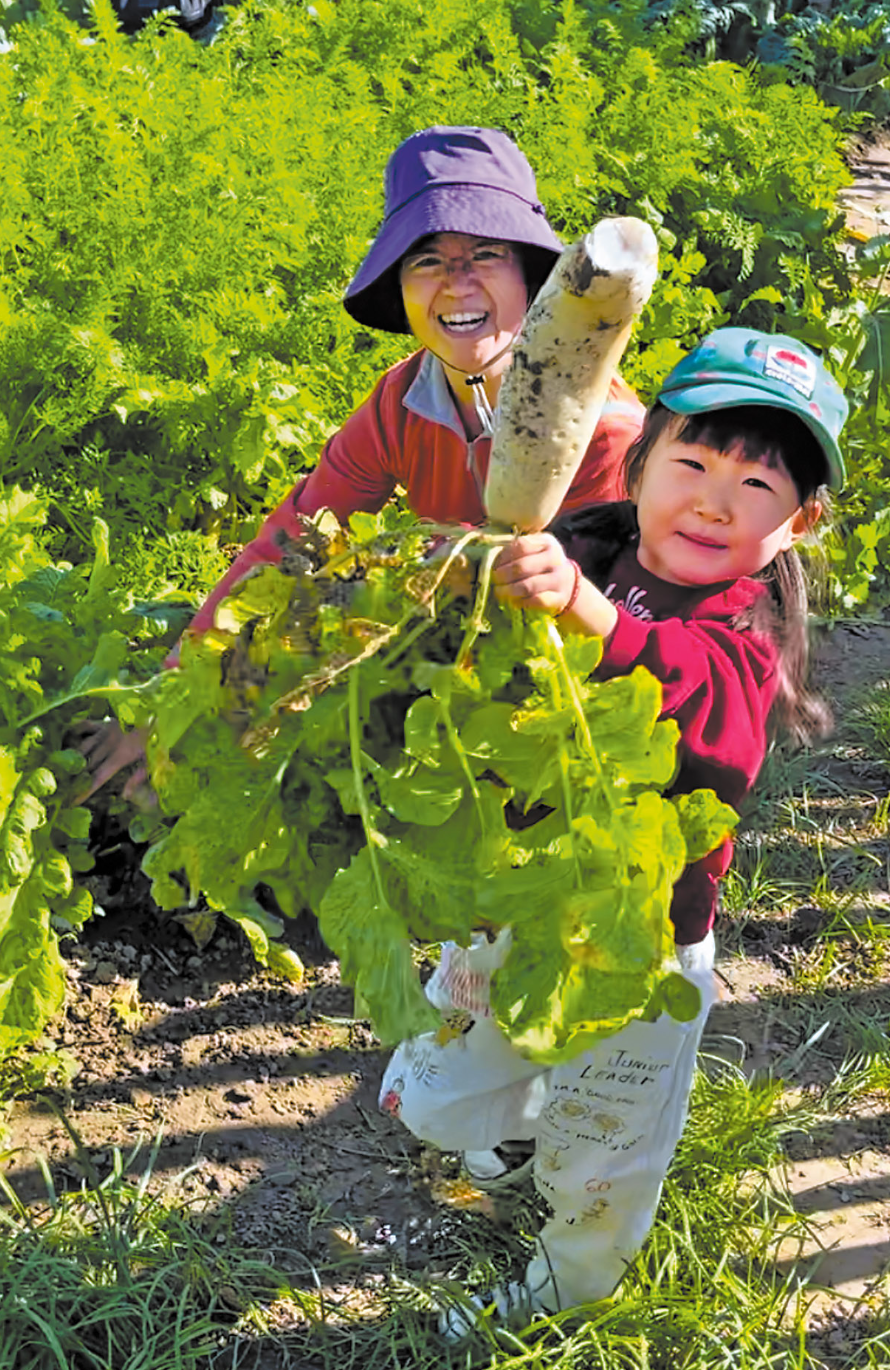
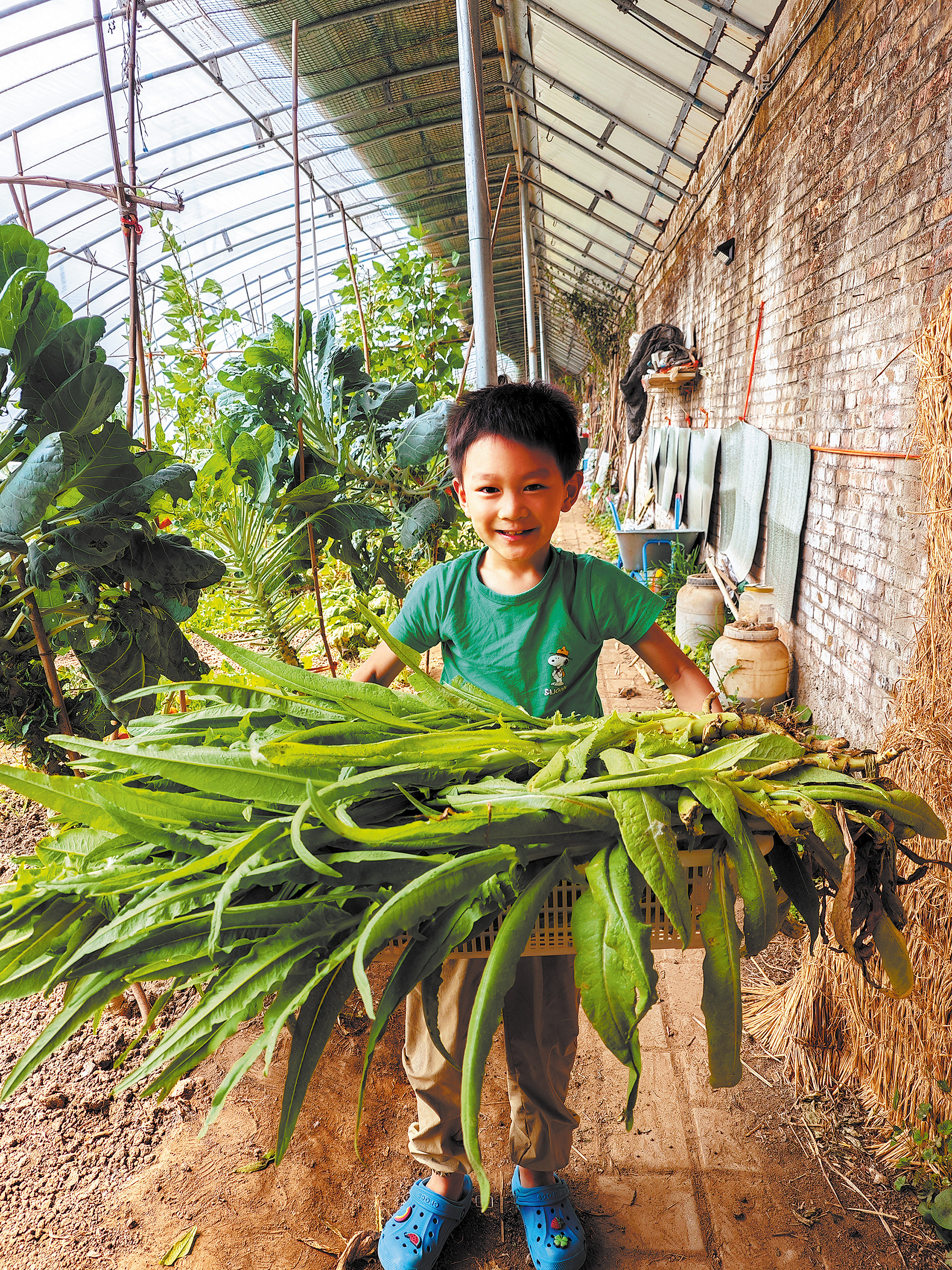
Hu has observed similar changes in Nanyuan village. "Our connection to the land is in our genes. Children are often even happier than their parents to come here and spend hours digging in the dirt," he said. The project has organized activities such as radish-pulling events and cucumber-harvesting races to engage young participants.
One of Hu's neighbors in the garden and her retired siblings gather at the plots every weekend — not only to farm, but also to reconnect as a family. "We rarely see each other on weekdays," said the neighbor, surnamed Gao. "The garden gives us a place to reunite."
Innovation is essential
As the trend gains momentum, the market is evolving, with a variety of business models emerging. Not everyone is willing to endure the backbreaking labor undertaken by families like Dai's and Hu's, particularly younger people born and raised in megacities.
Shared commercial gardens now offer tiered services tailored to busy but aspiring weekend farmers. In the suburbs of Beijing, a 33-square-meter plot can be rented for 2,980 yuan a year under a self-managed model. A half-trusteeship option, which includes watering and weeding while tenants handle the harvest themselves, costs 4,980 yuan annually. For nearly 6,000 yuan per year, full trusteeship allows the farm to manage the entire process and deliver vegetables directly to the tenant's doorstep.
Beijing resident Fan Fan said she chose the fully managed option at a shared vegetable garden in Chaoyang district, as her demanding work schedule leaves her little time even for grocery shopping. With high expectations for food quality and a preference for green, organic and healthy produce, she rents a plot and receives regular vegetable deliveries from the farm. "I hope to try a hands-on model and grow my own food after I retire," she said.
ALSO READ: Autumn school holidays a welcome break with tradition
In the short term, the experiential nature of shared gardens aligns well with consumer trends toward health, sustainability and personalized experiences, generating strong market demand, said financial commentator Zhang Xuefeng.
Despite their popularity, some industry insiders caution that the life cycle of certain shared gardens may be limited to just three years, as farming is far from simple. Once a fully managed model is adopted, they warn, it can easily become a disguised form of buying vegetables at premium prices.
"In the long run, sustainability depends on factors such as service quality, user experience and adaptability to market changes," Zhang told China City News. Relying on a single planting service is unlikely to be viable over time, he added, making continuous innovation essential for farms to survive and grow.
To diversify offerings, many shared farms have begun integrating hobby farming with cultural and educational activities. Shanghai's Yichi Garden, for example, designs courses themed around the 24 solar terms, allowing children to learn about traditional Chinese culture through hands-on agricultural experiences. The approach not only enriches the visitor experience but also generates additional income for the farm.
Contact the writers at zhaoyimeng@chinadaily.com.cn
