

Ease of living, quality services and facilities make new area attractive proposition
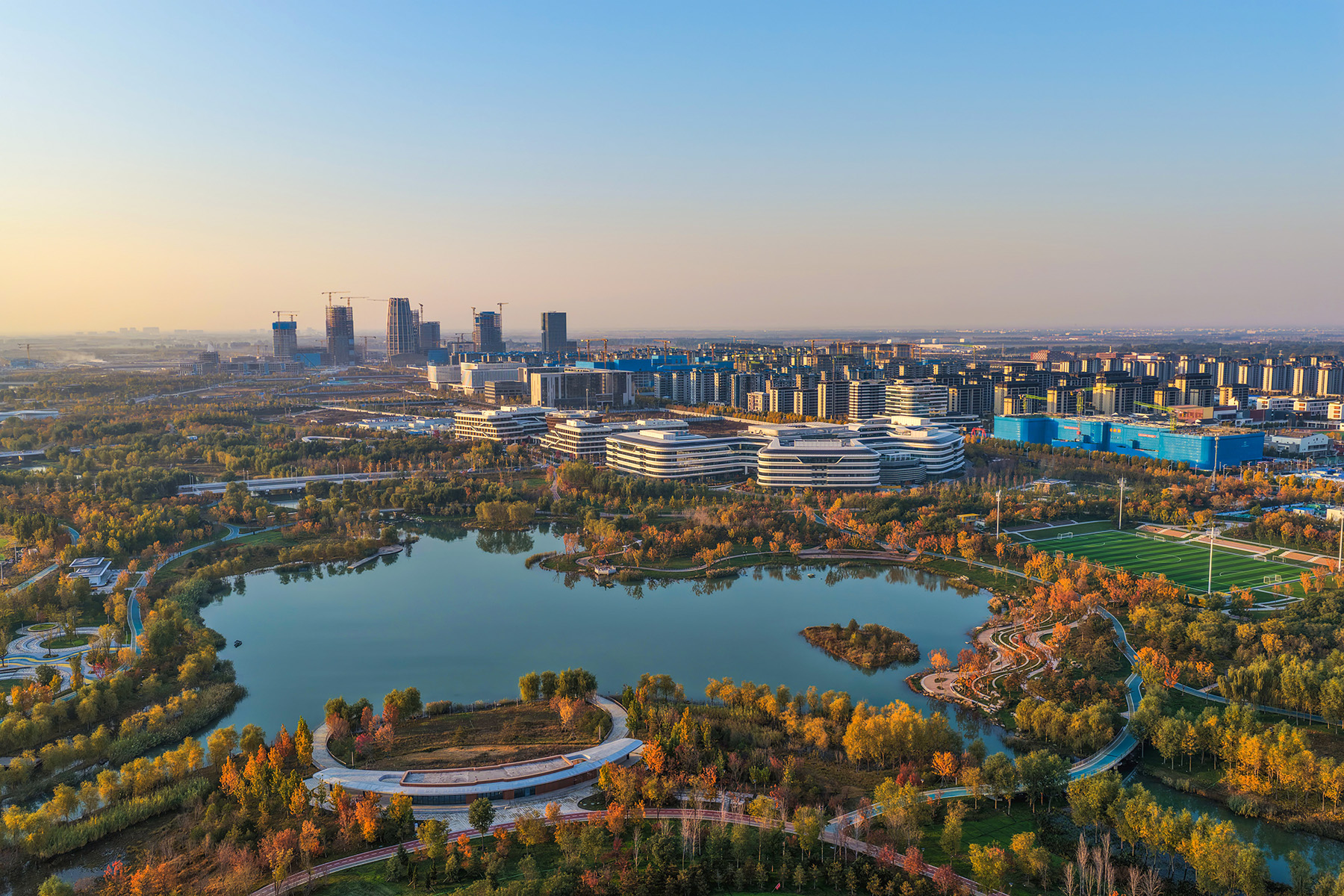
The morning sunlight slips into a 70-square-meter apartment in the Xiong'an New Area and Liu Suying's cat stirs first. It presses its head against Liu's hand until she wakes on a spring morning in March.
Liu then gets up. She makes breakfast quickly — eggs sizzling in a pan, the smell of coffee drifting through her small kitchen. Without hesitation, she leaves her home in the new area's Xiongdong district in Hebei province. About seven minutes later, she arrives at work by car.
Liu, 25, graduated from Beijing Jiaotong University last June and now works as a production planning engineer at a commercial satellite company in Xiong'an. She is satisfied with her job, which involves innovative work, and the ease of life in the new area.
She rents a two-bedroom apartment for 10,000 yuan ($1,450) a year, and receives a monthly living subsidy of 1,000 yuan from the local government.
"A friend of mine works at a big tech company in Beijing," Liu said. "She rents a single room in a shared apartment for about 3,000 yuan a month. When she heard I have my own place, she was jealous."
READ MORE: 'City of the future' a reality after 9 years
Nine years ago, such a scene was unimaginable. In April 2017, when China announced the establishment of Xiong'an New Area, the planned construction zone was mostly fields and villages.
Today, what has risen from that ground is a city designed not just to relieve Beijing of its nonessential functions — a major mission for the new city — but to become a place people from different walks of life want to reside in.
By the end of 2025, Xiong'an's permanent population reached about 1.4 million, up about 200,000 from five years ago, according to local authorities.
So far, a total of more than 400 branches of central State-owned enterprises have established a presence in the area, bringing their employees and attracting even more talented people.

Bright prospects
Liu's decision to start her career here was deliberate. She had considered Beijing, where she graduated, and Qingdao, close to her hometown in Shandong province.
"Beijing felt saturated," she said. "The cost of living, the commute — two to three hours a day — would wear on me."
By contrast, her first visit to Xiong'an in early 2025 left a positive impression. "The residential buildings are so new and orderly. The community facilities like canteens, schools, parks and clinics are well equipped. The 15-minute living circle they talked about is already real," she explained.
The 1,000-yuan living subsidy is part of a broader support system designed to lower the financial burden for young talent. Liu is also one of more than 17,000 Xiong'an Talent Card holders who have settled in the new area.
The card entitles them to public services including medical care, housing, and children's education, as well as support for their work and entrepreneurship efforts.
"In Beijing, a household registration — which is so appealing to many young graduates — might help one's child get into school someday. But for me, I'd be renting forever, and maybe never owning a car," Liu said.
In Xiong'an, she said she can build a career and a stable life. She plans to buy an apartment and bring her parents to live with her.
"Public services and the living environment serve as the binding force for talented people and families to settle down," said Mu Aiying, deputy director of the Institute of Economics at Hebei University of Economics and Business. "The factors determine whether talented people can live well and whether they will choose to stay or not."
Interwoven ambitions
Feng Xinyu, a 34-year-old PhD graduate in cryptography and software engineering from Peking University, is among the wave of talented people being drawn to Xiong'an.
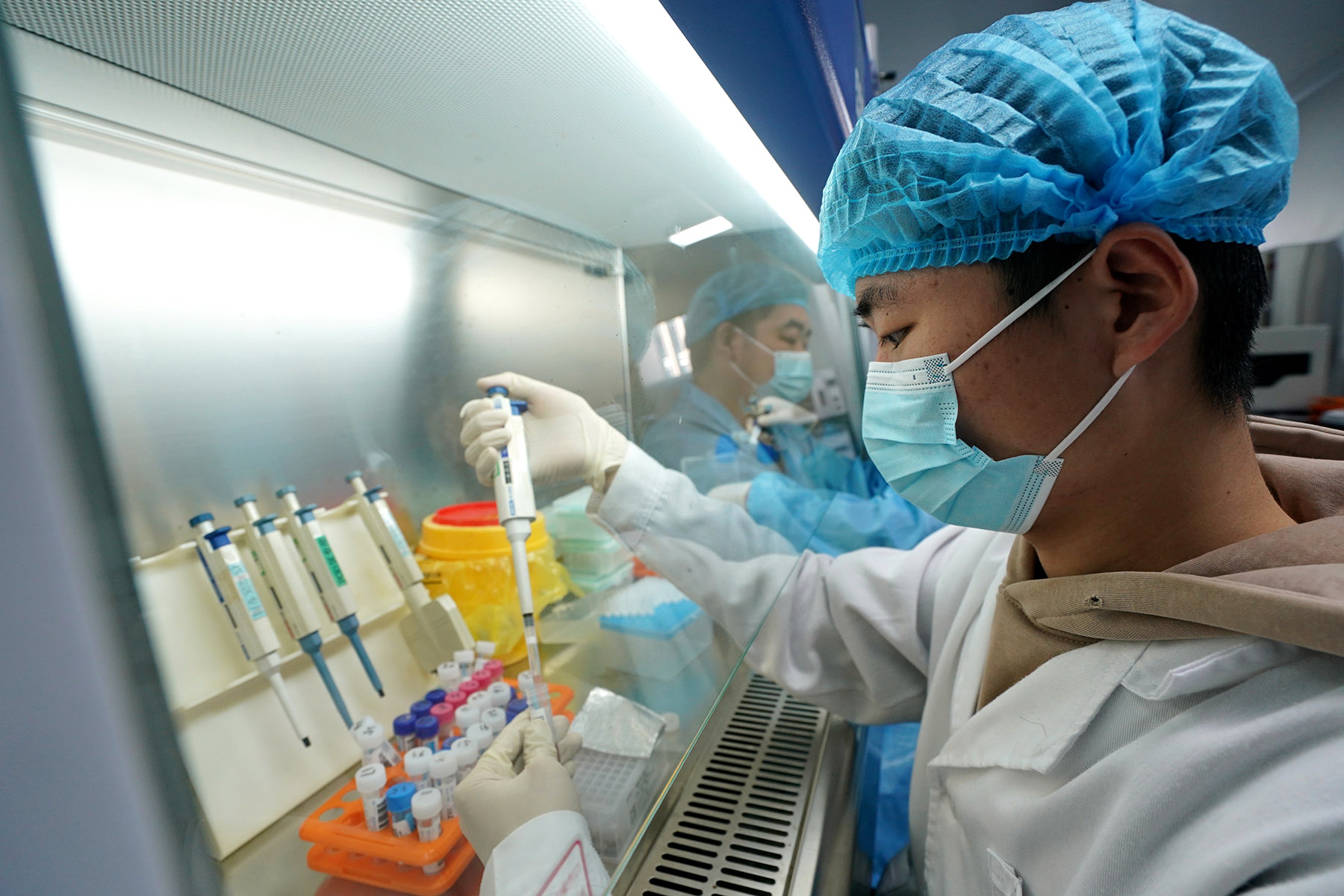
He founded Zhonghe Tech (Xiong'an) Co, a business focused on AI data security, after considering offers from major tech companies in Beijing. Feng made the choice to settle in Xiong'an, in part, because of the emerging industrial ecosystem.
"In the new city, the concept of 'upstairs and downstairs as upstream and downstream' is real," Feng said.
"Our work touches on multiple aspects, including AI models, computing power and chips. Here, there's a whole industrial chain in the AI sector."
His company is located in an AI industrial park that focuses on next-generation theories and application innovations relating to artificial intelligence. It has attracted more than 60 enterprises since June.
"People on the upper and lower floors often visit each other and exchange ideas. Sometimes conversations can lead to new ideas, creating a great entrepreneurial atmosphere," Feng said, adding this was the advantage that attracted him to Xiong'an.
The city is now positioning itself as a hub for three flagship industries — satellite internet and aerospace information, AI, and new materials. More than 200 companies have gathered to work in these sectors.
"You can feel that the new city is a quickly emerging innovation hub and an entrepreneurial hot spot," Feng said.
He also appreciates the quiet environment that Xiong'an can provide. "We used to work at a lab in a place that was busy and bustling. Here I can focus better. Xiong'an gives you that space for scientific research," Feng said.

Finding home
For those who come for work, the next question is always the same — whether Xiong'an can become a home.
Lyu Zhentao's answer came quickly.
The 48-year-old arrived in early 2024 as an employee of a State-owned enterprise that relocated to the new area. Within three months, his wife quit her job in Beijing and joined him.
"She saw the city was new, the environment was good, and the development prospects were very promising,"Lyu said.
In Beijing, they rented an 80-sq-m apartment in Daxing district near the subway for over 5,000 yuan a month. In Xiong'an, they live in a 120-sq-m home and pay 2,000 yuan per month.
"For our family, the pressure has been greatly reduced. Besides, our daily commute time is also short now," Lyu said, explaining his daily travel time has been reduced from over two hours to 15 minutes.
His wife found work with another SOE based in the new area. Their 22-year-old son is now looking for employment in Xiong'an while preparing for postgraduate entrance exams.
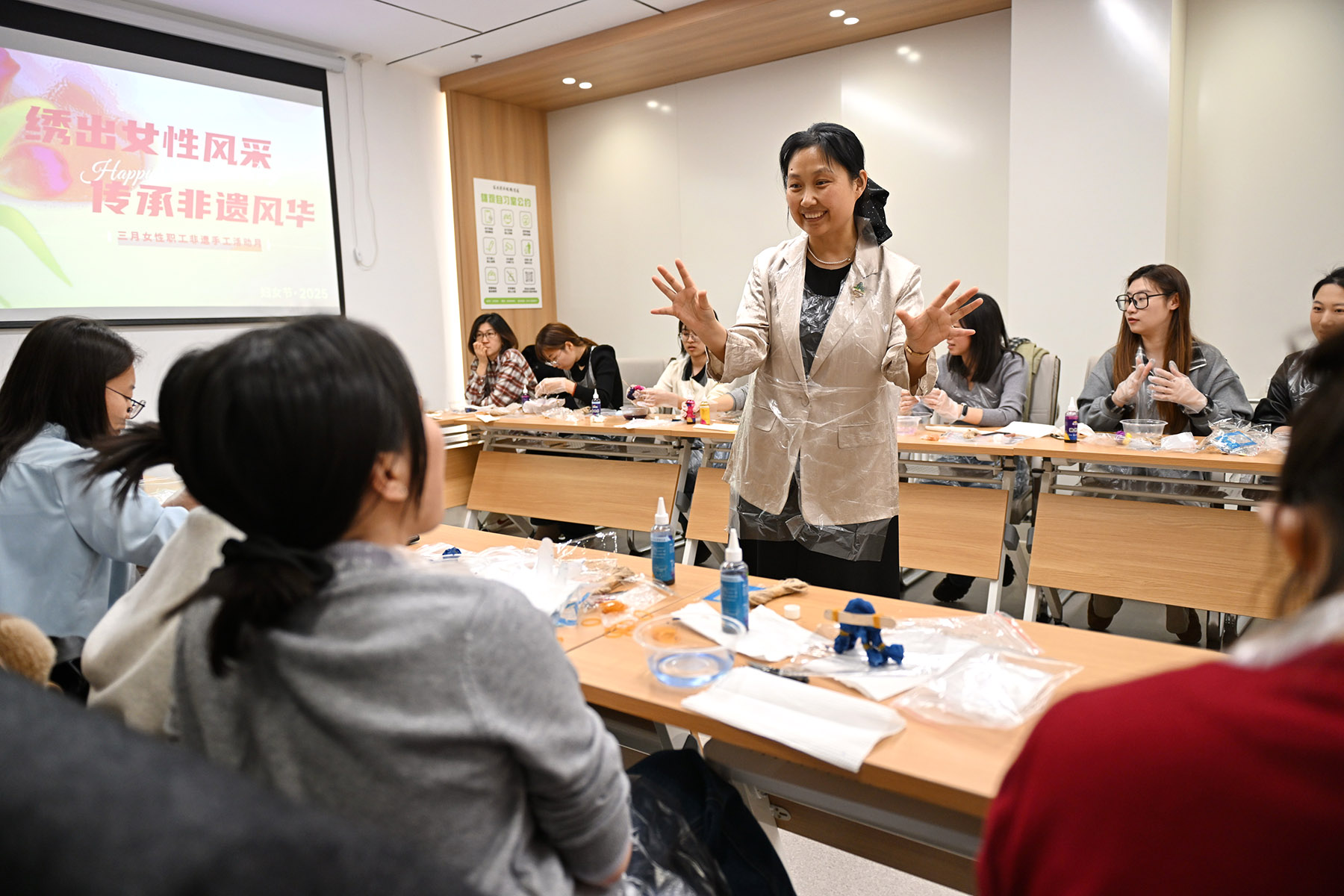
"For years, I never really felt settled," said Lyu, whose hometown is in the Inner Mongolia autonomous region, and who described himself as a beipiao (Beijing drifter) for over 10 years. "But here, things are different. The overall work and life atmosphere is positive. Slowly, you start to feel like you belong."
Lyu now has more time to relax with family and colleagues. "We like playing badminton in the area's newly opened sports center," he said, adding he is looking to buy a residence in Xiong'an. "I plan to stay. This is home now," he said resolutely.
Xiong'an's housing system is designed to make settling easy. Relocated employees like Lyu can access green channels to buy a home.
"What you see is what you get, and the property certificate will be issued upon delivery," said Zhang Hongda, a staff member at the Xiong'an Housing Management Center.
Xiong'an also has a tiered approach to rental housing that caters to different needs. Eight product types have been developed, from apartments for young people and talented people, to blue collar units and family-friendly communities.
"Renters have the same rights as homeowners when it comes to schooling for their children," said Tian Zhuang, another employee at the center. So far, 7,200 renters have enrolled their children in local schools under this policy.

A healthy system
But housing alone does not make a home. For families moving to a new city, healthcare is often the real test. That is where doctors like Lu Yan come in.
Lu, a neurologist from Xuanwu Hospital of Capital Medical University in Beijing, serves as executive director of the neurology department at Xiong'an Xuanwu Hospital, built under a management agreement with its Beijing counterpart.
Since September 2023, she has regularly worked in Xiong'an, usually two days a week. Lu is one of many Beijing-based specialists sent to the new area to ensure high-quality medical care.
At 6:20 on a typical morning, a hospital shuttle departs Xuanwu Hospital in Beijing, carrying doctors and nurses who split their time between the two cities. The bus arrives in Xiong'an at 7:50 am, and the Beijing specialists begin their day.
"Our goal is to reach the same level of care as in Beijing,"Lu said. "The equipment here is top-notch. The environment at the new hospital is better. And with Beijing specialists coming regularly, the standard is rising quickly."
In 2024, her department handled 9,615 outpatient visits. Last year, that figure jumped to 18,489 — an increase of over 92 percent.
"More than half of the patients are local, with the rest coming from nearby cities or even further, like Inner Mongolia and provinces in Northeast China," Lu said, adding that the numbers reflect growing recognition of the hospital's treatment capabilities.
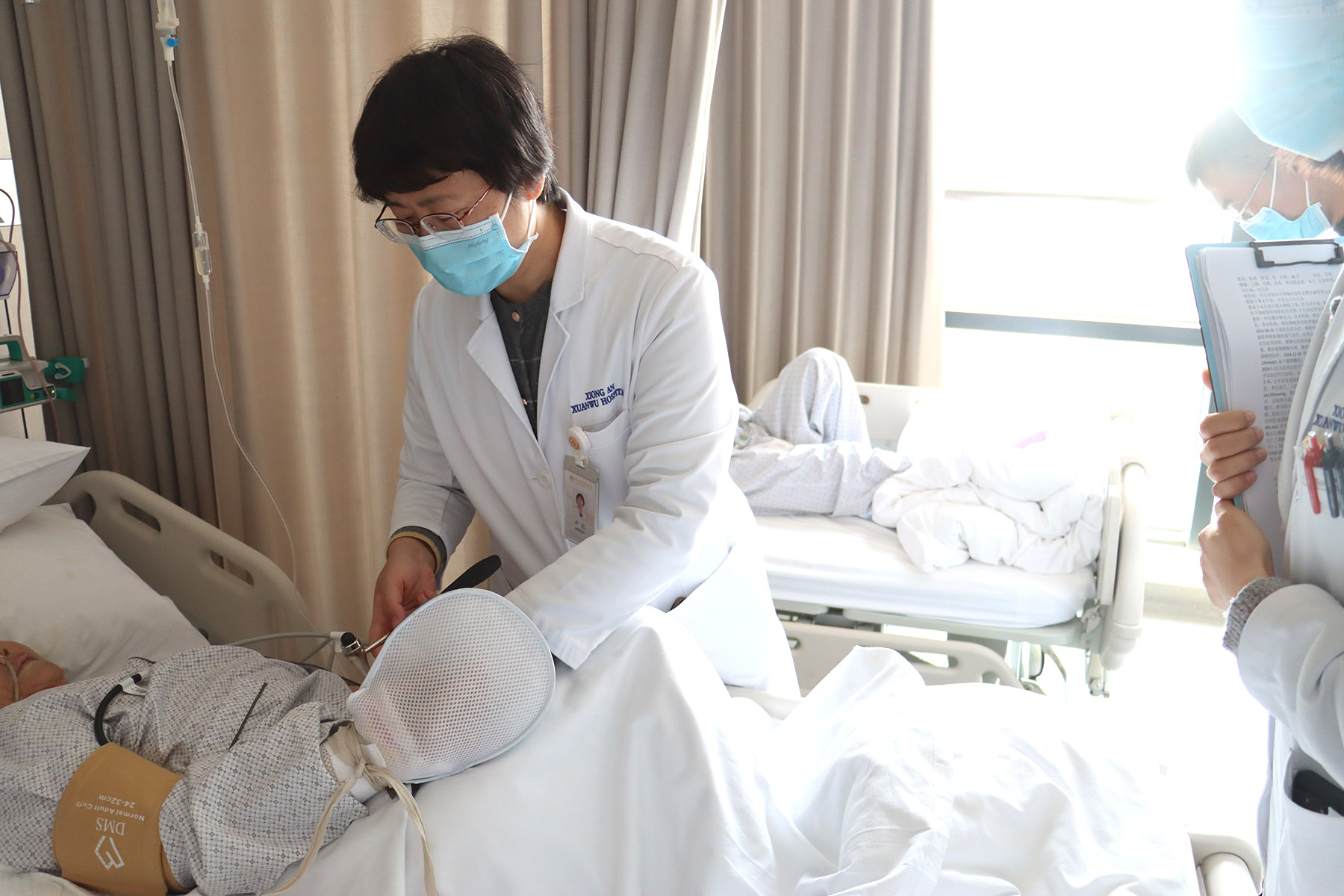
She said one patient from Beijing's Huairou district chose to be treated in Xiong'an. "The rooms have two or three beds, private bathrooms, TVs — it's like a hotel," she said. "When patients in Beijing can't get a bed right away, they can come here and get the same care in a better environment."
To improve the hospital's medical capabilities, new recruits are sent to the Beijing hospital for further training. "They even have the same opportunities as those of us from Beijing to pursue further studies," Lu said.
She said her ultimate goal is to achieve the same standards of management and treatment in Xiong'an as in Beijing's medical system.
ALSO READ: China upgrades Xiong'an high-tech zone to national level
"The high-quality public services are the 'soft power' of Xiong'an, which is the core factor in attracting talented people and their families to settle here," the economist Mu said.
For newcomers like Liu, such attractions matter. On weekends, she sometimes takes her cat to Yuerong Park. The lake is clear, the sky is blue, and birdsong can be heard drifting through the trees, she said.
"It's a city that makes you feel comfortable," Liu said."Built with a vision for the future, not just for now. I think it's a place where you can catch the opportunities for both work and life. And that, to me, is what makes it work."
Contact the writers at zhangyu1@chinadaily.com.cn
