

HandyCup pub fosters a community of people with disabilities and the able-bodied, spreading compassion and acceptance, Wang Xin reports.
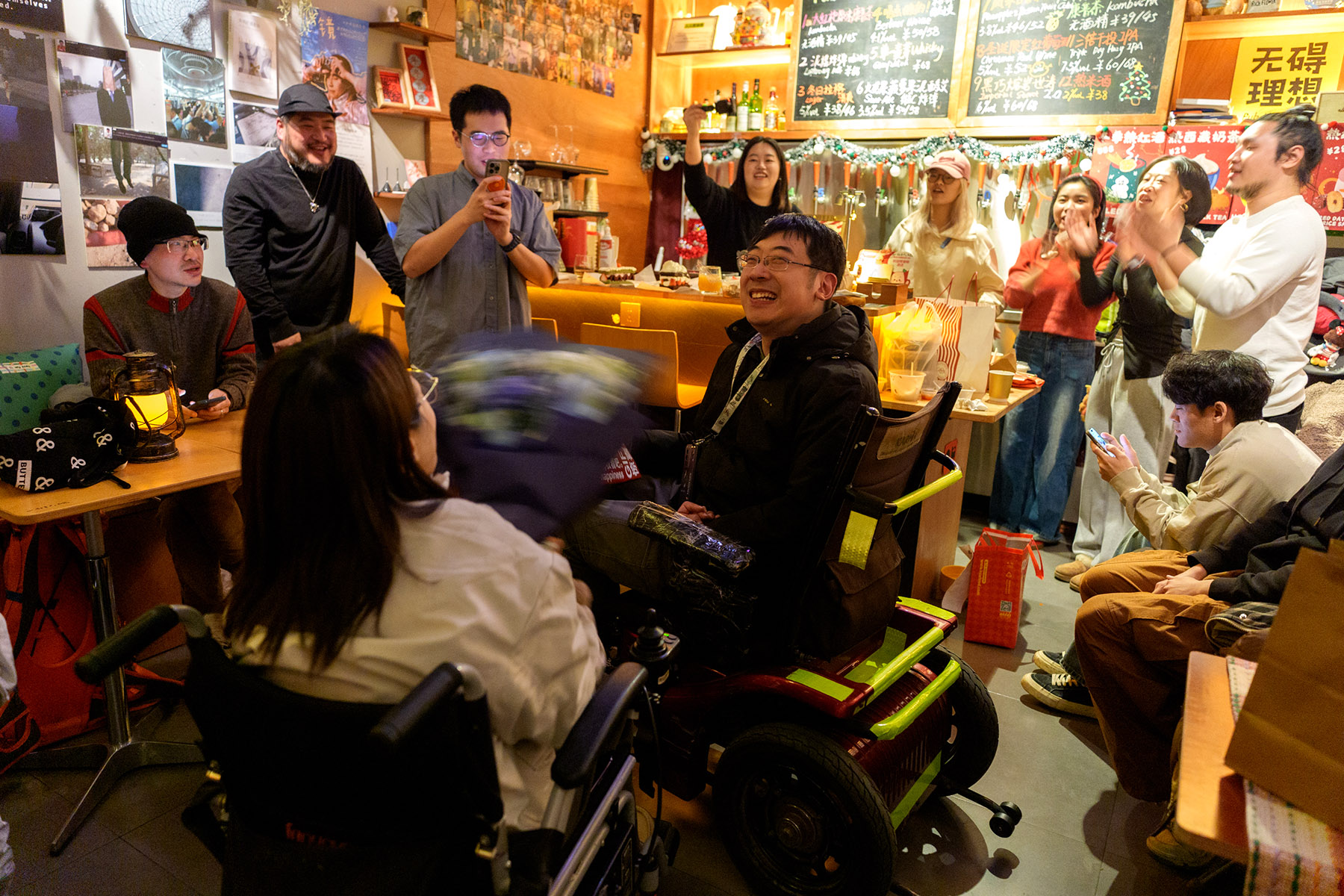
Fu Ming, a 38-year-old business owner with a physical disability who is dedicated to promoting accessibility, recently celebrated his birthday with a heartwarming crowd of friends at Pub HandyCup in Shanghai.
As the first accessible pub in China, owned by Xia Yujie, Pub HandyCup's name is a play on words from "handicap", embodying the vision of breaking down barriers with drinks and creating an open, inclusive space for all.
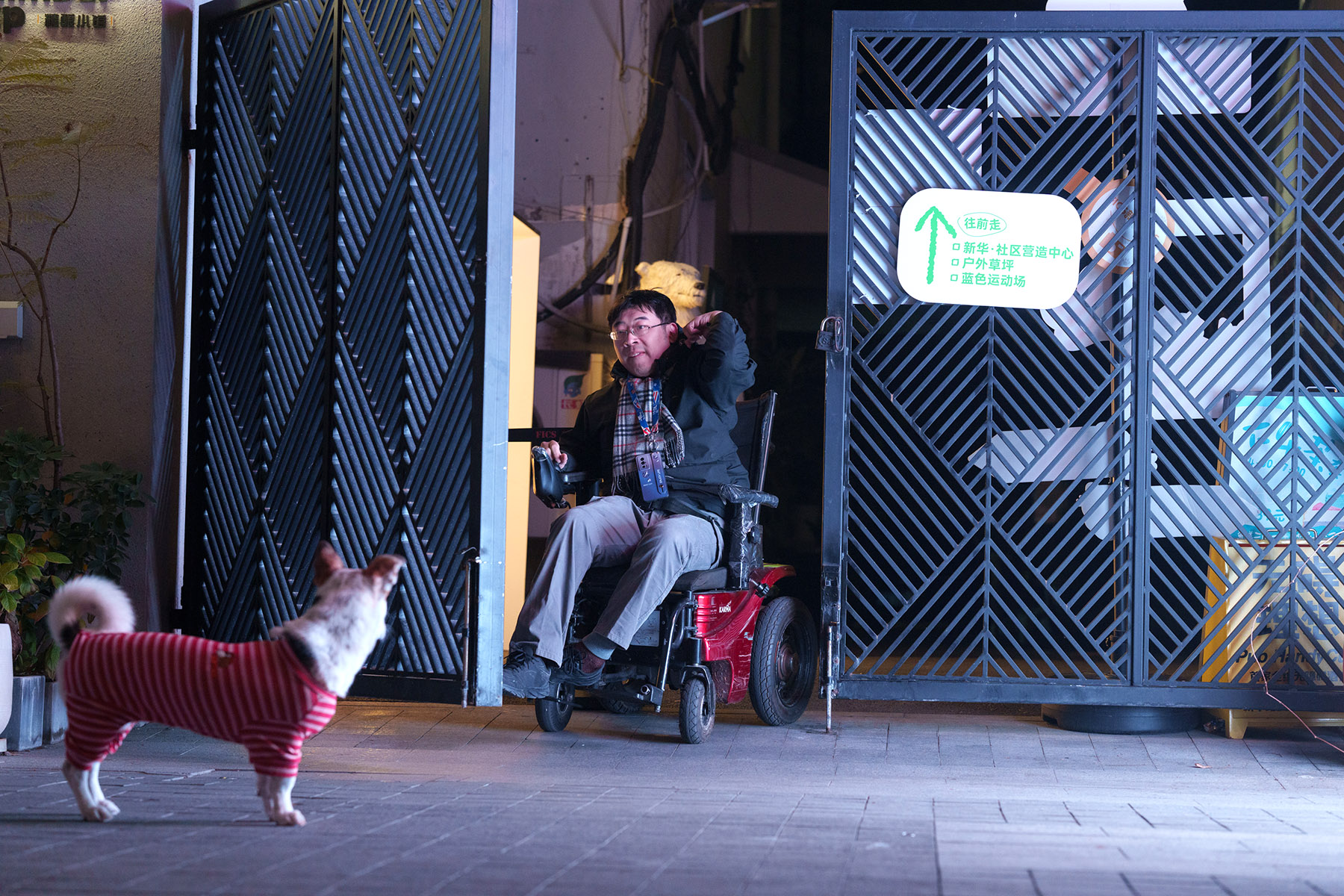
When Fu was less than a year old, he fell and suffered a brain injury, which led to limitations on the left side of his body. Using a wheelchair, this regular pub customer, better known as Xiao Mi, freely navigates in and out of the pub thanks to its thoughtful accessible design.
READ MORE: The light beyond our sight
The pub incorporates a ramp and a wide, foldable side door with handrails at the entrance, which wheelchair users can open and close with one hand. Inside the pub, seats and tables are on both sides, leaving enough space in the middle for wheelchairs to pass through and turn around. The table heights are adjustable, and the two bar counters are also designed at different heights to allow wheelchair users to socialize comfortably.
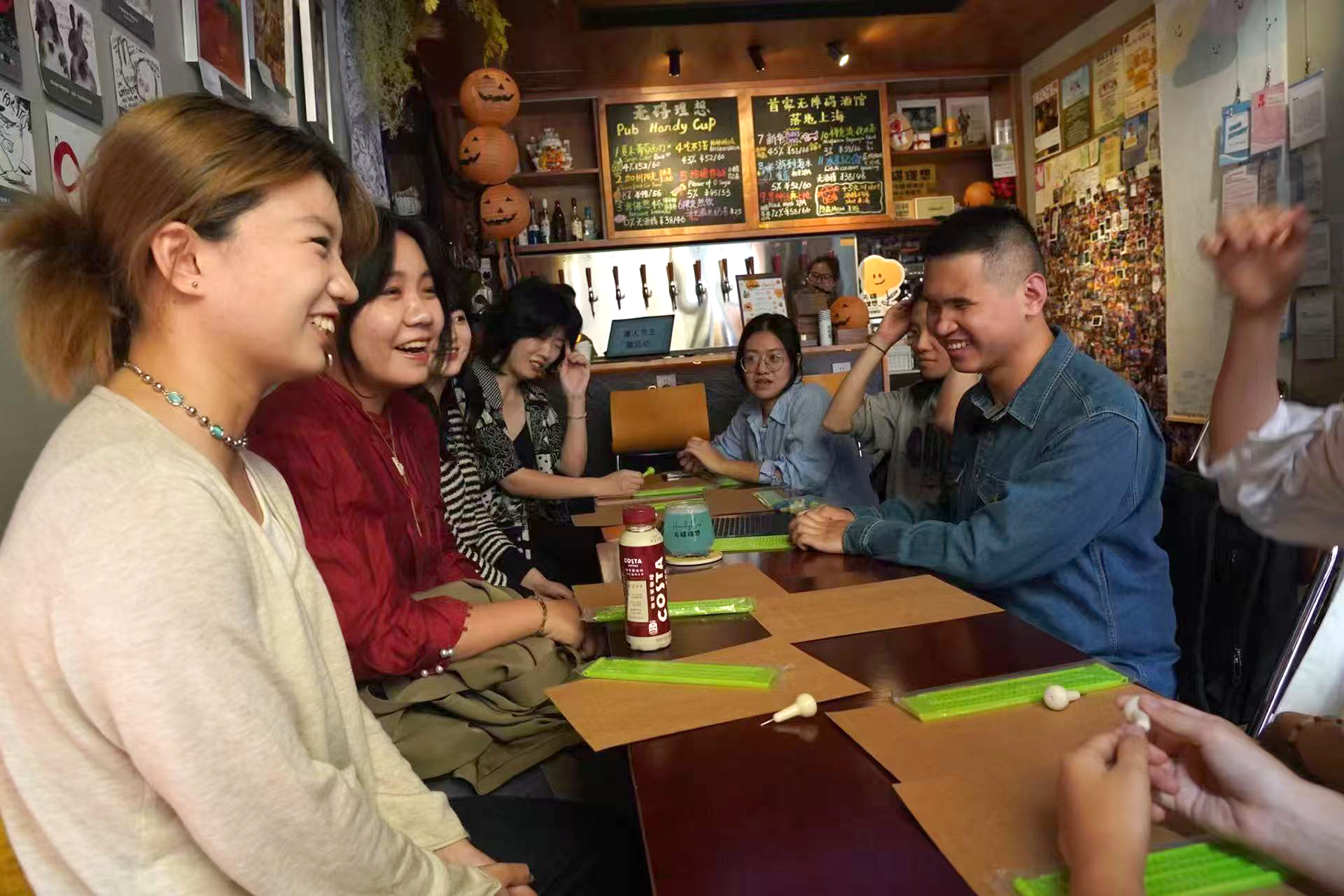
Moreover, many details are designed for the visually and hearing-impaired. A Braille map outlining the entire space is near the entrance, and Braille labels are in many of the pub's corners. All table corners are rounded to prevent injuries, a sign language board is hung on the wall for people to use to communicate with the hearing impaired, and even hearing aid batteries are available for free.
These details may seem unusual or subtle to the able-bodied, but it is these practical, common little courtesies that quietly yet concretely and naturally demonstrate accessibility.
"To me, accessibility is about people crossing physical boundaries for a shared vision or goal, understanding different needs, and making each one able to live their life in similar convenience," says Fu.
"This pub is open, inclusive, and cocreated by us all — not only by us with disabilities, but also by the able-bodied from diverse groups, backgrounds and countries."
Breaking boundaries
Fu's words echo those of the pub's owner, Xia Yujie.
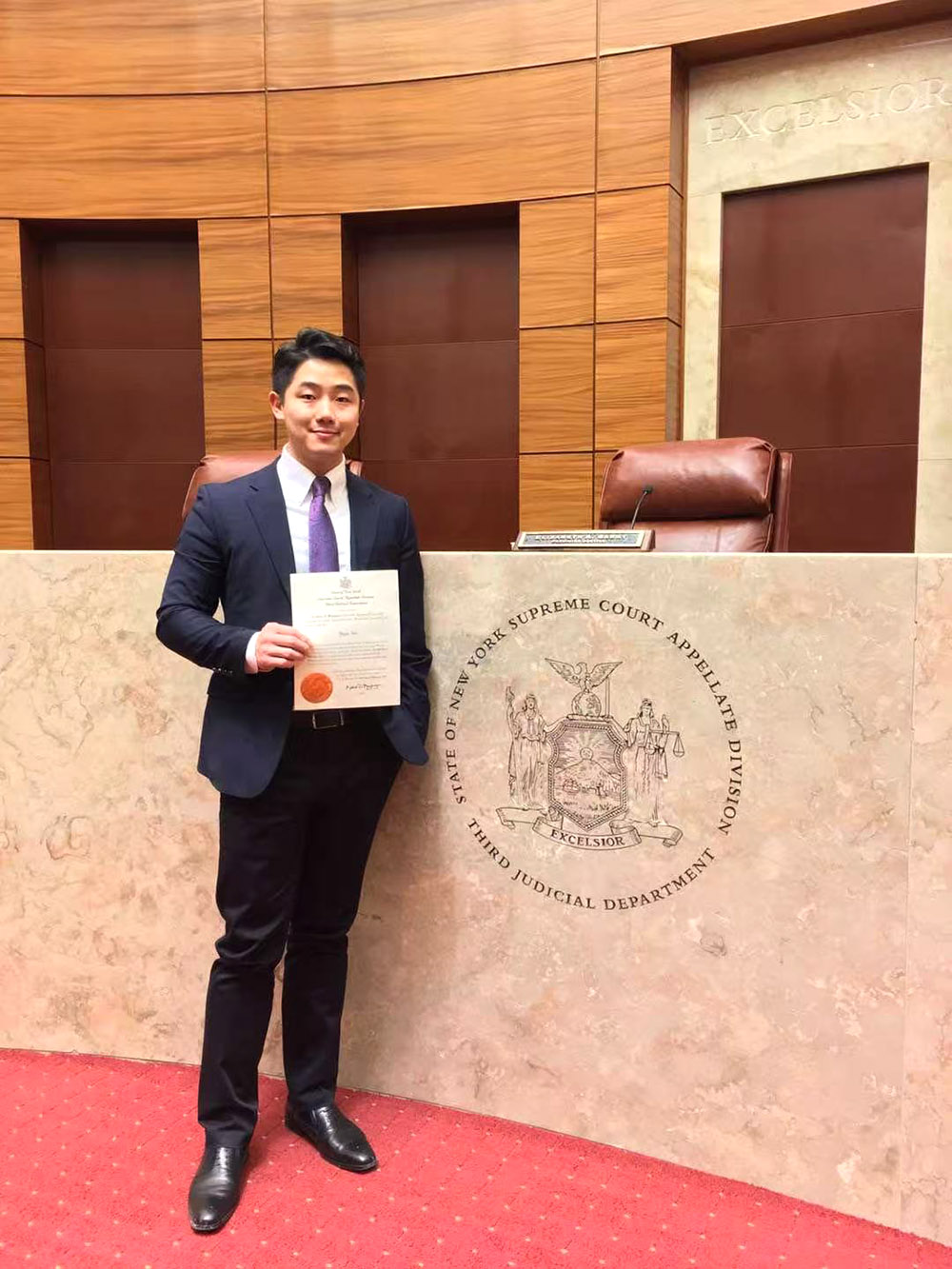
The idea of creating an accessible space had long lingered in Xia's mind. The 35-year-old lawyer lost the function of his left hand due to a medical accident while in middle school, which changed his life and gave him life experiences from a vastly different perspective and thought. Later, he became a law student at the China University of Political Science and Law, and continued his education with a scholarship in the United States.
During his studies in the US, he met classmates with a variety of disabilities and observed the still-unmet demand for accessible facilities and spaces. When he returned to China and became a lawyer, Xia further noticed that although many airports and museums are equipped with accessible facilities, a relaxing, accessible space was still missing in the consumer market.
Living in both disabled and able-bodied worlds, Xia values the "diversity" of individuals and sees himself as a bridge between them, as he understands and recognizes the under-voiced needs of both. In May 2024, after long preparation and extensive search for a suitable location, Xia's dream landed on Xinhua Road in Shanghai's Changning district.
Xia notes that what people with disabilities need is no different from anyone else's: to enjoy a drink or coffee in a relaxing, welcoming social space without worrying about barriers. What the pub offers is not merely accessibility, but more extensively, inclusion for all.
"We don't differentiate between customer groups, nor do we position ourselves as catering specifically to people with disabilities," says Xia. "Coming here to have a relaxing drink should be 'common' in daily life. That's what accessibility is all about. We support their needs, but we do not make it something 'special'."
Xia adds that he has also gained a lot from the space. As a lawyer, he has to follow the rules and be rigorous and cautious. But running the business of a pub requires intense curiosity, imagination, and creativity, which, to some extent, frees him. At the pub, he meets and engages with different people every day. He finds everyone interesting, easy, and fun, able to be themselves, and helps blur the ever-present boundaries between people.
"My biggest takeaway from the pub is that it significantly reshapes my outlook on life. It liberates my curiosity and nature, and helps me fulfill a deeper sense of identity. There are no differences with others here," says Xia with a smile.
A sense of belonging
Xia is not the only one breaking boundaries. His efforts bridge groups with various disabilities, helping more people find comfort and gain new inspirations.
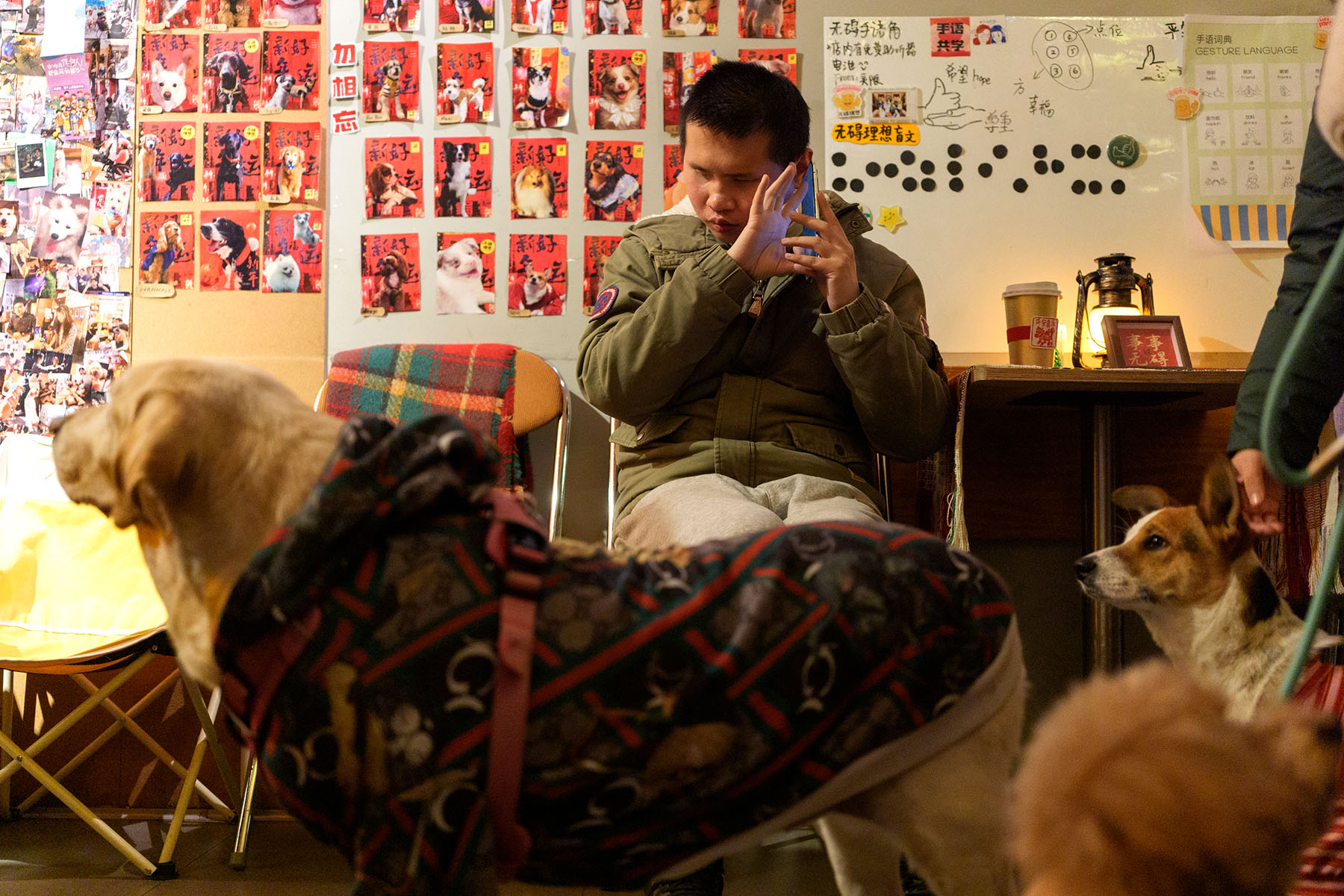
Among the pub's dozens of regular customers, 30-year-old visually-impaired Gong Jinghua, better known as Mao Mao, is an active and impressive one. He attended the pub's opening and much of his advice on its accessibility design, especially the Braille signs, was adopted.
Like Fu, Gong has also explored beyond his boundaries, mostly on his own, before coming to Pub HandyCup. Despite the countless difficulties visually-impaired people face in leaving behind familiarity, Gong bravely relocated to Shanghai from his hometown in Shanxi province in 2022. He experienced many anxious days in the unfamiliar city until he found a sense of belonging at the pub.
Gong's passion and potential were recognized when he helped with the pub's Braille design. He was invited to be the pub's resident event planner, offering diverse activities to promote accessibility and inclusion, including Braille workshops, crossover collaborations, blindfolded pint-pulling games, wheelchair block tours, Braille riddles, and more.
Such activities have helped turn abstract barriers into tangible experiences, bringing people from diverse groups and worlds together in subtle, clever ways. During this process, Gong is also building his self-esteem, making more friends, and expanding his limitations.
"I particularly enjoy visiting exhibitions and art galleries, but I need someone to describe them to me. We have many artist friends. When I go to their shows, they explain their works to me," says Gong excitedly.
From Fu's perspective, he sees Gong as a representative of those breaking boundaries at the pub, summarizing Gong's success on three levels: when Gong became an event planner instead of being a masseur; when he started working with other disabilities rather than confining himself to the blind community; and when he joined discussions on broader topics in the wider world of disabilities.
Even though he cannot see, Gong tells China Daily, "Pub HandyCup is 'colorful'. It is diverse, equal and inclusive."
Keep moving forward
Xia shares that the pub's disabled customers are diverse in many ways. Still, the majority are able-bodied, including musicians, artists, singers, nearby residents, and other business owners in the community. Open-minded young people are the main force.
Wang Yongjun, a 42-year-old director and producer, learned about this pet-friendly pub on online platforms. He is discussing with Xia the idea of making a public service documentary, which Wang expects to complete next year.
"I see social responsibility, hope and warmth at this pub. When we are continuously moving forward, we must think of and care more about those with disabilities. With the greatest love and compassion, we can show care for these individuals without distinction," says Wang.
Han You, 31, came across the pub while walking her dog. She feels attached to the pub's community after accidentally breaking her leg while skiing in France last month. Being asked to use a wheelchair for three months, she has gained a deeper understanding of what makes this pub and the community special.
"When I am in the wheelchair, I clearly notice the gaze of others. But that doesn't happen here. No one treats you differently, as we are all 'normal'. The pub is a true community — warm, caring, alive, and emotionally connected," says Han.
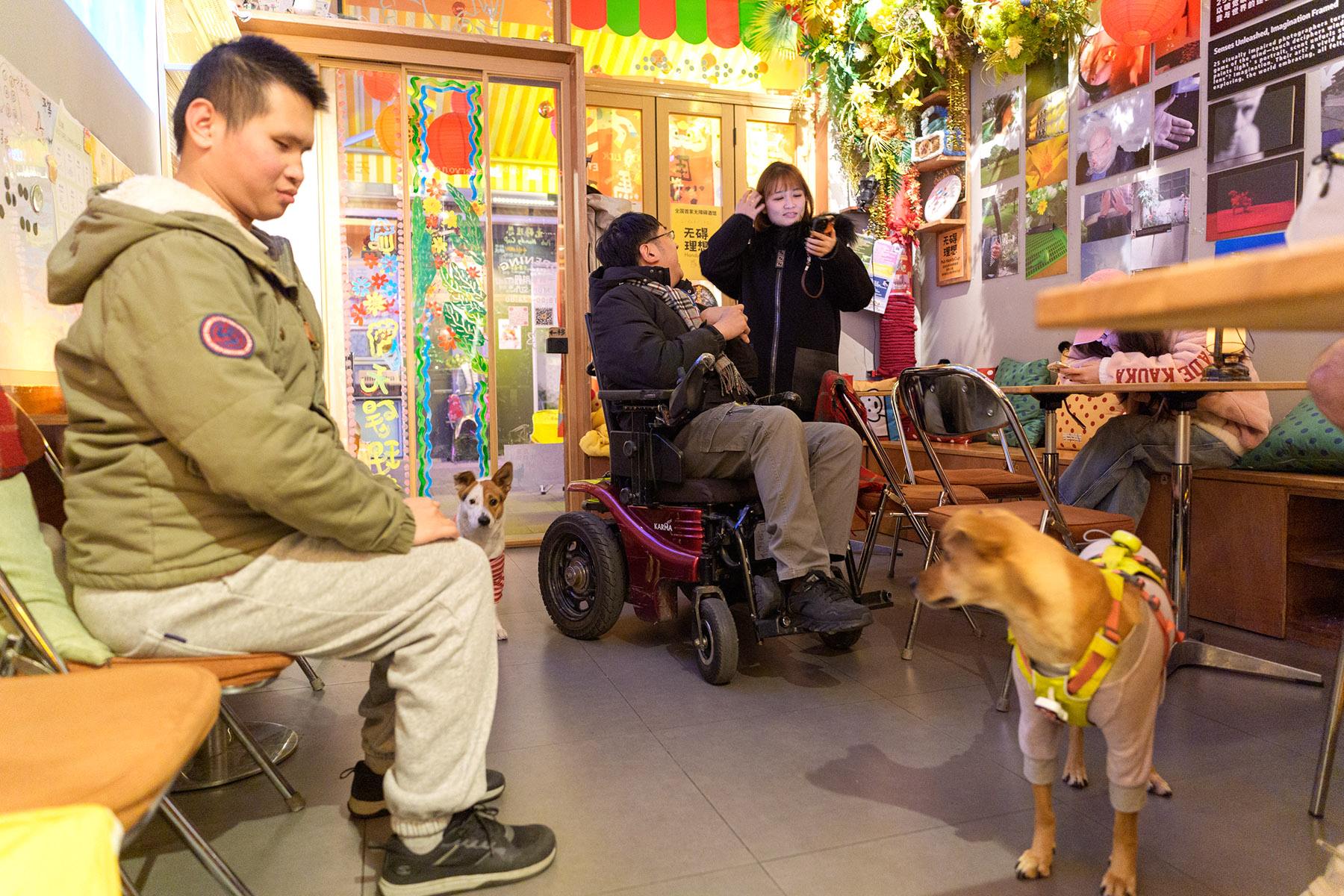
The groups connected by the pub are still growing, exceeding Xia's expectations. In addition to dozens of regular customers, the pub has also attracted about 1,000 members in its online groups. The Xinhua Road community also engages with the pub for advice, making joint efforts to optimize accessible facilities and experiences in the area.
Shanghai was among the first cities in China to pioneer barrier-free environments. As early as the 1980s, the city began integrating accessible facilities into key roadways and newly constructed large-scale buildings. The city government rolled out the nation's first management regulations on accessible facility construction in 2003, with subsequent efforts over the next two decades to ensure their implementation, optimization, and legislation.
An increasing number of public cultural spaces across the city are also ramping up efforts in promoting accessibility. In 2022, a small bookstore on Nanchang Road opened, featuring Braille books and an environment designed for the visually-impaired, the first of its kind in the city.
Accessible reading rooms with comprehensive facilities and services are available in public libraries, including Shanghai Library, Shanghai Children's Library, and smaller ones across the city.
ALSO READ: Putting yourself out there
Moreover, venues such as Jaguar Shanghai Symphony Hall, the Shanghai Dramatic Arts Centre, Shanghai Museum East, as well as some theaters and cinemas across the city, offer accessible services and special activities for groups with disabilities to enjoy entertainment.
"Accessibility is infrastructure for diverse groups to see each other, to connect and socialize. Some people may say our pub is niche, but I would say we are much more general and inclusive," says Xia.
Notably, the pub also receives many overseas visitors from Australia, the United Kingdom, France, and Canada. Some of them even invited Xia's team to open branches in their nations — a future goal Xia is looking into.
"Life is essentially diverse. We've grown accustomed to separation and various constraints, but once they are broken down, by simply seeing and walking into other people's normal lives, changes will happen naturally," says Xia.
Contact the writer at wangxin2@chinadaily.com.cn
