

In Hebei province, inheritors join with a host of others nationwide to delight visitors and residents alike
In a sunlit studio in the Xuanhua district of Zhangjiakou, Hebei province, the air smells faintly of burned wood.
Guo Chunlei leans over a golden gourd. The tiny hot-tip soldering iron in his hand dances across the gourd's surface — not burning but coaxing. The image of a powerful horse comes to life through the ancient art of gourd pyrography, which uses heat to etch the surface.
This year is the Year of the Horse according to the Chinese zodiac.
"It's all about the shading," Guo said. "You adjust the heat to create light, shadow, and emotion."
For more than 30 years, this has been his passion — an artistic journey that began in 1993 in Beijing, where a chance encounter with a piece of rough pyrography captivated him. "I wanted to bring the paintings I loved to life on gourds," he said.
ALSO READ: A Guangdong guide to festive giving wins hearts
His first tool was a heavy soldering iron meant for sealing iron woks for cooking. It was a humble start that became a lifelong love.
Today, Guo is a city-level inheritor of Daoge Gourd Pyrography, which is known for its blend of techniques, including cloisonne, an ancient enameling procedure. But his passion extends beyond creation to teaching. He provides free daily livestreams on social media.
"I just want more people to understand this heritage," he said, adding that picking up the hot iron often brings him peace. His students now span the country, with several becoming recognized inheritors themselves.
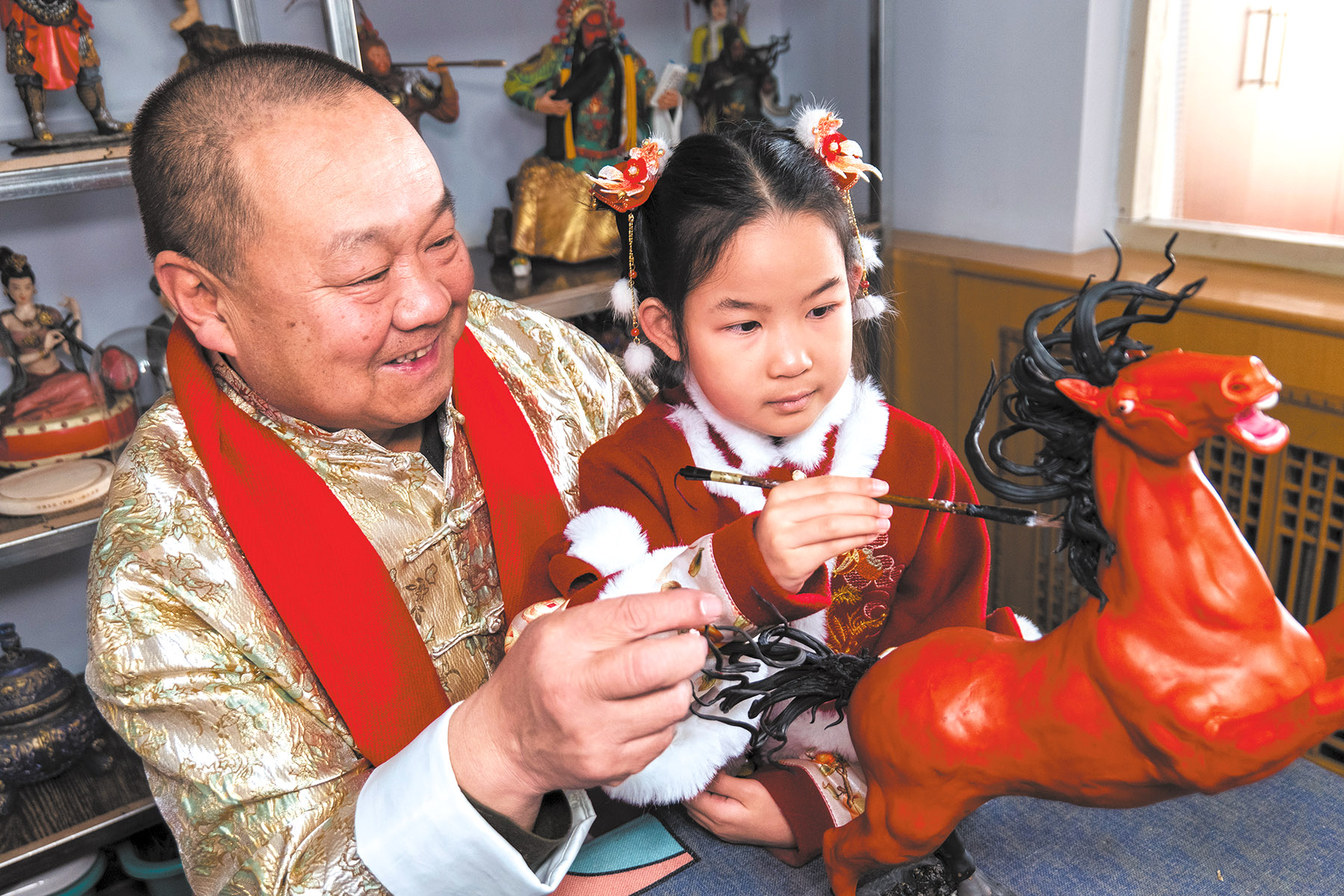
Elsewhere in Xuanhua, a different transformation is unfolding. Cheng Xueming, 56, a fifth-generation inheritor of Cheng Family Dough Figurines, pinches and sculpts soft, colored, claylike material. Under his fingers, shapeless lumps take shape, becoming majestic figures from history and legend — the playful Monkey King, general Guan Yu and many others.
"It's about giving form to the heroes from my childhood stories," Cheng said.
For him, the hardest part is the constant renewal that is required to remain at the top of his craft: "It's always challenging to find fresh inspiration from modern life to keep things alive and attractive."
These masters are central figures in Xuanhua's rich cultural landscape. Wang Xiaomin, director of the district's cultural center, said 71 examples of intangible cultural heritage are protected there.
"These things have deeply integrated with tourism, enhancing the local cultural appeal," Wang said.
During the Chinese New Year celebration this year, the arts stepped out of studios and into the community. For example, the cultural center organized events recently where the "horse" theme took center stage, including cross-regional festivals and local storytelling sessions with inheritors.
"We've hosted major ICH events, serving about 30,000 visitors," said Chen Xuejie, a local cultural official.
She added that such events have boosted the desire of tourists to travel in Hebei by offering deep cultural immersion. For travelers, these events offer hands-on engagement.
Li Zhishui, who visited Zhangjiakou with his family from Beijing in January, recalled his daughter's intense focus while trying pyrography on a small gourd.
"Feeling the heat and trying to control the lines — that's a connection you don't get from watching," Li said.
The cultural vibrancy brought by intangible cultural heritage virtually echoes through every part of Hebei. In Langfang, Beijing's neighbor, the massive Five-Good ICH Fair in early February has been a sensory feast, featuring diverse examples of local heritage from the Beijing-Tianjin-Hebei region.
"It feels like a giant, joyful playground," said Wang Nan, 28, from Tianjin, who traveled to a similar fair with her family recently. She held up a small paper-cutting of a rabbit she made under a master's guidance.
"There were delicious food and incredible performances, and best of all you could roll up your sleeves and try things yourself. My nephew didn't want to leave the dough figurine booth," she said.
Wang Sicong from the Langfang cultural and tourism bureau said the city held about 30 hands-on experience sessions, providing kits of materials for visitors to learn skills through fun interaction.
The fair also featured friendly culinary competitions by chefs from around the region, showcasing traditional foods, such as dumplings and rice cakes, and weaving ancient arts into the overall festive experience.
Nor is it just Langfang that has seen how heritage draw tourists. Far from it, in fact. In Tangshan, a festival called ICH Celebrates the New Spring was held along the popular Hetou Old Street in early February. It fused tradition with the digital age.
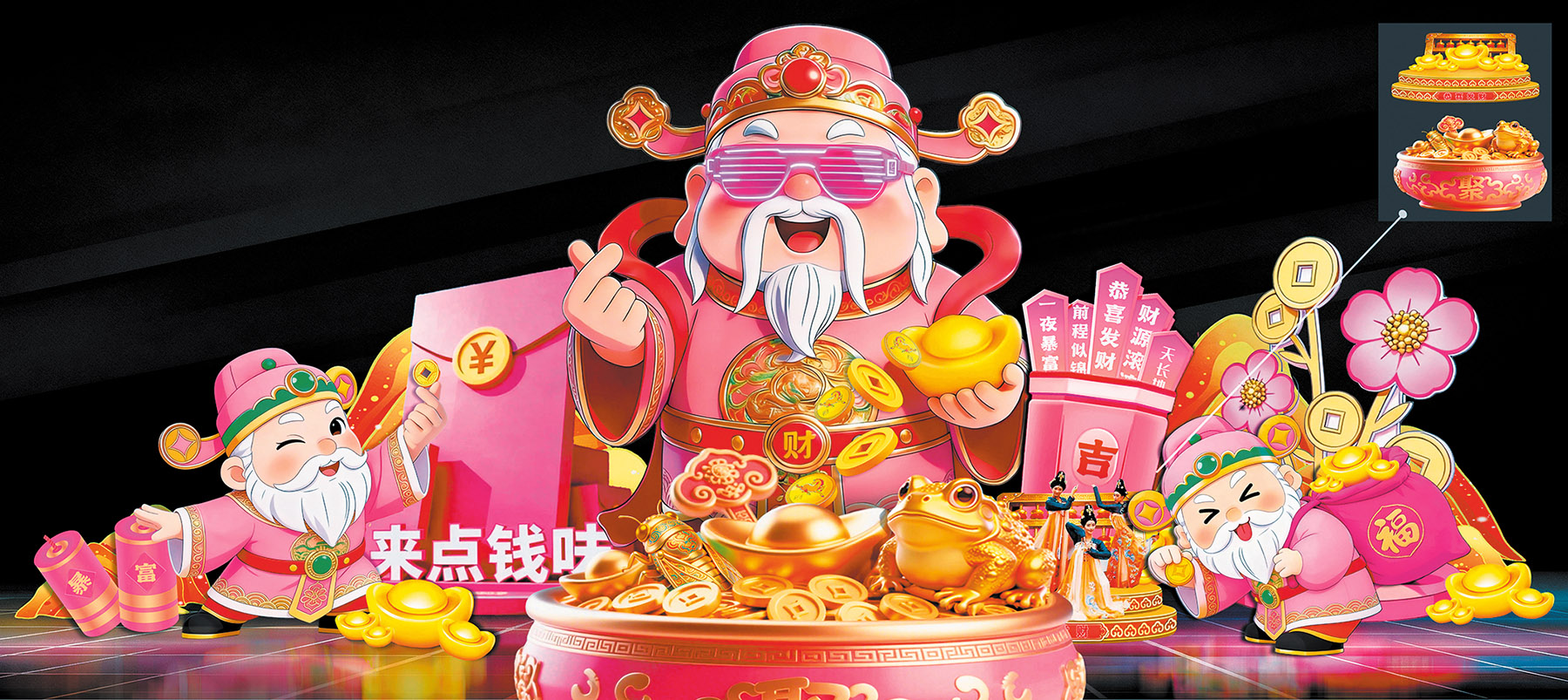
Visitors wandered under dazzling heritage-themed lanterns, with children trying to mimic the shadows in an interactive shadow puppet booth. Livestreamers beamed the festivities nationwide, selling specialty New Year goods online.
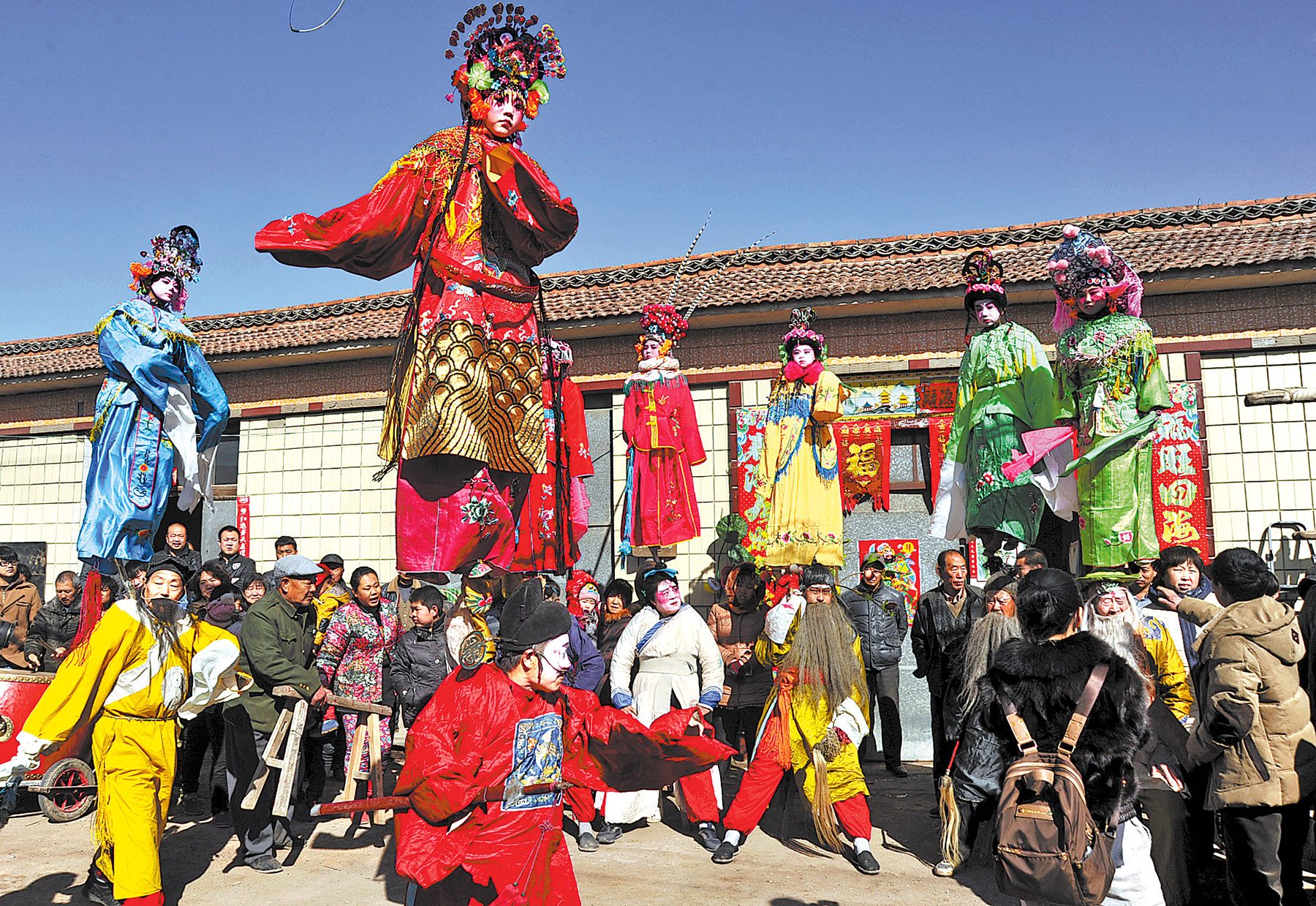
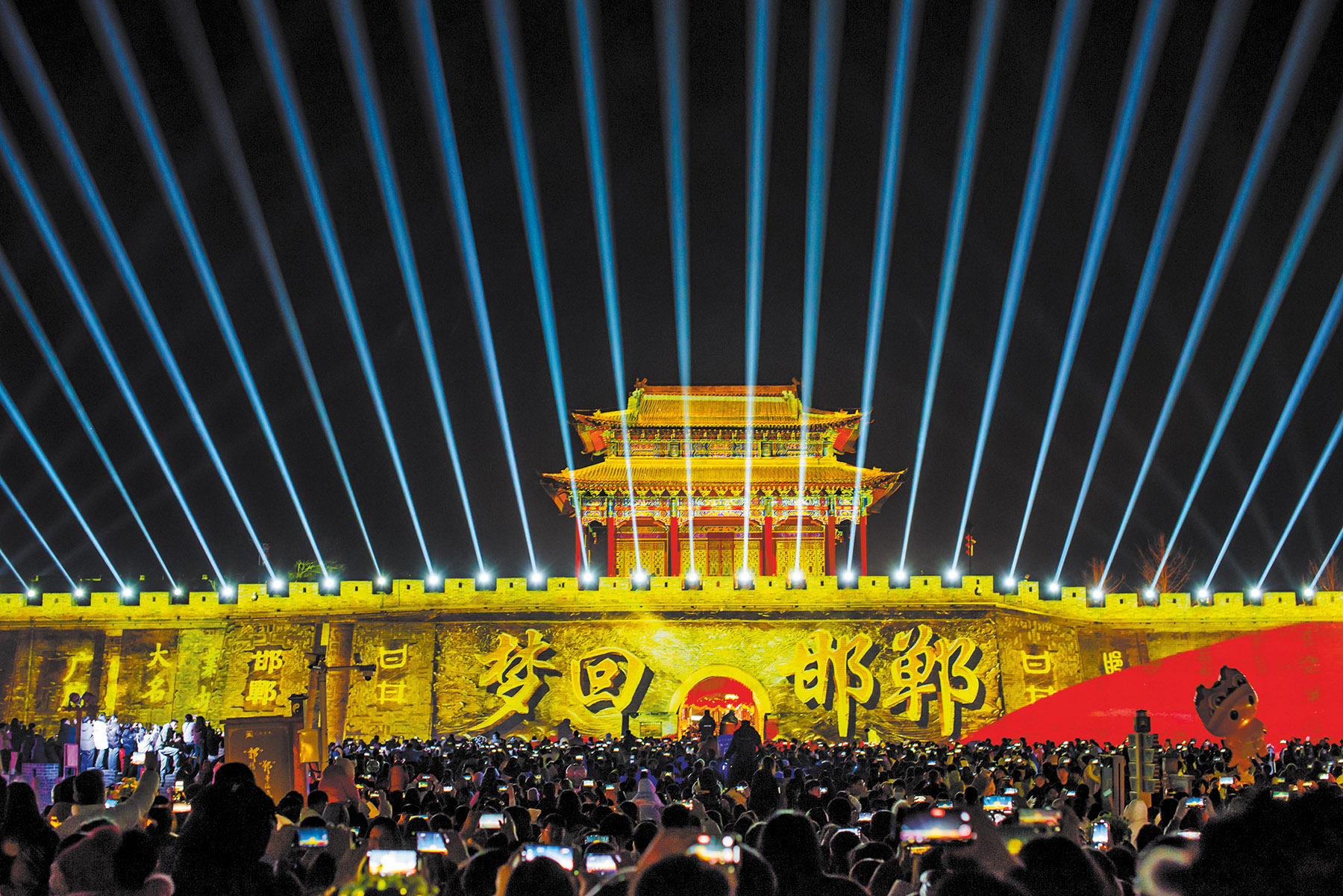
Beyond Hebei, the Spring Festival spirit of cultural heritage is alive across the country. A major exhibition at the Chinese Traditional Culture Museum in Beijing will run until March 20, showcasing more than 100 representative ICH projects from all over China.
Meanwhile, the 2026 Intangible Cultural Heritage Gala on China Central Television featured splendid cultural performances from every province, bringing the nation's traditions to screens everywhere.
The national spotlight on heritage during Spring Festival is significant, said Fan Zhengang, a professor at Shijiazhuang Tiedao University who researches traditional Chinese culture.
"These activities are more than just holiday fun. They are a living revival of our shared culture," Fan said, adding that they help people — especially children — connect with their roots.
"In our fast-paced, digital world, these hands-on experiences and community celebrations can really bring people together and foster a sense of belonging to something enduring."
ALSO READ: Lunch at the museum!
The goal, practitioners agree, is for these treasures to be woven into daily life.
"The real success is when people no longer see these crafted works merely as heritage but as a natural and enjoyable part of life — perhaps a beautiful gourd lamp in a living room or a cheerful dough figure on a desk," Fan said.
Back in Xuanhua, Guo Chunlei put the final touches on his galloping horse. It will serve as a model for his online students — a symbol of momentum for the new year.
The ancient craft, carried forward by dedicated hands and fueled by new curiosity, continues its timeless journey, not as a relic but as a vibrant part of the future.
Contact the writers at zhangyu1@chinadaily.com.cn
