

Lifestyle trend sees rapid growth in extravagant canine celebrations, events
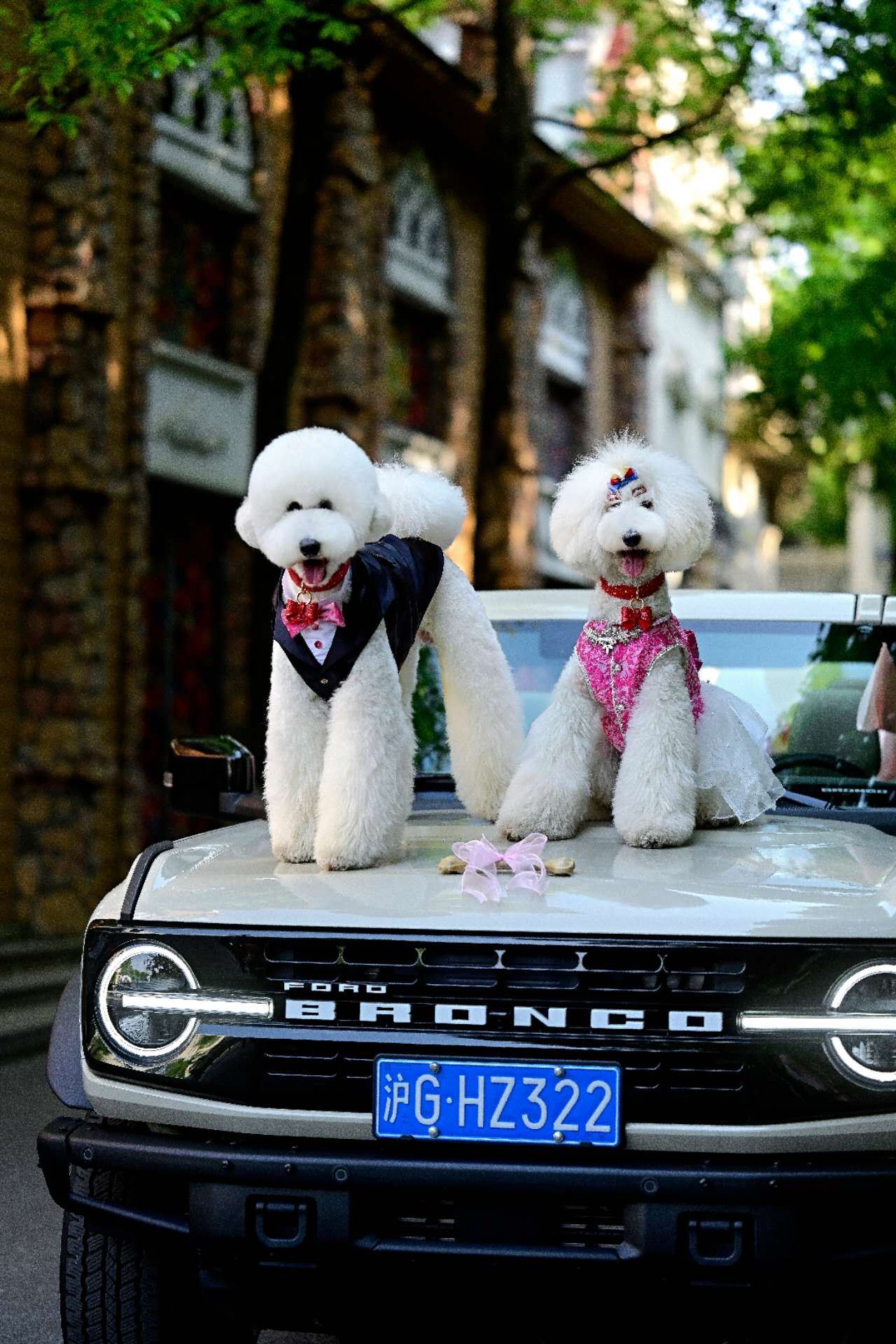
When Shanghai resident Sun Yongning, 42, talks about her "daughter" Alice, her voice softens with affection.
Alice, a 1-year-old poodle, recently "married" Max — a male dog belonging to a family friend who shares "a special connection" with our family, she said.
"The way they met was really dramatic. We ran into Max and his owners at a pet gathering, and the two dogs instantly clicked — they were so excited to see each other, and we owners also got along surprisingly well," said Sun.
It wasn't until later that they discovered an unusual coincidence. Sun said when they looked at the dogs' pedigree certificates they realized Max was the sibling of another one of her dogs. "It felt like a plot twist straight out of a novel," she said.
The two dogs became inseparable and when they both turned 1 year old, the families held a joint celebration — part birthday, part symbolic wedding.
READ MORE: Philippines: Pet weddings highlight animal blessing ceremony
Hosted by Max's owner, who works in event planning, the celebration was grand. "There were gifts, guests and even strangers offering blessings. When Alice and Max rode in a little carriage around the park, it truly felt like a real wedding," said Sun.
As pet weddings, birthday parties and themed celebrations grow increasingly popular across China, a new lifestyle industry is taking shape — one that celebrates not only animals but the emotions of their owners.
For Sun, Alex and Max's ceremony carried deep meaning. "We just want to make their world colorful and full of experiences," she said.
Reactions to the "wedding" were mixed — many praised the idea, while others found it "too unconventional", Sun said.
"Most of our friends loved it and some even said they wanted to do something similar. Of course, there were people who didn't understand it. But for us, it was just a joyful gathering," she said.
Classy canines
"Pets are no longer just companions but are family members who share our daily joys and emotions. We want to help pet parents live in the moment — to experience life together with their pets," said Tang Yuanlei, founder of Patago.
Founded in 2022, Shanghai-based Patago is recognized as the country's first platform to position pets not merely as companions, but as their owner's partners in a shared lifestyle.
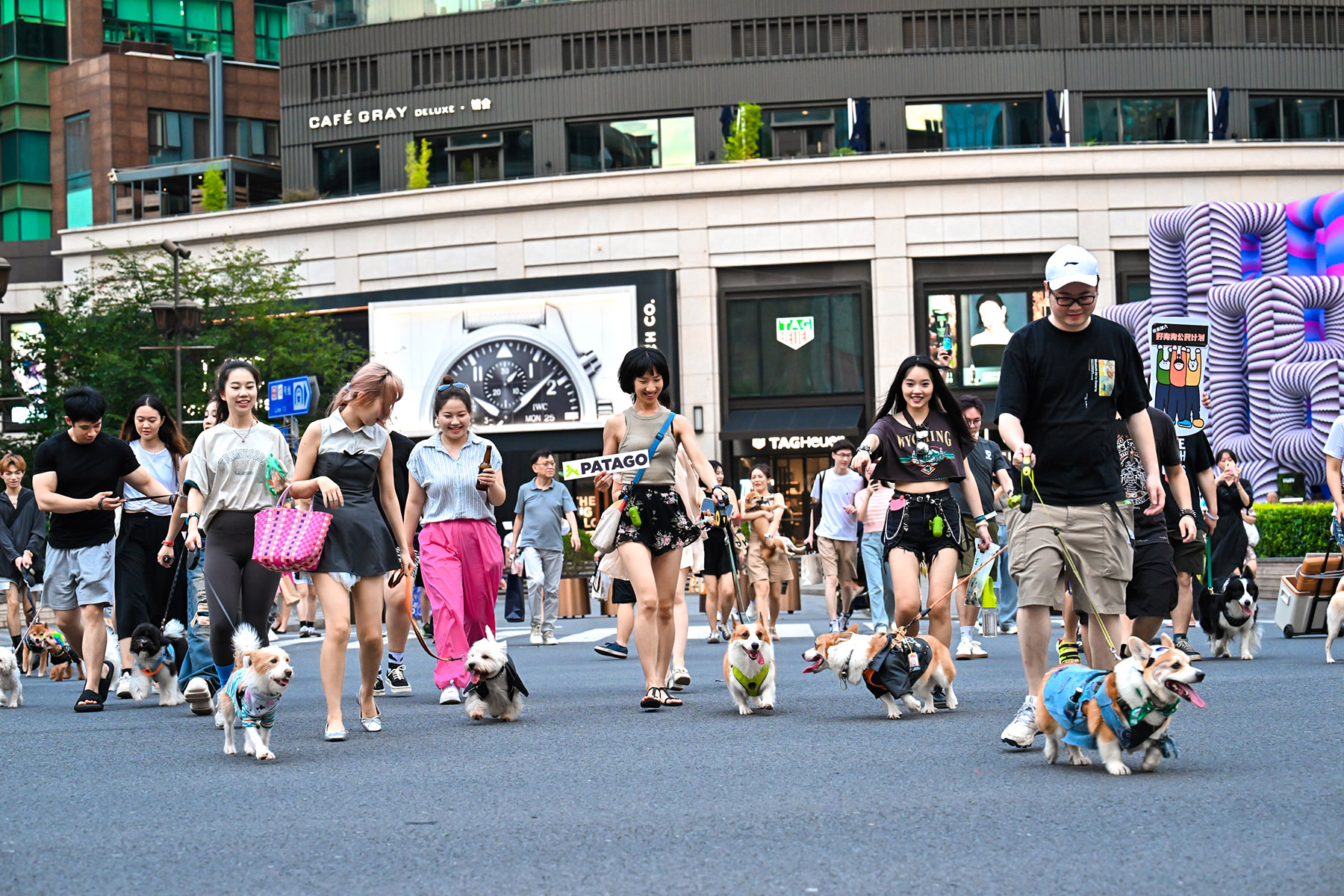
It describes itself as "a refined life guide for pet owners", curating activities such as pet runway fashion shows and photography sessions to outdoor dog-running events.
"Today's pet owners aren't just focused on how to raise their pets well, but on how to experience new things together," Tang said. "A pet wedding or party isn't only for the pets — it's also a way for people to express affection, build identity and connect socially," she said.
The pet population in China's urban areas reached 120 million in 2024, with the urban pet (dog and cat) consumption market exceeding 300 billion yuan ($41.8 billion), according to the 2025 China Pet Industry White Paper.
The consumer report also highlighted a clear demographic shift to younger owners, with individuals born after the 1990s accounting for 41.2 percent of pet owners and those after 2000 more than 25 percent.
As of November 2025, China had 4.98 million registered pet-related enterprises, data from business analytics platform Qichacha shows. In 2024, 1.65 million new companies entered the market, followed by 1.39 million more in the first 11 months of 2025, reflecting strong and sustained growth.
Tang envisions China's pet event industry expanding rapidly.
"In the past three years, especially this year, the growth has been explosive. More brands, ad agencies and organizations are entering the field. Events once designed for adults or children are increasingly becoming experiences shared with pets," she said.
Tang believes the "humanization" of pet culture mirrors deeper social trends. Some owners love dressing up their pets and taking part in runway events, while others prefer health-oriented gatherings like Patago's popular dog-running club.
One of its most memorable events took place in June at Naked Hill in Nanjing, Jiangsu province, with the company's first human-and-pet cross-country run and carnival.
"It was our first Canicross event — a sport popular abroad where humans and dogs run together through natural trails. Dogs love to run, and so do their owners," said Tang, adding it encourages a healthier outdoor lifestyle.

Exchanging collars
Bai Yu and his wife Ju Jie run a small pet boarding business in Hangzhou, Zhejiang province.
The idea of turning a birthday celebration into an elaborate professional pet wedding began almost by accident, they said.
Their two dogs, Elio and Mira, both 1-year-old Coton de Tulear, are more than pets to them. "We have five dogs and a cat, and the oldest is 13. Each carries a piece of our family's story," said Bai.
In August, just before the Qixi Festival, China's Valentine's Day, the couple decided to hold a wedding for the dogs.
They drew on their professional backgrounds. Bai previously worked as a wedding host, and Ju is a fashion designer.
"After the COVID-19 pandemic, I left the wedding industry and opened a pet boarding house with my wife. We have a small villa that naturally creates the right atmosphere. The photography was done at a bridal studio I invested in, and my wife designed the veil and outfits," said Bai.
They spent about a month preparing for the big day — planning, buying decorations, and inviting former colleagues.
"It became a real team effort. Some of our friends even drove from Shanghai, and Jiangsu and Anhui provinces to attend. Around 20 guests came — and 50 dogs," said Bai.
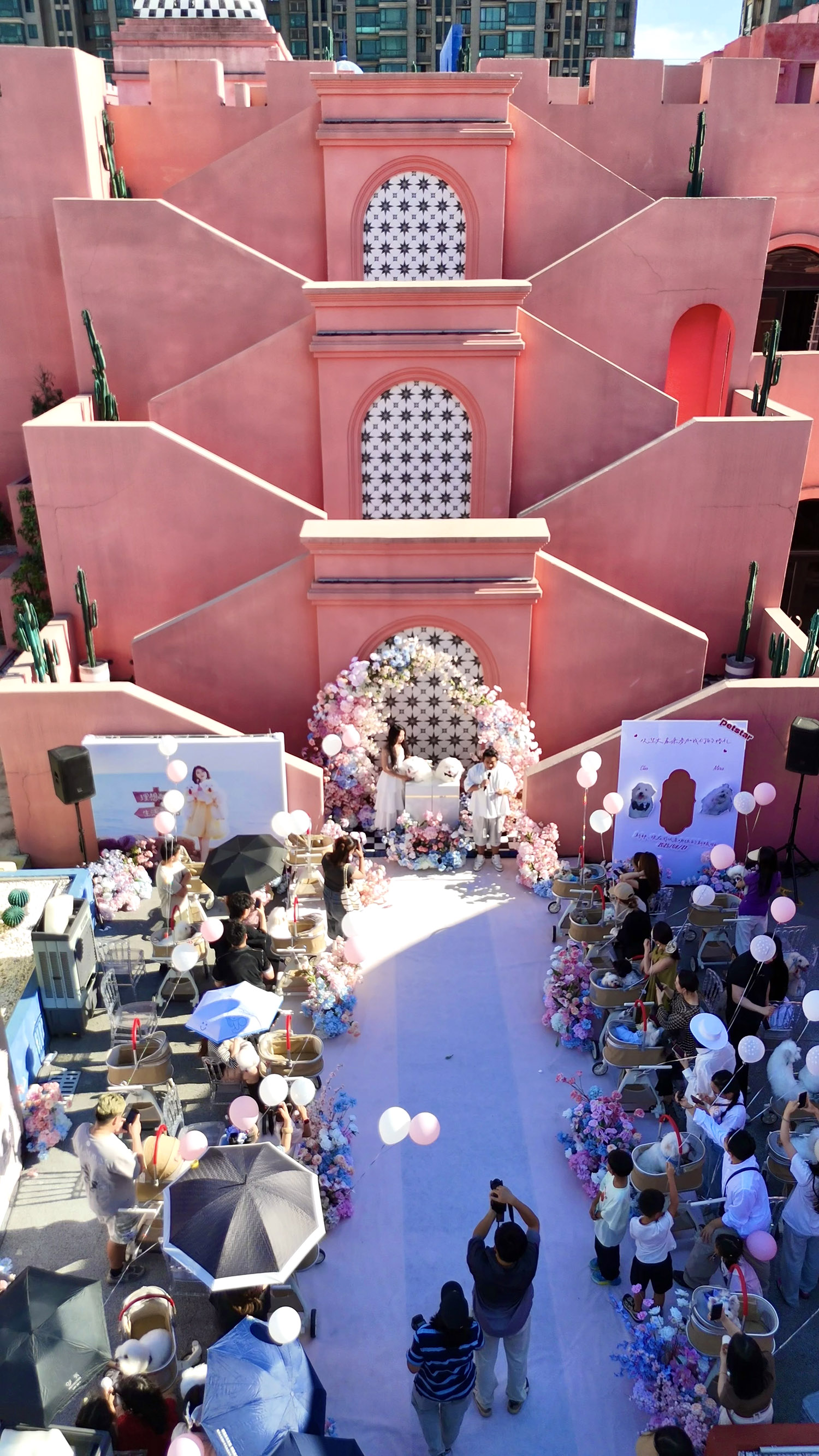
The ceremony mirrored a real wedding with playful twists such as invitations addressed to dogs, a dress code, a marriage celebrant Yu Xiaochun, founder of Petstar, a local pet company, and toy robot dogs serving as bridesmaids and groomsmen.
"We arranged pet strollers as gifts, set up a small stage, and had a one-hour ceremony. The most touching moment was when Elio and Mira exchanged collars — a floral one for the bride, a blue one for the groom," said Bai, who hosted the event.
For Bai, the ceremony was more than a novelty. It was deeply personal.
"Dogs don't understand birthdays or weddings, but they understand happiness. When they're by our side, and we're happy, they're happy too. That's enough," he said.
Bai added: "In many ways, the wedding was also for us — for the emotions we rarely know where to place. People say pets accompany humans, but I think they help us release our love."
Bai and Ju, who have no children, never had a wedding themselves, choosing to travel instead. "We didn't need a wedding, but giving one to our dogs made us genuinely happy — maybe it fulfilled the dream we never realized," Bai said.
China's urban pet population surpassed the number of children under the age of 4 in 2024, according to a Goldman Sachs report. It projected that by 2030, the number of urban pets could exceed 70 million, while the population of children under age 4 might fall below 40 million.
Sun Zhe, a sociologist at Chinese Modernization Institute of Shanghai University of Finance and Economics, said the growing "ritualization" of pet culture reflects profound emotional and social shifts among China's youth.
"When people celebrate their pets through ceremonies such as weddings or birthdays, they are not only expressing affection but also affirming a new kind of intimacy — one that connects humans and animals, and through them, connects people with each other," he said.
The phenomenon speaks to the deep psychological and cultural evolution of urban living, Sun Zhe said.
"In the past, pets were mainly friends or companions. Today, they've become extensions of the self — what I call 'self-projections'. Because pets cannot speak, they carry the gentlest, most stable part of their owners' emotional world. Investing time, money, and emotion in them is a way of nurturing one's better self," he said.
Liu Jing, 35, from Nanjing, Jiangsu province, is an accountant and mother of a 3-year-old daughter. She lives with two cats and a small mixed-breed dog. For her, affection for her pets lies in everyday companionship rather than ceremonial display.
"I completely understand why some people want to hold weddings or parties for their pets — it's a beautiful way of expressing love," said Liu. "But for me, love doesn't have to take the form of rituals. It's in the quiet moments — feeding them, walking them, or just sitting together on the sofa."
Liu said her pets are part of the family and her daughter has grown up with them, learning gentleness and care.
"I think that's the most meaningful part — passing love and empathy on to the next generation," she said.
While some critics see pet weddings or celebrations as unnecessary or extravagant, Sun Zhe views them as part of a broader "symbolic economy".
"In the agricultural era, animals served practical purposes. But in the information age, urban life is built around symbols and emotional meaning rather than production. Pets have shifted from functional beings to emotional symbols — a way for people to consume, express, and connect in search of psychological fulfillment," he said.
A cure for loneliness
According to a 2022 LeadLeo Research Institute survey, among people who spend more than 5,000 yuan per month on their pets, 26 percent lived alone — suggesting that independent pet owners form a significant segment of the high-spending market.
"For those living independently, pets play a dual role — they provide comfort in solitude, but also act as social catalysts. A dog walk can turn into a community activity; pet-friendly cafes and parks become new social spaces that revitalize urban life," said Sun Zhe.
Data from commercial real-estate consultancy JLL shows that in 2025 newly opened retail stores in Shanghai saw "pet and related services" occupy 2.1 percent of total commercial floor area, up by 0.6 percentage points compared with the previous year.
Seen through this lens, pet culture is not just about consumption or novelty — it's about how people in fast-changing cities are reconstructing intimacy, belonging and care, Sun Zhe said.
ALSO READ: Former steel town in Northeast China purrs ahead on tail of ‘pet economy’
He added that pet culture might help counter social isolation rather than reinforce it, suggesting that pets often serve as both emotional anchors and social connectors in urban settings.
Bai, the boarding house owner in Hangzhou, said the pet wedding trend reflects the changing mindset of young Chinese.
For many people, pets are emotional companions and social bridges, helping people in modern cities, where real connections are often lacking, to open up, start conversations, and even heal.
"We don't always celebrate our own birthdays, but we celebrate theirs every year," he said.
"A dog's life is only 10 or so years. We may have many dogs in our lifetime — but for them, we're their only family. All we can do is give them a beautiful life, so that both sides have good memories to hold on to. That's enough."
Contact the writer at sunnyu923@163.com
