

Archaeologists have uncovered massive stone mound tombs that reshape understanding of a Neolithic civilization, Zhang Yu reports in Shijiazhuang.
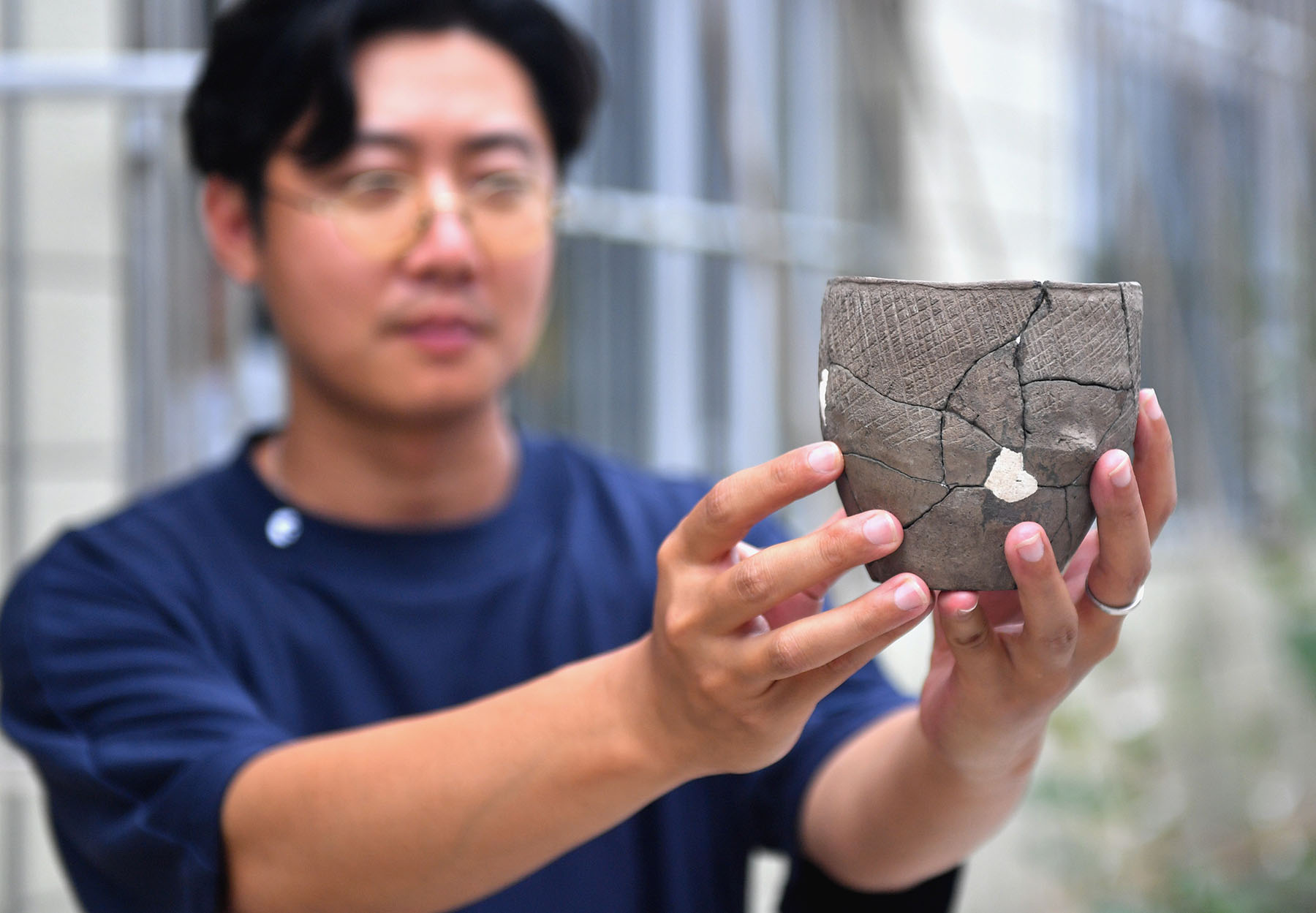
Every evening, as the sun dips behind the mountains of Zhangjiakou in Hebei province, Gong Zhanqing returns from a windswept hilltop to a temporary office.
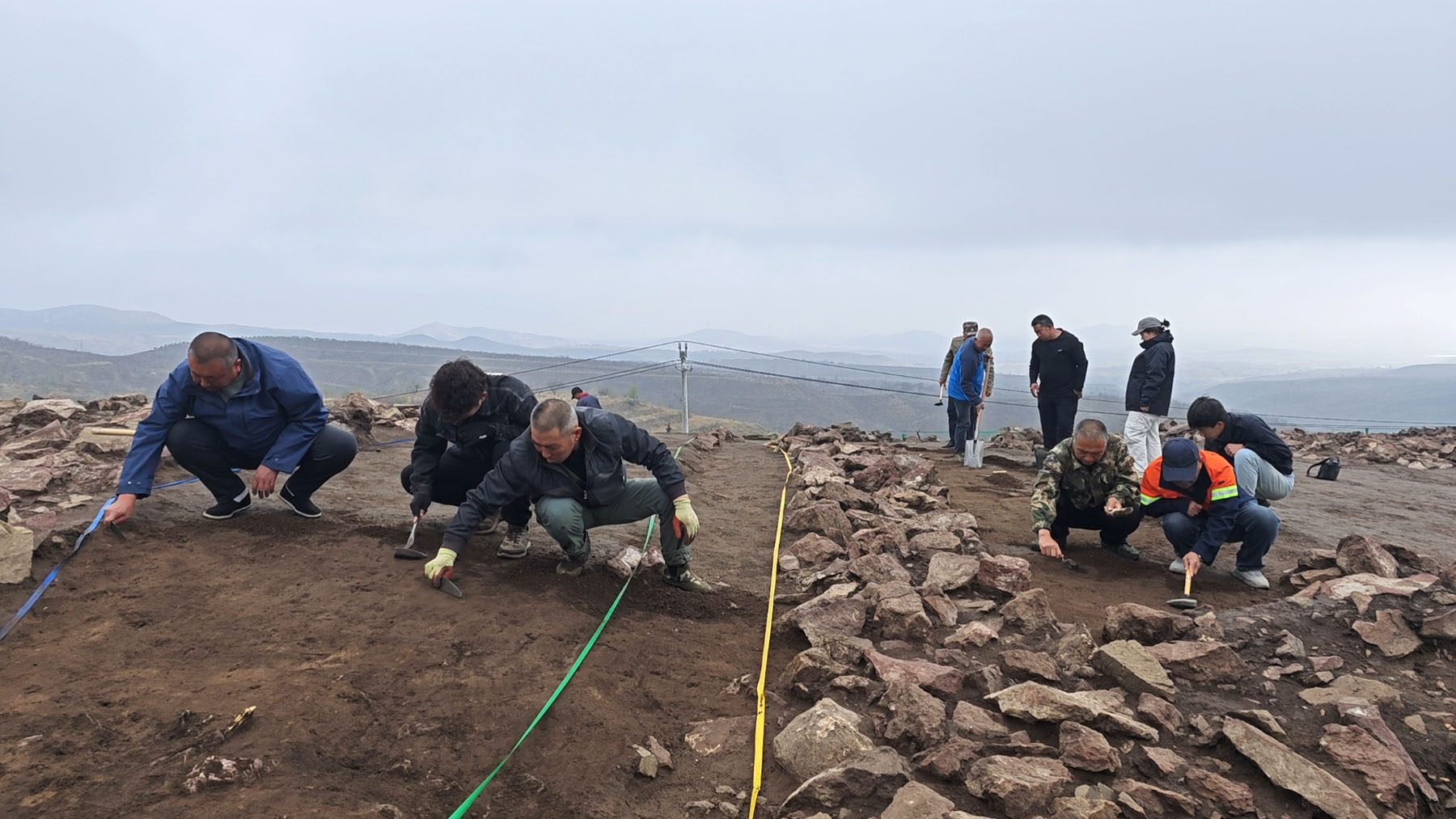
His day's work is far from over. Under a simple lamp, the 33-year-old archaeologist begins the delicate task of cleaning and documenting the day's finds, his tools a small brush, a bamboo pick and a vernier caliper.
"You have to be extremely careful, especially when reaching a key layer. You clean bit by bit to avoid damaging any artifacts," says Gong, the on-site leader of the excavation at the Zhengjiagou site in Xuanhua district.
READ MORE: Tracing the origins of civilization
He is an archaeologist with the Hebei Provincial Institute of Cultural Relics and Archaeology, taking on this job at the site in 2024.
For him, this meticulous routine over the past two years is part of a much larger story — unraveling the secrets of a discovery that is offering new insights into the understanding of one of China's most important Neolithic civilizations, the Hongshan culture.
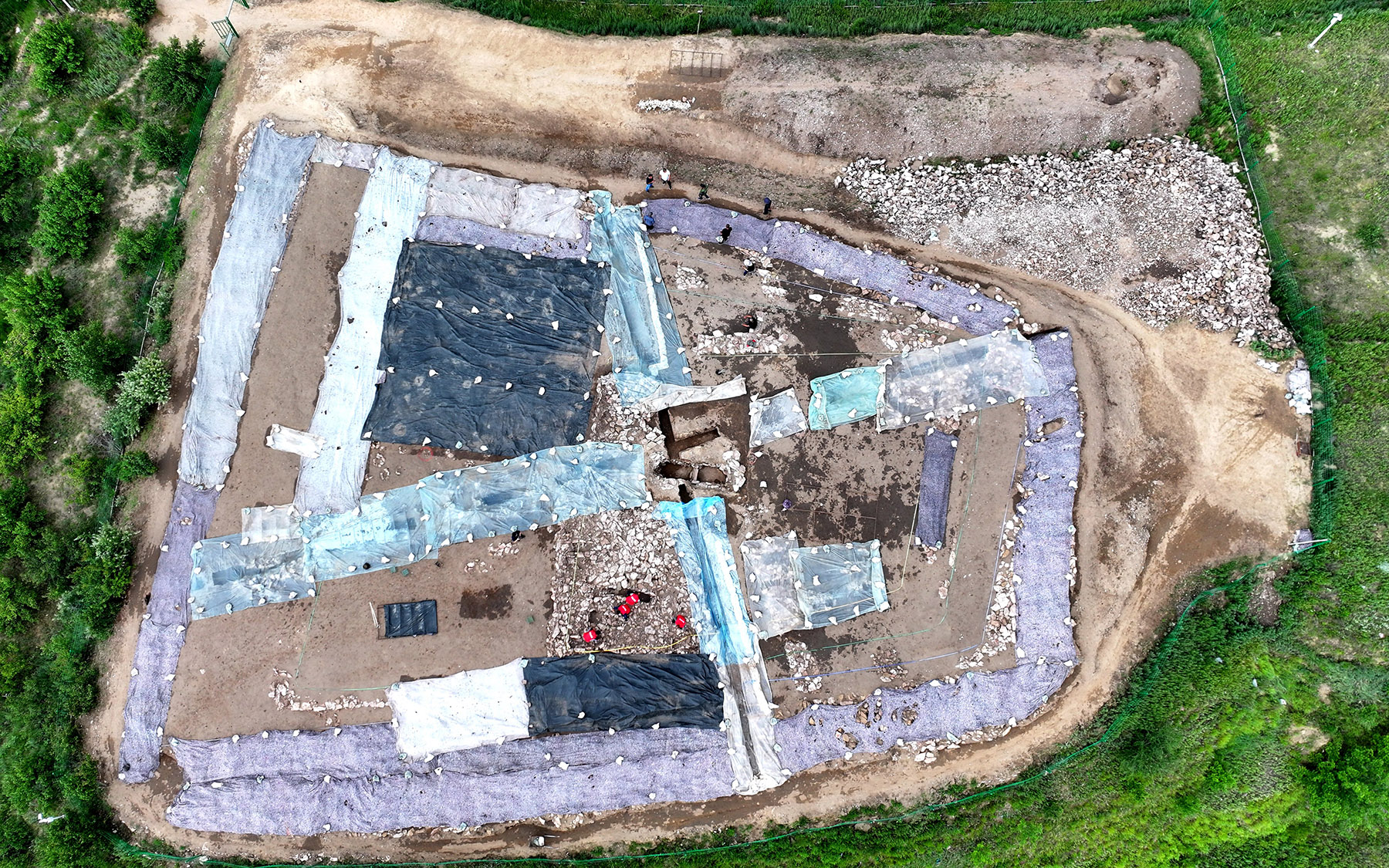
Discovered in late 2021, the Zhengjiagou site has been found to contain nine stone mound tombs, with Mound No 1 being one of the largest and most significant.
Located on a highland about 1,014 meters above sea level, the scale of this tomb left even the experienced Gong in awe.
"Although I've been in archaeology for over 10 years, I never expected to find a prehistoric structure of such massive scale on a mountaintop in this region," he says.
Covering an area of nearly 1,500 square meters, Mound No 1 is a feat of ancient engineering.
It consists of three earthen tiers, each reinforced with neatly laid stone retaining walls, forming a trapezoidal platform integrated into the mountain landscape.
The structure was clearly divided into distinct zones for burial and for rituals.
"The so-called 'stone mound tombs' are ancient burial complexes built with stones by the late Hongshan people," Gong explains.
"They functioned similarly to later mausoleums where important community figures were buried, and sacrificial activities were held."
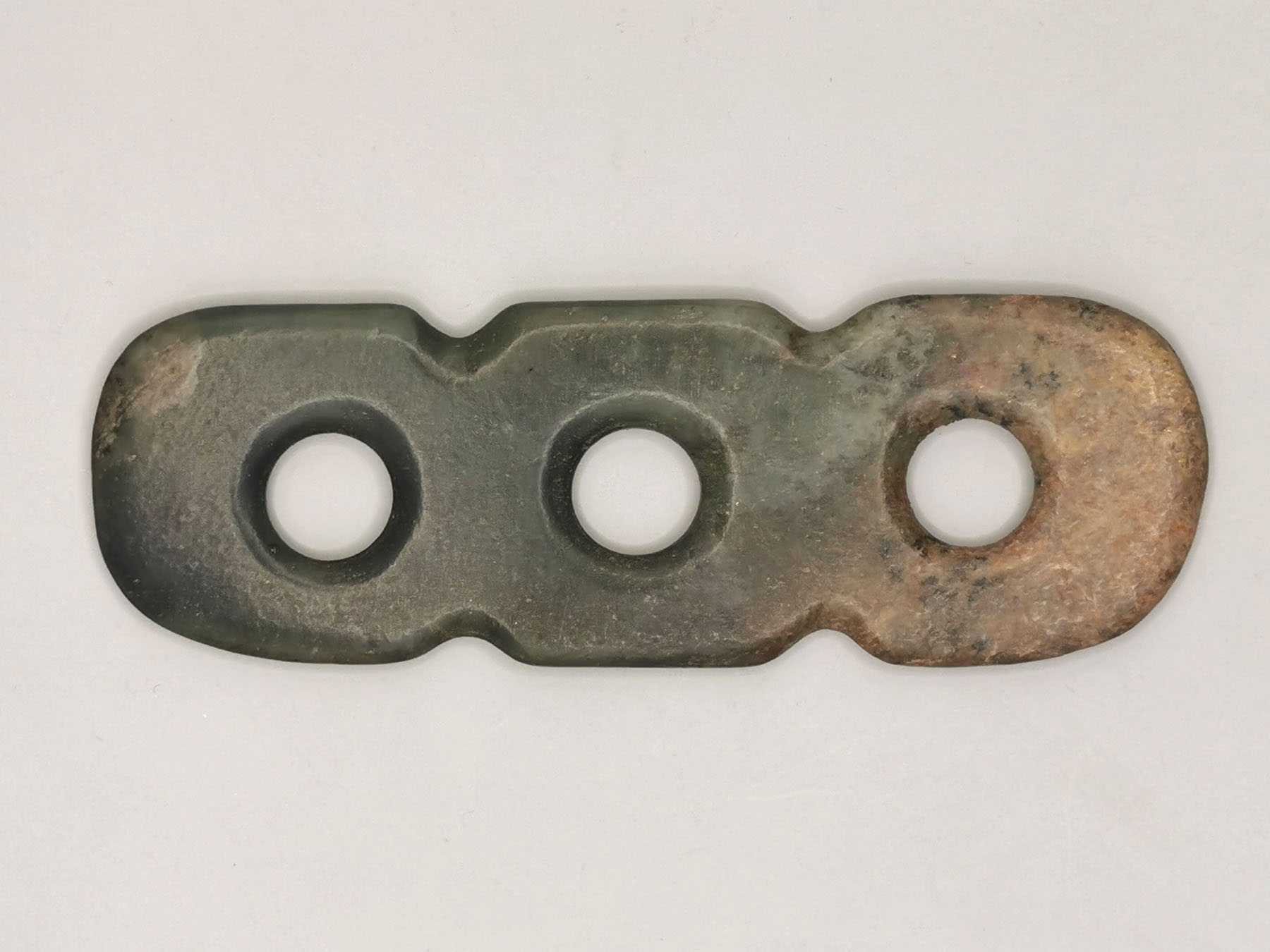
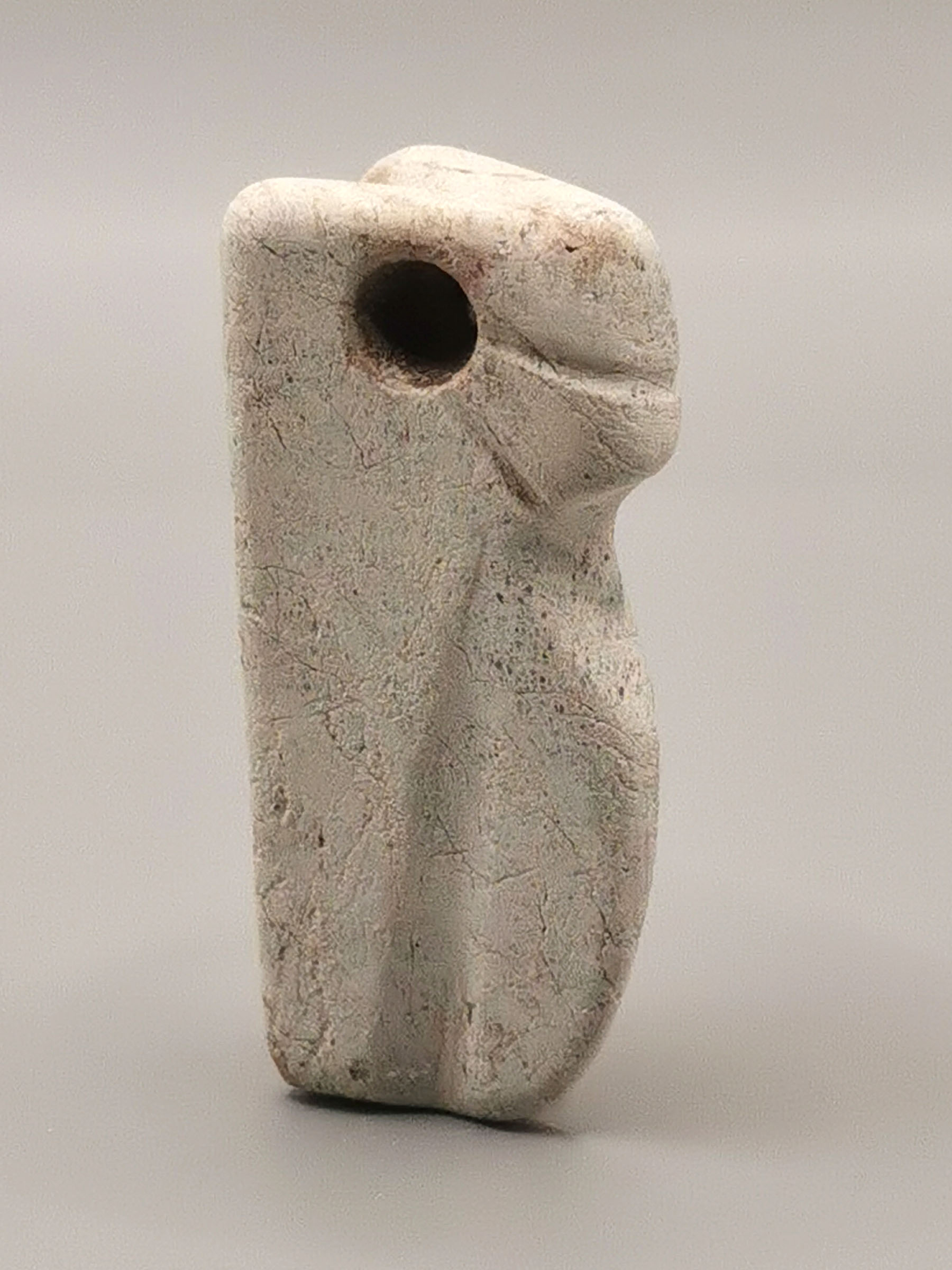
Since systematic excavation began, over 600 artifacts have been recovered, primarily ritual objects made of jade, pottery, stone, bone and shell, with very few everyday items.
"The excavation has lasted four years, with new discoveries each year," Gong says. "We have gradually gained a clearer understanding of its structure, construction methods and cultural significance."
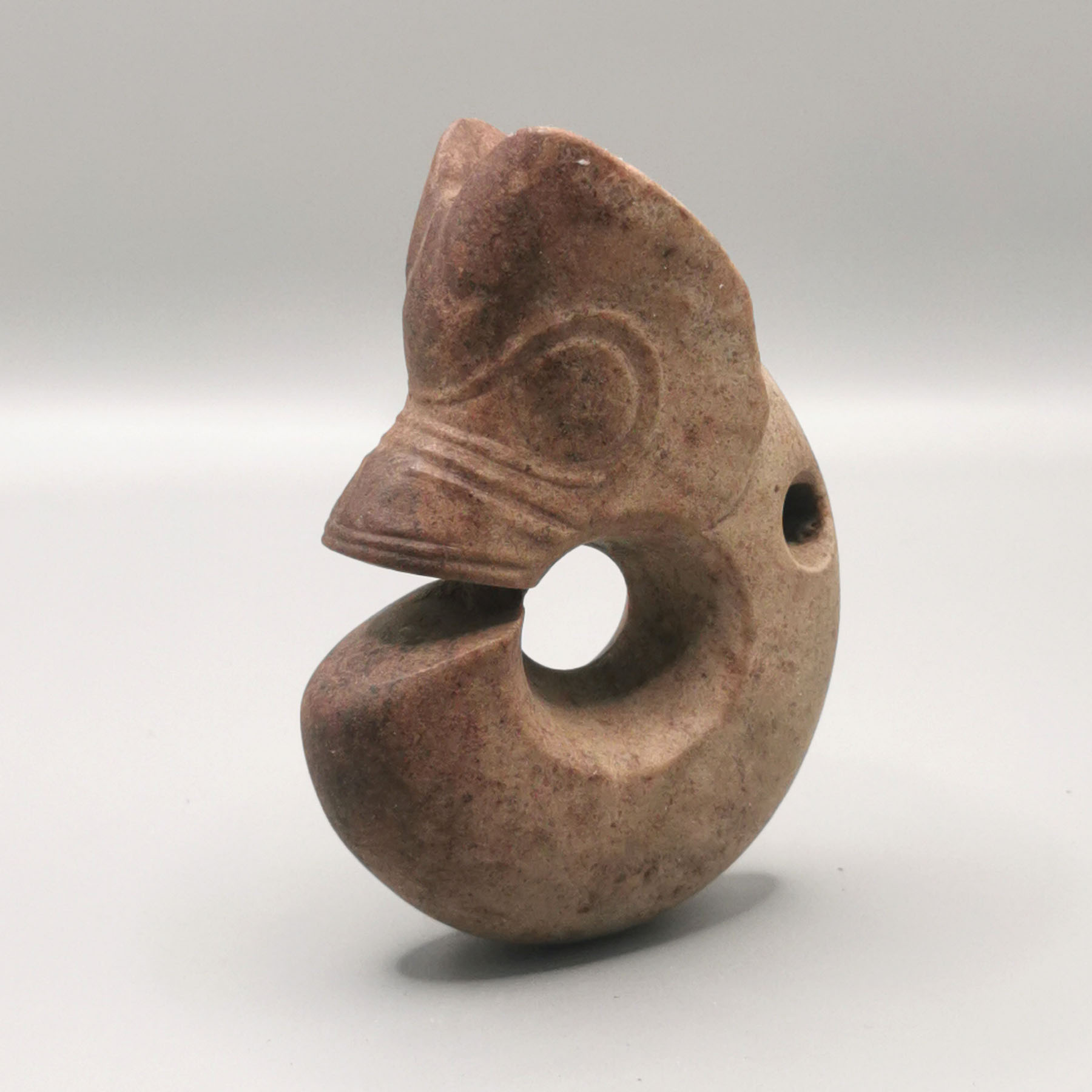
Among the most exciting finds is a ring-shaped jade dragon with a slit, a signature artifact of the Hongshan culture.
"It was a ritual object used by the Hongshan people for worship and communication between heaven and earth," Gong says, describing its design as one that fuses the features of a bear, pig and snake.
This discovery of the site is pivotal because it redefines the map of Hongshan culture.
Previously, the core of this culture, renowned for its exquisite jade work, was believed to be concentrated hundreds of kilometers away in Northeast China's Liaoning province and North China's Inner Mongolia autonomous region.
Zhengjiagou, situated far to the northwest in Hebei, changes that narrative.
"It extends the timeline of the Hongshan culture and significantly expands its known geographical distribution," Gong explains.
Scientific dating indicates the tomb complex was used from approximately 5,300 to 4,800 years ago, confirming that the culture had spread to the southwest, as Zhangjiakou is located more than 500 km southwest of Liaoning.
The site's importance has resonated at all levels.
Wang Jihong, director of the Xuanhua District Cultural Relics Management Office, witnessed the local response firsthand.
Her team took immediate action after villagers reported seeing human bones and pottery fragments on the hillside in November 2021.
"The surrounding villages have since been relocated," Wang says."In the future, we believe the public will definitely be able to visit the Zhengjiagou site and its artifacts up close."
According to Wang, local authorities have installed protective fencing, surveillance cameras and security patrols, and are planning an archaeological park and a museum.
For the local community, the find is a source of newfound pride.
"Before 2021, this was just a small hill with a few trees," says Meng Hai, the village Party secretary of Zhengjiagou.
"Knowing our village has this history now makes us feel proud," he says.
Recognized as one of Hebei's Six Major New Archaeological Discoveries of 2025, Zhengjiagou is also part of a national-level Archaeological China project, according to Wang.
As the wind sweeps across the excavated stone walls, Gong looks to the future. His team aims to publish a comprehensive report within three years and build a protective shelter over the site to facilitate public display.
ALSO READ: A Neolithic site in Jiangsu tells new stories
The broader mission, shared by everyone involved, is to piece together the journey of these ancient people.
"How did the Hongshan people migrate from Northeast China to the Zhangjiakou area? This will be the focus of our next research,"Gong says.
With every careful stroke of his brush, Gong is not just cleaning ancient jade. He is helping to clear the dust off a missing chapter in the grand story of Chinese civilization.
Contact the writer at zhangyu1@chinadaily.com.cn
