

The Hong Kong Philharmonic's first New Year concert on the mainland reflects smoother travel, talent-friendly policies and growing cultural integration
It was 10:30 am on a sunny Saturday morning. A handful of cozily dressed musicians carrying cellos or violins got out of their vehicles at the Bay Opera of Shenzhen, a key cultural landmark in the Qianhai Cooperation Zone, facing a peaceful bay.
Shortly afterward, two large orchestra coaches arrived with the rest of the Hong Kong Philharmonic members. The rehearsal would start in half an hour. There was still time to grab a cup of coffee.
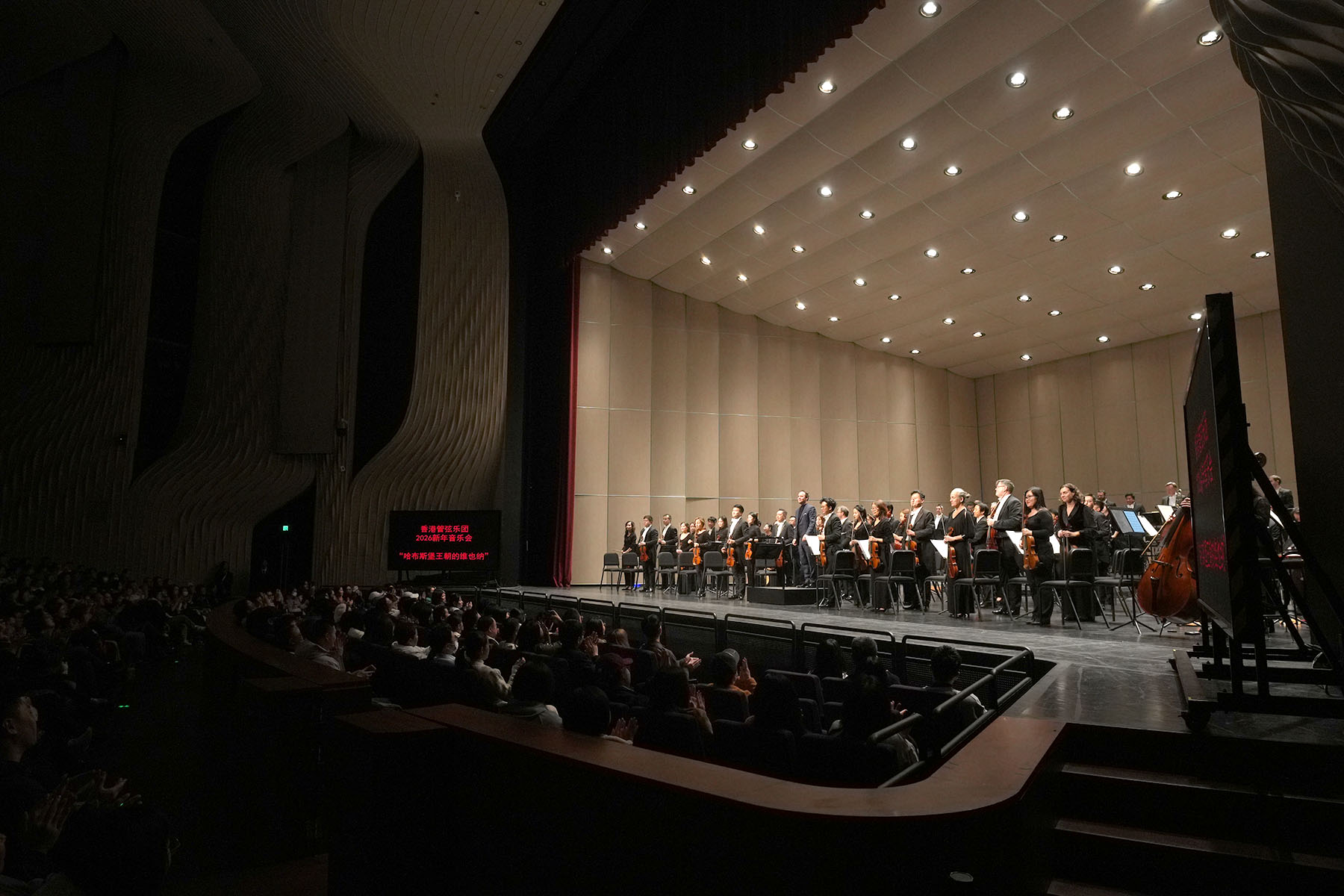
Four hours later, the 96-member group, fully dressed in formal black attire, took the stage in the packed opera hall. The orchestra, one of Asia's most reputable, performed its first New Year concert on the Chinese mainland in its 52-year history.
To make life easier for those onstage and offstage, the concert was held in the afternoon. By the same evening, both the audience and the musicians would return to their destinations in the Guangdong-Hong Kong-Macao Greater Bay Area.
"It's definitely a routine for me, because I do this every week," says Paul Luxenberg, who was on the orchestra coach. He has lived in Hong Kong since joining the orchestra as principal tuba in 2001, and currently lives there with his wife and two children.
The Los Angeles-born tubist has been sought after in the region. A graduate of the renowned Juilliard School, he not only plays as a soloist and with an ensemble, but also teaches at music institutions in Hong Kong and Shenzhen, Guangdong province. During the past three months, he recalled at least 20 trips crossing from Hong Kong to Shenzhen.
When he travels farther north to cities like Wuhan — where he has given multiple master classes, performed in recitals, and judged an international competition — he usually buys an extra ticket. That's because his hefty instrument, a piston-valve F tuba from the German instrument maker Meinl Weston, usually rides next to him on the high-speed rail. If the tubing were laid out straight, the length would be an astonishing 3.7 meters — not something that the nature-loving Californian would carry on one of his climbing expeditions.
But for this concert, big instruments — the harp, tuba, double basses, timpani and percussion — crossed through Hong Kong-Shenzhen customs without any fuss. What used to take half a day to get clearance, now takes only half an hour, according to Vanessa Chan, director of orchestral operations.
New customs policies in 2025 from the Qianhai authority and Chinese customs have made the border crossing less daunting. The new policies, aiming to facilitate the mobility of high-level talent living in the region, also paved the way for this midday concert.
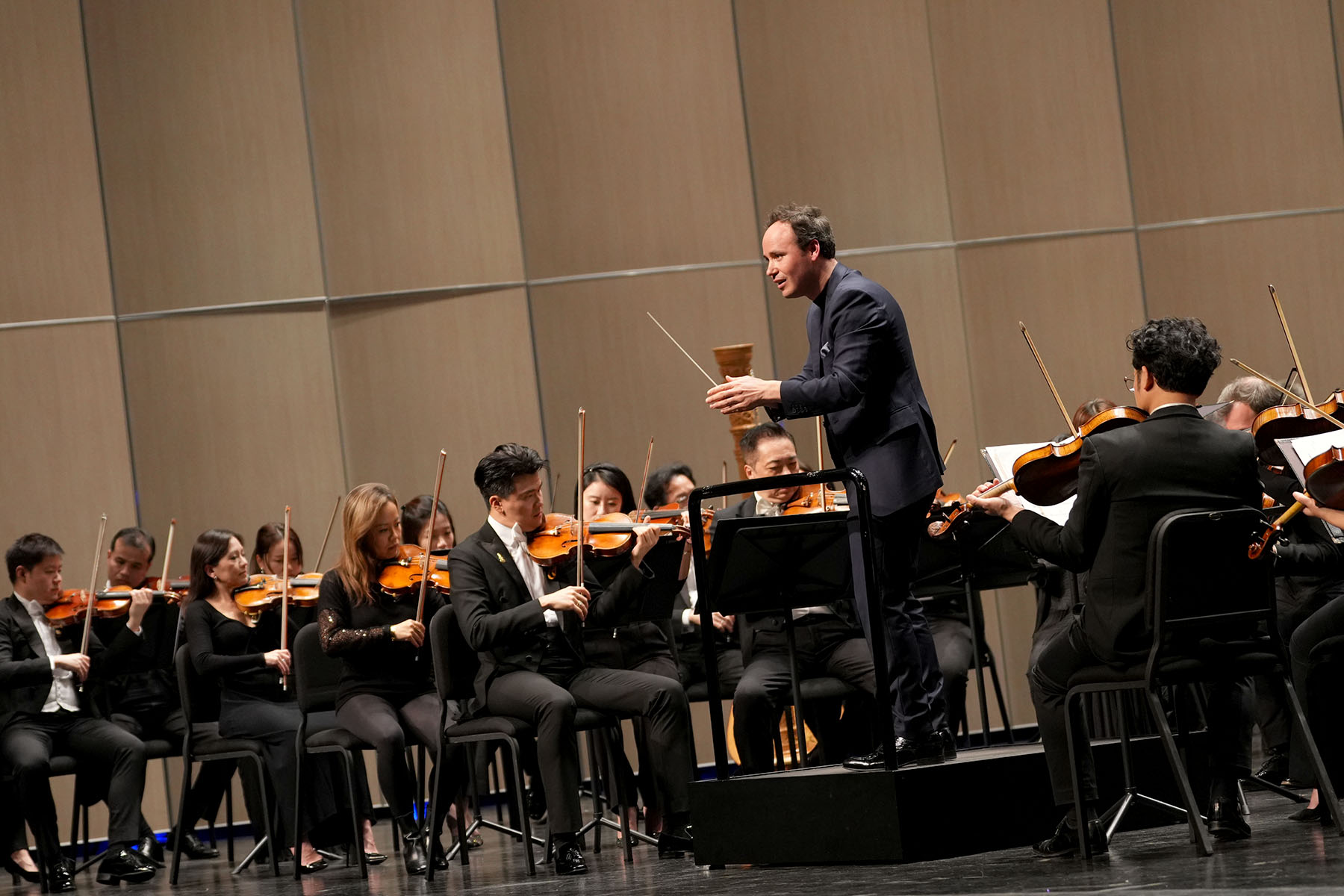
Featuring festive orchestral works inspired by Budapest and Vienna, the program was conducted by an energetic Hungarian conductor, Gergely Madaras, who often turned around to face the audience during each piece, providing anecdotal commentary. The scene was filled with laughter and warm applause.
Some classical music fans traveled for hours just to attend the event, despite the fact that the same program had already been performed on Dec 29 and Dec 30 at Tsim Sha Tsui's Hong Kong Cultural Centre, where the orchestra is based. It is also where most of the orchestra's 100-plus concerts are held each year. Mainland music lovers used to race against time to attend a concert and catch the last train heading back.
Now, the orchestra is coming to them. "Just because it's the Hong Kong Phil onstage," says Li Jun, a classical music lover who explained why he'd traveled from Guangzhou in Guangdong on the day of the concert.
"It's important not just for our orchestra, but for any big orchestra, to have a little bit of touring. During tours, you have an exchange of ideas and also culture," says Benjamin Moermond, the orchestra's principal bassoon in his 16th season.
READ MORE: Brazilian beats
For Moermond and Luxenberg, both Juilliard School alumni, their routine teaching at the School of Music at the Chinese University of Hong Kong (Shenzhen), is supported by a 10-year multi-entry visa, known as the "R visa", for specialized high-level talent.
Among the 40-plus foreign musicians at the orchestra, about 30 still need to apply for the common work visa, or the "Z visa", for each performance on the mainland. But that is also changing.
"The orchestra has done a great job helping to improve the visa situation for our colleagues," says Luxenberg, the principal tuba. "The (high-level talent) visa is becoming something that more of my colleagues are using these days."
The orchestra's New Year's concert serves as a harbinger for further cultural integration with the mainland. The management team, traveling with the orchestra, delivered a clear message on the sidelines of the concert: the orchestra needs to venture deeper into the Chinese mainland, treating it as its own turf.
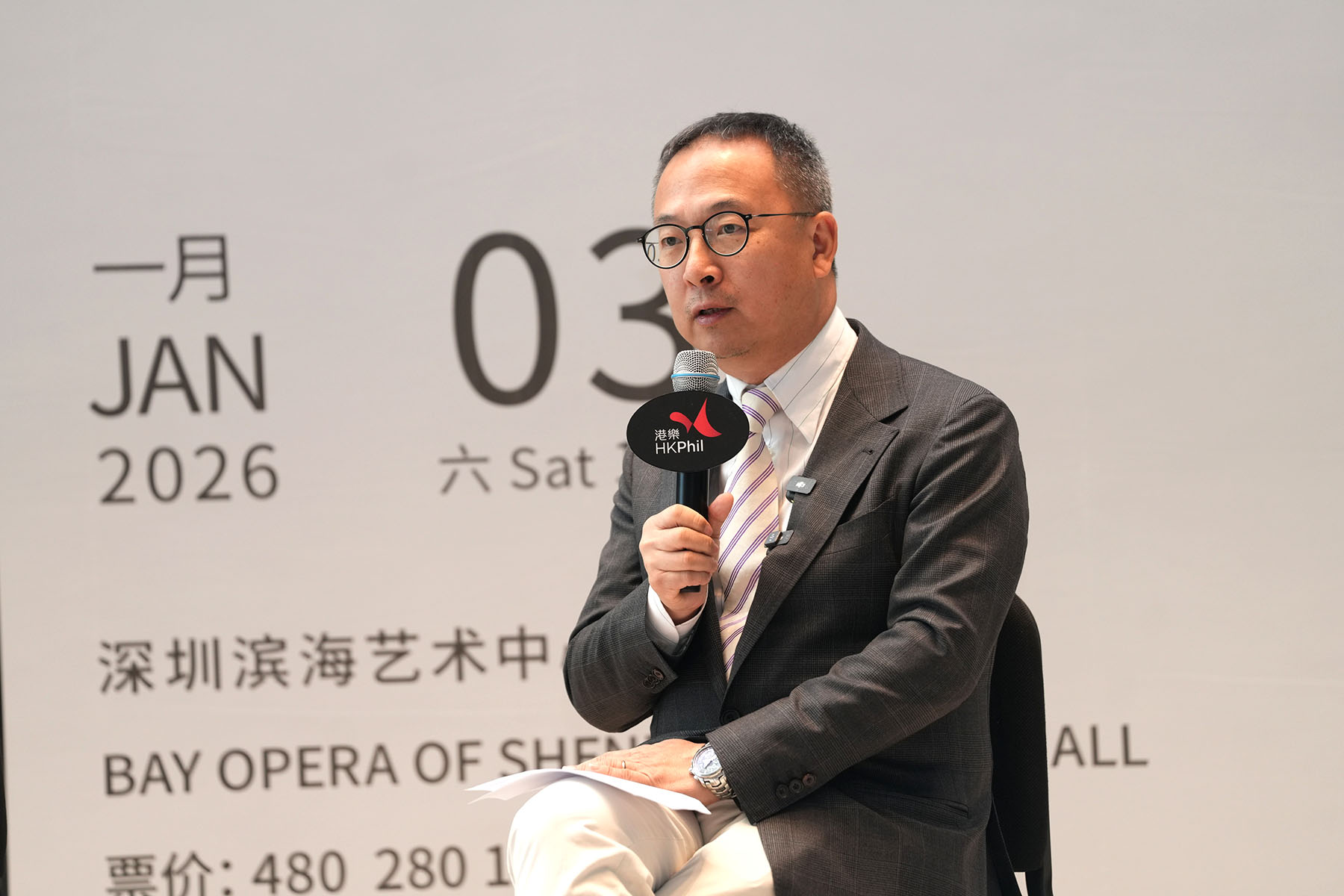
"As a world-class orchestra, the Hong Kong Philharmonic is not just an orchestra for Hong Kong, but also an orchestra for the Greater Bay Area and China at large," says Winnie Tam, vice-chairman of the board of governors, Hong Kong Philharmonic Society.
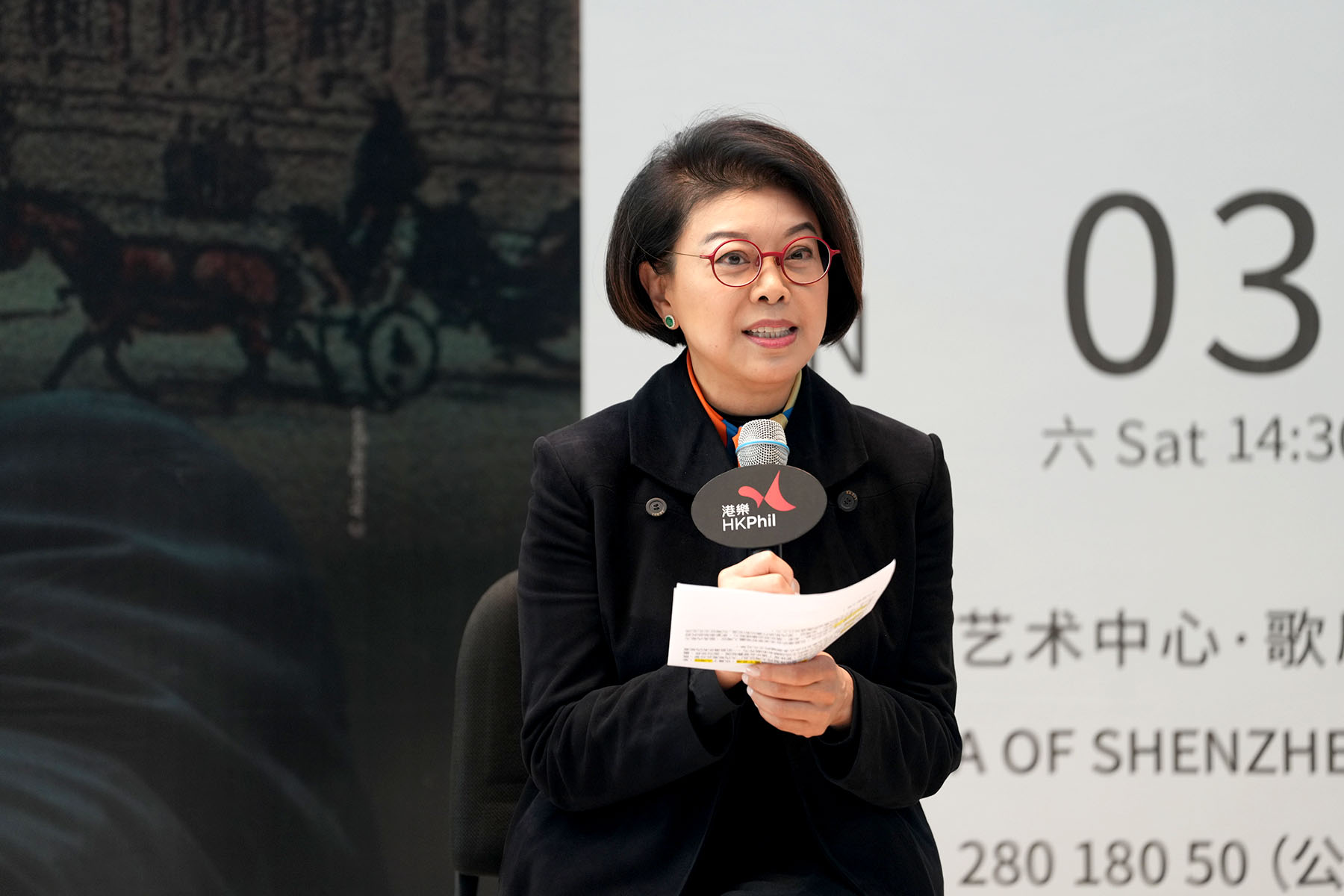
"The integration of the cultural life between Shenzhen and Hong Kong is an unstoppable trend," says deputy chief executive Patrick Ren Xiaolong."I was told by the ticket office that about 10 to 15 percent of today's audience comes from Hong Kong."
Ren, a seasoned administrator known for his tenure as CEO of the orchestra at Beijing's National Centre for the Performing Arts, relocated to Hong Kong in 2025 to take his new post at the Hong Kong Philharmonic.
To lure more mainland audiences, he says, the orchestra has scheduled many of its weekend concerts for the afternoon rather than the evening. It is also expected to stage more concerts on the Chinese mainland, once every three months, starting from the 2026-27 season. An upcoming afternoon concert will be held at the Xinghai Concert Hall in late January with world-renowned conductor Daniele Gatti returning to Guangzhou for the second consecutive year with the orchestra to perform Gustav Mahler's Symphony No 7 in E Minor.
With the future in mind, the orchestra picked 25-year-old Tarmo Peltokoski as the next music director. The Finnish conductor will lead the orchestra for his mainland debut at Guangzhou's Xinghai Concert Hall on April 26, with Dmitri Shostakovich's Symphony No 11 in G Minor, as well as the Violin Concerto composed by Peltokoski's mentor, Esa-Pekka Salonen, alongside violinist Leila Josefowicz. In late June, the orchestra will collaborate at the Shenzhen Concert Hall with conductor Roberto Abbado in Dmitri Shostakovich's Symphony No 1 in F Minor and share the stage with pianist Aristo Sham in Sergei Rachmaninoff's Piano Concerto No 3 in D Minor.
ALSO READ: Hong Kong Philharmonic Orchestra concludes tour with Beijing concert
"There is a real excitement within the orchestra for new projects and new energy," says Moermond.
The Cincinnati-born musician also travels to Guangzhou, playing an active role working with young artists at the Youth Music Culture the Greater Bay Area, known as YMCG. The annual event, which collaborates closely with veteran musicians of leading orchestras from around the world, serves as a springboard for aspiring young talent worldwide.
For the itinerary to Guangzhou, Moermond says that he has found a shortcut.
"Shenzhen has many train stations, right? Out in Longgang district, there is Pinghu Station. And it is quite quick to get to Guangzhou East Station, which is closer to where the Xinghai Concert Hall is. You see I know all the routes now," the musician says with a smile.
The author is a freelance writer for China Daily.
