

The choice of Shenzhen as the hosting city for the 33rd APEC Economic Leaders’ Meeting—a city that transformed from an agricultural backwater into a global technology hub in four decades—carries a deliberate message. It embodies a nation that has achieved modernization through reform, opening-up, and hard work rather than through imperialism. For Hong Kong, this moment offers both a mirror and a map.
 It is often noted that China is the only major country in modern history to achieve comprehensive modernization without relying on colonization or the subjugation of others. This is not merely a point of national pride; it is a structural fact with consequences for how China engages with the world today. The prosperity visible across the Chinese mainland is the product of domestic reform, infrastructure investment, and integration into global trade—not the extraction of wealth from distant lands. For Hong Kong, this matters because the city’s own rise was never built on colonialist privilege either. Hong Kong has thrived because of its people’s ingenuity and its role as a bridge between the mainland and the wider world. That bridge is now wider and busier than ever.
ALSO READ: HKTDC: HK-Shenzhen synergy fuels joint contribution to APEC
Many Hong Kong residents who moved overseas in recent years have discovered something unexpected: The respect they command in their new communities is inseparable from China’s standing in the world. When a country is seen as a stabilizing force in the global economy and a constructive player in multilateral institutions, its people abroad share a measure of that credibility. This is not abstract patriotism; it is lived experience. The passport one carries, the consular protection one can access, and the general regard with which one’s origin is held all shape the immigrant experience. China’s international position today—as the world’s largest trading nation, and as a crucial voice in global governance—directly benefits those who call Hong Kong home, whether they remain in the city or have settled elsewhere.
This is precisely why the current moment demands unity of purpose rather than division. Hong Kong stands at a rare inflection point. The city’s first five-year plan, released in September, provides something the city has long lacked: a systematic, forward-looking framework for economic and social development. With 105 indicators across seven chapters, the plan is not a wish list but an operational blueprint. It explicitly aligns Hong Kong with national development priorities while preserving the city’s unique advantages under the “one country, two systems” framework.
The spatial logic of the plan is captured in the phrase “south finance, north technology and innovation”. The southern districts will consolidate Hong Kong’s role as an international financial center. The northern territories, bordering Shenzhen, will become the engine of a new innovation and technology economy. This is not a rhetorical flourish. The Northern Metropolis will supply over 3,000 hectares of new development land, with roughly 900 hectares of “spade-ready” sites produced in the next five years alone—a 7.5-fold increase over the previous five-year period. Seven thousand housing units will be completed in that window, with 240,000 more to follow over a decade. For a city that has endured decades of crippling land shortages, speculative hoarding, and substandard housing, this is the most consequential land supply reform in generations.
READ MORE: APEC cities envision bright future
The deeper significance lies in what this land will be used for. The Northern Metropolis is designed to host industry, not just residences. The plan envisions clusters in life and health sciences, artificial intelligence, robotics, and microelectronics, supported by three innovation parks and five research institutions. The Northern Metropolis University Town concept will link higher education directly to commercialization, creating a pipeline from laboratory to factory floor. For young people who have watched their city’s economy narrow into finance and property, this represents a genuine broadening of opportunity.
None of this will happen automatically. The plan’s success depends on execution—on cutting through the procedural delays that have historically strangled development, on attracting enterprises to the northern clusters, and on persuading the public that the benefits will be widely shared rather than captured by a few. The Hong Kong Special Administrative Region government has introduced dedicated legislation to streamline approvals in the Northern Metropolis, with planning processes compressed from nine months to two for certain applications . But bureaucratic reform alone is insufficient. What is required is a shift in mindset: from passive reliance on traditional advantages to active cultivation of new ones. So the task for Hong Kong now is not to look backward at what opportunities have been lost, but forward at what can be built. The first five-year plan is a start. The Northern Metropolis is a foundation. The land is there. The framework is there. What remains is the collective will to see it through.
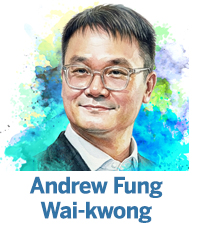
The author is a former information coordinator for the Hong Kong Special Administrative Region government and a member of the Chinese Association of Hong Kong and Macao Studies.
The views do not necessarily reflect those of China Daily.
