

Stephen Law says good governance is not a compliance exercise but a foundation for sustainable business development and public confidence
Years ago, I stood on the Hong Kong Institute of Certified Public Accountants’ (HKICPA) awards stage to receive a corporate governance award on behalf of a listed company. I remember the pride, but even more the responsibility. Public recognition establishes a benchmark that an organization must continue to uphold.
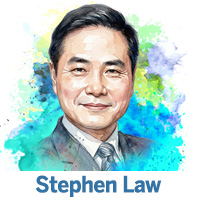 Having chaired the awards’ organizing committee in 2012, returning this year as the Institute’s president reinforced a conviction shaped by my experience as an investor and senior executive of listed companies: Good governance is not a compliance exercise. It is a foundation for sustainable business development and public confidence.
The Best Corporate Governance and ESG Awards 2026 presented 35 awards, with eight first-time recipients, including a newly listed company. Recognition extended to established leaders, newer entrants and public-sector organizations. These achievements deserve celebration, but their wider significance lies in the standards they encourage others to pursue.
For Hong Kong, the message is particularly important. An international financial center competes not only on its ability to attract capital, but also on the trust that encourages investors to commit capital for the long term.
From disclosure to effective governance
For more than a quarter of a century, the awards have reflected an important evolution. Governance is no longer viewed simply through board structures and regulatory compliance. It is increasingly understood as integral to strategy, risk management and long-term resilience. The awards’ highest recognition assesses governance and ESG together, including their integration into corporate culture and operations.
Best practice does not mean publishing the thickest report. It means demonstrating how principles influence decisions, responsibilities and outcomes.
My experience in private equity and the management of major listed companies has taught me to examine both sides of this equation. Investors need reliable information and effective safeguards. Management needs governance arrangements that guide decisions and identify risks before they become crises. Strong governance serves both.
Raising the bar
First, boards need stronger independent oversight and broader expertise.
Additional independent directors can bring fresh perspectives and increase a board’s capacity to address complex issues. However, appointments must deliver substance. Directors need sufficient time, relevant information and the confidence to challenge assumptions. Diversity should strengthen judgment, not merely satisfy a numerical requirement.
Second, internal controls must be treated as an investment in resilience.
Having held executive responsibility for finance, investment control and treasury, I understand that controls are most valuable when embedded in daily operations. They should help management identify emerging problems, protect assets and support sound decisions—not simply produce documentation.
Hong Kong should explore stronger management accountability and proportionate independent assurance over internal controls. Any changes should reflect companies’ size, complexity and risk profile, with appropriate consultation and implementation support.
Third, credible asset valuation will become increasingly important.
My work as an accounting advisory expert to the Ministry of Finance reinforces my conviction that sound financial information supports both market confidence and economic development. As more enterprise value rests in technology, patents and brands, investors need to understand the assumptions and uncertainties underlying valuations.
In my submission on Hong Kong’s first five-year plan, I proposed a statutory licensing regime for professional valuers and specialized intellectual-property valuation training. These proposals warrant further consideration as Hong Kong develops its innovation and intellectual-property financing capabilities.
Financing green development with confidence
As a member of the Green Tech Fund Assessment Committee, I appreciate the importance of connecting promising technologies with credible pathways to commercial application. Environmental ambition, technical merit and commercial viability must be considered together.
The same discipline should apply to green and transition finance. Investors need reliable information about environmental performance, implementation risks and the use of funds.
Independent sustainability assurance can strengthen confidence in emissions data, transition commitments and other material information. It must be supported by competent practitioners, robust evidence and clear explanations of what has—and has not—been assured.
As HKICPA president, I see an important responsibility for the profession in building this capability through standards, technical guidance and training. Reliable disclosure and assurance can help direct capital toward credible projects while reducing greenwashing risks.
Innovation requires accountability
Artificial intelligence brings governance questions into sharper focus.
The Institute’s research covering 124 large-cap companies found that 92 disclosed AI use. Yet disclosure focused more on applications than on governance arrangements, including oversight, risk assessment, data controls and human accountability. This does not establish that undisclosed safeguards are absent, but it highlights a need for greater transparency.
As a Cyberport board member, I welcome technology’s potential to improve productivity and create opportunities. However, faster processing cannot replace professional judgment.
Boards should understand who approves high-risk applications, how sensitive information is protected and when human intervention is necessary. The Institute’s AI and data-governance guidance, including a five-step Traffic-Light Decision Framework, is intended to support responsible deployment.
Hong Kong should demonstrate that innovation and effective governance reinforce each other.
Serving national development
As a member of the National Committee of the Chinese People’s Political Consultative Conference, I see Hong Kong’s professional strengths as an important contribution to the country’s high-quality development and opening-up.
For Chinese mainland enterprises raising funds or expanding internationally, Hong Kong can provide the reporting, governance, valuation and assurance capabilities needed to communicate their strengths and manage cross-border risks. This is a practical way to showcase the quality of mainland enterprises and connect national development with global investment.
The Hong Kong Special Administrative Region government’s efforts to strengthen financial services, innovation and green development deserve active support. Regulators, professional bodies, and businesses should translate that direction into practical guidance, talent development and proportionate requirements, giving smaller organizations a workable path to improvement.
The author is a member of the National Committee of the Chinese People’s Political Consultative Conference, president of the Hong Kong Institute of Certified Public Accountants, and an advisory expert to the Ministry of Finance.
The views do not necessarily reflect those of China Daily.
