

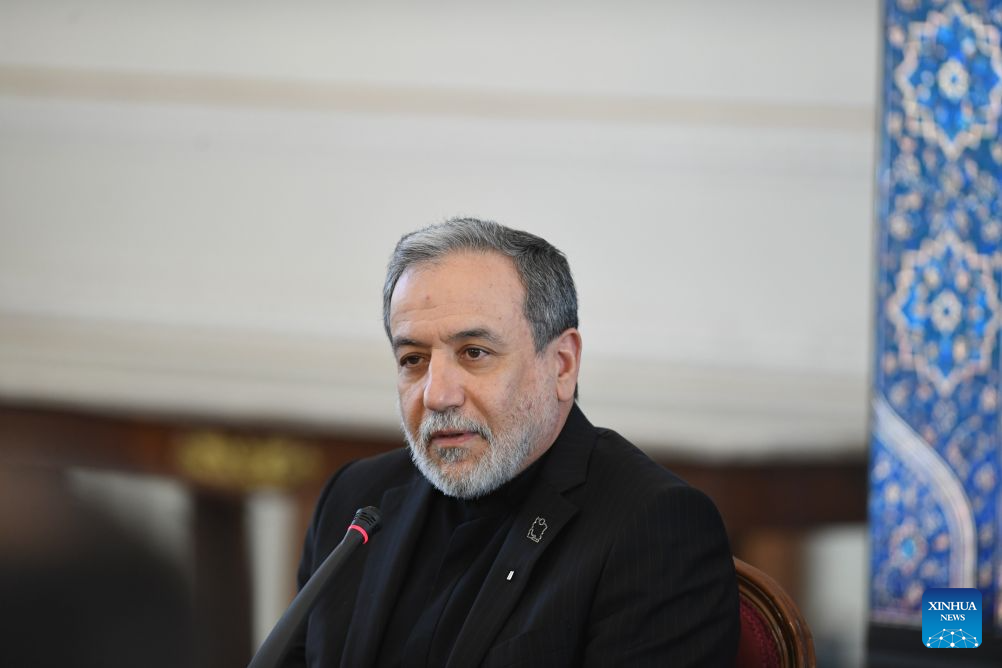
TEHRAN – Iran's Foreign Minister Seyed Abbas Araghchi is scheduled to visit Pakistan and Oman in the coming days, the Iranian Foreign Ministry said Sunday, as the Islamic Revolutionary Guard Corps (IRGC) reported that a supertanker carrying over 2 million barrels of oil sank in the Gulf's southern waters following "massive explosions" after hitting naval mines.
Spokesperson for the ministry Esmaeil Baghaei said in a statement that Araghchi will attend the 30th Meeting of the Council of Ministers of the Economic Cooperation Organization (ECO) in Islamabad on Sunday and Monday, where trade and economic cooperation among the group's 10 member states will be discussed.
Araghchi will hold talks with his Omani counterpart Sayyid Badr bin Hamad Al Busaidi in Muscat on Tuesday, the spokesman added.
According to the semi-official Tasnim news agency, Araghchi will leave Tehran for Islamabad on Sunday.
Meanwhile, the IRGC navy said two "violating" oil tankers suffered "massive" explosions after hitting naval mines on the "unauthorized" route south of the Strait of Hormuz.
The vessels had turned off identification and GPS systems and sought to "stealthily" cross the waterway with the US Army's support, the navy said in a statement on the IRGC's official news outlet Sepah News.
ALSO READ: Iran's IRGC says drones hit US air defense radar station in Bahrain
It identified one of the vessels as a supertanker carrying over 2 million barrels of oil, saying it caught fire following the blast and sank in the Gulf's southern waters.
The navy cautioned fishing vessels about the wreckage and warned tanker owners and crews, as well as shipping companies' managers, against approaching the "forbidden" mined region in the strait, saying the same fate awaits all vessels that violate the ban.
It also said early Sunday that two other "violating" tankers, which sought to transit the "unauthorized" route south of the strait, exploded and caught fire after hitting mines, while two more tankers turned back to the Gulf after receiving warnings from its maritime traffic control.
Gulf states' demands for compensation rejected
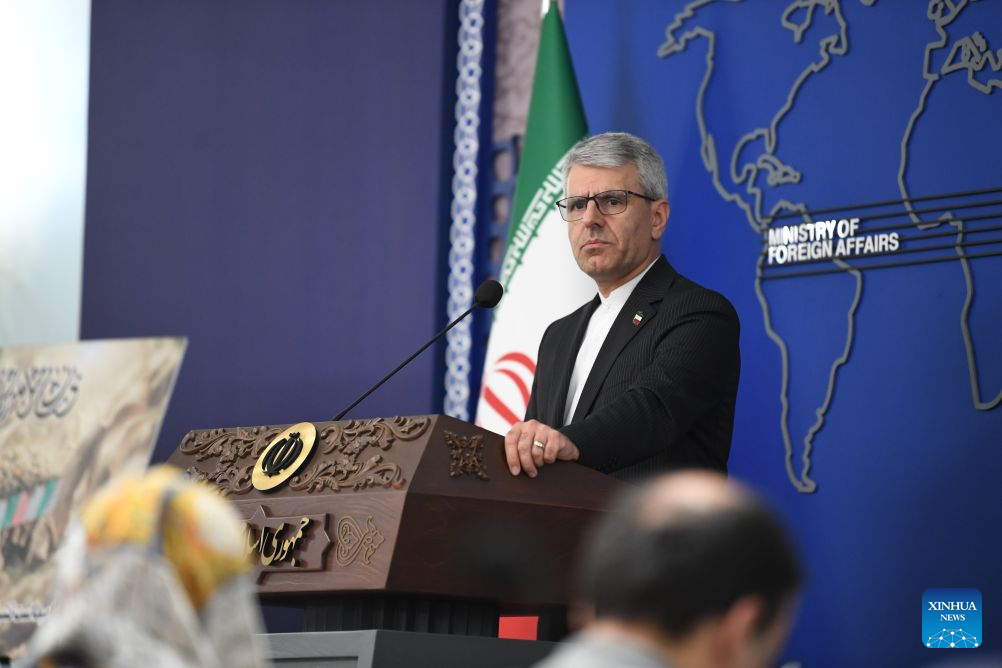
At a weekly press conference on Sunday, Baghaei rejected the demand by the Gulf Cooperation Council (GCC) that Iran should provide compensation for the damages, losses, and injuries resulting from its attacks on US bases and assets in West Asia.
Baghaei made the remarks in response to anti-Iran comments by GCC Secretary-General Jasem Mohamed Albudaiwi during a UN Security Council meeting in New York on Friday, convened at Bahrain's request.
Albudaiwi said Iran had launched over 7,000 missiles and drones against Gulf states since Feb 28, and that the GCC holds Iran fully responsible for the attacks and their consequences. He listed the GCC's demands to the UN Security Council, including "requiring Iran to provide full compensation for the damages resulting from its attacks in accordance with international law and Human Rights Council Resolution 61/1".
Baghaei said that regional countries that "actively participated in the military aggression" against Iran and made available their territories for use by the "aggressors" cannot demand reparations.
Improved cooperation with IAEA unlikely
In response to a confidential report of the International Atomic Energy Agency (IAEA) released ahead of a meeting of the agency's Board of Governors next week, Baghaei said cooperation with the IAEA would not improve as long as the status quo persists.
Baghaei said the IAEA had acknowledged that US-Israeli attacks on Iranian nuclear facilities disrupted the agency's activities in Iran, but had failed to explicitly identify the "military aggression" as the principal cause.
READ MORE: IRGC: 2 ‘violating’ tankers catches fire in Hormuz after hitting mines
"As long as this situation persists, we cannot expect a transformation in cooperation between Iran and the agency," he said.
Baghaei also accused the IAEA of issuing one-sided reports, saying such an approach had harmed its reputation and credibility.
